Lors de l'achat de drones de lutte contre l'incendie, comment déterminer la responsabilité du fournisseur si les marchandises sont endommagées pendant le transport ?

Ouvrir un conteneur d'expédition pour y trouver un bien de grande valeur endommagé est un scénario cauchemardesque. Lorsque nous expédions nos unités SkyRover de Xi'an vers les États-Unis, nous comprenons que des contrats vagues laissent souvent les acheteurs supporter injustement la facture des incidents de transit.
Pour déterminer la responsabilité, vous devez examiner explicitement la clause “ Risque de perte ” et les Incoterms sélectionnés dans votre contrat d'achat. Le fournisseur est responsable si le contrat spécifie “ Livré droits acquittés ” (DDP) ou si vous prouvez que les dommages résultent d'un emballage inadéquat, à condition que vous documentiez immédiatement les problèmes sur le connaissement.
Examinons les termes spécifiques et les étapes de vérification nécessaires pour protéger votre investissement.
Quels Incoterms dois-je sélectionner pour m'assurer que le fournisseur assume le risque pendant le transport international ?
D'après notre expérience dans la navigation dans les douanes et la logistique américaines, choisir le mauvais terme d'expédition est l'erreur la plus courante commise par les acheteurs. Cela décale souvent le fardeau financier avant même que les marchandises ne quittent la Chine.
Vous devriez sélectionner DDP (Delivered Duty Paid) pour vous assurer que le fournisseur assume tous les risques et coûts jusqu'à ce que le drone atteigne votre installation spécifique. Si le DDP n'est pas possible, choisissez DAP (Delivered at Place), qui maintient le risque de perte avec le fournisseur jusqu'à ce que les marchandises soient prêtes à être déchargées à votre destination.
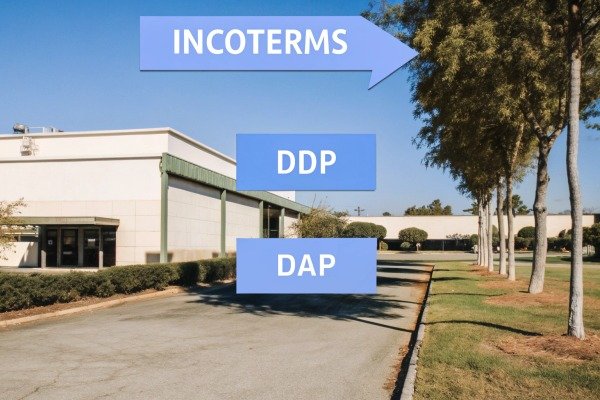
Comprendre les points de transfert de risque
Lorsque nous finalisons les contrats pour nos drones industriels, nous voyons souvent les responsables des achats se concentrer fortement sur le prix unitaire tout en négligeant les Conditions Commerciales Internationales (Incoterms). Conditions Commerciales Internationales (Incoterms) 1. Ces acronymes de trois lettres sont l'épine dorsale juridique du commerce international. Incoterms 2 Ils définissent exactement où le risque est transféré de nous, le fabricant, à vous, l'acheteur.
Si vous acceptez EXW (Ex Works), vous prenez un pari énorme. Sous EXW, au moment où le drone quitte notre usine à Chengdu, vous êtes responsable de tout. Si le camion s'écrase sur le chemin du port de Shanghai, ou si le navire de marchandises rencontre une tempête dans le Pacifique, cette perte est à votre charge. Nous déconseillons fortement cela pour les équipements de grande valeur comme les drones de lutte contre les incendies, à moins que vous n'ayez votre propre réseau logistique robuste.
Termes recommandés pour une protection maximale
Pour le plus haut niveau de sécurité, nous recommandons de privilégier DDP (Delivered Duty Paid) (livrés droits acquittés). Ce terme impose l'obligation maximale au fournisseur. Cela signifie que nous sommes responsables de l'expédition, de l'assurance, du dédouanement et de la livraison jusqu'à votre porte. Livré Droits acquittés 3 Si le drone est endommagé à n'importe quel moment avant que vous ne le signiez, nous sommes responsables.
Cependant, certains fournisseurs peuvent résister au DDP en raison de la complexité des taxes d'importation américaines. Dans ce cas, DAP (Delivered at Place) est une alternative solide. En vertu du DAP, nous supportons toujours le risque de perte pendant le transit. La différence est que vous gérez les droits d'importation, mais la sécurité physique des marchandises reste notre responsabilité jusqu'à l'arrivée.
Comparaison de l'allocation des risques
Pour vous aider à visualiser où commence votre responsabilité, nous avons décomposé les termes les plus courants utilisés dans notre secteur :
| Incoterm | Qui paie le fret ? | Qui s'occupe des douanes ? | Où le risque est-il transféré à l'acheteur ? | Niveau de protection de l'acheteur |
|---|---|---|---|---|
| EXW (Ex Works) | Acheteur | Acheteur | À l'usine du fournisseur | Le plus bas (Risque élevé) |
| FOB (Free on Board) | Acheteur | Acheteur | Une fois les marchandises chargées sur le navire | Faible (Le risque de transit maritime est le vôtre) |
| CIF (Coût, Assurance, Fret) | Fournisseur | Acheteur | Une fois les marchandises chargées sur le navire* | Moyen (Le fournisseur paie l'assurance, mais le risque est techniquement transféré tôt) |
| DAP (Rendu au lieu de destination convenu) | Fournisseur | Acheteur | Dans les installations de destination de l'acheteur | Haut |
| DDP (Rendu droits acquittés) | Fournisseur | Fournisseur | Dans les installations de destination de l'acheteur | Le plus élevé (Idéal pour les acheteurs) |
*Note sur CIF : Bien que le fournisseur paie l'assurance, le risque est légalement transféré à l'acheteur une fois que les marchandises franchissent le basting du navire. Cela peut créer des litiges complexes en matière de réclamations.
La clause "Risque de perte"
Au-delà des Incoterms, votre contrat doit explicitement stipuler le "Risque de perte". Même avec des Incoterms favorables, nous suggérons d'ajouter une clause qui remplace les défauts standards. Par exemple, une clause stipulant :, "Le risque de perte ou de dommage des Marchandises reste à la charge du Vendeur jusqu'à ce que les Marchandises soient physiquement inspectées et acceptées par l'Acheteur à la destination finale," ajoute une puissante couche de protection juridique.
Comment puis-je vérifier si la police d'assurance du fournisseur couvre entièrement les dommages potentiels aux drones de grande valeur ?
Nous savons que la responsabilité standard du transporteur est souvent calculée au poids, ce qui est lamentablement insuffisant pour la technologie de précision. S'appuyer sur une couverture de base peut vous laisser avec des miettes.
Vous devez exiger un Certificat d'Assurance (COI) qui mentionne spécifiquement la couverture “Fret” ou “Transport” avec une limite supérieure à la valeur totale de la facture. Vérifiez que la police inclut une clause “Tous risques” pour couvrir les accidents et nomme clairement votre organisation comme titulaire du certificat ou assuré supplémentaire.

Distinction entre assurance responsabilité civile et assurance fret
Un piège courant que nous observons est que les acheteurs acceptent un certificat de "Responsabilité Civile Générale" comme preuve d'expédition sécurisée. La responsabilité civile générale couvre les dommages que le fournisseur pourrait causer à des tiers (par exemple, si un drone s'écrase dans un bâtiment lors d'une démonstration). Elle ne couvre pas pas vos marchandises lorsqu'elles se trouvent à l'intérieur d'un conteneur d'expédition.
Lorsque vous achetez nos drones de lutte contre l'incendie, qui transportent des caméras thermiques sophistiquées et des capteurs de télémétrie caméras thermiques 4, le risque financier est élevé. La responsabilité standard des transporteurs est souvent limitée à quelques dollars par livre. Pour un drone léger en fibre de carbone, cette indemnisation ne couvrirait même pas le coût fibre de carbone 5 d'une seule hélice, sans parler du corps central orange abritant l'avionique.
Ce qu'il faut rechercher dans le certificat d'assurance (COI)
Avant que nous n'expédions une seule unité, les acheteurs professionnels demandent généralement un COI. Certificat d'assurance 6 Vous devriez faire de même. Lorsque vous examinez ce document, recherchez ICC (A) clauses ou "Clauses de l'Institut pour le Fret Maritime A". Dans le monde de l'assurance, cela équivaut à une couverture "Tous Risques". Elle couvre presque toute perte ou dommage physique causé par des causes externes.
Inversement, les polices "Perte Totale Uniquement" ne paieront que si l'expédition entière est détruite (par exemple, si le navire coule). Si le drone arrive avec un bras fendu ou un cardan endommagé, une police "Perte Totale" ne paie rien.
Valorisation et Limites de Couverture
Les drones de lutte contre l'incendie sont des outils spécialisés. La valeur d'assurance doit refléter non seulement le coût du matériel, mais aussi la valeur "Coût, Assurance et Fret" (CAF) plus un pourcentage supplémentaire (généralement 110%). Cela garantit que si vous devez récommander, vos frais administratifs et les fluctuations potentielles des prix sont couverts.
Liste de vérification de la vérification de l'assurance
Utilisez cette liste de vérification lors de l'audit des documents d'assurance d'un fournisseur :
| Composant d'assurance | Exigence | Pourquoi c'est important |
|---|---|---|
| Type de politique | Marchandises / Assurance maritime intérieure / Transport | Couvre les marchandises elles-mêmes, pas seulement la responsabilité civile. |
| Portée de la couverture | "Tous risques" ou ICC (A) | Couvre les dommages partiels, le vol et la mauvaise manipulation, pas seulement les pertes catastrophiques. |
| Limite de responsabilité | ≥ 110% de la valeur de la facture | Assure le coût de remplacement complet plus les frais d'expédition et les marges administratives. |
| Franchise | Vérifier le montant acceptable | Si la franchise est de $5 000 et les dommages de $4 000, vous ne recevez rien. Assurez-vous que le fournisseur paie la franchise. |
| Limites géographiques | Origine à destination finale | Doit couvrir l'intégralité du trajet, y compris le transport par camion du port à votre domicile. |
La clause "Entrepôt à entrepôt"
Assurez-vous que la police comprend une clause "Entrepôt à entrepôt". Sans cela, la couverture pourrait prendre fin dès que les marchandises sont déchargées au port. Le trajet du port à votre caserne de pompiers ou à votre centre de distribution est souvent le moment où la manipulation la plus brutale se produit (nids-de-poule, freinages brusques). Si la police se termine au port, ce dernier kilomètre est entièrement à vos risques.
Quelles clauses d'emballage spécifiques dois-je inclure dans le contrat d'achat pour éviter les dommages de transit ?
Notre équipe de production passe des heures à concevoir des inserts en mousse personnalisés car nous savons que le mouvement à l'intérieur de la boîte est l'ennemi. Le carton standard n'est jamais suffisant pour les drones industriels.
Inclure des clauses exigeant des inserts en mousse haute densité découpée sur mesure (EVA), des indicateurs d'impact (étiquettes ShockWatch) sur le caisson extérieur, et une stricte conformité aux réglementations IATA sur les marchandises dangereuses pour les batteries au lithium. Préciser que le non-respect de ces normes d'emballage rend le fournisseur responsable de tout dommage résultant.

Définir légalement "l'emballage adéquat"
Des termes vagues comme "emballage d'exportation standard" sont dangereux. En cas de litige, un fournisseur peut argumenter qu'une simple boîte en carton est "standard". Pour vous protéger, vous devez être prescriptif dans le contrat.
Pour nos drones SkyRover, en particulier les modèles avec le corps central orange vif et les longs bras noirs, nous utilisons une mousse de densité spécifique. Le contrat doit préciser que le drone doit être "emballé dans un étui rigide ou une boîte en carton ondulé à double paroi avec de la mousse EVA découpée sur mesure empêchant tout mouvement du châssis central ou de la caméra suspendue"."
Protection des composants critiques
La partie la plus vulnérable d'un drone de lutte contre l'incendie est la charge utile : la caméra suspendue sous le boîtier. Si ce composant vibre contre la paroi du conteneur, les moteurs du cardan peuvent être ruinés sans aucun dommage externe visible.
Votre clause devrait exiger :
- Blocages de cardan : Dispositifs de retenue mécaniques qui empêchent la caméra de basculer pendant le transport.
- Détachement des hélices : Les hélices doivent être retirées et emballées séparément pour éviter toute flexion ou contrainte sur les roulements du moteur.
- Contrôle de l'humidité : Des sachets déshydratants doivent être inclus pour prévenir la corrosion des circuits imprimés, en particulier pour le fret maritime qui est sujet à la "pluie de conteneur" (condensation).
Le rôle des indicateurs d'impact
Nous recommandons fortement d'exiger l'utilisation de ShockWatch ou TiltWatch labels. These are small stickers placed on the outside of the crate that change color if the box is dropped or tipped over.
Including a clause stating, "Acceptance of goods is subject to inspection of ShockWatch indicators; activated indicators shall constitute prima facie evidence of mishandling," shifts the burden of proof immediately. If the sticker is red, the carrier or supplier has to prove the drone isn't broken, rather than you having to prove it is.
Lithium Battery Compliance (IATA)
Firefighting drones use high-capacity batteries. These are classified as Dangerous Goods (Class 9). If a supplier packs them incorrectly—for example, loose in the box without terminal protection—it violates international law (IATA/ICAO). Dangerous Goods Regulations 7
If a shipment is stopped by customs or damaged because batteries were packed unsafely, the liability must fall on the supplier. Your contract should explicitly state: "Supplier warrants that packaging complies with all IATA Dangerous Goods Regulations IATA Dangerous Goods Regulations 8. Any fines, delays, or damages resulting from non-compliance are the sole responsibility of the Supplier."
Packaging Specifications Table
Here is a template for the packaging requirements section of your purchase order:
| Composant | Required Packaging Standard | Objectif |
|---|---|---|
| Drone Body | Custom-cut EVA Foam (High Density) | Empêche le déplacement ; protège le boîtier orange et les bras. |
| Capteurs/Caméra | Verrouillage de nacelle + Compartiment en mousse séparé | Empêche les dommages dus aux vibrations sur les moteurs de stabilisation. |
| Piles | Boîte certifiée UN 38.3 + SOC < 30% | Conformité aux réglementations de sécurité ; prévention des incendies. |
| Contenant extérieur | Caisses en carton ondulé double paroi ou en bois | Résistance à l'écrasement lors de l'empilage. |
| Indicateurs | 2 étiquettes ShockWatch (côtés opposés) | Preuve visible de manipulation brutale. |
Quelles preuves dois-je fournir pour réclamer avec succès une indemnisation pour les drones endommagés à l'arrivée ?
Lorsque les clients appellent notre ligne de support avec des réclamations pour dommages, ceux qui sont résolus rapidement sont ceux qui ont tout documenté avant même que le camion de livraison ne s'éloigne. La rapidité et le détail sont vos meilleurs alliés.
Vous devez fournir le connaissement signé avec des annotations spécifiques des dommages, des photos haute résolution de l'emballage extérieur avant et après ouverture, et une vidéo complète de déballage. Vous devez soumettre un avis de réclamation formel écrit dans le délai strict du transporteur, souvent aussi court que 3 jours.

Le piège du " reçu propre "
La plus grosse erreur que font les acheteurs est de signer le reçu de livraison (connaissement ou POD) sans inspecter la cargaison. Si vous signez pour les marchandises sans noter de problèmes, vous déclarez légalement que la cargaison est arrivée en " bon état ". C'est ce qu'on appelle un " reçu propre "."
Une fois qu'un reçu propre est signé, la réclamation pour dommages de transport devient incroyablement difficile. Lettre de voiture 9 Vous dégagez effectivement le transporteur et le fournisseur de toute responsabilité.
Conseils pratiques : Si le chauffeur vous presse, marquez le reçu avec " Sous réserve d'inspection pour dommages cachés " ou " Emballage extérieur endommagé – Contenu non vérifié. " S'il y a des trous visibles, des bosses ou des étiquettes ShockWatch activées, écrivez exactement ce que vous voyez sur les documents avant de signer.
La norme de la vidéo de déballage
Dans l'industrie des drones, une photo ne suffit souvent pas. Nous conseillons vivement à nos clients de filmer l'intégralité du processus de déballage. Cette vidéo doit être continue et sans coupure.
Commencez par filmer la boîte non ouverte, en zoomant sur l'étiquette d'expédition pour prouver qu'il s'agit du bon colis. Montrez l'état des coins et du ruban adhésif. Ensuite, filmez la découpe du ruban adhésif et le retrait du drone. Si un bras d'hélice est cassé ou si le boîtier orange est fissuré, capturer cette découverte en vidéo prouve que les dommages ne se sont pas produits après que vous l'ayez sorti.
Documentation des " dommages cachés "
Parfois, la boîte semble parfaite, mais le drone à l'intérieur est cassé. C'est un " dommage caché "."
- Arrêtez immédiatement : Ne continuez pas à déballer et n'essayez pas de le réparer.
- Conservez tous les emballages : Ne jetez pas la boîte, la mousse ou le papier bulle. L'expert en assurance voudra voir l'emballage pour déterminer s'il était insuffisant.
- Photos : Prenez des photos des dommages sous plusieurs angles. Prenez des photos du numéro de série du drone.
Défauts latents vs. Dommages de transport
Les drones de lutte contre les incendies sont complexes. Parfois, les dommages ne sont pas visibles – par exemple, un gyroscope qui ne se calibre pas en raison d'un impact sévère.
Votre contrat devrait définir une "Période d'acceptation fonctionnelle" (par exemple, 7 jours). Cela vous donne le temps de mettre le drone sous tension et d'exécuter des diagnostics. Si l'IMU interne (Unité de mesure inertielle) échoue immédiatement Unité de mesure inertielle 10, et que vous avez la preuve d'un choc (comme une étiquette ShockWatch rouge), vous pouvez lier cette défaillance interne aux dommages de transport.
Protocole de calendrier des réclamations
Les transporteurs ont des délais très stricts. Si vous attendez deux semaines pour signaler des dommages, votre réclamation sera probablement refusée automatiquement.
- Immédiat (À la livraison) : Notez les dommages sur le connaissement.
- 0-24 heures : Prenez des photos/vidéos et informez le fournisseur par e-mail.
- 48-72 heures : Déposez un "Avis d'intention de réclamation" formel auprès du transporteur.
- Jours 3-7 : Effectuer des tests fonctionnels pour identifier les dommages internes.
En suivant scrupuleusement ce protocole de preuves, vous comblez les lacunes que les assureurs utilisent pour refuser le paiement.
Conclusion
Sécuriser la responsabilité des drones de lutte contre l'incendie pendant le transport nécessite une approche proactive plutôt que réactive. En sélectionnant les Incoterms DDP, en vérifiant l'assurance "Tous Risques", en imposant des normes d'emballage strictes pour les composants sensibles tels que la caméra thermique et le boîtier orange, et en adhérant à des protocoles rigoureux de collecte de preuves, vous transférez le risque financier hors de votre organisation. Un contrat bien négocié n'achète pas seulement un drone ; il garantit que le fournisseur reste un partenaire dans son arrivée en toute sécurité, et pas seulement un vendeur qui remet une boîte.
Notes de bas de page
1. Source officielle des règles Incoterms définies par la Chambre de Commerce Internationale. ︎
2. Source officielle des règles Incoterms de la Chambre de Commerce Internationale. ︎
3. Fournit une analyse détaillée du terme d'expédition DDP et de ses implications juridiques. ︎
4. Teledyne FLIR est un fabricant leader de charges utiles d'imagerie thermique pour drones. ︎
5. Informations générales sur les propriétés matérielles et les coûts de la fibre de carbone dans l'aérospatiale. ︎
6. Marsh est un leader mondial du courtage d'assurance expliquant les normes COI. ︎
7. L'IATA est l'autorité mondiale pour la réglementation du transport aérien des matières dangereuses. ︎
8. Réglementations officielles pour l'expédition de marchandises dangereuses comme les batteries au lithium par avion. ︎
9. Orientations de la Federal Maritime Commission sur la documentation d'expédition et les responsabilités des transporteurs. ︎
10. Recherche technique sur la fiabilité et les modes de défaillance des IMU dans les véhicules aériens sans pilote. ︎
 English
  Español de México
  Deutsch
  Français
  Русский
  العربية
Laisser un commentaire