 Classe 9 Marchandises dangereuses (MD) 1 Classe 9 Marchandises dangereuses 2=”top-image-square”>
Lorsque nous finalisons les contrats d'exportation à notre siège de Xi'an, nous constatons souvent que les clients négligent les spécificités de la logistique de garantie jusqu'à ce qu'un moteur tombe en panne en pleine saison. Un accord vague peut rapidement transformer une récolte rentable en un cauchemar financier en raison de frais de fret internationaux imprévus.
Vous devez négocier explicitement une clause de “ livraison fractionnée ” dans votre contrat de vente, où vous couvrez le fret jusqu'à l'usine et le fournisseur paie le retour des unités réparées. le code SH 3. Sans cet accord écrit, les Incoterms standard comme FOB ne s'appliquent pas aux services de garantie, vous laissant responsable de toutes les dépenses logistiques aller-retour.
Décomposons les termes essentiels dont vous avez besoin pour sécuriser votre résultat net et maintenir votre flotte en vol.
Quelles clauses spécifiques dois-je rechercher dans le contrat concernant les frais d'expédition de garantie ?
Notre équipe juridique rédige des dizaines d'accords chaque mois pour nos partenaires américains et européens. Nous constatons fréquemment que les modèles standard omettent souvent les nuances de la logistique de réparation internationale, exposant les importateurs à des frais cachés lorsqu'ils supposent que les termes généraux couvrent des réparations spécifiques.
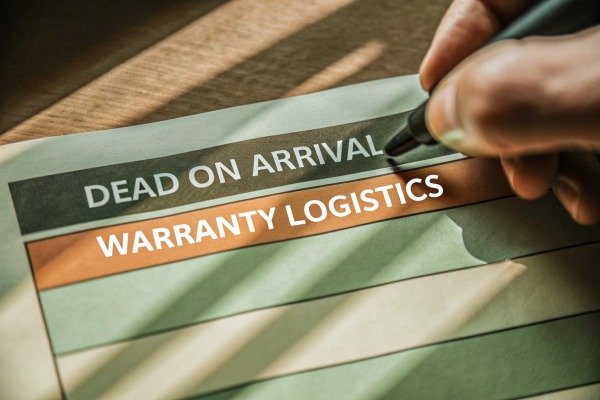
Recherchez une clause “ En panne à l'arrivée ” (DOA) obligeant le fournisseur à couvrir tous les frais d'expédition pour les défauts immédiats, et une section distincte “ Logistique de garantie ”. Celle-ci devrait préciser que l'acheteur supporte le coût d'envoi des pièces défectueuses en Chine, tandis que le fabricant couvre le fret aérien pour le retour des composants réparés à votre installation.

Lorsque vous achetez des machines agricoles de grande valeur, le contrat est votre seul filet de sécurité. De nombreux importateurs croient à tort que la période de garantie signifie simplement " réparations gratuites ". Cependant, dans le commerce transfrontalier, " réparation gratuite " n'équivaut pas à " expédition gratuite ". Si votre contrat est silencieux sur la logistique, l'hypothèse par défaut dans le commerce international revient souvent à la logique Ex Works (EXW) pour les retours, ce qui signifie que vous payez pour tout.
Pour protéger votre investissement, vous devez disséquer la section garantie de votre facture pro forma ou de votre accord de vente. Vous recherchez la clarté, pas seulement des promesses de qualité.
Distinction entre Incoterms et Conditions de garantie
Il est crucial de comprendre comprendre que les Incoterms 4 que les Incoterms (tels que FOB, CIF ou DDP) ne s'appliquent qu'à l' expédition initiale des nouveaux biens de la Chine vers votre entrepôt. Ils ne régissent pas automatiquement le mouvement des biens pour réparation.
Si vous avez acheté vos drones sous les termes DDP (Delivered Duty Paid), ne supposez pas que le fournisseur gérera également la partie "Duty Paid" pour un retour sous garantie. Vous devez insérer une clause spécifique stipulant que "le fournisseur est responsable du fret de retour des articles réparés ou remplacés par fret aérien express". Sans cela, un fournisseur pourrait expédier votre pièce de rechange par fret maritime pour économiser des coûts, vous laissant attendre 35 jours pendant que vos cultures ont besoin d'être traitées.
Le filet de sécurité "Dead on Arrival" (DOA)
Une garantie standard couvre les défauts qui surviennent pendant l'utilisation. Cependant, une clause DOA est une protection spécifique pour l'équipement qui tombe en panne immédiatement à l'ouverture de la boîte ou lors du premier vol.
Vous devriez insister sur une clause qui définit une période DOA (généralement 7 à 15 jours après réception). Si un défaut est constaté dans ce délai, le contrat devrait stipuler que le fournisseur supporte 100% des frais d'expédition— tant le retour de l'unité défectueuse en Chine que l'expédition de la nouvelle unité vers vous. Cela oblige le fabricant à effectuer un contrôle qualité rigoureux (CQ) 5 contrôle qualité rigoureux (CQ) avant que les marchandises ne quittent l'usine.
Liste de contrôle des clauses contractuelles
Utilisez le tableau suivant pour examiner vos accords actuels. Si ces colonnes sont vides dans votre contrat, vous êtes en danger.
| Type de clause | Objectif | Terminologie recommandée |
|---|---|---|
| Logistique DOA | Protège contre les défauts immédiats. | "Seller covers all shipping costs (round-trip) for defects reported within 15 days of delivery." |
| Standard Warranty Freight | Defines who pays for normal repairs. | "Buyer pays freight to Seller; Seller pays freight back to Buyer via DHL/FedEx." |
| Assessment Liability | Determines who pays if no defect is found. | "If analysis proves pilot error, Buyer covers all shipping and repair costs." |
| Customs Valuation | Reduces tax on returns. | "Seller must declare replacement parts as 'Warranty Replacement – No Commercial Value' on invoices." |
Defining "Proper Use" and Exclusions
Finally, pay attention to the exclusions. In the agricultural sector, drones are exposed to corrosive pesticides and water. We often see contracts that void warranties if there is "water damage," which is ironic for a sprayer drone.
Ensure the contract acknowledges the intended use environment. The clause should read: "Warranty covers defects under normal agricultural operating conditions, including exposure to standard crop protection chemicals." This prevents the supplier from claiming that normal wear and tear voids your shipping coverage.
Le fournisseur couvre-t-il les frais d'expédition aller-retour ou seulement la livraison des pièces réparées ?
We treat every returned unit seriously at our Chengdu factory, analyzing flight logs to improve future designs. However, covering full round-trip shipping for every claim would bankrupt most manufacturers, leading to significantly higher upfront unit prices for you to offset that risk.
Most Chinese suppliers will only cover the one-way shipping cost of returning the repaired item to you. Full round-trip coverage is extremely rare and usually limited to DOA cases or high-volume VIP contracts where a premium has been paid upfront to offset these potential logistics expenditures.
Understanding the financial structure of Chinese manufacturing helps you negotiate better. Margins in hardware are often tighter than importers realize. If a supplier agreed to pay round-trip shipping for every minor sensor failure, they would likely cut corners on component quality to stay profitable.
La norme de l'industrie est le modèle de " livraison fractionnée ". C'est un compromis équitable où les deux parties partagent le risque. Vous payez pour acheminer la pièce en Chine ; nous payons pour vous la retourner.
La logistique des batteries au lithium
Un facteur majeur qui empêche les fournisseurs de couvrir les coûts d'aller-retour est la batterie. Les drones agricoles utilisent d'énormes batteries au lithium haute tension. piles au lithium 6 Celles-ci sont classées comme marchandises dangereuses (MD) de classe 9.
L'expédition d'articles DG nécessite un emballage spécialisé, des manutentionnaires certifiés et des services de fret premium. Retourner une batterie défectueuse en Chine est incroyablement coûteux et bureaucratiquement difficile pour vous en tant qu'importateur. Souvent, le coût d'expédition dépasse la valeur de la batterie elle-même.
Pour cette raison, de nombreux fournisseurs n'acceptent pas du tout les retours de batteries. Au lieu de cela, le contrat devrait stipuler que si une batterie tombe en panne et que vous fournissez une preuve vidéo de l'irrégularité de la tension, le fournisseur expédiera une nouvelle pièce de rechange sans exiger le retour de l'ancienne. Cela vous évite les tracas de trouver un coursier certifié DG.
Pourquoi la couverture à sens unique est logique
En acceptant de payer pour l'expédition vers la Chine, vous prenez également le contrôle du calendrier. Si vous avez besoin d'une réparation de toute urgence, vous pouvez choisir l'expédition express. Si c'est moins urgent, vous pouvez utiliser une méthode moins chère.
Cependant, vous devez vous assurer que le fournisseur utilise Air Express pour le trajet de retour. Certains fournisseurs pourraient essayer d'économiser de l'argent en envoyant des pièces sous garantie par fret maritime (LCL), ce qui prend 30 à 40 jours.
Comparaison des coûts : unité entière vs pièces
Lorsqu'un drone tombe en panne, ne renvoyez jamais l'unité entière, sauf si absolument nécessaire. L'expédition d'un drone agricole de 50 kg par avion est prohibitive en termes de coûts.
Nous conseillons toujours à nos partenaires d'identifier le module défectueux spécifique (par exemple, le radar, la pompe ou un bras). L'expédition d'un bras de 2 kg en Chine coûte une fraction de l'expédition du drone entier. C'est pourquoi la compétence technique de votre côté est vitale : vous devez être capable de démonter la pièce spécifique.
Matrice de responsabilité des coûts
Voici comment les coûts sont généralement répartis dans un partenariat équilibré :
| Catégorie de dépenses | Pratique standard (Responsabilité de l'acheteur) | Pratique standard (Responsabilité du fournisseur) |
|---|---|---|
| Expédition VERS la Chine | Oui (Garantie standard) | Uniquement pour DOA (Dead on Arrival) |
| Expédition DEPUIS la Chine | Non | Oui (Article réparé/remplacé) |
| Droits d'importation (Chine) | Non | Oui (Le fournisseur gère l'entrée en Chine) |
| Droits d'importation (Votre pays) | Oui (Même pour les remplacements) | Non |
| Assurance | Oui (Pour l'expédition sortante) | Oui (Pour l'expédition de retour) |
Négociation d'exceptions
Si vous êtes un grand distributeur achetant des conteneurs de drones, vous avez un levier. Vous pouvez négocier un "Pool de fonds" pour l'expédition sous garantie. Par exemple, vous pourriez accepter de mettre de côté 1% de la valeur totale de l'achat sur un compte de crédit. Si des frais d'expédition sous garantie surviennent, ils sont déduits de ce pool. Si le pool n'est pas utilisé d'ici la fin de l'année, il est déduit de votre prochain achat. Cela fait effectivement en sorte que le fournisseur couvre les coûts, mais cela nécessite un volume élevé de commandes.
Comment devrais-je négocier les conditions d'expédition pour les pièces de rechange urgentes afin de minimiser les temps d'arrêt ?
Pendant la saison de pulvérisation intense, nos clients ne peuvent pas se permettre d'attendre trois semaines pour une pompe de remplacement. Lorsque nous recevons un appel urgent du terrain, la vitesse devient la seule métrique qui compte, mais la vitesse coûte cher et doit être planifiée à l'avance.
Négocier un “Tampon de tampon de pièces de rechange 7 pièces de rechange” exigeant que le fournisseur expédie 2-3% de composants critiques tels que les moteurs et les ESC avec votre commande initiale. Pour les urgences ultérieures, convenez que le fournisseur utilisera des courriers aériens express (DHL/FedEx) pour les pièces sous garantie, plutôt que des méthodes de fret maritime plus lentes, afin d'assurer la continuité opérationnelle.
Les temps d'arrêt sont l'ennemi du profit dans l'agriculture. Les cultures n'arrêtent pas de pousser pendant que vous attendez un colis de Shenzhen. Se fier uniquement à l'expédition de pièces dans les deux sens pour chaque défaillance est une stratégie erronée.
Pour minimiser les temps d'arrêt, votre négociation doit se concentrer sur la prévention et la vérification, plutôt que sur la simple expédition.
Le tampon de pièces de rechange de 2-3%
Le terme d'expédition le plus efficace est celui qui empêche l'expédition. Vous devriez négocier un "Tampon de pièces de rechange gratuit"."
Pour chaque 10 drones que vous achetez, demandez au fournisseur d'inclure un kit gratuit contenant les points de défaillance les plus courants :
- 2 moteurs supplémentaires
- 2 ESC supplémentaires (contrôleurs de vitesse électroniques)
- 4 hélices supplémentaires
- 1 pompe à eau supplémentaire
- 1 jeu de trains d'atterrissage
Cela représente généralement environ 2-3% de la valeur totale de la commande. Les fabricants acceptent souvent cela pour éviter les tracas administratifs liés au traitement de petites réclamations de garantie plus tard. Lorsqu'une pièce tombe en panne, vous la remplacez immédiatement de votre stock, puis vous déposez la réclamation pour reconstituer votre stock.
Vérification numérique plutôt que retour physique
L'expédition prend du temps. Pour accélérer le processus, vous avez besoin d'une " clause de preuve numérique "."
Cette clause stipule que le fournisseur acceptera des photos, des vidéos et des journaux de vol haute résolution comme preuve suffisante de défaut pour les composants d'une certaine valeur (par exemple, moins de 100 USD).
Si une buse ou un petit capteur tombe en panne, vous ne devriez pas avoir à dépenser 50 USD pour le renvoyer en Chine afin de prouver qu'il est cassé. Vous envoyez une vidéo, et nous envoyons le remplacement immédiatement. Cela réduit considérablement le délai de traitement, passant de semaines à quelques jours.
Liste des pièces de rechange essentielles
Lors de la négociation de votre stock tampon, concentrez-vous sur les articles à forte usure. Sur la base de nos données de réparation, voici les composants que vous devriez avoir sous la main :
| Composant | Fréquence de défaillance | Criticité | Recommandation |
|---|---|---|---|
| Hélices | Haut | Haut | Gardez 4 jeux par drone. |
| Spray Nozzles | Haut | Moyen | Gardez 10+ pièces de rechange (bon marché et faciles à obstruer). |
| Pompe à eau | Moyen | Haut | Gardez 1 pièce de rechange pour 5 drones. |
| Module radar | Faible | Haut | Gardez 1 pièce de rechange pour 10 drones. |
| ESC/Moteur | Faible | Haut | Gardez 1 jeu pour 10 drones. |
L'accord de " remplacement anticipé "
Pour les partenaires de confiance, nous proposons parfois le " Remplacement anticipé ". Cela signifie que si un composant critique comme un contrôleur de vol tombe en panne, nous expédions le nouveau immédiatement après avoir reçu le numéro de suivi de l'expédition de retour de votre part. Nous n'attendons pas de recevoir et d'inspecter l'article défectueux en premier.
Cela réduit le temps d'arrêt de moitié. Cependant, cela nécessite une relation basée sur la confiance. Vous pouvez essayer de négocier cela en proposant de payer une caution pour la pièce de remplacement, qui est remboursée une fois que le fournisseur reçoit l'unité défectueuse.
Qui est responsable des droits d'importation et du dédouanement pour les remplacements sous garantie ?
Notre service logistique aide fréquemment les clients américains à naviguer dans les formalités douanières pour éviter des coûts inutiles. Nous constatons souvent que les pièces de remplacement sont bloquées aux frontières ou taxées incorrectement parce que la valeur déclarée n'a pas été traitée avec précision sur la facture commerciale.
L'importateur est généralement responsable de tous les droits de douane et frais de dédouanement dans son pays d'origine, même pour les remplacements sous garantie. Pour éviter de payer des doubles taxes, vous devez vous assurer que le fournisseur marque l'expédition comme “ Remplacement sous garantie ” ou “ Sans valeur commerciale ” sur la facture, bien que les autorités douanières locales décident en fin de compte de l'évaluation fiscale.

C'est la surprise la plus courante pour les importateurs. Vous avez payé des taxes sur le drone lors de sa première arrivée. Maintenant, vous recevez un moteur de remplacement, et le coursier vous demande de payer à nouveau des taxes.
Techniquement, en vertu des lois du commerce international, vous êtes l'importateur enregistré. lois du commerce international 8 Le fournisseur ne peut pas payer les droits de douane américains en votre nom, à moins que l'expédition ne soit envoyée DDP (rendu droits acquittés), ce qui est rare pour les pièces sous garantie en raison de la complexité du calcul des droits pour différents pays.
L'importance des factures commerciales
La clé pour éviter ou minimiser ces taxes réside dans la manière dont nous, le fournisseur, préparons les documents d'expédition. Vous devez demander à votre fournisseur d'utiliser une formulation spécifique sur la facture commerciale.
La description de l'article doit indiquer : " Pièce de remplacement sous garantie – Valeur aux fins douanières uniquement – Sans valeur commerciale. "
De plus, la valeur déclarée ne doit pas être le prix de détail. Il doit s'agir du coût de fabrication ou d'une valeur nominale. Par exemple, si un moteur coûte 200 € au détail, nous pourrions le déclarer à 50 € aux fins douanières. Cependant, soyez prudent : le déclarer à 0 € ou 1 € est souvent signalé comme suspect par les agents des douanes.
Exportation temporaire pour réparation
Si vous renvoyez un article de grande valeur (comme le corps principal du drone) en Chine pour réparation, puis que vous le ramenez, vous devriez utiliser une procédure appelée " Exportation temporaire pour réparation "."
- Sortant : Lorsque vous expédiez l'unité cassée en Chine, vous remplissez un formulaire douanier spécifique (comme le formulaire CBP 4455 aux États-Unis) pour enregistrer le numéro de série.
- Retour : Lorsque l'unité réparée revient, vous présentez cet enregistrement.
Cela prouve aux douanes que vous possédez déjà l'article. Par conséquent, vous ne payez des droits de douane que sur la valeur de la réparation (le coût de la main-d'œuvre et des nouvelles pièces ajoutées), et non sur la valeur totale du drone. Si la réparation était gratuite sous garantie, les droits de douane devraient être minimes.
Tarifs de la Section 301 (Contexte spécifique aux États-Unis)
Pour nos clients américains, le paysage commercial est complexe. Les drones et les pièces de drones chinois sont souvent soumis aux Droits de douane au titre de l'article 301 9 tarifs de la Section 301 (un supplément de 25%). Droits de douane au titre de l'article 301 10
Même les pièces sous garantie peuvent être soumises à ce tarif si elles ne sont pas correctement documentées. Cela rend le "stock de pièces de rechange" (discuté dans la section précédente) encore plus attrayant financièrement. Si vous importez les pièces de rechange avec l'expédition d'origine, vous payez le tarif une seule fois. Si vous les expédiez individuellement plus tard par courrier express, les frais de courtage et les tarifs potentiels peuvent être disproportionnellement élevés par rapport à la valeur de la pièce.
Stratégies d'atténuation des droits de douane
- Expéditions consolidées : Si vous avez plusieurs demandes de garantie, attendez et expédiez-les en un seul lot. Ou, demandez au fournisseur d'expédier vos pièces sous garantie dans le cadre de votre prochaine commande commerciale de nouveaux drones.
- Codes SH corrects : Assurez-vous que le fournisseur utilise le code SH pour "Pièces de drones" (souvent 8807.10 ou similaire) plutôt que le code pour un drone complet. Les pièces ont parfois des taux de droits de douane plus bas.
- Sélection du transporteur : Certains transporteurs (comme DHL ou FedEx) disposent de meilleures équipes de courtage internes qui comprennent mieux les expéditions sous garantie que les transitaires génériques.
Conclusion
L'importation réussie de drones agricoles nécessite de regarder au-delà du prix d'achat et de comprendre le coût total de possession, qui comprend les coûts souvent cachés de la logistique de garantie. En négociant une politique de "livraison partagée", en sécurisant un stock de pièces de rechange et en garantissant une documentation douanière correcte, vous pouvez protéger vos marges. Chez SkyRover, nous pensons qu'un contrat transparent est le fondement d'un partenariat à long terme. Des conditions claires concernant les responsabilités d'expédition ne font pas que faire économiser de l'argent ; elles garantissent que votre flotte reste opérationnelle lorsque vos clients en ont le plus besoin.
Notes de bas de page
1. Réglementations officielles pour le transport de batteries au lithium par fret aérien. ︎
2. Réglementations de l'industrie pour l'expédition de matières dangereuses comme les grosses batteries. ︎
3. Explique le Système Harmonisé international pour la classification des produits échangés. ︎
4. Explique les Incoterms internationaux standardisés utilisés dans le commerce mondial. ︎
5. Définit les normes internationales pour les systèmes de management de la qualité garantissant une qualité de produit constante. ︎
6. Contexte général sur la technologie des batteries utilisée dans les drones agricoles. ︎
7. Exemples de politiques de service du fabricant pour les composants de drones et les remplacements sous garantie. ︎
8. Aperçu éducatif du cadre juridique régissant le commerce transfrontalier. ︎
9. Source officielle du gouvernement américain détaillant les mesures correctives commerciales et les actions tarifaires. ︎
10. Informations officielles du gouvernement concernant les tarifs douaniers sur les produits d'origine chinoise. ︎


 English
  Español de México
  Deutsch
  Français
  Русский
  العربية
Comments
No comments yet. Be the first to share your thoughts!
Leave a Comment