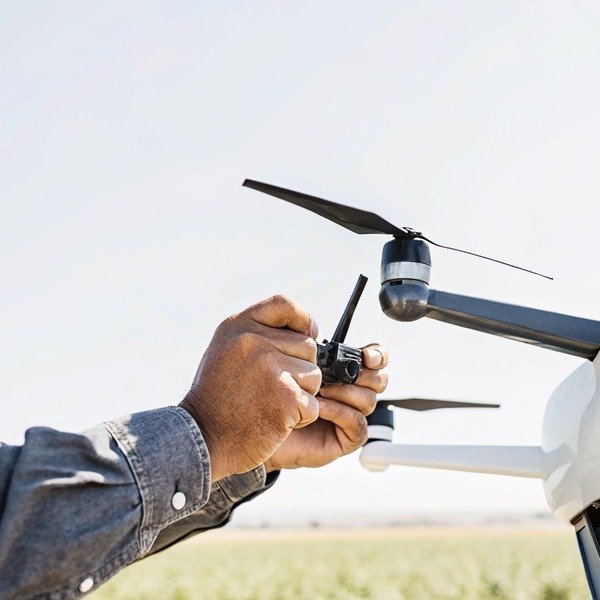
Lorsque nous expédions nos unités SkyRover à des clients américains, l'excitation se transforme souvent en anxiété. Clients américains 1 Vous avez l'échantillon, mais le risque de crash dès le premier jour vous terrifie.
Un processus de test de vol sur le terrain approprié comprend quatre étapes critiques : des inspections physiques et logicielles rigoureuses avant le vol, l'étalonnage du système au sol, des vérifications de vol stationnaire et de stabilité à basse altitude, et enfin, l'exécution de missions autonomes à pleine charge. Cette approche structurée garantit que le drone répond aux normes opérationnelles tout en minimisant le risque de dommages lors des essais initiaux.
Passons en revue les étapes spécifiques pour valider votre investissement en toute sécurité.
Quelles inspections essentielles avant le vol dois-je effectuer avant de lancer le drone échantillon ?
Des vis desserrées ou des capteurs non calibrés sur un nouvel import peuvent entraîner une défaillance immédiate. Nous constatons cela souvent lorsque les clients ignorent notre liste de contrôle recommandée.
Avant le lancement, inspectez la cellule pour détecter tout dommage dû au transport, vérifiez le serrage des moteurs et des hélices, et retirez tous les films protecteurs des lentilles. Calibrez l'IMU et la boussole dans un champ ouvert, exempt d'interférences magnétiques, et assurez-vous que la batterie est complètement chargée et solidement verrouillée pour éviter toute perte de puissance en plein vol.
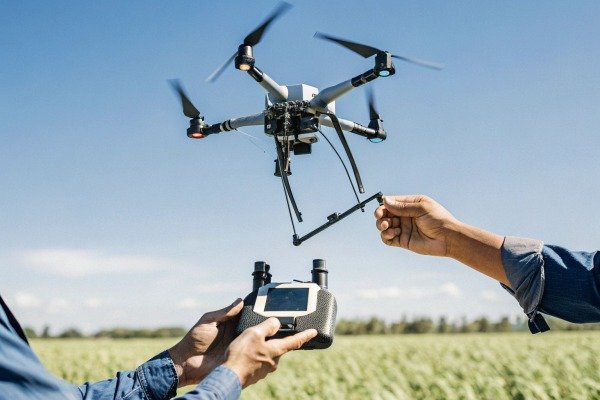
Le temps que vous passez au sol est directement corrélé à la sécurité de votre équipement en vol. Lors de la réception d'une unité échantillon provenant de l'étranger, vous devez supposer que les vibrations pendant le transport ont pu desserrer des composants critiques.
Vérifications de l'intégrité physique
Commencez par une inspection tactile. Ne vous contentez pas de regarder ; touchez et remuez chaque pièce mobile. Les drones agricoles produisent des vibrations massives à haute fréquence. Drones agricoles 2 Si un verrou de bras est légèrement desserré maintenant, il cédera sous la contrainte d'une charge utile complète. Notre équipe d'ingénierie conçoit spécifiquement des mécanismes de pliage pour qu'ils soient rigides, donc si vous constatez du jeu dans les bras, resserrez immédiatement les colliers de verrouillage.
Vérifiez les hélices pour détecter les fissures capillaires. Même une fracture microscopique peut entraîner une explosion en plein vol lorsque le moteur tourne à des milliers de tours par minute. Assurez-vous que les supports moteur sont affleurants et que les vis sont bloquées par un frein filet. supports moteur 3
Essentiels de la calibration du système
Une fois le matériel sécurisé, portez votre attention sur le logiciel. Les capteurs internes — spécifiquement l'IMU (Unité de Mesure Inertielle) Unité de mesure inertielle 4 et la boussole IMU (Unité de Mesure Inertielle) 5— sont sensibles aux changements de localisation géographique. capteurs internes 6 Un drone calibré dans notre usine de Chengdu ne volera pas correctement aux États-Unis sans recalibration.
Effectuez une analyse de "démarrage à froid". Allumez le drone et laissez-le reposer pendant 3 à 5 minutes. Observez les données de télémétrie sur votre contrôleur. L'horizon artificiel doit rester de niveau. S'il dérive pendant que le drone est stationnaire, l'IMU nécessite une recalibration immédiate.
Liste de contrôle avant vol
| Composant | Action d'inspection | Critères de réussite |
|---|---|---|
| Hélices | Passez les doigts le long des bords d'attaque ; tordez doucement. | Pas d'éclats, de fissures ou de flexion excessive. |
| Verrous de bras | Étendez les bras et verrouillez les manchons ; secouez le cadre. | Aucun mouvement ou "jeu" au niveau de l'articulation. |
| Moteurs | Tournez manuellement à la main ; vérifiez les vis de fixation. | Rotation fluide, pas de bruit de broyage, vis serrées. |
| Batterie | Insérez et retirez fermement sans appuyer sur le bouton de libération. | La batterie ne se désengage pas et ne fait pas de bruit. |
| Capteurs | Retirez les films ; vérifiez la poussière sur le radar/les caméras. | Nettoyez les lentilles ; surface radar dégagée. |
Enfin, vérifiez le verrouillage GPS. N'essayez pas d'armer les moteurs avant d'avoir acquis au moins 12 satellites acquis au moins 12 satellites 7 et que la barre d'intensité du signal est stable. Lancer en mode "ATTI" (pas de stabilisation GPS) est une erreur courante chez les nouveaux pilotes qui entraîne des dérives et des crashs immédiats.
Comment évaluer précisément l'uniformité et le débit du système de pulvérisation dans un environnement réel ?
Une pulvérisation inégale gaspille des produits chimiques et endommage les cultures. Lors de nos tests en usine, nous accordons la priorité à la constance du débit au-dessus de presque toutes les autres métriques pour garantir une application uniforme.
Pour évaluer l'uniformité, disposez du papier sensible à l'eau sur la trajectoire de vol et faites voler le drone à la hauteur et à la vitesse opérationnelles. Mesurez la densité des gouttelettes sur les papiers et comparez le volume réel du réservoir consommé aux données de télémétrie du contrôleur de vol pour vérifier la précision du débitmètre.

La validation du système de pulvérisation vous oblige à aller au-delà de la simple observation visuelle. Vous ne pouvez pas juger de la qualité de la couverture en regardant la brume dans l'air. Vous avez besoin de données concrètes du sol pour confirmer que le drone fait son travail efficacement.
Le test du papier sensible à l'eau
C'est la référence absolue pour tester la couverture. Placez des papiers sensibles à l'eau à intervalles spécifiques perpendiculairement à la trajectoire de vol du drone. papiers sensibles à l'eau 8 Pour un drone avec une largeur de pulvérisation théorique de 6 mètres, placez des papiers tous les 0,5 mètre sur une ligne de 10 mètres.
Faites voler le drone au-dessus de cette ligne à la hauteur de fonctionnement prévue (généralement 2 à 3 mètres) et à la vitesse prévue (généralement 4 à 6 mètres par seconde). Utilisez de l'eau claire pour ce test. Lorsque les gouttelettes touchent le papier jaune, elles deviennent bleues.
Récupérez les papiers et analysez la "Largeur de bande effective". Vous remarquerez que les bords du motif de pulvérisation ont moins de gouttelettes. La largeur effective est la zone centrale où la densité des gouttelettes est suffisante pour la protection des cultures. Si les bords extérieurs sont trop clairs, vous devez ajuster l'espacement de vos lignes de vol (chevauchement) dans le logiciel.
Vérification du débit
Vous devez également vérifier que le drone délivre le volume de liquide qu'il prétend délivrer. Si le logiciel indique qu'il a pulvérisé 10 litres, mais qu'il reste encore 2 litres dans le réservoir, votre débitmètre est non calibré. Cela entraîne une sous-application sur le terrain.
Journal de performance du système de pulvérisation
| Variable de test | Paramètre standard | Cible d'observation |
|---|---|---|
| Hauteur de vol | 2,5 mètres | Taille de gouttelette constante, pas de dérive. |
| Vitesse de vol | 5 mètres/seconde | Distribution uniforme sur le papier. |
| Pression de la pompe | 0,3 – 0,5 MPa | Pas de goutte à goutte des buses à l'arrêt. |
| Type de buse | 110 degrés Ventilateur plat | Le chevauchement crée une couverture uniforme. |
Effectuez un "test du seau" avant de voler. Retirez les buses ou placez le drone sur un support. Commandez à la pompe de pulvériser 5 litres. Récupérez le débit dans un récipient gradué. Si vous récupérez 4,8 litres ou 5,2 litres, vous devez ajuster le coefficient du débitmètre dans l'application. Cette étape est cruciale pour les applications de produits chimiques coûteux où la précision affecte votre rentabilité.
Quelles manœuvres de vol spécifiques dois-je effectuer pour tester la stabilité et l'autonomie de la batterie sous charge ?
Un drone qui vole bien à vide peut vaciller lorsqu'il est plein. Nous concevons nos châssis pour gérer les charges de liquide fluctuantes, mais vous devez vérifier cette stabilité vous-même.
Effectuez un test de vol stationnaire avec un réservoir plein pour mesurer le temps de vol réel par rapport aux affirmations du fabricant. Effectuez des virages serrés et des manœuvres de freinage rapides pour observer la réaction de l'aéronef aux mouvements du liquide, en vous assurant que le contrôleur de vol compense efficacement sans perdre d'altitude ni de stabilité de cap.

La dynamique de vol change radicalement lorsque vous ajoutez 20 ou 40 kilogrammes de charge utile liquide. Le fluide n'ajoute pas seulement du poids ; il bouge. Cet "effet de tangage" agit comme une force secondaire qui lutte contre le contrôleur de vol.
Le test de stress de l""effet de tangage"
Chargez le réservoir à 50% de sa capacité avec de l'eau. Cet état à moitié plein est en fait plus dangereux qu'un réservoir plein car le liquide a plus de place pour bouger. Faites voler le drone vers l'avant à 5 mètres par seconde, puis relâchez soudainement le manche de tangage pour freiner.
Observez attentivement le drone. Il devrait s'incliner vers l'arrière pour s'arrêter. Lorsque l'eau se déplace violemment à l'intérieur du réservoir, le drone pourrait baisser le nez ou vaciller. Un bon contrôleur de vol corrigera instantanément cela. Si le drone perd une altitude significative ou oscille (tremble) violemment pendant plus d'une seconde, les réglages de gain (sensibilité) peuvent nécessiter un ajustement.
Analyse de la chute de tension de la batterie
Les batteries se comportent différemment sous de lourdes charges. Vous devez voir comment la tension se maintient lorsque les moteurs demandent une puissance maximale. Faites voler le drone avec une charge utile complète. Commandez une ascension verticale rapide (pleine manette des gaz vers le haut).
Observez la tension de la batterie sur votre écran. Il est normal que la tension chute (s'affaisse) momentanément. Cependant, si elle tombe dans la "zone rouge" ou déclenche un avertissement de basse tension immédiatement après le décollage, les cellules de la batterie peuvent avoir une résistance interne élevée ou ne pas être suffisantes résistance interne 9 pour la charge utile.
Métriques du test de charge de la batterie
| État de vol | Comportement de tension acceptable | Signes d'alerte |
|---|---|---|
| Survol (pleine charge) | Tension stable, déclin lent. | Chutes rapides > 0,5 V en quelques secondes. |
| Montée à plein régime | Affaissement temporaire, récupère en se stabilisant. | La tension atteint la coupure critique ; le drone atterrit automatiquement. |
| Fin du vol | Courbe de décharge linéaire. | Chute soudaine de 20% à 0% en quelques secondes. |
Enregistrez le temps de vol total avec une charge utile complète jusqu'à ce que la batterie atteigne 20%. Comparez cela à la fiche technique. Si nous promettons 15 minutes et que vous n'en obtenez que 8, il y a un problème avec la santé de la batterie ou l'efficacité du moteur.
Quelle est la manière la plus sûre pour moi de vérifier les mécanismes d'évitement des obstacles et de retour en cas de défaillance ?
Faire aveuglément confiance aux capteurs provoque des accidents. Nous conseillons aux clients de tester ces fonctions de sécurité dans des environnements contrôlés avant de s'y fier dans des champs complexes.
Vérifiez en toute sécurité l'évitement des obstacles en volant vers une cible souple et non dommageable comme une boîte en carton à basse vitesse. Pour tester la fonction de retour à la maison, déclenchez manuellement la commande et simulez également une perte de signal pendant que le drone est à portée de vue visuelle pour vous assurer qu'il monte et revient avec précision.

Les fonctions de sécurité sont votre police d'assurance. Cependant, elles ne sont pas magiques. Elles ont des limites basées sur la physique et la technologie des capteurs. technologie des capteurs 10 Vous devez cartographier ces limites avant de mettre le drone au travail près d'arbres ou de lignes électriques.
Vérification de l'évitement d'obstacles
Ne testez pas l'évitement des obstacles sur un mur en briques ou une voiture garée. Utilisez quelque chose qui ne détruira pas le drone en cas de défaillance du système. Une pile de boîtes en carton vides est idéale.
Réglez le drone sur une vitesse lente (2-3 m/s). Volez tout droit vers les boîtes. Le radar devrait détecter l'objet à une distance spécifique (généralement 15-20 mètres) et commencer à freiner. Il devrait s'arrêter complètement en vol stationnaire à une distance de sécurité (généralement 2-5 mètres).
Testez cela sous différents angles. Les radars ont souvent des angles morts, surtout directement au-dessus ou en dessous du drone. N'oubliez pas non plus que la plupart des radars ont du mal avec les objets fins comme les lignes électriques ou les branches mortes sans feuilles. Connaître ces limitations évite une fausse confiance.
Logique de Retour à la Base (RTH)
La fonction RTH sauve le drone lorsque le lien radio est perdu. Pour tester cela, éloignez le drone d'environ 50 mètres. Définissez une "Altitude RTH sécurisée" dans l'application qui est supérieure à tous les obstacles de votre région (par exemple, 30 mètres).
Tout d'abord, appuyez manuellement sur le bouton RTH. Observez le drone. Il devrait d'abord monter à 30 mètres, puis revenir en arrière, et enfin descendre.
Ensuite, testez le RTH "Failsafe". Pendant que le drone est en vol stationnaire en toute sécurité à proximité, éteignez votre télécommande. C'est effrayant, mais nécessaire. Le drone devrait détecter la perte de signal en moins de 3 secondes et lancer automatiquement la séquence RTH. S'il reste simplement en vol stationnaire sur place ou commence à dériver avec le vent, les paramètres de sécurité sont incorrects. Ce test confirme que si la batterie de votre contrôleur meurt ou si vous perdez le signal derrière une colline, le drone reviendra vers vous.
Conclusion
En suivant méticuleusement ces protocoles de test — inspection du matériel, vérification des motifs de pulvérisation, tests de résistance de la dynamique de vol et validation des systèmes de sécurité — vous transformez un drone d'échantillon en un outil agricole de confiance. Cette approche disciplinée vous permet de déployer la technologie en toute confiance, en maximisant l'efficacité tout en protégeant votre investissement.
Notes de bas de page
1. Directives officielles de la FAA pour l'exploitation d'aéronefs sans pilote aux États-Unis. ︎
2. Norme internationale pour les systèmes aériens sans pilote agricoles et les exigences de sécurité. ︎
3. Spécifications du fabricant pour l'entretien des moteurs et des hélices de drones haute performance. ︎
4. Informations générales sur la fonction et les composants des unités de mesure inertielle. ︎
5. Définition technique faisant autorité du composant capteur. ︎
6. Documentation technique pour le calibrage des capteurs de vol et des systèmes IMU. ︎
7. Données officielles du gouvernement américain sur la disponibilité des satellites GPS. ︎
8. Guide de vulgarisation universitaire sur l'utilisation de cette méthode de test spécifique. ︎
9. Explication scientifique des facteurs de performance des batteries. ︎
10. Recherche technique sur la technologie radar et capteurs pour l'évitement autonome d'obstacles. ︎
 English
  Español de México
  Deutsch
  Français
  Русский
  العربية
Comments
No comments yet. Be the first to share your thoughts!
Leave a Comment