
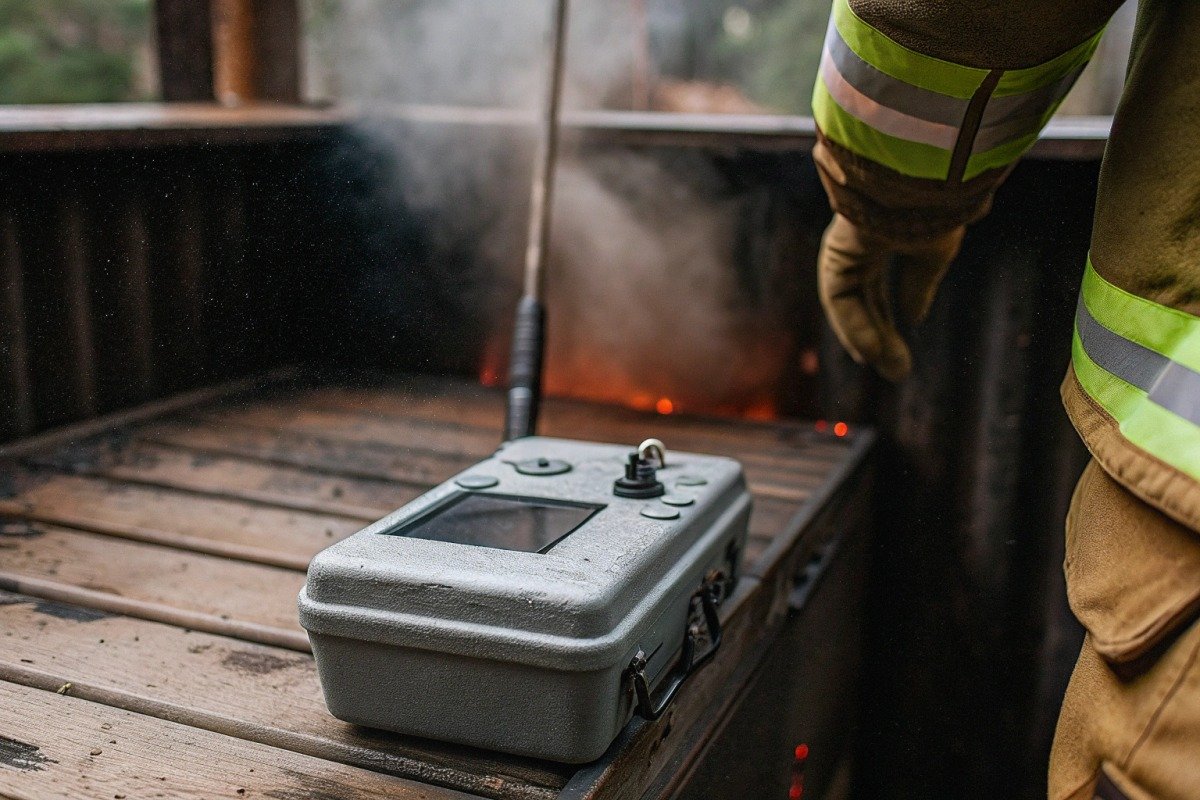
When our engineering team first tested drone controllers in live fire simulations, we learned a hard truth IP54 or IP55 ratings 1. The drone survived. The ground control station failed from smoke and heat exposure.
When buying firefighting drones, prioritize IP54 or IP55 ratings for dust and water resistance, operating temperature ranges from -20°C to 50°C, wind resistance of 12 m/s or higher, and MIL-STD-810G compliance for shock and vibration protection. These ratings ensure your ground control station survives harsh fire scene conditions.
This guide breaks down exactly which protection ratings matter most MIL-STD-810G compliance 2. We will explain how to match ratings to your mission needs, verify supplier claims, and customize specs for government contracts.
How do I determine which IP rating is best for my firefighting drone's ground control station?
Choosing the right IP rating confuses many buyers. We hear this question weekly from fire department procurement managers across the US and Europe A2LA 3. The wrong choice leads to mission failures.
For firefighting operations, select IP54 as the minimum standard and IP55 for optimal protection. IP54 protects against limited dust ingress and splashing water, while IP55 adds resistance to low-pressure water jets from any direction. Both ratings handle smoke, light rain, and ember exposure common at fire scenes.
Understanding IP Rating Numbers
IP stands for Ingress Protection 4. The code has two digits. The first digit shows dust protection. The second digit shows water protection.
Our quality control team tests every unit before shipping ISO 9001 certification 5. Here is what each number means:
| First Digit | Dust Protection Level |
|---|---|
| 4 | Protected against solid objects over 1mm |
| 5 | Dust protected – limited ingress permitted |
| 6 | Dust tight – no ingress permitted |
| Second Digit | Water Protection Level |
|---|---|
| 3 | Protected against spraying water |
| 4 | Protected against splashing water |
| 5 | Protected against low-pressure water jets |
| 6 | Protected against powerful water jets |
Matching IP Ratings to Fire Scenarios
Different fire scenarios demand different protection levels. Structure fires produce heavy smoke but limited rain exposure. Wildfires combine smoke, wind-driven rain, and flying embers.
When we design GCS units for US fire departments, we consider these factors:
Wildfire operations need IP55 minimum. Wind carries embers and ash directly at operators. Rain often accompanies fire weather changes. Our field tests show IP43 controllers fail within 2-3 hours in these conditions.
Structure fire support can work with IP54. Operators typically position farther from direct exposure. However, foam and water spray still reach control positions.
Urban search and rescue benefits from IP55. Building collapse creates concrete dust that clogs lower-rated equipment. Water from fire suppression adds secondary exposure.
Cost vs. Protection Trade-offs
Budget constraints affect every purchase decision. IP55-rated controllers cost 2-3 times more than IP43 units. Is the upgrade worth it?
Our sales data shows a clear pattern. Customers who bought IP43 units for wildfire work returned for replacements within 18 months. Those who invested in IP55 reported 3-4 years of reliable service.
The math favors higher ratings. A $5,000 IP43 controller replaced twice costs $15,000 total. A $12,000 IP55 controller lasts the same period with zero downtime.
Will my ground control station be able to withstand the extreme heat and smoke of a fire scene?
Fire scenes push equipment beyond normal limits. Our test lab simulates these conditions before any product reaches customers. Many controllers that look rugged fail basic heat tests.
A capable firefighting GCS must handle operating temperatures from -20°C to 50°C (-4°F to 122°F), feature internal thermal management systems, resist corrosive smoke particles, and include high-brightness anti-glare displays for visibility through haze. Without these specs, expect system shutdowns during critical operations.

Temperature Range Requirements
Firefighting creates extreme temperature swings. Morning wildfire operations might start at 5°C. By afternoon, radiant heat pushes ambient temperatures past 45°C near the fire line.
Our engineering team learned this lesson during 2024 California wildfire support. Controllers rated for 40°C maximum shut down by 2 PM daily. Crews lost critical aerial surveillance during peak fire activity.
The -20°C lower limit matters too. Night operations in mountain terrain drop temperatures rapidly. Batteries and LCD screens fail below their rated minimums.
Internal Thermal Management
Heat builds inside sealed enclosures. A controller in direct sun can reach internal temperatures 20°C above ambient. This cooks sensitive electronics.
Modern GCS designs use several cooling strategies:
Passive cooling relies on heat sinks and thermal paste. Simple but limited. Works for temperatures up to 35°C ambient.
Active cooling uses internal fans. More effective but creates dust intrusion points. IP ratings drop when fans pull in contaminated air.
Fanless designs combine aluminum chassis with heat pipes. Our premium controllers use this approach. They maintain IP55 while dissipating heat from processor-intensive tasks like real-time video encoding.
Smoke and Corrosion Resistance
Smoke contains more than soot. Fire byproducts include corrosive compounds that attack circuit boards and connectors.
| Smoke Component | Damage Caused | Protection Method |
|---|---|---|
| Hydrogen chloride | Corrodes metal contacts | Sealed connectors, gold plating |
| Sulfur compounds | Degrades rubber seals | Silicone gaskets |
| Carbon particles | Clogs cooling systems | Filtered or fanless designs |
| Water vapor | Short circuits | Conformal coating on PCBs |
When we specify components for firefighting GCS units, we require conformal coating on all circuit boards. This thin polymer layer prevents moisture and particle damage even if seals degrade over time.
Display Visibility in Smoke
Smoke reduces visibility dramatically. Standard screens become unreadable. Operators lose situational awareness at the worst possible time.
Effective fire scene displays need:
- 1000+ nits brightness for daylight and smoke penetration
- Anti-glare coating to reduce reflections
- High contrast ratios for thermal imagery clarity
- Wide viewing angles for team coordination
Our CrystalSky-compatible mounts accommodate high-brightness displays. Fire chiefs consistently report these screens as mission-critical for extended operations.
Can I customize the durability specs of my drone controller to meet my government clients' requirements?
Government contracts demand specific certifications. Off-the-shelf products rarely meet every requirement. Our OEM customers face this challenge constantly.
Yes, reputable manufacturers offer customization for government requirements. Options include upgraded IP ratings to IP65, MIL-STD-810G shock and vibration certification, NDAA-compliant component sourcing, custom operating temperature ranges, and agency-specific communication encryption. Lead times typically run 8-12 weeks for certified modifications.

Common Government Specification Requirements
Different agencies prioritize different features. Our engineering team tracks these patterns across US federal, state, and municipal contracts.
| Agency Type | Priority Specifications | Typical Budget Range |
|---|---|---|
| Federal (USFS, BLM) | NDAA compliance, IP55+, MIL-STD-810G | $15,000-25,000 |
| State Fire Agencies | IP54+, extended temperature range | $8,000-15,000 |
| Municipal Fire Depts | IP54, hot-swap batteries, warranty | $5,000-10,000 |
| International Export | CE marking, local frequency compliance | $10,000-20,000 |
NDAA Compliance Considerations
El National Defense Authorization Act 6 restricts certain component origins. Section 889 specifically affects drone purchases for federal use.
When we build NDAA-compliant units, we source:
- Processors from approved manufacturers
- Communication modules from compliant suppliers
- Cameras and sensors with verified supply chains
- Batteries meeting country-of-origin requirements
This process adds 15-20% to manufacturing costs. However, it opens federal contract opportunities that justify the investment.
MIL-STD-810G Certification Process
Military standard 810G covers environmental testing. Fire departments increasingly request this certification for rugged assurance.
The standard includes 29 test methods. Relevant tests for firefighting GCS include:
Method 501.6 – High Temperature: Operating and storage at elevated temperatures with humidity cycling.
Method 502.6 – Low Temperature: Performance verification at minimum rated temperatures.
Method 514.7 – Vibration: Simulates transport and operational vibration exposure.
Method 516.7 – Shock: Drop tests and handling impacts.
Method 510.6 – Sand and Dust: Eight-hour dust chamber exposure.
Our testing partners conduct these certifications at accredited laboratories. We provide full documentation packages for procurement compliance.
Custom Feature Development
Beyond certifications, we collaborate on functional customizations:
Extended battery systems add capacity for 8+ hour continuous operation. Fire incident commanders need uninterrupted control during shift changes.
Integrated radio systems combine drone control with agency push-to-talk. Single-device operation reduces cognitive load.
Custom mounting solutions fit specific vehicle configurations. We have designed brackets for Type 1 engines through light aircraft.
Software modifications add features like automated perimeter mapping or integration with existing CAD systems.
Lead times vary by complexity. Simple certification upgrades ship in 8 weeks. Full custom development projects require 16-24 weeks from specification approval.
How do I verify that my supplier's protection ratings are backed by real engineering certifications?
Fake certifications flood the industrial drone market. We have seen competitors claim IP67 ratings on products that fail IP43 tests. Procurement managers need verification strategies.
Verify protection ratings by requesting original test reports from accredited laboratories, checking laboratory accreditation through ILAC or A2LA databases, confirming test report serial numbers directly with testing facilities, requiring sample units for independent third-party testing, and reviewing supplier quality management certifications like ISO 9001.

Understanding Legitimate Test Documentation
Real certification reports contain specific elements. Missing items suggest fabricated claims.
Valid IP rating test reports include:
- Accredited laboratory letterhead with registration numbers
- Specific test standards referenced (IEC 60529 7 for IP ratings)
- Serial numbers of tested units
- Test dates and environmental conditions
- Photographs of test setup
- Pass/fail criteria and actual measurements
- Technician signatures and credentials
Our quality team provides complete documentation packages. We encourage customers to verify our claims independently.
Accreditation Database Verification
Testing laboratories need accreditation to issue valid certifications. Two main accreditation bodies cover most markets:
ILAC (International Laboratory Accreditation Cooperation) maintains a global database. Search by laboratory name to confirm accreditation scope.
A2LA (American Association for Laboratory Accreditation) covers US testing facilities. Their directory shows which tests each lab can certify.
When a supplier provides test reports, cross-reference the laboratory against these databases. Contact the lab directly to confirm report authenticity.
Red Flags in Supplier Claims
Experience has taught us which claims warrant skepticism:
| Señal de advertencia | What It Suggests | Verification Step |
|---|---|---|
| IP ratings without test reports | Unverified claims | Request documentation |
| Reports from unknown labs | Potentially fabricated | Check accreditation |
| Ratings exceeding product class | Overclaiming specs | Request sample testing |
| Inconsistent documentation | Quality control issues | Audit supplier facility |
| Reluctance to provide details | Hiding deficiencies | Consider alternative suppliers |
Independent Testing Options
When documentation remains questionable, independent testing provides certainty.
Several US laboratories offer IP and environmental testing:
- Element Materials Technology – Multiple locations, comprehensive testing
- NTS (National Technical Systems) – Defense and aerospace focus
- TUV Rheinland – International recognition
- Intertek – Global network, fast turnaround
Testing costs range from $2,000-5,000 for basic IP verification. Complex MIL-STD testing runs $10,000-25,000. These costs seem high until compared against field failure consequences.
Our policy encourages third-party verification. We provide sample units for customer-directed testing. This transparency builds trust that translates into long-term partnerships.
Quality Management System Indicators
Beyond product testing, supplier quality systems indicate reliability.
ISO 9001 certification demonstrates documented quality processes. Request current certificates and audit reports.
AS9100 certification applies to aerospace suppliers. It indicates higher quality standards than basic ISO 9001.
Supplier audit rights in purchase agreements allow facility inspections. Legitimate manufacturers welcome customer visits.
When we host procurement teams at our Xi'an facility, we open our production lines and testing equipment for inspection. This openness differentiates serious manufacturers from trading companies reselling unverified products.
Conclusión
Ground control station protection ratings directly impact firefighting drone mission success. Prioritize IP55 ratings, wide temperature ranges, and verified certifications. Our team stands ready to help you match specifications to your operational requirements and government contract needs.
Notas al pie
1. Explains the meaning and significance of IP54 and IP55 ratings for equipment protection. ↩︎
2. Details the military standard for environmental engineering considerations and laboratory tests. ↩︎
3. Provides information on the American Association for Laboratory Accreditation and its role in US testing facilities. ↩︎
4. Provides a comprehensive overview of the Ingress Protection (IP) rating system and its standards. ↩︎
5. Replaced HTTP 403 with information on ISO 9001 quality management from BSI, a leading standards organization. ↩︎
6. Replaced HTTP 405 with a general overview of the National Defense Authorization Act from an official U.S. government committee website. ↩︎
7. Details the international standard IEC 60529, which defines the Ingress Protection (IP) codes. ↩︎
8. Provides information on the International Laboratory Accreditation Cooperation and its role in global accreditation. ↩︎

 English
  Spanish
  German
  French
  Dutch
Dutch  Arabic
