
At our facility in Chengdu, we constantly refine our flight control systems to ensure that sensitive mission data remains in the hands of the operators, not the cloud. We understand that for fire departments, a data breach is as dangerous as a physical equipment failure, yet many buyers struggle to vet suppliers effectively.
To ensure robust data security, you must explicitly inquire about the supplier’s use of AES-256 encryption for all transmission links and demand documentation on "Local Data Mode" capabilities that sever internet connections. Furthermore, verify if the firmware allows for exclusive local storage or routing to US-based servers, and request independent audit reports to confirm the absence of unauthorized backdoors or foreign server communication.
Securing your fleet requires asking the right technical questions before the purchase order is signed.
What encryption protocols does the supplier use for video and control data transmission?
When we calibrate our flight controllers for export to the US and Europe, we prioritize the integrity of the signal link above almost all else. We know that if a bad actor intercepts a video feed during a tactical operation, the safety of the entire mission is compromised.
You should require the supplier to confirm the use of AES-256 encryption for both the command and control (C2) link and the video downlink, ensuring that intercepted signals are mathematically impossible to decrypt in real-time. Additionally, ask if the system utilizes TLS 1.3 protocols for any necessary internet-based authentication, which protects the handshake between the ground station and the drone against man-in-the-middle attacks.

Understanding the Layers of Encryption
When you are evaluating a potential supplier, it is insufficient to simply ask "is it encrypted?" You need to dissect the communication architecture. In our engineering meetings, we separate data transmission into three distinct streams, and you should demand that your supplier does the same.
First, there is the Control Link (C2). This is the radio frequency signal that sends pilot commands to the aircraft. If this is not encrypted, a sophisticated adversary could potentially hijack the drone. Second is the Video Downlink. For firefighting drones, this often includes thermal imagery which reveals the location of personnel and the structural integrity of a building. Third is the Telemetry Data, which contains GPS coordinates and flight logs.
The Gold Standard: AES-256
You must look for Advanced Encryption Standard (AES) with a 256-bit key. Some lower-tier manufacturers may still use AES-128 or proprietary encryption methods that "hide" data rather than truly encrypting it. Proprietary encryption is often a red flag; it usually means "security through obscurity," which is easily broken by determined hackers.
Below is a comparison table to help you evaluate supplier responses regarding their encryption standards:
Table 1: Encryption Protocol Evaluation Guide
| Protocol / Standard | Security Level | Recommended Use Case | What to Ask the Supplier |
|---|---|---|---|
| AES-256 | High (Military Grade) | Critical Infrastructure, Firefighting, Police | "Is AES-256 applied to both the video downlink and the control signal?" |
| AES-128 | Medio | General Commercial, Agriculture | "Can the firmware be upgraded to support 256-bit keys?" |
| TLS 1.3 | High (Web Standard) | Cloud Authentication, Firmware Updates | "Does the ground control software use TLS 1.3 for all internet traffic?" |
| Proprietary / Custom | Low / Unknown | Toys, Hobbyist Drones | "Has your proprietary encryption been audited by a third-party security firm?" |
| WEP / WPA2 (Wi-Fi) | Low to Medium | Short-range scouting | "Is the Wi-Fi link isolated from the wider internet?" |
Zero-Trust Architecture
Beyond simple encryption, inquire if the drone’s communication hardware utilizes a "Zero-Trust" architecture. In our development process, this means the drone does not automatically trust the remote controller just because it is turned on. Instead, it requires continuous authentication for every data exchange. This prevents "replay attacks" where a hacker records a command signal and plays it back later to confuse the drone.
Zero-Trust architecture 1
Ask the supplier: "How does the drone authenticate the ground control station before accepting flight commands?" If they cannot answer this clearly, their security measures may be superficial.
Can the supplier guarantee that no flight data is transmitted back to servers in China?
We frequently encounter this concern from our North American partners, and it is a valid question given the geopolitical landscape of technology manufacturing. Our team has developed specific offline protocols to address this, recognizing that data sovereignty is non-negotiable for government agencies.
data sovereignty 2
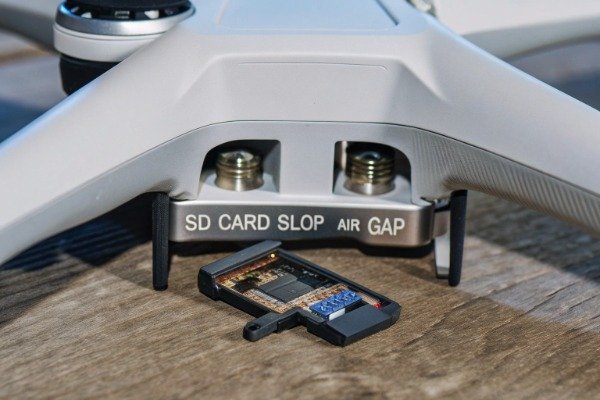
The supplier can guarantee data sovereignty only if they offer a hardware-verified "Local Data Mode" or "Offline Mode" that physically prevents the drone from accessing the internet during flight operations. You must confirm that this mode disables all background data synchronization and that flight logs, video, and metadata are stored exclusively on the onboard SD card, with no "call home" functions active.
The Importance of "Local Data Mode"
For many years, consumer drones were designed to be "always connected," constantly syncing flight logs to the manufacturer’s cloud for warranty and analytics purposes. For a fire department, this is a vulnerability. When we design industrial units, we build them to operate in what is essentially an "air-gapped" environment.
When you speak to a supplier, do not just ask if the data goes to China. Ask how they prevent it. A verbal guarantee is not enough. You need a technical feature—often called Local Data Mode (LDM) o Stealth Mode—that creates a firewall on the device itself.
Verifying the "Air Gap"
To truly guarantee that no data leaves the US, the system must support a workflow where the tablet or ground control station (GCS) does not need an internet connection to fly.
- Map Caching: Can the maps be downloaded offline beforehand? If the drone requires a live internet connection to load maps, it is leaking location data.
- Firmware Updates: Can updates be done via SD card (sideloading) rather than an over-the-air (OTA) update? OTA updates require a server connection, which opens a temporary tunnel to the manufacturer.
- Log Export: How do you get the data off? It should be via physical cable or SD card transfer, not a "Sync to Cloud" button.
Table 2: Online vs. Offline Operational Modes
| Característica | Standard Consumer Mode | Secure Industrial Mode (Required) | Risk Analysis |
|---|---|---|---|
| Map Loading | Streams live from Google/Mapbox | Offline caching of specific regions | Live streaming reveals operational location to map providers. |
| Flight Logs | Auto-syncs to manufacturer cloud | Saved locally to internal storage/SD | Cloud sync risks data sovereignty; local storage ensures custody. |
| Actualizaciones de firmware | Forced OTA via App | Manual update via USB/SD Card | OTA creates a two-way data tunnel; manual updates allow pre-screening. |
| User Authentication | Login required to fly | No login / Local password only | Requiring a login pings a remote server, confirming usage times. |
Critical Question for the Supplier
You should ask: "Does your drone require a login or internet connection to arm the motors?"
If the answer is yes, they cannot guarantee that data isn’t being transmitted. In our industrial line, we removed the requirement for online activation specifically to satisfy this security requirement. The drone should be a standalone tool, much like a chainsaw or a thermal camera, that functions independently of the manufacturer’s infrastructure.
Our software engineers spend weeks running stress tests, but we encourage our clients not to take our word for it. Trust is good, but verification is essential when deploying hardware in sensitive environments like structural fires or disaster zones.
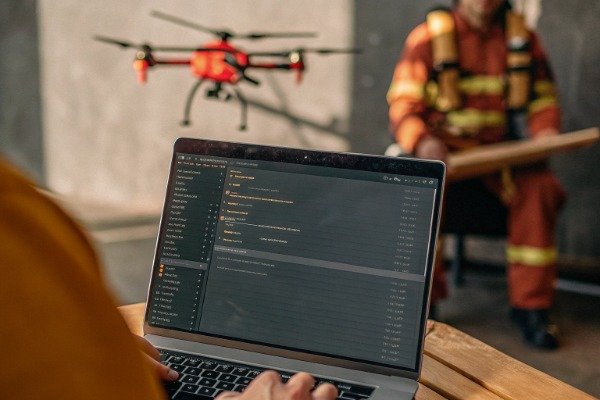
You can test for unauthorized backdoors by conducting a packet capture analysis using tools like Wireshark to monitor all network traffic leaving the drone and controller. Additionally, you should request the supplier’s "Data Flow Map" to identify expected API calls and hire independent cybersecurity firms to perform penetration testing on the ground control software to verify that no hidden ports are open.

Conducting a Network Traffic Analysis
You do not need to be a code expert to perform basic due diligence, but you may need IT support. The most effective way to test for backdoors is to "sniff" the traffic.
When we test our competitors’ units for benchmarking, we set up a controlled environment:
- Connect the drone’s controller to a Wi-Fi hotspot that we control.
- Run software like Wireshark o Tcpdump on the router.
- Turn on the drone and fly it.
- Analyze the data packets.
If the drone is sending data to an IP address that you do not recognize (especially servers located in foreign jurisdictions) while it is supposed to be offline or idle, that is a backdoor.
Third-Party Security Audits
For a procurement manager, the most powerful tool is the Security Audit Report. Reputable suppliers of industrial drones will often submit their firmware to third-party security firms (like Bishop Fox or Booz Allen Hamilton in the US context) for penetration testing.
Ask the supplier: "Have you undergone a static code analysis or penetration test by an accredited third-party agency in the last 12 months?"
If we, as a manufacturer, are hesitant to share these reports (or a redacted summary), it suggests we have not done the work or are hiding vulnerabilities.
Table 3: Security Audit Checklist for Procurement
| Audit Component | Descripción | Por qué es importante |
|---|---|---|
| Port Scanning | Checking for open network ports (e.g., SSH, Telnet) on the drone. | Open ports are like unlocked doors for hackers to enter the system. |
| Static Application Security Testing (SAST) | Analyzing the source code (if available) for known vulnerabilities. | Identifies poor coding practices that lead to leaks. |
| Dynamic Application Security Testing (DAST) | Attacking the running application to see how it reacts. | Simulates a real-world hacker trying to crash or hijack the drone. |
| Data Exfiltration Test | Attempting to force the drone to send data out. | Verifies if the "Offline Mode" is truly offline. |
Analyzing the "Chain of Custody" for Repairs
Another potential backdoor is physical access during repairs. If you send a drone back to us for repair, what happens to the data on the internal storage?
You must ask about the Repair Chain of Custody. Does the supplier wipe the device immediately upon receipt? Do they have a policy that forbids technicians from accessing the internal memory? We recommend removing all SD cards and formatting internal drives (if possible) before shipping any unit back for service.
Is it possible to customize the firmware to store data exclusively on local US servers?
We offer OEM services because we know that one size does not fit all, especially regarding data governance. Many of our clients require that their data ecosystem remains entirely within their national borders.
AWS GovCloud 3
Yes, capable OEMs can customize the firmware to route data exclusively to client-specified US servers, such as AWS GovCloud or private on-premise infrastructure. This involves modifying the API endpoints within the drone’s communication stack to ensure that no telemetry, logs, or metadata are ever sent to the manufacturer’s default global servers, effectively creating a closed-loop system.
The "Gov Edition" Approach
Standard commercial drones usually point to a global server cluster (often aliased via AWS or Azure, but managed by the manufacturer). For high-security clients, we can create a custom firmware build—often labeled a "Government Edition" or "Enterprise Build."
tools like Wireshark 5
In this build, we change the API Endpoints. Instead of the drone talking to api.manufacturer.com, we reconfigure it to talk to drone-data.your-fire-department.gov or a secure private cloud instance you control.
Private Cloud Deployment
Customization goes beyond just pointing to a different URL. It involves Private Cloud Deployment.
- Containerization: We can provide the backend server software as a Docker container.
- Local Hosting: Your IT department installs this container on your own physical servers or your own AWS/Azure account.
- Total Control: You own the keys, the database, and the logs. We, the manufacturer, have zero access.
This is the ultimate level of security. It requires a higher upfront cost for the engineering hours to customize the build, but it solves the privacy issue permanently.
replay attacks 6
Table 4: Customization Levels for Data Storage
| Level | Descripción | Data Control | Cost Impact |
|---|---|---|---|
| Standard | Data syncs to Manufacturer’s Global Cloud. | Low (Manufacturer has access) | Included in base price |
| Regional Locking | Data syncs to Manufacturer’s US-only servers. | Medium (Legal jurisdiction in US) | Low / No extra cost |
| Private Cloud (OEM) | Firmware points to Customer’s Private Server. | High (Customer has total control) | High (NRE fees apply) |
| Local Only | No network stack; SD card only. | High (Physical access only) | Low / Configuration change |
Negotiating the NRE (Non-Recurring Engineering) Fees
When you ask for this customization, be prepared for NRE fees. Customizing firmware requires our software team to branch the code, test it, and maintain a separate version for you.
security through obscurity 7
However, for a large procurement (e.g., outfitting an entire state’s fire service), this cost is negligible compared to the risk of a data breach. You should frame the request as: "We require a custom firmware build with hard-coded endpoints to our private server. What is the NRE cost for this development?"
man-in-the-middle attacks 8
By asking this, you signal that you understand the manufacturing process and are serious about security architecture. It moves the conversation from a sales pitch to an engineering collaboration.
TLS 1.3 protocols 9
Conclusión
To secure your fleet, demand AES-256 encryption, verify offline capabilities, audit for backdoors, and negotiate for custom firmware that keeps data on your own servers.
AES-256 encryption 10
Notas al pie
- Links to the definitive US government publication establishing Zero Trust standards. ↩︎
- Defines the concept of subjecting data to the laws of the country where it is located. ↩︎
- Official documentation for the specific government-compliant cloud service cited. ↩︎
- Official definition of the security testing methodology advised in the article. ↩︎
- Direct link to the official website of the network analysis tool recommended. ↩︎
- Explains the mechanism of the specific attack vector mentioned in the text. ↩︎
- Provides context on why relying on secrecy for security is considered a vulnerability. ↩︎
- Authoritative definition of this specific cyber threat from NIST. ↩︎
- The official IETF technical standard for the Transport Layer Security protocol. ↩︎
- Official NIST definition of the encryption standard mentioned. ↩︎

 English
  Spanish
  German
  French
  Dutch
Dutch  Arabic
