 Mercancías peligrosas de clase 9 1=”top-image-square”>
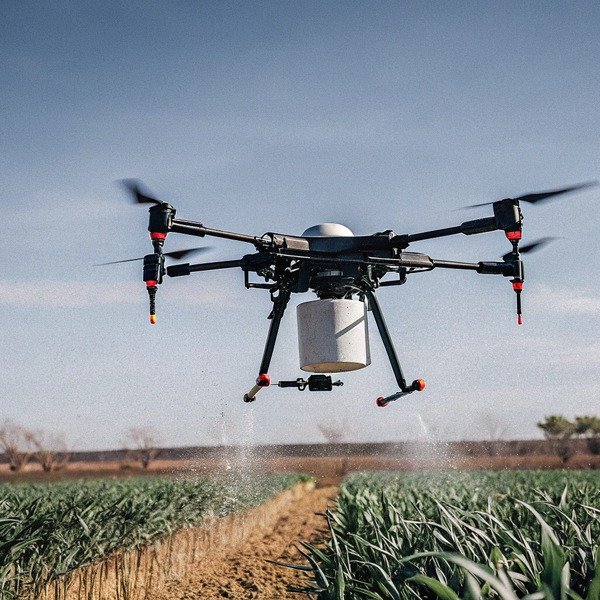
Expanding your inventory with the latest agricultural drones is exciting, but the rapid pace of technology can make sourcing a headache. You might worry about investing in models that become obsolete next year or dealing with suppliers who vanish when technical issues arise. When we develop new prototypes in our Xi'an facility, we see how quickly specs change, and we know that asking the right questions upfront is the only way to protect your investment.
To successfully source the latest models, you must structure your inquiries around technical longevity, specifically asking for 2026 roadmaps, payload scalability, and open SDK availability. Simultaneously, verify the supplier's ability to provide localized after-sales support and handle complex DDP logistics to ensure a seamless expansion of your product line.
Let’s break down exactly what you need to ask to secure the best equipment for your customers.
What specific technical parameters should I prioritize when requesting data sheets for new agricultural drones?
When our engineering team in Chengdu tests a new flight platform, we look far beyond the basic marketing numbers. You need to know if the drone can actually handle the rigorous demands of a North American farm season, or if it will fail under stress. Focusing on the wrong specs can lead to carrying inventory that looks good on paper but disappoints your customers in the field.
Prioritize inquiring about the flow rate reliability under maximum pressure, the specific battery cycle life at full payload, and the type of obstacle avoidance radar used. Crucially, ask for the real-world flight endurance with a full tank, not just the hover time without a payload.
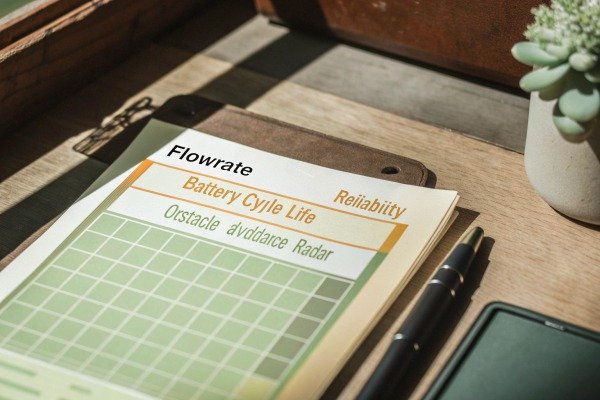
When you dig into the technical data sheets, you need to separate marketing fluff from operational reality. technical data sheets 2 The agricultural drone market for 2025 and 2026 is shifting towards "application machines" rather than just flying cameras. This means the mechanical stress on the system is higher than ever. mechanical stress 3
Payload and Flow Rate Systems
The first parameter to scrutinize is the spraying system. Many manufacturers will list a maximum flow rate, but they rarely mention the pressure drop that occurs at that rate. You should ask if the drone uses Centrifugal Nozzles o Pressure Nozzles. Centrifugal nozzles are becoming the standard for 2026 models because they handle thicker liquids and powders better, reducing clogging. However, they require different maintenance. Ask for the droplet size adjustability range (usually measured in microns). A competitive model should offer adjustable droplet sizes from 60μm to 400μm directly from the controller.
Battery Efficiency and Thermal Management
Batteries are the single most expensive consumable for your customers. A simple "20-minute flight time" spec is useless. You need to know the flight time at Max Take-off Weight (MTOW). Furthermore, inquire about the thermal management of the battery. In our testing, we found that many generic batteries overheat before they run out of charge, forcing the pilot to wait for them to cool down. Ask the supplier: "What is the continuous discharge rate (C-rate) and does the charger support active cooling?"
Sensing and Autonomy
Modern buyers expect full autonomy. The drone must see wires and branches. Do not settle for simple infrared sensors. You want to see Phased Array Radar o Binocular Vision specs. Phased array radar is superior for dusty, agricultural environments where optical cameras might get obscured.
Key Specification Checklist for 2026 Models
Use this table to compare supplier responses against industry standards 4 industry standards.
| Característica | Standard Requirement | Advanced/Pro Requirement | Por qué es importante |
|---|---|---|---|
| Spraying System | Pressure Nozzles | Dual Atomized Centrifugal | Prevents clogging; better coverage. |
| Radar | Fixed Altitude Radar | 360° Phased Array Radar | Safety around trees and power lines. |
| Battery Life | 300 Cycles | 1,000+ Cycles (Warranty) | Reduces long-term operating costs. |
| Ingress Protection | IP65 | IP67 (Core Modules) | Washability after chemical exposure. |
| FPV Camera | 720p Fixed | 12MP Gimbal + Night Vision | Allows night ops and clearer scouting. |
How can I determine if the supplier supports OEM branding and custom software development for my inventory?
We often receive requests from distributors who want to build their own brand identity rather than just reselling a factory name. It is frustrating to find a great hardware platform only to be told you cannot change the logo or the flight app. To avoid being locked into a rigid ecosystem, you must clarify the depth of customization available before you place a sample order.
You should explicitly ask if the supplier offers an open API or SDK for the flight controller to integrate with third-party farm management software. Additionally, confirm the Minimum Order Quantities (MOQ) required for physical white-labeling, such as custom fuselage colors, branded remote controllers, and user manual localization.
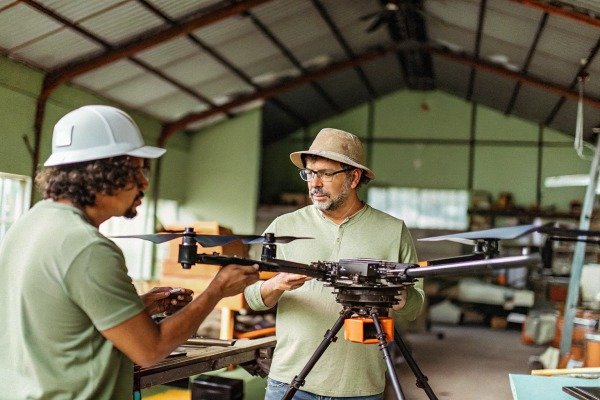
Understanding the difference between simple "logo slapping" and true OEM Original Equipment Manufacturer 5 (Original Equipment Manufacturer) partnership is vital for your long-term strategy. True OEM support allows you to differentiate your product in a crowded market.
Hardware Customization Levels
Most factories can print your logo on the drone arm for a small fee. However, deep customization goes further. You need to ask about mold colors. Can the water tank be produced in your brand's specific color? This usually requires a higher MOQ because we have to change the raw plastic pellets in the injection molding machines. Also, ask about the Remote Controller (RC). Can the startup screen display your logo? This is a software-hardware bridge that adds immense professional value.
Software and SDK Access
This is where the industry is heading. Your customers likely use software like DroneDeploy, Pix4D, or specialized farm management tools 6 farm management tools. Pix4D 7 DroneDeploy 8 If the drone you source is a "closed box," it cannot share data with these platforms.
- Mobile SDK (MSDK): Ask if they provide this. It allows you to develop a custom app to control the drone.
- Onboard SDK (OSDK): This allows you to add custom hardware, like a specialized multispectral camera or a granular spreader, that talks to the drone's computer.
Intellectual Property Protection
When you request these changes, you must ensure your brand is protected. Ask the supplier about their policy on exclusivity. If you co-develop a specific software feature or a custom tank design, will they sell that same design to your competitor next month? You need a supplier willing to sign a Non-Disclosure Agreement (NDA) and potentially a Non-Compete agreement for specific custom features.
Software Integration Capabilities
Here is what you should look for when discussing software with a Chinese manufacturer.
| Level | Descripción | What to Ask For | Suitable For |
|---|---|---|---|
| Basic | Logo on App Splash Screen | "Can I change the boot image on the RC?" | Retailers / Resellers |
| Intermediate | Custom UI / Language | "Do you support English/Spanish UI customization?" | Regional Distributors |
| Advanced | API / Cloud Integration | "Do you have MQTT protocol documentation?" | Enterprise Solutions |
| Expert | Custom Flight Control | "Is the Flight Controller unlocked for development?" | R&D Partners |
What questions should I ask to ensure the manufacturer provides reliable after-sales service and spare parts?
In our experience exporting to global partners, the sale is just the beginning of the relationship, but many buyers overlook this phase. Nothing destroys a distributor's reputation faster than having a customer's drone grounded for three weeks during peak spraying season because a $5 propeller is out of stock. You need to validate that the support network is as robust as the hardware.
Verify if the manufacturer provides a comprehensive Bill of Materials (BOM) for wear-and-tear parts and inquire about their standard shipping times for replacements. Crucially, ask if they offer remote video diagnostics or local repair training certification for your technical team to handle immediate fixes.

After-sales service for agricultural drones is distinct from consumer electronics. drones agrícolas 9 A broken camera drone is an inconvenience; a broken sprayer drone during a pest outbreak is a financial disaster for the farmer. Your inquiry strategy must reflect this urgency.
Defining the "Critical Spares" List
Do not just ask "do you have parts?" Ask for a Recommended Spare Parts List (RSPL) for a fleet of 10 drones. A competent manufacturer will immediately provide a list containing:
- Propellers and CW/CCW Motors.
- Landing gear struts (these break often in hard landings).
- Spray nozzles and pump diagrams.
- ESC (Electronic Speed Controller) modules.
If the supplier hesitates or says "just contact us when you need it," that is a red flag. We always advise our partners to stock these parts locally.
Technical Support Channels
Time zones are a major barrier. If you are in the US and the engineer is in China, a 12-hour delay is standard. You need to ask:
- "Do you have an English-speaking support team?"
- "Is there an online portal for ticket tracking?"
- "Do you provide video tutorials for common repairs?"
Many advanced manufacturers now use WhatsApp or WeChat groups for VIP distributors to provide real-time answers.
Warranty Terms and Conditions
Warranty contracts can be tricky. Agricultural drones work in harsh environments with water, pesticides, and dust. Many standard warranties exclude "liquid damage," which is ironic for a sprayer drone. You must clarify:
- Corrosion coverage: Is the warranty void if pesticide residue is found inside the shell? (Good drones are sealed against this).
- Crash policy: Do they offer flight log analysis to determine if a crash was pilot error or firmware failure?
- Turnaround Time (TAT): What is the guaranteed time to repair if you ship a unit back to the factory?
Service Level Agreement (SLA) Targets
When negotiating, try to establish these baselines.
| Service Metric | Acceptable Standard | Gold Standard |
|---|---|---|
| Tiempo de respuesta | 24 Hours | < 4 Hours (via Chat) |
| Parts Shipping | 5-7 Business Days | 2-3 Days (Local Warehouse) |
| Capacitación | PDF Manuals | Video Library + Live Zoom Training |
| Garantía | 12 Months (Main parts) | 12 Months + Free Log Analysis |
How do I verify that the factory has experience with export certifications and door-to-door shipping?
We have seen too many drones get stuck in US Customs because the paperwork was incomplete or the battery labels were wrong. It is stressful and costly. To ensure your shipment arrives at your warehouse without surprise fees or confiscation, you must audit the supplier's logistics capability before the first wire transfer.
Request proof of previous successful deliveries to your region, such as redacted Bills of Lading, and confirm their ability to ship under DDP (Delivered Duty Paid) terms. You must also verify they hold valid UN38.3 certifications for battery transport and FCC authorization to ensure legal entry into the US market.

Shipping industrial drones is not like shipping T-shirts. Mercancías peligrosas de clase 9 10 They contain high-capacity lithium batteries (Class 9 Dangerous Goods) and sophisticated radio transmission equipment. If the factory lacks experience, your investment could be seized.
The Importance of Incoterms
When inquiring about price, always clarify the Incoterms.
- EXW (Ex Works): You pay for everything from the factory door. High risk for you.
- FOB (Free on Board): They handle Chinese customs; you handle US customs and shipping.
- DDP (Delivered Duty Paid): This is the gold standard for easy importing. The supplier takes all the risk and pays all duties until the product arrives at your door. We strongly recommend DDP for your first few orders until you establish your own freight forwarder.
Essential Certifications
You cannot import without the right paper trail. Ask for these specific documents:
- FCC Certification: Required for the US. The radio controller and the drone must comply.
- UN38.3 Test Report: This is non-negotiable for air or sea freight of lithium batteries. Without it, the airline will reject the cargo.
- MSDS (Material Safety Data Sheet): Required for the batteries.
- Phytosanitary Certificate: If the packaging involves solid wood pallets, this prevents customs rejection due to pest concerns.
Validating Experience
Don't just take their word for it. Ask: "Can you provide a tracking number of a recent shipment to the US?" (They can hide the client details). If they have never shipped to the US before, you become the guinea pig for their learning curve.
Export Document Checklist
Ensure your supplier can provide every item on this list before shipping.
| Nombre del documento | Objetivo | Criticidad |
|---|---|---|
| Factura comercial | Determines duties and taxes. | Alto |
| Lista de empaque | Details weight, dimensions, and contents. | Alto |
| Air Waybill / Bill of Lading | Proof of shipment and title transfer. | Alto |
| UN38.3 Summary | Proof that batteries are safe to transport. | Extreme |
| Autorización de equipos otorgada por la FCC | Proof of radio frequency compliance. | Extreme |
| Certificado de origen | May reduce duties depending on trade agreements. | Medio |
Conclusión
Sourcing agricultural drones for 2025 and beyond requires a shift from buying simple hardware to establishing a strategic partnership. By rigorously inquiring about technical resilience, demanding open software ecosystems, verifying support infrastructure, and auditing logistics experience, you protect your business from risk. At our factory, we respect the buyers who ask these tough questions because it shows they are ready for long-term success.
Notas al pie
1. IATA regulations regarding the air transport of Class 9 lithium batteries. ↩︎
2. ISO standard for technical product documentation and data sheet requirements. ↩︎
3. IEEE research publication regarding mechanical stress and reliability in unmanned aerial vehicle systems. ↩︎
4. ISO standard defining operational procedures and safety requirements for unmanned aircraft systems. ↩︎
5. Definition and business context of Original Equipment Manufacturer (OEM) partnerships. ↩︎
6. Leading industry platform for agricultural drone data analysis and farm management. ↩︎
7. Official site for Pix4D, providing photogrammetry solutions for precision agriculture and crop monitoring. ↩︎
8. Official site for DroneDeploy, a leading software platform for agricultural drone mapping and analysis. ↩︎
9. FAO overview of the role and benefits of drones in modern agriculture. ↩︎
10. IATA standards for the safe air transport of lithium batteries as dangerous goods. ↩︎

 English
  Spanish
  German
  French
  Dutch
Dutch  Arabic
