
We often see clients struggle when their expensive equipment loses connection near high-voltage lines or amidst the chaotic radio noise of a disaster zone. At our production facility, we know that reliable performance is not just about battery life; it is about invisible signal resilience. If you do not ask the right questions about electromagnetic interference (EMI) now, you risk operational failure when it matters most. electromagnetic interference 1
You should specifically request independent laboratory reports verifying compliance with MIL-STD-461 or IEC standards for electromagnetic compatibility. Ask for raw data logs showing signal stability under high-amplitude interference (kV/m) and verify the use of frequency Frequency Hopping Spread Spectrum 2-hopping technologies to ensure the drone maintains control in noisy environments.
To help you secure the safest equipment, here are the exact technical inquiries you must make before signing a purchase order.
What international EMI compliance standards should I verify with the manufacturer?
In our experience exporting to the US and Europe, navigating regulatory paperwork is as critical as the hardware itself. navigating regulatory paperwork 3 We constantly work with certification bodies to prove our flight controllers can survive harsh electronic environments, and you should be skeptical of any supplier who cannot produce these specific documents.
Verify that the manufacturer meets MIL-STD-461 regarding susceptibility to radiated interference or equivalent IEC 61000 industrial standards. These certifications ensure the drone’s shielding and electronics can withstand specific electromagnetic field strengths without malfunction, protecting your investment during critical firefighting operations.
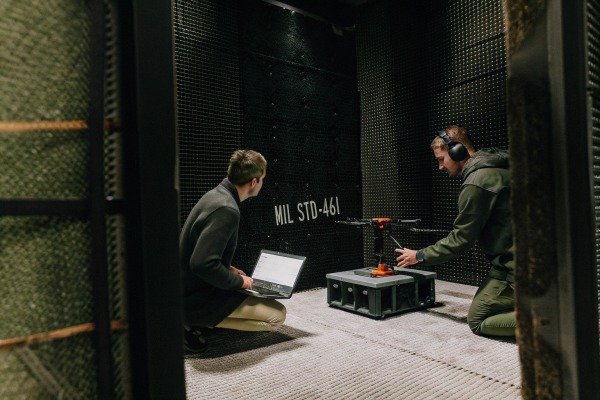
When you evaluate a supplier, the first step is to cut through the marketing language and look for hard certification. Many commercial drones claim “anti-interference” capabilities, but without a referenced standard, this is often just a marketing term. In the industrial sector, specifically for firefighting where equipment works near power grids and heavy machinery, specific standards separate professional gear from hobbyist toys.
You need to ask for the Declaration of Conformity (DoC) and the full test report. Do not settle for a summary page. In these reports, look for the specific test methods used. For high-end industrial drones, we often reference military standards because they are more rigorous than standard consumer FCC or CE requirements. reference military standards 4 The gold standard is MIL-STD-461, specifically the RS103 test, which measures radiated susceptibility. This test proves that the drone does not crash when exposed to strong external radio waves.
Key Standards to Request
Different standards apply to different parts of the drone. It is important to know which standard applies to the shielding and which applies to the emission of signals.
| Standard Name | Focus Area | Por qué lo necesita |
|---|---|---|
| MIL-STD-461 (RS103) | Radiated Susceptibility | Ensures the drone flies correctly even when blasted by external radar or radio waves. |
| IEC 61000-4-3 | EMS Immunity | The industrial equivalent to military specs; standard for European markets. |
| FCC Parte 15 | Radio Frequency Emission | Ensures the drone does not illegally interfere with other devices (legal requirement). |
| ISO 7637 | Electrical Transients | Important for hybrid gas-electric drones to ensure engine sparks do not kill the flight computer. |
Differentiating "Compliant" from "Certified"
Be careful with the wording suppliers use. “Compliant” might mean they designed it to meet the standard but never paid a third-party lab to prove it. “Certified” means an independent lab verified the performance. For your procurement needs, always insist on third-party lab reports. We have seen instances where internal factory tests passed, but independent labs found leaks in the shielding. A certified report offers you liability protection and peace of mind.
Furthermore, check if the standard covers the entire system or just individual components. A drone might use a GPS module that is EMI certified, but if the wiring harness connecting it to the flight controller is unshielded, the system will still fail. You need system-level certification.
How can I confirm signal stability in high-interference urban fire environments?
Urban fires are chaotic, with radio waves bouncing off skyscrapers and power grids creating a “canyon” of noise. When we conduct field tests in dense city centers, we simulate these exact signal-crowded scenarios to ensure our SkyRover units maintain a solid link, and you should demand proof of similar real-world validation.
Ask for field test data showing successful operation near high-voltage power lines and cellular towers, specifically looking for signal-to-noise ratio (SNR) logs. Confirm the drone utilizes dual-band automatic switching (2.4GHz/5.8GHz) to autonomously navigate around frequency congestion common in dense urban areas.

Laboratory tests are essential, but the real world is unpredictable. In an urban fire scenario, a drone is bombarded with Wi-Fi signals from apartments, 4G/5G towers, and the massive electromagnetic field generated by high-voltage transmission lines. To confirm stability, you must ask how the drone handles the “Urban Canyon” effect and magnetic interference.
The primary metric you should ask for is the Signal-to-Noise Ratio (SNR) data from urban flight logs. Signal-to-Noise Ratio 5 A high absolute signal strength means nothing if the background noise is equally loud. You want to see a graph where the control link remains distinctively higher than the noise floor, even in congested environments. If a manufacturer cannot provide flight logs from an urban test zone, they likely have not optimized their system for your use case.
The Critical Role of Dual Sensors
Interference does not just break the video link; it confuses the drone’s sense of direction. High-voltage lines generate magnetic fields that can spin a compass wild. magnetic fields 6 When we design for these environments, we use redundancy to solve the problem.
You must confirm the drone possesses:
1. **Dual IMUs (Inertial Measurement Units):** If one sensor starts drifting due to vibration or interference, the other takes over.
2. **Dual Compasses with Isolation:** The compass should be mounted far from the drone’s own motors and high-current wiring. Ask if the compass has “magnetic shielding” or if the software includes “magnetic declination algorithms” that filter out transient interference.
Understanding Video Latency in Noise
A stable signal is not just about not crashing; it is about seeing the fire. In high-interference zones, digital video feeds often lag or freeze. digital video feeds 7 This is dangerous for a pilot trying to break a window or drop a fire retardant bomb.
| Interference Source | Effect on Drone | Required Countermeasure |
|---|---|---|
| High-Voltage Lines | Magnetometer errors, GPS scrambling | RTK GPS module, Dual Compasses, Faraday Cage shielding. |
| Wi-Fi/Cell Towers | Video lag, Control link loss | 2.4/5.8GHz Auto-switching, FHSS technology. |
| Reflective Buildings | Multipath interference (Ghost signals) | OFDM (Orthogonal Frequency-Division Multiplexing) transmission. |
| Fire Smoke (Ionized) | Signal attenuation | Lower frequency bands (900MHz if legal) penetrate smoke better. |
When asking about video transmission, ask for the “latency under load.” Many specs list 150ms latency, but that is in an open field. In an interference-heavy city, that can spike to 2 seconds. Ask for video tests performed near active substations or cell towers to get the real number.
What specific details should I look for in the factory's anti-jamming test reports?
Marketing brochures often hide the truth behind glossy photos and bold claims. In our testing lab, we analyze raw failure data to understand exactly when and how a system breaks, and you should demand to see these specific “breaking points” before placing a bulk order.
Scrutinize the report for specific field strength limits (measured in V/m) where component failure occurred, rather than just pass/fail summaries. Look for data on GPS recovery times after jamming events and ensure the tests covered the specific frequency bands used by the drone’s control and video links.

A test report is only as good as the parameters set for the test. If a manufacturer tests their drone at a very low interference level, it will pass easily, but it will fail you in the field. You need to know how to read the fine print of an EMC (Electromagnetic Compatibility) report. Electromagnetic Compatibility 8
First, look for the **Field Strength**. This is usually measured in Volts per meter (V/m). A standard commercial test might stop at 3 V/m or 10 V/m. However, close to a fire truck’s powerful radio or a substation, fields can exceed 50 V/m. We recommend asking if they have tested at levels closer to military specs (like 50 V/m or higher) for critical components. If the report says “Pass” at 3 V/m but has no data for higher intensities, that is a red flag.
In-Band vs. Out-of-Band Interference
Interference comes in two flavors. “In-band” is noise on the same frequency the drone uses (like a jammer). “Out-of-band” is noise from nearby equipment (like a TV tower) that overloads the electronics.
You need to check the report for:
1. **In-band Rejection:** How well does the receiver filter out noise that is very close to its operating frequency?
2. **Blocking Dynamic Range:** How strong does a nearby signal have to be to make the drone “deaf” to your controller?
GPS Recovery Logic
The report should also detail what happens *after* interference stops. This is the “Recovery Time.” If the GPS is jammed, does it come back online in 1 second or 30 seconds? In a fire, 30 seconds is an eternity. Look for a test metric called “Time to First Fix (TTFF) after Jamming.”
Evaluating Test Parameters
Use this checklist when reviewing the physical report document. If these columns are missing or vague, request the raw data.
| Report Parameter | Acceptable Range/Description | Red Flag / Warning Sign |
|---|---|---|
| Frequency Range | 100 kHz to 18 GHz (covers all radios) | Range stops at 1 GHz (misses 2.4/5.8GHz bands). |
| Field Strength | At least 10 V/m; preferably 50 V/m | Only tested at 3 V/m (Home appliance standard). |
| Modulation Type | AM, FM, and Pulse modulation | Only tested with "Continuous Wave" (unrealistic). |
| EUT Mode | "In Flight" or "Active" | Tested in "Standby" or "Off" mode. |
| Antenna Orientation | Horizontal & Vertical polarization | Only tested in one orientation. |
By asking for these specific details, you signal to the supplier that you are an expert buyer. They will be less likely to send you subpar units and more likely to offer their “Pro” or “Enterprise” configurations that actually meet these rigorous specs.
Which communication link technologies should I request to ensure resistance to electromagnetic interference?
A drone is useless if the pilot loses the link, turning a rescue tool into a falling hazard. We prioritize integrating the most robust transmission modules available, often customizing firmware to prioritize control signals over video when bandwidth drops, ensuring you stay in command.
Request communication systems that employ Frequency Hopping Spread Spectrum (FHSS) to rapidly switch channels when interference is detected. Additionally, prioritize links that support 4G/5G cellular bonding as a backup to standard radio frequencies, ensuring continuous command capabilities even if the primary RF link is saturated.
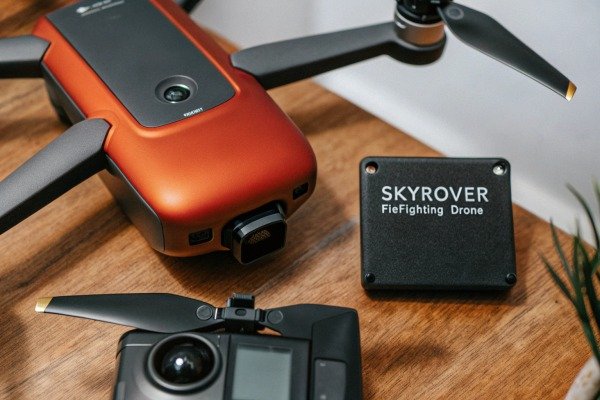
The hardware inside the drone is your final line of defense. When inquiring about the transmission system (often called the datalink), you need to move beyond simple range numbers like “10km range.” Range is calculated in empty space; interference resistance is what matters in a city.
The technology you must demand is **Frequency Hopping Spread Spectrum (FHSS)**. In simple terms, FHSS breaks the data into small packets and hops between dozens or hundreds of different frequencies every second. If one frequency is jammed by a nearby radio, the system instantly jumps to a clear one. Ask the manufacturer: “How many channels does your FHSS algorithm use, and what is the hop rate?” A higher hop rate generally means better resistance to intentional or accidental jamming.
Backup Link Redundancy
For high-end firefighting missions, reliance on a single radio link is risky. We are seeing a shift toward “bonded” or “hybrid” communication systems. This involves using the standard remote controller frequency (2.4GHz) alongside a cellular module (4G/5G LTE).
If the radio frequency is totally overwhelmed by EMI, the drone switches to the cellular network to maintain control. Ask the supplier if their flight controller supports “4G Dongle integration” or “Cloud-based command backup.” This feature is a lifesaver in urban environments where cell coverage is good but radio noise is high.
Encrypted Digital Links
Finally, ensure the link is digital and encrypted (AES-256). digital and encrypted 9 Analog signals are easily distorted by EMI, resulting in “static” or “snow” on the video feed. Digital links (like OcuSync, Lightbridge, or proprietary industrial links) use error-correction coding. This means the system can mathematically reconstruct a damaged signal.
Ask specifically: “Does the video transmission use Forward Error Correction (FEC)? Forward Error Correction 10” This technology allows the receiver to fix bit-errors caused by interference without asking the drone to re-send the data, which reduces latency and keeps the video smooth even in dirty RF environments.
Conclusión
Purchasing firefighting drones requires looking beyond flight time and payload capacity; the invisible threat of electromagnetic interference can ground your fleet when you need it most. By demanding compliance with MIL-STD-461, analyzing raw SNR logs from urban field tests, and insisting on FHSS and cellular redundancy, you ensure your equipment is battle-ready. At SkyRover, we believe in transparency, so always ask for the raw data—your safety depends on it.
Notas al pie
1. General background on the physical phenomenon of electromagnetic interference. ↩︎
2. Example of professional-grade transmission technology using FHSS in industrial drone systems. ↩︎
3. Official FCC guidance on equipment authorization and radio frequency emission regulations. ↩︎
4. Educational resource explaining the military standards used to evaluate electromagnetic interference in electronic systems. ↩︎
5. Academic explanation of SNR and its impact on communication reliability in noisy environments. ↩︎
6. General background on the properties and effects of magnetic fields on electronic equipment. ↩︎
7. Technical resource explaining latency and performance issues in digital video transmission. ↩︎
8. Official page for the IEC 61000 series regarding international electromagnetic compatibility standards. ↩︎
9. Official NIST documentation on the Advanced Encryption Standard used for securing digital links. ↩︎
10. Research publication detailing how Forward Error Correction improves data reliability in wireless communication. ↩︎

 English
  Spanish
  German
  French
  Dutch
Dutch  Arabic
