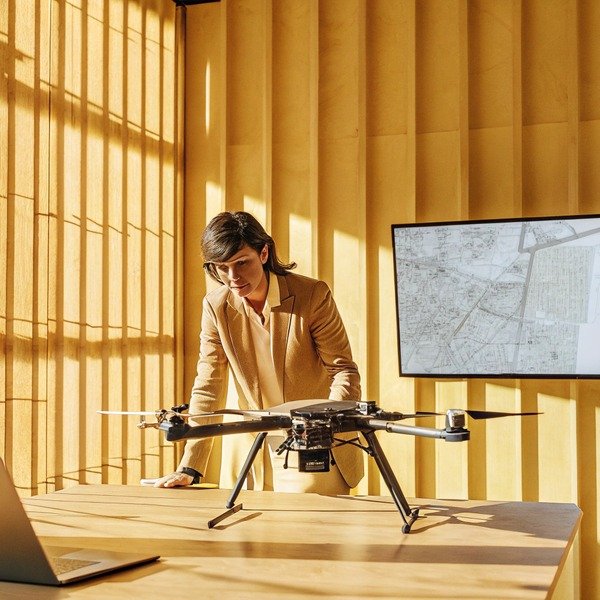
When our engineering team tests new prototypes in high-wind conditions, we see how quickly standard GPS drifts standard GPS 1, creating panic for pilots trying to stabilize a heavy payload near a burning structure. This drift can be the difference between a successful rescue and a costly crash.
An RTK system is necessary if your missions involve complex urban environments, structural fires requiring precise hovering, or scenarios needing centimeter-level accuracy for 3D mapping and forensic evidence. However, for basic scouting in open rural areas where obstacles are scarce, standard GPS often suffices.
Here is a detailed breakdown to help you decide if this investment fits your fleet.
What specific firefighting scenarios require the centimeter-level accuracy of an RTK system?
We often hear from clients struggling with signal interference near power lines. While we tune our flight controllers to mitigate this, standard GPS has physical limitations in these hazardous zones that software alone cannot fix.
RTK is mandatory for scenarios like urban search and rescue where drones fly between buildings, structural fires requiring close-range thermal inspections, and post-disaster photogrammetry for creating 3D models. In these situations, the 2-5 meter error margin of standard GPS is too dangerous.
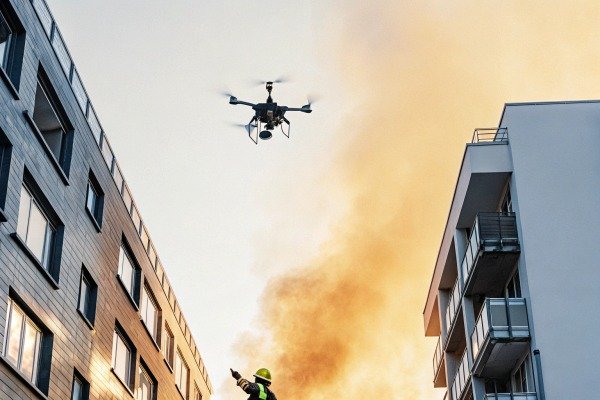
When evaluating your needs, you must look closely at the environment where your team operates most frequently. Standard GPS (Global Positioning System) modules are generally accurate to within 2 to 5 meters. In a wide-open field, this error margin is acceptable. However, in firefighting, a 5-meter error can mean the difference between seeing through a window and crashing into the wall next to it.
The Urban "Canyon" Effect
If your department operates in a city with tall buildings, you face a phenomenon known as the "urban canyon" effect. High-rise buildings block satellite signals and reflect them, causing "multipath multipath errors 2 errors." This confuses a standard GPS module, causing the drone to drift unpredictably. An RTK (Real-Time Kinematic) system corrects these errors Cinética en tiempo real 3 in real-time by communicating with a base station or a network reference station. This ensures the drone knows its position within 2-3 centimeters, allowing pilots to navigate narrow gaps between buildings confidently.
Structural Integrity and Roof Inspections
During a structural fire, incident commanders often need comandantes de incidentes 4 to know if a roof is safe for firefighters to walk on. A drone equipped with a thermal camera can spot cámara térmica 5 heat signatures that indicate a weakening structure.
- Without RTK: The pilot must manually fight the drone's drift to keep the camera focused on a specific truss or beam. This increases the cognitive load on the pilot.
- Con RTK: The drone hovers largely autonomously in a fixed position. The pilot can focus entirely on analyzing the video feed rather than flying the aircraft.
Forensics and Post-Disaster Mapping
After the fire is out, many departments use drones to map the scene for arson investigations. To create arson investigations 6 a legal-grade 3D model or orthomosaic map, accuracy is non-negotiable. Without RTK, you would need to manually place Ground Control Points (GCPs)—markers Ground Control Points 7 on the ground with known coordinates—throughout the burned area. Walking through a hazardous burn site to place these markers is dangerous and time-consuming. An RTK drone geotags every image with precise coordinates, significantly reducing or eliminating the need for manual GCPs.
Summary of Scenarios
To help you visualize where RTK is essential, we have compiled the following comparison based on common feedback from our user base.
| Firefighting Scenario | Standard GPS Suitability | RTK Necessity | Reason for RTK |
|---|---|---|---|
| Wildfire Scouting (High Altitude) | Alto | Bajo | Open terrain, few obstacles, 5m error is acceptable. |
| Urban Search & Rescue | Bajo | Alto | Signal reflection from buildings causes dangerous drift. |
| Power Line / Hazmat Inspection | Muy bajo | Crítico | Magnetic interference requires dual-antenna RTK for heading stability. |
| Arson Investigation / Mapping | Bajo | Alto | Precise geotagging is needed for court-admissible evidence. |
| Operaciones nocturnas | Moderado | Alto | Visual sensors work poorly in dark; pilots rely heavily on positioning data. |
Is the additional cost of an RTK module worth the investment for my drone fleet?
During our cost analysis meetings with procurement managers, we emphasize that skipping high-precision modules might save money upfront but can lead to expensive crash repairs or useless data later.
The investment is worth it if you require repeatable automated flights, precise coordinate sharing with ground teams, or legal-grade evidentiary data. If your operations are strictly limited to open-field wildfire scouting without complex terrain, the extra cost may yield diminishing returns.

The decision to purchase an RTK system often comes down to a trade-off between the initial capital expenditure and the long-term operational costs. An RTK module and the accompanying base station (or network subscription) can add thousands of dollars to the price of a drone unit. However, looking at the sticker price alone is misleading.
Reducing Operational Labor Costs
The most significant hidden saving comes from mapping workflows. As mentioned earlier, creating accurate maps with a standard GPS drone requires Ground Control Points (GCPs).
- The GPS Workflow: A team must arrive, measure points on the ground using survey equipment, place physical targets, fly the mission, and then pick up the targets. This can add 1-2 hours to a mission.
- The RTK Workflow: The pilot sets up the base station (5 minutes), flies the mission, and leaves.
If your department conducts frequent mapping or accident reconstruction, the labor hours saved by eliminating GCPs will pay for the RTK module within a few months.
Preventing Equipment Loss
Industrial drones are significant investments. A crash due to signal interference or GPS drift not only destroys the asset but also halts the mission. In environments with high electromagnetic interference—such as interferencia magnética 8 near industrial transformers or power lines—standard compasses can fail, leading to a "fly-away" event. RTK systems, particularly those with dual antennas, provide a backup heading reference that is immune to magnetic interference. Buying RTK is effectively an insurance policy against losing the drone due to sensor confusion.
The Value of "PinPoint" Accuracy
Modern tactical software, like ATAK (Android Team Awareness Kit), allows drone Android Team Awareness Kit 9 pilots to drop a digital pin on a target and share it instantly with ground crews.
- Escenario: A pilot spots a hazardous chemical drum in a smoke-filled yard.
- With GPS: The coordinate sent to the ground team might be off by 5-10 meters. The team wastes time searching or goes to the wrong spot.
- Con RTK: The coordinate is accurate to within inches. The ground team knows exactly where to go.
In life-saving situations, this efficiency is priceless.
Cost-Benefit Breakdown
We advise our clients to categorize their budget based on the "Total Cost of Ownership" rather than just the purchase price.
| Factor de costo | Dron GPS estándar | Dron con RTK | Veredicto |
|---|---|---|---|
| Costo inicial del hardware | Lower (Base Price) | Higher (+$3k – $8k avg.) | RTK costs more upfront. |
| Survey/Mapping Labor | High (Requires GCPs) | Low (No GCPs needed) | RTK saves labor costs. |
| Crash Risk (Interference) | Moderado a Alto | Bajo | RTK protects the asset. |
| Data Post-Processing | Slow (Manual alignment) | Fast (Auto-alignment) | RTK speeds up results. |
| Mission Success Rate | Variable in complex zones | Consistent | RTK ensures reliability. |
How does RTK improve flight stability and safety during complex rescue missions?
Our test pilots report that when flying large quadcopters near intense heat sources, the generated turbulence makes holding position exhausting without the electronic "anchor" that a high-precision system provides.
RTK significantly improves stability by resisting magnetic interference from high-voltage lines and maintaining precise position against updrafts caused by fires. This reduces pilot fatigue, prevents drift into obstacles, and allows for safe formation flying when deploying multiple drones simultaneously.

Flight stability is not just about comfort; it is about safety. Firefighting environments are among the most hostile airspaces for a drone. You are dealing with high heat, unpredictable wind shear (updrafts from the fire), smoke that obscures visual sensors, and often sensores visuales 10, high-voltage infrastructure.
The Role of Dual-Antenna RTK in Magnetic Immunity
One of the most critical but overlooked aspects of RTK is its ability to fight magnetic interference. A standard drone relies on a magnetic compass to know which way it is facing. Large metal structures (like warehouses, bridges, or firetrucks) and high-voltage power lines create magnetic fields that confuse the drone's compass. This leads to the "toilet bowl effect," where the drone swirls uncontrollably and may crash.
Many industrial RTK drones utilize dual antennas. By calculating the precise position difference between two antennas on the drone itself, the system can determine the drone's heading (direction) without relying solely on the magnetic compass. This makes the drone nearly immune to magnetic interference, allowing it to fly safely near power lines where standard drones would fail.
Battling Turbulence and Wind
Fires create their own weather systems. The heat generates strong updrafts and turbulence. A standard GPS drone corrects its position once it has drifted beyond a certain threshold (e.g., 1-2 meters). In strong turbulence, this results in a jerky, wandering flight path.
An RTK drone corrects its position hundreds of times per second based on centimeter-level data. It reacts almost instantly to displacement. The result is a drone that feels like it is "locked" in the sky, even in gusty conditions. This stability allows the pilot to focus on the mission—directing the water cannon or searching for victims—rather than fighting the flight sticks.
Enabling Augmented Reality (AR) Overlays
Modern flight software often projects AR information onto the pilot's screen, such as street names, the location of other team members, or the perimeter of the fire.
- The Drift Problem: With standard GPS, these AR overlays can "drift" or float around the screen because the drone doesn't know exactly where it is. A street label might accidentally appear over a house.
- The RTK Solution: Because the drone knows its exact position and heading, AR overlays remain "pinned" to the correct real-world objects. This prevents pilot disorientation and ensures that tactical data presented on the screen is actually reliable.
Stability Comparison
| Característica | Dron GPS estándar | RTK Drone | Impacto operativo |
|---|---|---|---|
| Precisión de vuelo estacionario | +/- 1.5m Vertical, +/- 0.5m Horizontal | +/- 10cm Vertical, +/- 5cm Horizontal | RTK allows flying closer to objects. |
| Magnetic Resistance | Low (Susceptible to compass error) | High (Dual-antenna heading) | RTK prevents fly-aways near power lines. |
| Wind Correction | Reactive (Corrects after drift) | Proactive (Tight position hold) | RTK reduces pilot fatigue. |
| Formation Flying | Dangerous (Risk of collision) | Safe (Precise separation) | RTK allows multi-drone swarms. |
What are the critical differences between standard GPS and RTK for thermal mapping accuracy?
When calibrating thermal sensors for customized builds, we see that temperature data is useless if geotagging is off by meters, causing crews to target the wrong hotspots.
Standard GPS provides thermal maps with 2-5 meter offsets, making it difficult to pinpoint exact hotspots in smoke. RTK ensures thermal images are geotagged with centimeter precision, allowing fire crews to overlay thermal data onto real-world maps without alignment errors.

Thermal mapping is a powerful tool for identifying hotspots after a wildfire or assessing roof insulation and fire spread in structural fires. However, a thermal image is just a picture of heat; to be useful, it must be accurately placed on a map.
The Challenge of Thermal Image Stitching
To create a large map of a fire scene, the drone takes hundreds of photos while flying a grid pattern. Software then "stitches" these images together.
- Visual vs. Thermal: With visual cameras, software can find "tie points" (like a distinct rock or corner of a sidewalk) to match images. Thermal images, however, often lack sharp details—trees and ground often look like blurry blobs of grey or orange.
- The GPS Failure: If the software cannot find visual tie points, it relies entirely on the GPS coordinates embedded in the image metadata. If those coordinates are off by 3 meters (standard GPS), the software fails to stitch the map, or the resulting map is distorted and unusable.
- The RTK Advantage: RTK provides coordinates so precise that the stitching software can align the images based on location data alone, even if the thermal image is low-contrast or blurry.
Real-Time Hotspot Identification
In active wildfire containment, crews need to know exactly where the fire is crossing a containment line. If a drone pilot spots a flare-up through thick smoke, they need to send coordinates to the bulldozer or water tanker crew.
If using standard GPS, the coordinates might direct the crew to a location 5 meters away—potentially on the wrong side of a firebreak or into a ditch. RTK ensures that the "hotspot" identified on the screen corresponds exactly to the physical location on the ground.
Post-Processing Kinematics (PPK) as an Alternative
It is worth noting that for mapping (where real-time navigation isn't as critical), there is an alternative called PPK.
- RTK (Real-Time): Corrects position durante the flight. Requires a constant connection between the drone and the base station. If the signal drops (e.g., flying behind a mountain), accuracy is lost.
- PPK (Post-Processing): The drone records raw satellite data, and you correct it después de the flight using computer software.
For wildfire mapping in remote mountains with poor radio links, PPK can sometimes be more reliable than RTK because it doesn't depend on a live link. However, PPK does not provide the real-time stability benefits discussed in the previous section. Most modern industrial drones support both modes, but you need the high-precision GNSS hardware on board to do either.
Mapping Accuracy Checklist
| Requisito | GPS estándar | RTK / PPK | ¿Por qué importa? |
|---|---|---|---|
| Image Stitching (Low Contrast) | Fails frequently | High Success Rate | Thermal images often lack visual details for stitching. |
| Coordinate Accuracy | 2 – 5 meters | 2 – 3 centimeters | Critical for directing ground crews to small targets. |
| GCP Requirement | Mandatory for accuracy | Optional / Minimal | Saves hours of setup time in dangerous zones. |
| Overlay on Satellite Maps | Often misaligned | Perfect alignment | Allows commanders to see fire relative to old maps. |
Conclusión
Evaluating RTK necessity depends on your mission profile. For urban, structural, and precision mapping tasks, it is essential. For general rural scouting, standard GPS remains a viable, cost-effective option.
Notas al pie
1. Official US government information on GPS accuracy standards. ↩︎
2. Educational resource explaining the technical details of multipath errors. ↩︎
3. General overview of RTK technology for background context. ↩︎
4. Official FEMA resources on the National Incident Management System. ↩︎
5. Manufacturer documentation on thermal imaging applications in firefighting. ↩︎
6. International Association of Arson Investigators professional resources. ↩︎
7. Professional society for photogrammetry and remote sensing standards. ↩︎
8. Industry insights on managing magnetic interference for drone safety. ↩︎
9. Official government site for the TAK software suite. ↩︎
10. Technical article on drone sensor performance in low visibility. ↩︎

 English
  Español de México
  Deutsch
  Français
  Русский
  العربية
