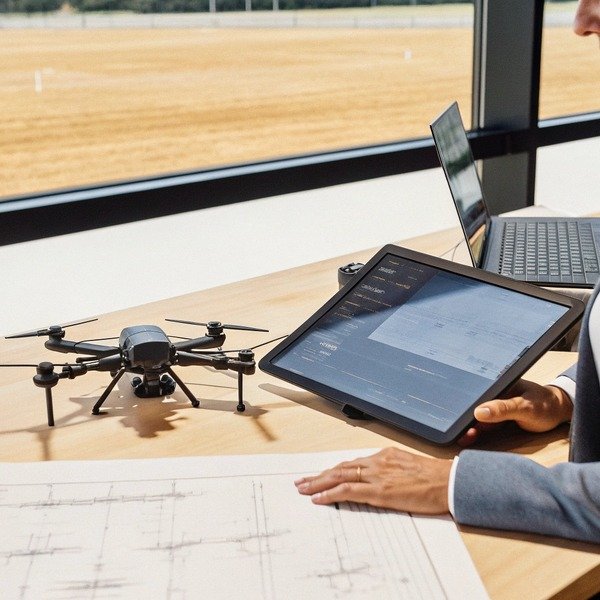
We see too many procurement tenders fail because specs on a brochure rarely match reality on the flight deck. At our facility in Xi’an, we constantly remind clients that safety depends on verifying data, not just reading it.
To verify technical specifications, request raw data logs for loaded flight times rather than unladen hovering, demand third-party ISO ingress protection certificates, and conduct live video transmission tests in high-interference environments. Always cross-reference payload capacity against maximum takeoff weight limits to ensure the drone retains stability during active fire suppression.
Let’s examine the critical metrics you must audit before signing any purchase order.
How can I verify the actual flight time and payload capacity claims for heavy-duty operations?
Our flight testing facility runs daily endurance checks, yet we still see competitors overpromising on battery life under load. It is frustrating to see users risk equipment because they trusted a “max flight time” number tested in a windless lab.
Verify claims by requesting a flight log showing the voltage curve during a full-payload mission, not just hovering. True endurance is often 30% lower than the advertised “max flight time.” Ensure the drone can lift your specific fire suppression payload while maintaining a 20% battery safety margin for return.
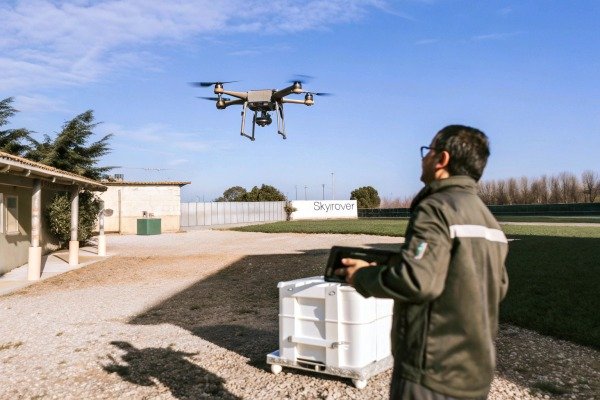
When you evaluate a heavy-lift drone, you are looking at two conflicting numbers: flight time and payload weight. Manufacturers often list the maximums for both, but you can never achieve both simultaneously. A drone carrying a 100kg suppression payload will not fly for the advertised 60 minutes. suppression payload 1 It might only fly for 20 minutes.
The "Empty vs. Loaded" Trap
You must distinguish between "hovering time" and "operational flight time." Hovering consumes less energy than maneuvering. When we test our hexacopters, we see massive spikes in current draw when the drone fights wind or accelerates.
If a spec sheet says "50 minutes flight time," ask for the specific payload weight used during that test. If the answer is "zero payload," that data is useless for your mission. You need the "loaded" flight time.
Calculating the Safety Margin
Batteries behave differently under heavy loads. Voltage sag occurs faster. Caída de voltaje 2 If you push a battery to 0% while carrying heavy fire hoses, the voltage might drop below critical levels instantly, causing a crash. You need to calculate your operational window based on landing with 20% battery remaining.
Use the table below to understand how payload impacts real-world performance. This data reflects typical heavy-lift platforms currently on the market.
| Load Scenario | Advertised Flight Time (Unladen) | Real Flight Time (Max Payload) | Safe Operational Window (Land at 20%) |
|---|---|---|---|
| Surveillance Only (Cameras) | 55 – 60 mins | 45 – 50 mins | 35 – 40 mins |
| Light Payload (Extinguisher Balls) | 55 – 60 mins | 30 – 35 mins | 20 – 25 mins |
| Heavy Payload (Hose/Liquid Tank) | 55 – 60 mins | 18 – 22 mins | 12 – 15 mins |
Validating Motor Efficiency
Check the Maximum Takeoff Weight (MTOW) against the thrust-to-weight ratio. Maximum Takeoff Weight 3 A safe industrial drone needs a ratio of at least 2:1. If the drone weighs 50kg fully loaded, the motors must be capable of lifting 100kg total. This extra power allows the autopilot to stabilize the aircraft in high winds. If the spec sheet does not list motor thrust, ask your supplier immediately.
What specific IP ratings and heat resistance metrics should I look for to ensure durability in extreme heat?
We bake our airframes in industrial ovens to simulate fireground conditions because standard plastic parts melt near active suppression zones. I have seen cheaper drones return from a fire with warped arms and sensor failures due to heat intake.
Look for a minimum rating of IP55 for water protection against hose spray and conductive smoke particles. For heat resistance, confirm the airframe uses carbon fiber composites capable of withstanding 100°C ambient heat, and check that internal electronics have active cooling systems for operations near intense convection columns.

Firefighting is a dirty, wet, and hot environment. A standard consumer drone is not built for this. The "Ingress Protection" (IP) rating tells you how well the drone keeps solids and liquids out. Ingress Protection 4
Decoding the IP Rating
The first digit refers to solids (dust/smoke), and the second refers to liquids (water).
- IP43: Protected against tools and water spray less than 60 degrees from vertical. This is not enough. Rain or hose spray often comes sideways or from below due to wind turbulence.
- IP55 or IP56: Protected against dust and high-pressure water jets from any direction. This is the standard you should demand.
Conductive smoke particles are a hidden killer. If smoke enters the flight controller, it can short-circuit the electronics. A high first digit (5 or 6) is crucial.
Heat Resistance Verification
Temperature range specs often list "-20°C to 50°C". This refers to the ambient air temperature. However, the air above a fire is much hotter. You must verify the material of the drone body.
Plastic casings deform at relatively low temperatures. We strictly use high-grade carbon fiber and aviation aluminum. high-grade carbon fiber 5 These materials maintain structural integrity even when the air around the drone spikes above 80°C briefly.
Internal Cooling Systems
External heat is one problem; internal heat is another. High-performance processors and battery management systems generate their own heat. If the drone is sealed tight for waterproofing (IP rating), that heat is trapped.
Ask the supplier: "How is the flight controller cooled?" Reliable systems use internal fans and heat sinks that transfer heat to the aluminum frame, acting as a giant radiator. Without this, the drone may trigger a "thermal shutdown" safety mode mid-flight. thermal shutdown 6
| Componente | Standard Material | Fire-Grade Material | Why it Matters |
|---|---|---|---|
| Frame Arms | Plastic / Hybrid | 3K Carbon Fiber | Stiffness in high wind; resists melting. |
| Joints/Mounts | ABS Plastic | 7075 Aluminum | Plastic joints fail under heat stress. |
| Canopy | Thin Polycarbonate | High-Temp Composite | Protects internal battery from radiant heat. |
How do I validate the resolution and accuracy of thermal imaging cameras included in the package?
Integrating sensors is tricky; we often reject thermal modules that look good on paper but fail to spot hotspots through thick smoke. Simply having a “thermal camera” is not enough if the firefighter cannot interpret the fuzzy grey blob on the screen.
Validate thermal performance by requesting raw radiometric JPEG files to check temperature data at the pixel level. Ensure the sensor resolution is at least 640×512 with a high refresh rate (30Hz+), and verify the lens focal length allows for safe standoff distances while still detecting heat signatures accurately.

In firefighting, a thermal camera does two jobs: it finds the fire source through smoke, and it finds missing persons. Low-quality sensors fail at both.
Resolution is Non-Negotiable
Many entry-level drones use 320×240 or even 160×120 sensors. These are useless from an altitude of 50 meters. You need 640×512 resolution. This offers four times the pixel count of a 320×240 sensor.
Why does this matter? At 50 meters high, a human body might only occupy 4 pixels on a low-res camera. You will miss them. On a 640×512 camera, that same person occupies enough pixels to be recognizable as a human shape.
Radiometric Data
"Radiometric" means every single pixel in the image contains temperature data. A standard thermal video just shows hot and cold colors. A radiometric image lets you tap on a specific roof section and see "350°C". radiometric image 7
You must verify this by asking the supplier for a sample file. Open it in their analysis software. If you cannot see specific temperature values for specific spots, it is not a radiometric sensor. This data is critical for the Incident Commander to judge structural integrity. Incident Commander 8
Frame Rate (Hz)
Cheaper thermal cores are export-restricted to 9Hz (9 frames per second). This looks like a slideshow. It is disorienting for a pilot trying to fly fast. You must confirm the camera operates at 30Hz or higher. This provides smooth motion, allowing the pilot to spot moving heat signatures instantly.
Check the Lens Options
A wide-angle lens covers more area but reduces detail. A telephoto lens gives detail but restricts the view.
- 13mm lens: Good for general search.
- 25mm lens: Better for inspecting tall buildings from a safe distance.
- Ensure the supplier offers the lens that fits your operational terrain.
What details must I confirm regarding signal transmission range and anti-interference capabilities?
Sending a drone behind a concrete high-rise disrupts signals, which is why we stress-test our dual-link systems in dense urban environments. A drone that loses connection while carrying a fire suppression bomb is a massive liability.
Confirm the system uses dual-band frequency hopping (2.4GHz/5.8GHz) to bypass urban interference. Demand a field test demonstrating stable 1080p video feed latency under 200ms at the maximum operational distance, specifically in non-line-of-sight (NLOS) scenarios common in high-rise firefighting.

Specs often claim "15km transmission range." This is usually tested in an open field with zero interference. In a city, with Wi-Fi routers, steel beams, and emergency radio traffic, that range can drop to 2km or less.
The Necessity of Dual-Band Hopping
Radio environments are crowded. 2.4GHz offers better range but has high interference. 5.8GHz offers faster data but has shorter range.
Your system must automatically switch between these bands. If one channel gets jammed by a nearby Wi-Fi router, the drone must hop to a clean channel instantly. Ask the supplier: "Does the link support dynamic frequency hopping?" dynamic frequency hopping 9
Latency Kills Missions
Latency is the delay between what happens and what you see. If the latency is 500 milliseconds (half a second), you will crash. By the time you see the obstacle, you have already hit it.
- Acceptable Latency: < 200ms.
- Ideal Latency: < 120ms.
Test this yourself. Wave your hand in front of the camera and watch the screen. If there is a noticeable lag, the system is unsafe for close-quarters firefighting.
Encryption for Security
Fire departments are government entities. Your data stream cannot be open to the public. Verify the encryption standard. encryption standard 10
- AES-128: Minimum standard.
- AES-256: Preferred standard.
This ensures that bystanders cannot intercept the video feed and broadcast sensitive footage of a tragedy.
Real-World Range Expectations
Do not rely on the "FCC" or "CE" range rating alone. Ask for a "Urban Canyon" test report.
| Environment | Advertised Range (Typical) | Realistic Operational Range | Major Interference Sources |
|---|---|---|---|
| Open Rural | 10km – 15km | 8km – 10km | Trees, Hills |
| Suburban | 10km – 15km | 5km – 7km | Home Wi-Fi, Power Lines |
| Dense Urban | 10km – 15km | 1.5km – 3km | Steel Buildings, massive Wi-Fi density |
Conclusión
Purchasing a firefighting drone is an investment in public safety, not just a hardware transaction. By looking past the glossy brochure and demanding raw data—on loaded flight times, real thermal resolution, and transmission stability—you protect your department's budget and, more importantly, the lives depending on this technology. Always verify, test in the field, and ensure your supplier can back up every claim with engineering proof.
Notas al pie
1. NFPA 2400 standard covers the use of UAS in fire service operations. ↩︎
2. Technical explanation of battery discharge curves and voltage behavior under load. ↩︎
3. Official FAA guidance relevant to drone weight regulations and commercial operations. ↩︎
4. Official International Electrotechnical Commission page defining IP rating standards. ↩︎
5. Scientific overview of carbon fiber properties, including thermal resistance. ↩︎
6. General background information on thermal safety mechanisms in electronics. ↩︎
7. Leading thermal imaging manufacturer explains radiometric data technology. ↩︎
8. FEMA training resource defining the Incident Command System structure. ↩︎
9. Major drone manufacturer documentation explaining transmission anti-interference technology. ↩︎
10. NIST publication establishing the Advanced Encryption Standard (AES). ↩︎

 English
  Spanish
  German
  French
  Dutch
Dutch  Arabic
