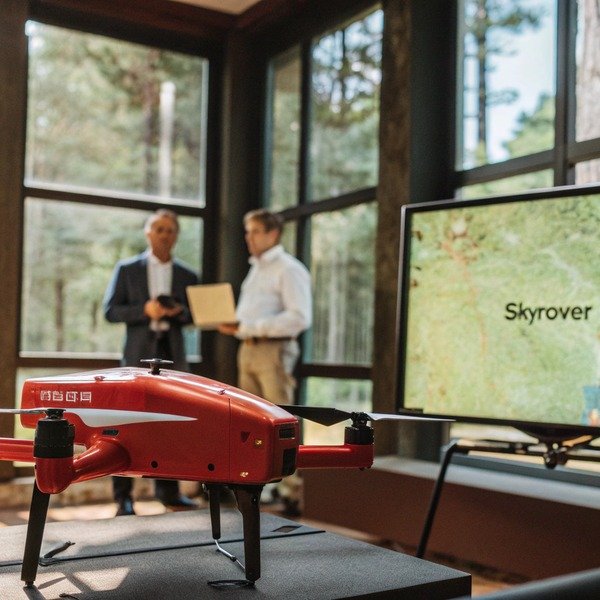
When we discuss technical specifications with procurement officers across Europe, we often notice a distinct gap between standard drone capabilities and the harsh reality of the field. Fire seasons in the Mediterranean are becoming longer and more intense, while urban incidents in Northern Europe require navigating complex modern architecture. If you purchase off-the-shelf equipment that hasn’t been road-tested against these specific operational realities, you risk deploying hardware that fails exactly when lives are at risk. You need a partner who engineers solutions for the smoke, the wind, and the regulatory landscape you face daily.
To determine if a supplier understands European needs, verify their knowledge of EASA PDRA requirements for BVLOS operations and their commitment to GDPR-compliant data sovereignty. They must offer hardware with verified IP ratings for diverse weather and software that integrates openly with local Incident Incident Command System 1 Command Systems rather than acting as a standalone tool.
Here is how you can evaluate a supplier’s depth of expertise before signing a contract.
How do I verify that the manufacturer's drones meet strict EASA regulations and safety certifications?
We spend months calibrating our flight controllers and documenting safety redundancies because we know that a drone grounded by paperwork is useless to a fire brigade. In our dealings with European aviation authorities, we have learned that simply having a CE mark is not enough for emergency services operating under high-pressure conditions. If a supplier dismisses the complexity of the 'Specific' category, they are likely selling you a hobbyist toy in a professional package.
You must verify that the supplier provides detailed documentation supporting Pre-defined Risk Assessments (PDRA) essential for emergency response authorizations. They should explicitly offer offline data modes to ensure all flight logs and video footage remain locally stored, addressing strict GDPR concerns and data sovereignty requirements prevalent across EU jurisdictions.
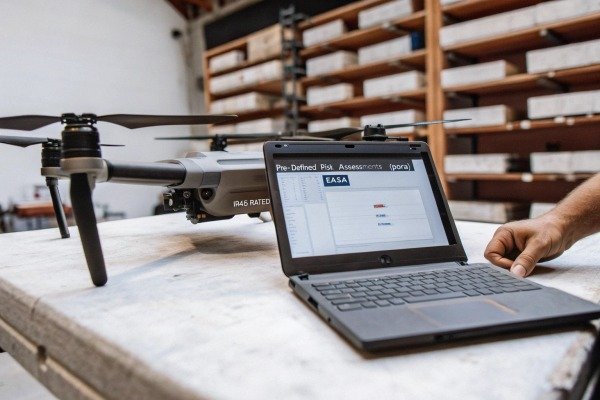
When evaluating a supplier's compliance with European Union Aviation Safety Agency (EASA) regulations, you need to look beyond the basic "Open" category certifications. Fire brigades often operate under the 'Specific' category, particularly when missions require flying Beyond Visual Line of Sight (BVLOS) to assess the perimeter of a large wildfire or when flying over populated urban areas during a structure fire.
navigating the 'Specific' Category and PDRA
A supplier who truly understands the European market will not just sell you hardware; they will provide the "safety case" data you need to apply for operational authorizations. We often provide our clients with comprehensive technical files that detail the kinetic energy impact, failure modes, and redundancy systems of our drones. This data is crucial when your department is filing for a Pre-defined Risk Assessment (PDRA) authorization Pre-defined Risk Assessment (PDRA) 2. If a supplier cannot tell you the precise fail-safe behaviors of their drone when a motor is lost or the link is severed, they are not ready for the European emergency services market.
Data Sovereignty and GDPR
One of the most critical, yet often overlooked, aspects of regulation is data privacy. In Europe, General Data Protection Regulation (GDPR) is strictly enforced General Data Protection Regulation (GDPR) 3. Fire brigades often capture footage of private property, victims, or critical infrastructure.
- The Risk: Many cloud-connected drones automatically upload flight logs and thumbnails to servers located outside the EU.
- La solución: A competent supplier offers a "Local Data Mode" or "Offline Mode." Local Data Mode 4 This ensures that no packet of data leaves the drone or the controller without your explicit action. We have engineered our systems to allow updates via SD card rather than forcing an internet connection, a feature requested specifically by our security-conscious European partners.
Safety Redundancy Systems
EASA regulations focus heavily on ground risk—what happens if the drone falls? Suppliers must demonstrate active safety features. This includes parachute systems that deploy automatically upon critical failure and redundant communication links.
Checklist for Regulatory Compliance
| Compliance Feature | Why It Matters for European Fire Brigades | Warning Sign (Red Flag) |
|---|---|---|
| PDRA Support Data | Required for BVLOS and complex mission approvals. | Supplier says "Standard rules apply" or ignores BVLOS. |
| Offline Data Mode | Ensures GDPR compliance and operational security. | Drone requires mandatory login/cloud sync to fly. |
| Remote ID (EU) | Mandatory for tracking and airspace integration. | Supplier offers US-standard Remote ID only. |
| Redundant Power | Prevents rapid descent during battery failure. | Single-battery architecture on heavy-lift units. |
What specific weather resistance features should I look for to ensure reliable performance in variable European climates?
Our engineering team runs simulation cycles that mimic everything from the freezing mists of the Scottish Highlands to the scorching dry winds of an Iberian summer. We understand that a fire brigade cannot wait for a sunny day to deploy their aerial assets. If the drone you are evaluating looks sleek but has open vents exposing the electronics, it will likely fail during the first heavy downpour or dust storm it encounters.
Look for verified IP45 ratings or higher to withstand the heavy rain and fine dust common in operational environments. Ensure the propulsion system is tested for wind resistance exceeding 12 m/s to handle gusts in mountainous or coastal regions, and verify the inclusion of self-heating batteries for reliability in freezing temperatures.
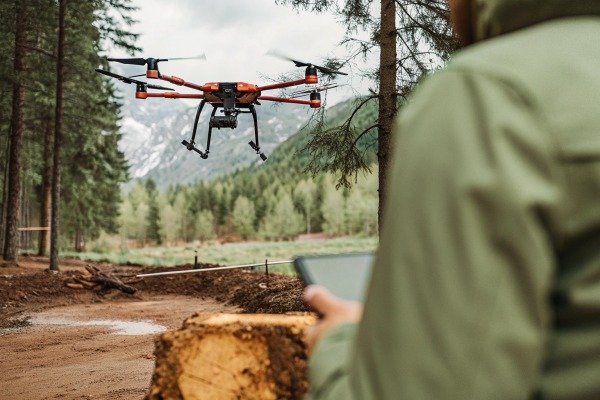
Europe presents a unique meteorological challenge where a single fire season can encompass extreme heat, high humidity, and sudden alpine storms. A supplier's understanding of this is revealed in the "ruggedization" of their platform.
Beyond the IP Rating
While an Ingress Protection (IP) rating is a good starting point Ingress Protection (IP) rating 5, it is not the whole story. An IP45 or IP55 rating guarantees protection against water jets and dust, which is essential. However, we have found that wind resistance is often the deciding factor in mission success.
- The "Urban Canyon" Effect: In European cities with narrow streets and tall buildings, wind tunnels create unpredictable turbulence. A drone must have a high thrust-to-weight ratio and aggressive flight control tuning to maintain a steady hover for thermal imaging.
- Gusts vs. Sustained Wind: Marketing materials often list "max wind speed." You need to ask about gust resistance. Can the drone recover if it is hit by a 15 m/s gust while flying near a cliff edge during a search and rescue (SAR) mission?
Thermal Management in Extremes
The operational range in Europe varies drastically.
- Extreme Heat (Southern Europe): In wildfires, ambient temperatures can exceed 40°C, and the air above the fire is even hotter. The drone must have active cooling systems that prevent the flight controller from overheating and shutting down mid-air.
- Freezing Cold (Northern/Alpine Europe): Lithium batteries lose voltage rapidly in the cold Lithium batteries lose voltage 6. A supplier who understands this will provide self-heating batteries. These batteries automatically warm themselves to an optimal operating temperature before takeoff, preventing the dangerous voltage sags that cause drones to drop out of the sky in winter.
Critical Components for Weather Reliability
- Sealed Electronics: Conformal coating on all internal PCBs to prevent corrosion from humidity and sea salt (crucial for coastal brigades).
- Closed Motor Design: Prevents ash and soot from entering the motor windings during low-altitude flights over burnt areas.
- Propeller Durability: Carbon fiber propellers are preferred over plastic for their rigidity in high winds, though they require careful inspection for cracks.
Can the supplier demonstrate how their software integrates with the incident command systems used by local fire brigades?
We realized early on that a pilot staring at a small remote controller screen offers limited value to the Incident Commander managing a chaotic scene from a control vehicle. We actively develop our software development kits (SDKs) to allow software development kits (SDKs) 7 video streams to leave our ecosystem and enter yours. If a supplier insists you use only their proprietary app and offers no way to export the live feed to your command center, they are creating an information silo that hampers tactical decision-making.
A capable supplier offers open-architecture systems or MAVLink compliance rather than closed ecosystems. They must demonstrate seamless low-latency streaming to common European Video Management Software (VMS) inside command vehicles using RTSP or HDMI outputs, ensuring the entire command chain views real-time intelligence.

The days of the "lone pilot" are ending. Modern European firefighting relies on interconnected data. The drone is just a sensor; the value lies in where that data goes.
Connectivity in "Signal-Denied" Areas
Fire brigades often operate in "urban canyons" or remote forests where standard RF (Radio Frequency) signals fail or are blocked.
- Cellular Bonding: A supplier who understands this landscape will offer 4G/5G modules. This allows the drone to transmit video over cellular networks when the direct radio link to the controller is weak. This is vital for BVLOS operations where the drone might be kilometers away from the command post.
- Mesh Networking: Advanced suppliers are looking into mesh networks, where drones can act as signal relays for each other, extending the range into deep valleys where no cellular signal exists.
The "Silver" and "Gold" Commander Link
In many European command structures (Gold-Silver-Bronze), the decision-makers Gold-Silver-Bronze 8 are not standing next to the pilot. They are in a mobile command unit or a remote HQ.
- Standard approach: The pilot describes what they see over the radio. This is slow and prone to error.
- Integrated approach: The drone system outputs a standard RTSP (Real-Time Streaming Protocol) video stream Real-Time Streaming Protocol 9. This feed is pulled directly into the brigade's Incident Command System (ICS) software (like Rosenbauer’s management systems or localized equivalents Rosenbauer’s management systems 10). The commander sees the thermal hotspot overlay on their main map in real-time.
Usability for Volunteer Firefighters
Germany, Austria, and other European nations rely heavily on volunteer firefighters (Freiwillige Feuerwehr). These operators are not full-time professional pilots.
- Simplicity is Safety: The software interface must be intuitive. Complex, clutter-heavy professional interfaces lead to mistakes under stress.
- Automation: Look for "Tap-to-Fly" features and automated search patterns. The software should allow a volunteer to draw a box on a map and say "search this area," allowing the drone to fly the pattern autonomously while the operator focuses on the video feed.
Software Integration Levels
| Level | Descripción | Value to Brigade |
|---|---|---|
| Basic | Video on pilot's remote only. | Low. Information is stuck with the pilot. |
| Intermediate | HDMI out to an external monitor. | Medium. Allows local group viewing. |
| Advanced | Live IP streaming (RTSP/RTMP) to HQ. | High. Enables remote strategic command. |
| Expert | Full ICS Integration (Telemetry + Video). | Critical. Drone position appears on HQ tactical maps. |
Is the factory willing to customize payload options to match the specific tactical requirements of my European clients?
Our R&D team thrives on the unique challenges our partners bring us, from lifting heavy fire retardant balls to integrating specialized gas sniffers for industrial accidents. We know that a standard RGB camera is useless when you need to detect a specific chemical leak or suppress a fire in a hard-to-reach spot. A rigid supplier who refuses to modify their gimbal interfaces or firmware is ignoring the fact that European fire brigades are often the primary responders for CBRN (Chemical, Biological, Radiological, Nuclear) incidents.
Manufacturers who truly understand tactical needs offer modular interfaces for specialized tools like CBRN gas detectors or heavy-lift drop mechanisms. They facilitate rapid prototyping for unique local threats, such as specific hose attachments or dry powder capsules, rather than forcing standard camera-only configurations.
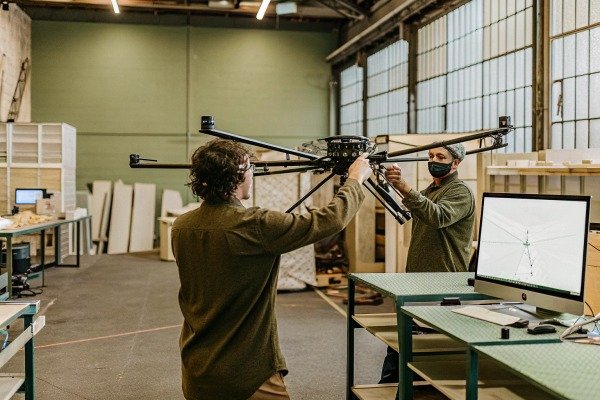
One size does not fit all in Europe. The tactical requirements of a brigade in a dense industrial zone in the Ruhr Valley differ vastly from a forestry unit in Catalonia.
Chemical and Hazardous Material Detection
European fire brigades are frequently tasked with industrial safety. In the event of a chemical plant leak, sending firefighters in suits to measure gas levels is slow and dangerous.
- The Customization: We often integrate third-party sensors (like sniffer modules) that can detect Chlorine, Ammonia, or combustible gases. The drone flies into the plume, transmits the concentration levels back to the controller, and maps the "danger zone" without risking a human life.
- Radiometric Thermal: Standard thermal cameras show hot and cold. Radiometric cameras measure specific temperatures. This allows firefighters to set "isotherms"—for example, "highlight everything hotter than 300°C in red." This helps distinguish between a hot tin roof and an active fire hotspot.
Swarm Technology and Suppression
There is a growing trend, seen in projects like PEELIKAN and trials in the UK, towards using drones for direct suppression or massive surveillance swarms.
- Swarm Ops: While still emerging, the ability for one pilot to deploy 3-5 drones to cover a large forest area is a key request. This requires software that supports "swarm logic"—where drones talk to each other to ensure full coverage without overlapping.
- Heavy Lift: Dropping fire retardant balls or "extinguishing capsules" is becoming a tactical option for spot fires. A supplier must be able to prove their drone can carry heavy loads (5kg – 20kg) stably, without compromising flight safety.
The "Swiss Army Knife" Approach
The best suppliers provide a "universal payload port." Instead of a proprietary camera mount, they offer standard power and data ports (like UART, CAN Bus, or simple PWM). This allows the fire brigade to 3D print their own attachments—light, speaker, drop mechanism—and power them directly from the drone. This open adaptability is a hallmark of a supplier who respects the ingenuity of the end-user.
Conclusión
Determining if a supplier understands the needs of European fire brigades requires looking past the shiny brochure. It demands a partner who speaks the language of EASA regulations, designs for the reality of "urban canyons" and Alpine freezes, and builds software that shares data rather than hoarding it. When you find a manufacturer who offers modular payloads for specific tactical needs and prioritizes data sovereignty, you have found a partner ready for the field, not just the showroom.
Notas al pie
1. ISO standard defining requirements for incident command systems. ↩︎
2. Official EASA documentation on the Specific category and PDRA. ↩︎
3. Official text of the EU General Data Protection Regulation. ↩︎
4. Manufacturer documentation explaining the offline data security feature. ↩︎
5. International standard definition for Ingress Protection ratings. ↩︎
6. Technical explanation of battery performance in low temperatures. ↩︎
7. Portal for developers integrating drone software via SDKs. ↩︎
8. Official guidance on the Gold-Silver-Bronze command structure. ↩︎
9. Definition of the streaming protocol used for video feeds. ↩︎
10. Example of a major European fire service management system. ↩︎

 English
  Spanish
  German
  French
  Dutch
Dutch  Arabic
