Buying a drone that misreads gas levels isn’t just a financial loss; it risks the lives of first responders entering a hazard zone. When we test our SkyRover payloads in Xi’an, we see how easily poor calibration leads to dangerous data gaps, turning a safety tool into a liability.
To verify sensor accuracy, demand valid NIST-traceable calibration certificates for every module and confirm field calibration kit availability. You must also check for environmental compensation algorithms that adjust for heat and humidity, ensuring the drone’s downwash does not dilute gas samples during flight.
Let’s break down the critical steps to ensure your fleet delivers reliable data when it matters most.
What specific field tests can I conduct to ensure the gas readings are reliable?
During our flight trials near Xi'an, we often see sensors fail simple smoke tests because the intake positioning is flawed. Don't let your team deploy equipment that hasn't survived a real-world simulation of flight conditions.
Conduct a "bump test" using a known gas concentration before every flight to verify response. Additionally, perform flight patterns over a controlled source to test recovery time after saturation, ensuring the sensor placement avoids rotor wash interference that dilutes the sample.
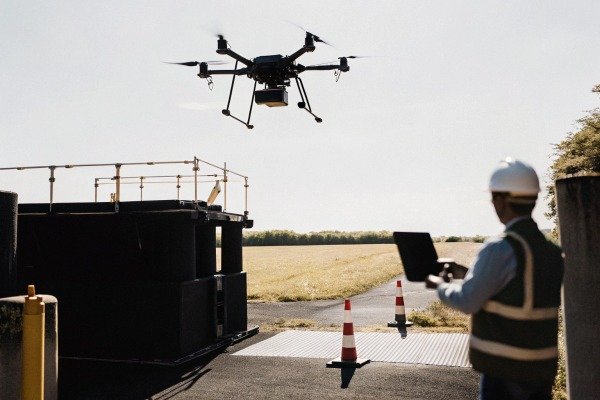
When you receive a new firefighting drone, relying solely on factory specs is a mistake. You need to validate the system in the field. The most critical test involves the interaction between the drone's aerodynamics and the sensor's intake. In our engineering facility, we discovered that if the air intake is positioned incorrectly, the heavy downdraft from the propellers (rotor wash) pushes the target gas away, resulting in artificially low readings.
The "Bump Test" Protocol
Before any mission, or at least weekly, you should perform a bump test bump test 1. This does not recalibrate the sensor but verifies it is alive and responding. You apply a small amount of gas from a calibration bottle to the sensor inlet. The reading on the ground station should spike almost immediately. If the numbers climb sluggishly, the sensor membrane might be clogged with soot or the electrochemical cell is failing.
Response Time (T90) Verification
In a fire scenario, the drone is moving. If the sensor has a slow response time (T90), the gas concentration map you generate will be geospatially inaccurate. For example, if the drone flies at 5 meters per second and the sensor takes 30 seconds to register a spike, the "hotspot" will appear 150 meters away from the actual leak. You can test this by hovering over a safe, controlled gas source and timing how fast the dashboard updates.
Hysteresis and Recovery
Fire scenes have pockets of extremely high gas concentrations. A low-quality sensor will get "poisoned" or saturated, taking minutes to return to zero. This is dangerous because the drone might fly into a clean zone but still report danger. Test this by briefly exposing the sensor to a high concentration and measuring how quickly it clears back to baseline levels.
Cross-Sensitivity Checks
Firefighting environments are full of chemical suppressants like AFFF foam and dry powders. These substances can confuse electrochemical sensors electrochemical sensors 2. We recommend testing the drone in the presence of these common suppressants to ensure they don't trigger false alarms for toxic gases like Carbon Monoxide (CO) or Hydrogen Sulfide (H2S) Carbon Monoxide (CO) 3 Hydrogen Sulfide (H2S) 4.
| Test Parameter | Objective | Criterios de aprobación |
|---|---|---|
| Rotor Wash Immunity | Ensure prop wash doesn't dilute sample. | Readings remain stable during hover vs. stillness. |
| T90 Response Time | Verify speed of detection during flight. | Sensor reaches 90% of value in <15 seconds. |
| Saturation Recovery | Check sensor clearing speed after high exposure. | Returns to baseline <30 seconds after source removal. |
| AFFF Interference | Ensure fire foam doesn't trigger false positives. | No significant spike in CO/H2S channels near foam. |
Which manufacturer certifications should I check to guarantee sensor quality and compliance?
We know the paperwork can be overwhelming when importing technical equipment to the US or Europe. However, missing a single certificate often signals that the sensor module inside is substandard or untraceable.
Request date-stamped factory calibration certificates traceable to NIST or ISO standards for each specific sensor serial number. For methane detection, verify compliance with EPA regulations like OOOOa, and ensure the manufacturer provides documentation for electromagnetic compatibility to prevent interference during operation.
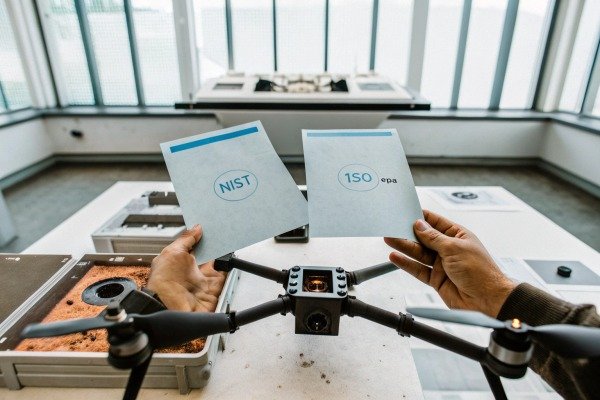
Certifications are your primary defense against liability. When evaluating a supplier, you must distinguish between generic product compliance (like a CE mark for the drone body) and metrological certification for the specific gas detection payload.
NIST and ISO Traceability
A general "Certificate of Conformity" is not enough. You need a calibration certificate that is traceable to the National Institute of Standards and Technology (NIST) or an equivalent National Institute of Standards and Technology 5 ISO standard. This document must list the specific serial number of the sensor module installed on your drone, the date of calibration, the reference gas used, and the expiration date. In our export process, we find that diligent procurement managers always cross-reference these serial numbers with the hardware upon delivery.
Environmental Regulatory Compliance
For firefighting drones that also handle hazardous material (HazMat) response or pipeline inspections, specific EPA standards apply. If your drone is used for methane detection (common in industrial fires), look for compliance with EPA Quad O (OOOOa/b/c) or the newer Appendix K EPA Quad O 6 protocols. These standards dictate the sensitivity required to detect leaks accurately. A sensor that meets these standards has undergone rigorous third-party testing to prove it can quantify emissions, not just visualize them.
Electromagnetic Compatibility (EMC)
Drones are noisy electrical environments. High-current motors and video transmission systems emit electromagnetic interference (EMI) electromagnetic interference 7. If the gas sensor module isn't shielded and certified for EMC, the electrical noise can manifest as "ghost" gas readings. Ask for EMC test reports to ensure the sensor readings are pure and not artifacts of the drone's own power system.
Intrinsic Safety Ratings
While the drone itself typically cannot be fully ATEX certified (due to motors and batteries), the sensor module itself should ideally carry an intrinsic safety rating if it is detachable intrinsic safety rating 8 or designed for close-range work. This certifies that the sensor electronics will not spark and ignite the very gas they are detecting.
| Certification / Standard | Objetivo | Why It Matters for Firefighting |
|---|---|---|
| NIST-Traceable Calibration | Metrological accuracy | Proves the sensor reads correctly against a known standard. |
| EPA OOOOa / Appendix K | Methane sensitivity | Required for legal reporting of gas leaks and environmental safety. |
| EMC / FCC Part 15 | Electrical shielding | Prevents drone motor interference from creating fake gas data. |
| ISO 9001:2015 | Manufacturing quality | Ensures the factory has consistent quality control processes. |
How does the drone's flight environment affect the precision of my gas detection data?
Our engineers spend months tuning algorithms because fire scenes are chaotic and unpredictable. Extreme heat and altitude shifts can make a top-tier sensor behave erratically if the software isn't smart enough to compensate.
High heat, smoke particulates, and rapid altitude changes can cause sensor drift. You must verify the drone uses built-in environmental compensation algorithms to adjust readings in real-time, correcting for relative humidity and temperature spikes typical in active fire zones.
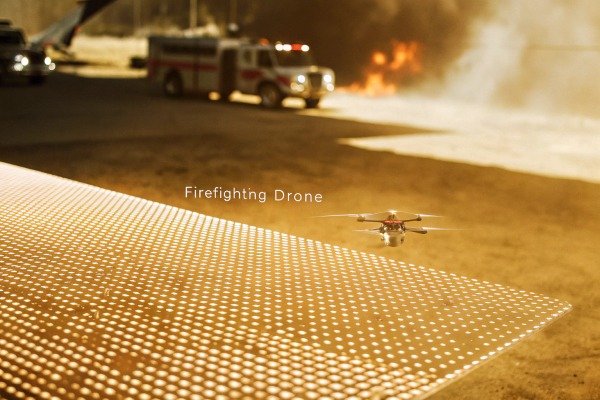
A firefighting drone operates in one of the most hostile environments for precision electronics. The precision of your data depends heavily on how well the system compensates for environmental variables.
Temperature and Humidity Spikes
Fire scenes are hot and wet. Water hoses create high humidity, while the fire generates intense heat. Electrochemical sensors are essentially chemical reactions; heat speeds them up, often causing high readings even if gas levels are constant. Conversely, rapid cooling can cause condensation on optical lenses (for OGI cameras) or laser mirrors (for TDLAS) TDLAS 9. You must ask the supplier if their onboard processor applies real-time compensation algorithms. These algorithms read the ambient temperature and humidity and mathematically adjust the gas reading to correct for drift.
Altitude and Pressure Changes
As a drone ascends, atmospheric pressure drops. This changes the density of the air and the partial pressure of the gas being measured. Without pressure compensation, a sensor calibrated at sea level will under-report gas concentrations at 400 feet. The best integrated systems use the drone's barometer data to actively correct the gas ppm (parts per million) calculation.
Geospatial Synchronization
Flying at 10 to 15 meters per second creates a data lag challenge. The system must synchronize the gas reading (which might have a 2-second processing delay) with the GPS coordinates from 2 seconds ago, not the current location. If this "time-shift" isn't handled by the software, your heat map will be misaligned. When we develop software for our clients, we ensure millisecond-level timestamping to lock the gas value to the exact point in space where it was sampled.
Distance Limitations
Different technologies handle distance differently. Laser-based detectors (TDLAS) can detect methane from 100 meters away, making them immune to the heat of the fire. However, standard electrochemical sensors must physically "touch" the gas, requiring the drone to fly dangerously close to the heat source. Understanding this physical limitation is key to interpreting the data's precision—a reading from 100m away measures the column of gas, while a reading from inside the plume measures a specific point.
| Environmental Factor | Impact on Sensor | Required Solution |
|---|---|---|
| Rapid Temp Rise | False high readings (Drift). | Onboard temp compensation algorithm. |
| High Humidity | Condensation/fogging or signal attenuation. | Heated optical windows or hydrophobic filters. |
| Altitude Change | Lower pressure = lower readings. | Barometric pressure correction integration. |
| High Wind Speed | Disperses gas plume rapidly. | High-sensitivity sensor (ppb level) to catch trace gases. |
What are the standard calibration protocols I should follow for maintaining sensor accuracy?
We advise our clients that buying the drone is just the start of the journey. Without a strict maintenance schedule, even our most advanced SkyRover units will eventually lose their precision and become unreliable.
Follow a strict schedule of monthly lab calibrations and post-exposure checks using standard gas kits. Replace electrochemical sensors immediately if they show "error" or drift significantly, and ensure your ground control software tracks sensor health and remaining life expectancy.

Sensors are consumable items. They degrade over time, especially when exposed to the harsh gases they are designed to detect. Establishing a rigid protocol is the only way to trust your equipment year after year.
The Maintenance Schedule
Manufacturers typically recommend a full laboratory calibration every 6 to 12 months. However, for active firefighting units, we recommend a "bump check" before every deployment and a full calibration verification monthly. If the drone flies through a thick plume of smoke, the particulate matter can clog the intake filters. These filters must be inspected and replaced after every major fire event to prevent the pump from straining and the sensor from starving.
Electrochemical Sensor Life
Common sensors for CO, H2S, and NO2 use chemical electrolytes that dry out or get used up. Their typical lifespan is 12 to 24 months. You should monitor the "baseline drift." If the sensor reads 5 ppm of Carbon Monoxide in clean, fresh air, it is drifting. Most modern ground control software will have a "Health" tab. If the remaining life drops below 20%, order a replacement immediately. Do not wait for it to fail in the middle of an operation.
Optical and Laser Maintenance
Optical Gas Imaging (OGI) and TDLAS systems are more durable but suffer Optical Gas Imaging (OGI) 10 from physical obstruction. Soot, water spots, and dust on the lens will block the infrared light, causing the system to miss gas clouds. The protocol here is physical cleaning using specific lens wipes—never use rough cloth that could scratch the coating. Additionally, check the alignment. Hard landings can knock the laser emitter slightly out of focus, reducing its effective range.
Software Diagnostics
Your drone's software is your first line of defense. Ensure the system provides real-time diagnostic error codes. You want to see alerts for "Sensor Over-Range" (meaning the gas level exceeded the maximum limit, potentially damaging the sensor) or "Pump Failure." Reviewing flight logs after a mission can reveal these errors, indicating that the unit needs bench testing before it flies again.
Storage Protocols
Where you store the drone matters. Storing sensors in a hot vehicle or a damp warehouse will degrade them even when not in use. Electrochemical sensors should be stored in a cool, dry place. Avoid storing them near silicone-based lubricants or cleaning agents, as silicone vapors can permanently poison the catalytic beads in combustible gas sensors (LEL sensors).
Conclusión
Verifying accuracy protects your investment and safety. From checking NIST certificates and running field bump tests to ensuring your software compensates for heat and altitude, strict validation ensures your drone fleet performs when the heat is on.
Notas al pie
1. Industry definition and procedure for bump testing from a major gas detection manufacturer. ↩︎
2. General background information on the operating principles of electrochemical sensors. ↩︎
3. Authoritative health information on Carbon Monoxide from the World Health Organization. ↩︎
4. Official OSHA guidelines and safety information regarding Hydrogen Sulfide. ↩︎
5. Official website of the federal standards body mentioned in the text. ↩︎
6. Official EPA page detailing the Quad O regulations for oil and gas air pollution. ↩︎
7. International Electrotechnical Commission explanation of EMI and EMC standards. ↩︎
8. Overview of intrinsic safety certification services by UL, a major safety company. ↩︎
9. Scientific overview of Tunable Diode Laser Absorption Spectroscopy. ↩︎
10. Technical explanation from a leading manufacturer of OGI technology. ↩︎

 English
  Spanish
  German
  French
  Dutch
Dutch  Arabic
