
When we develop SkyRover software, we know relying solely on brochures is dangerous biometric 1. Smoke and darkness often blind standard sensors, putting your mission and investment at serious risk.
You must demand validation datasets detailing training conditions and conduct controlled field tests Edge AI 2. Verify specific isotherm settings for smoke penetration, measure latency for real-time alerts, and stress-test the system against non-fire heat sources to minimize false positives before finalizing any procurement decision.
To ensure your fleet performs when lives are on the line, follow these specific testing protocols.
How do I test the AI's ability to detect fire sources through heavy smoke and darkness?
During our night flight simulations, we found standard cameras fail instantly in dense smoke. Relying on unverified optical sensors leaves your team blind when visibility drops.
To test smoke penetration, evaluate the drone’s thermal isotherm settings rather than visual feeds. Schedule flight tests during “thermal crossover” periods at dawn or dusk, and ensure the specific sensor fusion aligns accurately to identify heat signatures hidden behind visual obscurants.
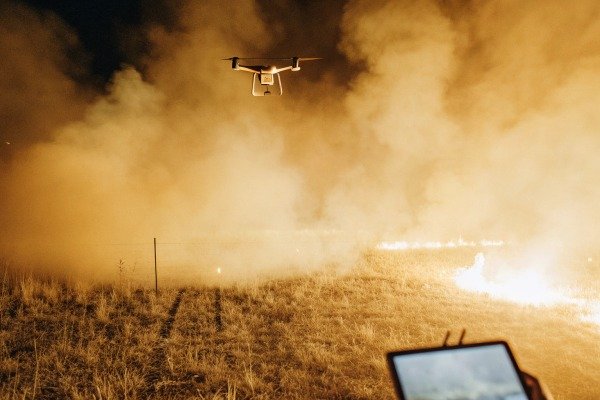
When evaluating a large quadcopter for fire suppression, the marketing materials often show crystal-clear video feeds. fire suppression 3 However, real-world fires are chaotic, dark, and obscured by particulate particulate matter 4 matter. In our engineering labs, we have seen that AI algorithms trained primarily on clear daylight footage fail catastrophically when introduced to heavy smoke.
To rigorously test this, you must look beyond standard optical recognition. You need to verify the Isotherm parameters. An isotherm isolates specific temperature ranges, coloring them brightly while greying out everything else. isotherm 5 A generic thermal camera shows a gradient, but a firefighting-specific AI must allow you to set a "floor" temperature (e.g., >300°C) to cut through the noise of smoke, which often holds ambient heat but is cooler than the source.
The "Thermal Crossover" Trap
One of the most critical tests you can perform is during the "thermal crossover" periods thermal crossover 6—typically dawn and dusk. At these times, the ambient temperature of the ground, rocks, and vegetation often matches the temperature of certain target objects.
- Daytime: The sun heats the ground, creating thermal clutter.
- Night: The ground cools, making hot spots pop.
- Crossover: The contrast disappears.
If the AI recognition system relies purely on temperature contrast without sophisticated shape analysis or multi-spectral fusion, it will fail to detect targets during these windows. You should request a demo flight exactly at sunset to see if the AI loses track of the fire source as the background temperature shifts.
Verifying Sensor Fusion Alignment
Modern firefighting drones use "Sensor Fusion," overlaying thermal data on top of a visual feed. Sensor Fusion 7 This provides context (visual) with data (thermal). However, a common failure point we encounter in cheaper systems is Parallax Error. Because the thermal lens and the optical lens are physically separated on the gimbal, the images can become misaligned at different zoom levels.
If the AI detects a fire based on the thermal sensor but overlays the bounding box on the visual feed incorrectly, your coordinates will be wrong. When you test the drone, point it at a heat source 100 meters away and zoom in. If the glowing heat signature drifts away from the physical object on the screen, the alignment is poor, and the coordinate generation for your ground team will be inaccurate.
Test Protocol: Smoke vs. Clear Air
Use the following table to score the drone's performance during your field trials.
| Test Condition | Standard Optical Camera Result | Raw Thermal Sensor Result | AI-Enhanced Sensor Fusion Result | Passing Criteria |
|---|---|---|---|---|
| Heavy Black Smoke | Zero visibility (Black screen) | High detection of heat source | Accurate overlay of heat source on smoke cloud | Heat source clearly defined; no "ghosting" artifacts. |
| White Steam/Smoke | Low contrast; confusing glare | Moderate detection | High contrast outlining of hotspot | AI must distinguish steam (cool) from smoke (hot). |
| Pitch Darkness | Zero visibility (Grainy noise) | Excellent contrast | Crisp thermal outline with edge detection | Auto-focus must lock onto heat, not hunt for light. |
| Thermal Crossover | Good visibility | Low contrast (Gray wash) | Object recognition based on shape + heat | AI identifies target despite low thermal variance. |
What scenarios should I simulate to ensure the drone distinguishes humans from other objects?
Our coding team spends months tuning algorithms to ignore heated rocks. If your drone mistakes a parked car for a survivor, you waste critical rescue time.
Simulate scenarios containing non-human heat sources like running vehicle engines, heated asphalt, and wildlife. Measure the AI’s confidence threshold at operational altitudes to ensure it accurately distinguishes human thermal signatures from environmental background noise without triggering excessive false alarms.
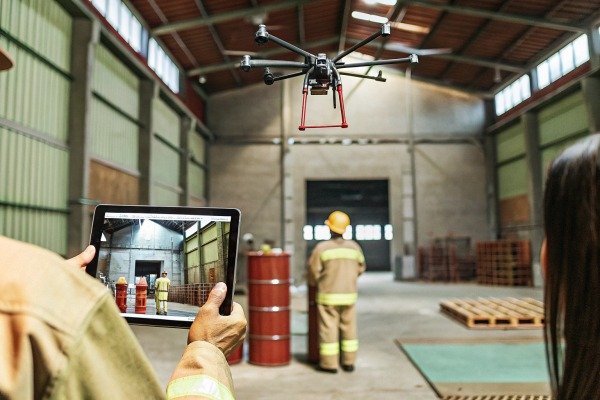
In Search and Rescue (SAR) missions within fire zones, the drone must identify survivors often obscured Search and Rescue (SAR) 8 by canopy or smoke. A major issue we see with imported algorithms is that they are often "over-tuned" for sensitivity. This means they flag anything warm as a human. While this ensures no one is missed, it floods the operator with false positives, eventually leading to "alert fatigue" where the pilot ignores the warnings.
The "Blob" Problem vs. Skeletal Recognition
Basic thermal AI looks for "hot blobs." Advanced AI looks for biometric movement or skeletal shapes. When you test the drone, do not just have a person stand in an open field. That is too easy.
You need to create a Confusion Test. Place a person next to:
- A vehicle with a running engine (similar heat mass).
- A large heated rock or asphalt patch (common in summer).
- A medium-sized animal (like a dog) if possible.
Fly the drone at its maximum operational altitude (e.g., 100 meters). A generic system will likely box all three targets as "Human." A sophisticated system will analyze the aspect ratio (humans are vertical, cars are horizontal) and the movement pattern.
Testing Slant Range and Angle
Another critical factor is the Slant Range—the diagonal distance from the drone to the target. AI recognition accuracy degrades significantly as the angle becomes steeper.
- Top-down view (Nadir): Humans look like small circles (head and shoulders). This is the hardest angle for AI to recognize.
- Angled view (45 degrees): Humans look like walking figures. This is easier for AI.
We recommend testing the drone directly overhead. Many algorithms struggle with the "top-down" perspective because their training datasets primarily consist of CCTV footage taken from a horizontal angle. If the drone cannot identify a survivor while looking straight down, it is useless for grid searches.
Confidence Threshold Calibration
Ask the vendor if the "Confidence Threshold" is adjustable. This is a setting that determines how sure the AI needs to be before it alerts you.
- High Threshold (e.g., 80%): Fewer alerts, but higher risk of missing a survivor (False Negative).
- Low Threshold (e.g., 40%): No survivors missed, but constant alerts for rocks and deer (False Positive).
A professional-grade system allows the pilot to adjust this slider in real-time based on the mission. If you are searching a dense forest, you might lower the threshold. If you are searching an urban area with many hot objects, you raise it.
Recommended Test Objects for Survivor Verification
Use this checklist to ensure the AI is robust against common decoys.
| Object | Thermal Signature | Challenge for AI | Expected Outcome |
|---|---|---|---|
| Human (Stationary) | 36°C-37°C, vertical aspect | Low motion; blends with trees | Detection at >80% confidence. |
| Running Car Engine | 80°C+, blocky shape | Much hotter than human; large size | Ignore or classify as "Vehicle". |
| Heated Asphalt | 30°C-50°C, large surface | Massive background noise | Ignore. System must mask ground heat. |
| Wildlife (Deer/Dog) | 38°C, horizontal aspect | Similar temp to human; movement | Classify as "Animal" or low confidence alert. |
How can I measure the real-time data processing speed of the AI during a mission?
We engineer our onboard chips to process data locally. If the drone relies on a slow connection to the cloud, your tactical map becomes obsolete instantly.
Measure the total system latency, specifically the time lag between the AI detecting a hazard and the alert appearing on your ground control station. Simulate a complete data link loss to verify that the onboard Edge AI continues processing and tagging targets locally.

In firefighting, seconds matter. A delay in video feed or AI detection can mean the difference between containing a spot fire and losing control. When we export drones to the US, we often explain the difference between Edge AI and Cloud AI.
- Edge AI: Processing happens on the drone's flight computer. It is fast and works without internet.
- Cloud AI: The video is sent to a server, processed, and results are sent back. This introduces lag.
For critical missions, you should almost always prioritize Edge AI. However, even onboard systems have latency.
Measuring "Glass-to-Glass" Latency
You need to test the Latency. This is the time it takes for a photon to hit the camera lens and for that image (with the AI bounding box) to appear on your controller screen.
How to test:
- Set up a digital stopwatch on a table.
- Point the drone camera at the stopwatch.
- Film the drone's controller screen with your smartphone in slow motion.
- Compare the time shown on the stopwatch vs. the time shown on the drone's screen feed.
- The difference is your latency.
For high-speed tactical flight, anything over 150 milliseconds (ms) can cause pilot oscillation (where you overcorrect because the video is lagging). For AI alerts, if the drone is flying at 15 meters per second, a 2-second processing delay means the drone has traveled 30 meters past the target before you even see the alert.
Data Link Loss Simulation
A robust system must handle signal loss. Firegrounds often have interference that cuts the video link.
The Test:
While the drone is autonomously tracking a fire line or searching a grid, disconnect the video antenna or intentionally fly behind a building to break the link.
Wait 30 seconds, then reconnect.
The Question: Did the AI continue to work?
- Fail: The drone stopped recording data when the link broke.
- Pass: The drone continued to scan, log coordinates of hotspots to its internal SD card, and automatically uploaded them to the controller the moment the link was re-established.
This feature is vital. The drone is often your "eye" in places you cannot reach. If it stops "thinking" just because it can't "talk" to you, it is not a smart drone; it is just a remote-controlled camera.
Latency Standards for Firefighting Drones
| Componente | Standard Commercial Drone | Professional Tactical Drone | Impact of Poor Performance |
|---|---|---|---|
| Video Feed Latency | 200ms – 400ms | < 100ms | Pilot nausea; difficulty flying near obstacles. |
| AI Processing Time | 1.0 – 2.0 seconds | < 0.1 seconds (Real-time) | Drone passes target before alerting operator. |
| Alert Transmission | Dependent on 4G/5G | Independent (RF Link) | Alerts fail in remote areas with no cell tower. |
| Link Loss Behavior | Stops processing | Logs to internal memory | Data gaps in critical fire mapping. |
What benchmarks should I use to evaluate the system's false alarm rate?
We once recalled a batch because solar reflections triggered fire alerts. High false alarm rates desensitize operators, leading them to ignore genuine warnings during actual emergencies.
Evaluate the system using Precision Precision and Recall 9 and Recall metrics rather than simple accuracy percentages. Conduct stress tests involving reflective surfaces and varying vegetation types to determine the specific false positive rate, ensuring the AI only flags genuine thermal anomalies as actionable threats.
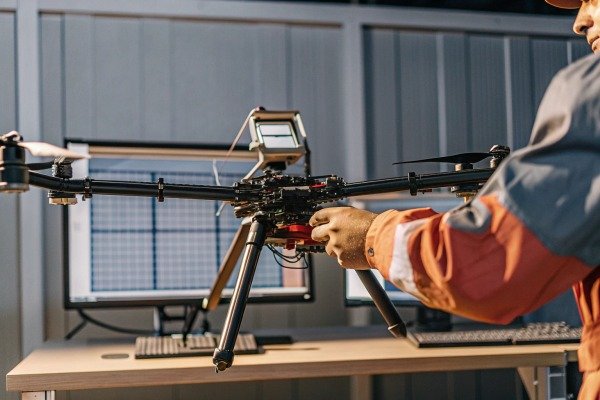
When you talk to sales representatives, they will often claim "99% Accuracy." In our industry, this number is meaningless without context. If a drone flies for an hour and sees nothing (which is correct because there is no fire), it is 100% accurate. But that doesn't tell you if it would have seen a fire.
To truly benchmark the system, you need to understand and test for Precision and Recall.
- Recall (Sensitivity): Out of 10 actual fires, how many did the drone find? (e.g., It found 9 out of 10. Recall is 90%).
- Precision: Out of 10 alerts the drone sent, how many were actually fires? (e.g., It sent 20 alerts, but only 10 were fires. Precision is 50%).
In firefighting, Recall is more important. You can tolerate a few false alarms (low precision) if it means you never miss a fire (high recall). However, if precision drops too low, the system becomes annoying and unusable.
The "Reflection" Stress Test
The biggest enemy of optical fire detection is Sun Glare. Sunlight reflecting off a tin roof, a wet road, or a glass building can look exactly like a flame to a basic AI model (bright, flickering, yellowish).
The Test:
Fly the drone on a bright, sunny day over an industrial area or a parking lot.
Count how many times the AI draws a "Fire" box around a windshield or a metal roof.
A high-quality algorithm uses "temporal analysis"—it watches the object for a few seconds. Fire flickers chaotically; a reflection is usually steady or moves predictably with the drone's flight. If the AI alerts instantly on a reflection without checking for movement, the software is immature.
Vegetation and Fuel Type Validation
Another benchmark is the system's ability to recognize your local fire type.
We have seen algorithms trained on California wildfires (burning pine and dry brush) fail completely California wildfires 10 when used in industrial chemical fires or peat bog fires.
- Forest Fire: High flames, lots of smoke.
- Peat Fire: Smoldering ground, little visible flame, high heat.
- Chemical Fire: Unusual smoke colors (green/yellow), extremely high temperatures.
If you are a procurement manager for a city department, testing the drone on forest data is not enough. You must ask the manufacturer: "Has this model been trained on structural fires and chemical burns?" If the answer is no, the benchmarks provided in the brochure are invalid for your specific use case.
Conclusión
Testing AI recognition accuracy is not about trusting the spec sheet; it is about verifying performance in the chaos of the real world. By stressing the system with heavy smoke, challenging it with thermal crossover conditions, measuring edge processing speeds, and benchmarking false alarm rates against reflective surfaces, you ensure the drone is a true asset. Don't just buy a flying camera—invest in a validated, intelligent partner that enhances your team's safety and efficiency.
Notas al pie
1. International standards body responsible for standardization in the field of biometrics. ↩︎
2. Industry leader defining Edge AI computing and its applications. ↩︎
3. Leading international organization establishing standards for fire safety and suppression. ↩︎
4. Official government resource defining particulate matter and its environmental impact. ↩︎
5. Technical explanation of isotherm technology from a major thermal sensor manufacturer. ↩︎
6. Official definition of thermal crossover from the National Wildfire Coordinating Group. ↩︎
7. General overview of the concept of combining data from multiple sensors. ↩︎
8. Government department outlining technology and protocols for SAR missions. ↩︎
9. Standard statistical definitions used to evaluate the performance of pattern recognition algorithms. ↩︎
10. Academic research center focused on fire science and management in California. ↩︎

 English
  Spanish
  German
  French
  Dutch
Dutch  Arabic
