
When we ship emergency response drones from our production lines in China to fire departments overseas, we often hear the same worry. You are concerned that a single technical failure during a blaze could ground your operation. We understand that downtime is not an option when lives are at stake.
Most suppliers do not provide free spare drone units due to high manufacturing costs. Instead, standard support typically focuses on modular spare parts kits, crash replacements, or negotiated “N+1” redundancy contracts where agencies purchase backup units at a discounted rate to ensure continuous uptime during repairs.
Let’s examine how you can secure the necessary backup hardware to keep your fleet operational.
Can I negotiate for backup firefighting drones to be included in my initial purchase contract?
During our contract discussions with U.S. distributors and public safety clients public safety clients 1, we frequently address the critical need for immediate hardware availability. We know that without a strategic backup plan, a single crash can disrupt your entire emergency response capability.
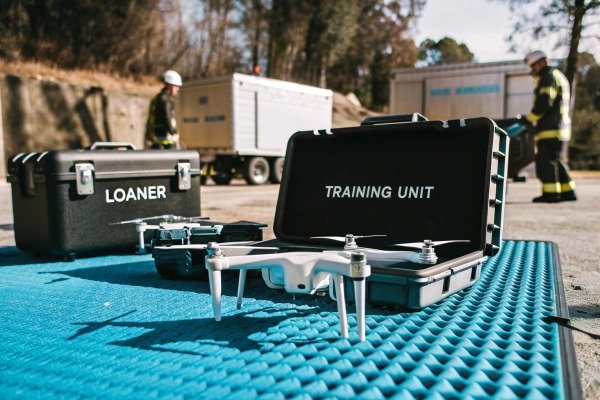
Negotiating for free backup drones is rare, but buyers can often secure "consignment stock" agreements or volume discounts for an extra standby unit. We recommend including clauses for a "loaner availability guarantee" or purchasing a dedicated training unit that doubles as an emergency spare to minimize operational risks.
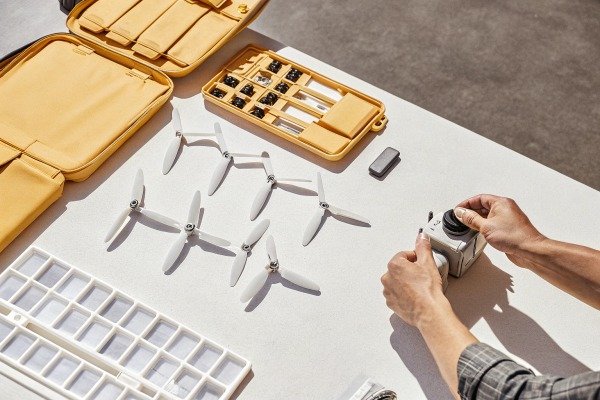
When you sit down to negotiate a contract for industrial firefighting drones industrial firefighting drones 2, you must approach the table with a clear understanding of the supplier's cost structure. Industrial drones are capital-intensive machines. Unlike consumer drones, we cannot easily write off the cost of a complete spare unit as a marketing expense. However, there are specific strategies you can use to secure a backup unit or equivalent protection without paying full retail price.
The "Training Unit" Strategy
One of the most effective negotiation tactics we see successful procurement managers use is the "training unit" approach. instead of asking for a free spare, you negotiate for a lower-spec or slightly used demo unit to be included as a training tool. In our factory, we often have units that have been used for flight testing or trade shows. These units are fully functional but cannot be sold as new. By securing one of these at a deep discount—or even as a value-add in a large bulk order—you effectively gain a spare airframe. If your primary drone crashes, you can swap the payload (camera or sprayer) to the training unit and continue the mission.
Consignment Stock Agreements
Another advanced strategy is negotiating for consignment stock. consignment stock 3 This is particularly useful for high-value components if not a full drone. In this arrangement, we or the local distributor agree to store critical backup units or expensive parts at your facility. You do not pay for them upfront. You only pay if you break the seal and use them. This gives you immediate access to a spare without tying up your budget in inventory that might sit idle.
Volume-Based Incentives
If you are purchasing a fleet, leverage your volume. While we may not give a free drone for a single unit purchase, an order of five or more units changes the math. At that scale, adding a "hot spare" (a ready-to-fly backup) becomes a feasible discussion point to close the deal.
Contract Clauses for Uptime
Rather than focusing solely on physical hardware, focus on "guaranteed uptime." You can write performance clauses into the contract. If a unit fails due to a warranty issue, the supplier must provide a replacement within 24 hours or face penalties. This forces the supplier to manage the spare inventory problem for you.
| Negotiation Strategy | Probability of Success | Primary Benefit |
|---|---|---|
| Free Spare Unit | Bajo | Zero cost, immediate redundancy. |
| Discounted Training Unit | Alto | Low cost, serves dual purpose (training/backup). |
| Consignment Stock | Medio | No upfront cost, immediate access on site. |
| Uptime Guarantee Clause | Medium-High | Shifts inventory risk to the supplier/distributor. |
Will the manufacturer provide loaner units if my equipment needs to be sent back for repairs?
When our service engineers receive a damaged fuselage for analysis, we understand the urgency of getting you back in the air. Waiting weeks for international shipping and repairs is simply not an option for active fire departments.
Manufacturers rarely offer direct loaner units for international clients due to shipping logistics and customs delays. However, local Value-Added Resellers (VARs) often maintain a loaner fleet as part of a premium Service Level Agreement (SLA), providing a temporary replacement while your primary drone undergoes factory maintenance.

The logistical reality of international trade makes direct manufacturer loaners difficult. If you buy directly from us in China, shipping a loaner unit to the United States involves customs clearance customs clearance 4, tariffs, and expensive air freight. By the time the loaner arrives, your original unit might already be repaired. This is why the role of your local partner is critical.
The Role of Local Value-Added Resellers (VARs)
This is where your choice of vendor matters immensely. While we manufacture the drones, the local distributor or VAR is your front line of support. Smart distributors keep a "service fleet." These are units specifically designated for loan to clients during repair windows. When you negotiate your support package, you should explicitly ask: "Do you have a loaner program?" If they do, they can overnight a replacement to your fire station. If you buy directly from a factory abroad to save money, you usually lose this benefit.
Acuerdos de Nivel de Servicio (SLA)
Loaner units are rarely free perks; they are usually part of a paid SLA. A standard warranty covers defects, but it does not cover the loss of use. An SLA is an insurance policy for uptime. insurance policy for uptime 5
- Gold/Platinum Support: typically includes free loaner units with overnight shipping.
- Standard Support: might offer loaners at a rental fee.
- Basic Warranty: usually offers no loaner, just a repair timeline.
The "Return-to-Base" Bottleneck
Most industrial drone warranties operate on a "Return-to-Base" model. You must ship the broken unit to a repair center. If that center is in another country, you face weeks of downtime. We are seeing a trend where manufacturers certify local repair shops to handle 90% of issues. However, if the damage involves the core flight controller or proprietary encrypted boards, it may still need to return to the factory. In these specific cases, a loaner is the only way to maintain operations.
Critical Questions to Ask Regarding Loaners
Before signing a purchase order, ask these specific questions to clarify the loaner policy:
- Is the loaner identical? Using a different model might require new pilot training or incompatible batteries.
- Who pays for shipping? Overnighting a heavy industrial drone is expensive.
- What is the maximum wait time? A loaner is useless if it takes a week to arrive.
- Is there a firmware match? Does the loaner run the same software version as your ground station?
| Nivel de soporte | Loaner Availability | Typical Cost | Tiempo de respuesta |
|---|---|---|---|
| Direct Manufacturer Warranty | Very Rare | High shipping costs | 2-4 Weeks |
| Distributor Standard | Rental Basis | Daily/Weekly Fee | 3-5 Days |
| Distributor Premium SLA | Included | Included in Annual Fee | 24-48 Hours |
| Third-Party Insurance | Replacement Unit | Deductible Payment | 3-7 Days |
How many spare drones should I keep in inventory to ensure continuous operation during emergencies?
We often see agencies struggle when their only unit requires a mandatory firmware update or a minor mechanical adjustment during a crisis. Relying on a single aircraft for mission-critical tasks creates a dangerous single point of failure. single point of failure 6
Public safety agencies should adopt an "N+1" redundancy model, where "N" is the number of active drones required for duty. For a standard fire station, maintaining one complete spare unit for every two active drones ensures that a backup is always ready for immediate deployment if a primary unit fails.
Determining the right inventory level is a balance between budget constraints and risk tolerance. In the firefighting sector, redundancy is not a luxury; it is a requirement. If a drone is providing thermal imaging for a roof crew thermal imaging 7, and it loses a motor, the team on the ground loses their eyes. You cannot wait for a repair.
The "N+1" Redundancy Rule
The gold standard in aviation and IT is "N+1." aviation and IT 8
- N = The number of units you need in the air simultaneously.
- +1 = The backup required to cover a failure.
If your department needs one drone in the air to monitor a fire, you must own two. If you need two in the air (perhaps one for thermal, one for zoom), you should own three. This ensures that a battery swap, a propeller chip, or a sensor calibration error does not end the mission.
Inter-Agency Mutual Aid
We recognize that small departments cannot always afford N+1. This is where "Mutual Aid" becomes a spare strategy. If neighboring districts use the same platform (e.g., all using SkyRover or DJI Matrice) DJI Matrice 9, you can share a regional spare pool. We encourage clients to coordinate with nearby agencies during procurement. If everyone buys compatible batteries and payloads, a neighbor's spare drone becomes your spare drone during a major event.
The Risk of "Firmware Drift"
There is a hidden danger in keeping spare drones: inactivity. If you buy a spare drone and leave it in a case for six months, it may not fly when you pull it out.
- Batteries: Lithium batteries self-discharge. Lithium batteries self-discharge 10 If they drop too low, they may lock permanently or fail to hold a charge.
- Firmware: Manufacturers release updates frequently. A spare drone might require a mandatory update before it will take off. In an emergency with no internet connection, a non-updated spare is a paperweight.
Maintenance Tip: You must rotate your spare drone into the active fleet at least once a month to ensure it is updated and the batteries are healthy.
Calculating Your Needs
We suggest analyzing your call volume and environment.
- High Risk: Wildfires, heavy smoke, water operations. High probability of damage. Ratio: 1 Spare for 1 Active (1:1).
- Medium Risk: Structural fires, search and rescue. Moderate wear. Ratio: 1 Spare for 2 Active (1:2).
- Low Risk: Accident reconstruction, inspection. Low wear. Ratio: Mutual Aid Reliance.
| Fleet Size (Active Needed) | Recommended Total Units | Redundancy Strategy |
|---|---|---|
| 1 Drone | 2 Units | 1 Active + 1 Backup (N+1) |
| 2 Drones | 3 Units | 2 Active + 1 Backup (N+1) |
| 3 Drones | 5 Units | 3 Active + 2 Backups (N+2) |
| Regional Pool | Varía | Shared pool of 2-3 units across districts |
Is it better to purchase a complete standby unit or just stock essential repair parts?
Our engineers designed the SkyRover series with modularity in mind because we know that field repairs must be fast and simple. Deciding between investing in a full backup drone versus a comprehensive box of spare parts is a financial balancing act for every department.
Purchasing a complete standby unit provides the highest reliability for critical missions, as it eliminates repair time entirely. However, stocking essential modular parts like motors, propellers, and camera payloads is more cost-effective for minor incidents, allowing trained pilots to perform immediate field swaps without grounding the entire system.

The choice between "Parts" vs. "Planes" depends heavily on your team's technical skill and your operational tempo.
The Case for Complete Standby Units
A complete unit is the ultimate insurance. When a drone crashes, diagnosing the problem takes time. Is it the motor? The ESC? The flight controller? In a fire, you do not have time for diagnosis. You grab the backup case, power on, and fly.
- Pros: Instant recovery, no technical skill needed, guaranteed performance.
- Cons: High initial capital cost, requires maintenance (updates).
The Case for Essential Repair Parts
Modern industrial drones are modular. Arms, landing gear, and payloads often snap on or bolt on with minimal tools. Stocking a "Crash Kit" is significantly cheaper than a new drone.
- Essential Parts to Stock:
- Propellers: Consumables. You should have dozens.
- Landing Gear: Often breaks on hard landings but doesn't affect flight avionics.
- Arms/Motors: If your drone design allows for quick-release arms (like some of our models), stocking a spare arm is a great middle ground.
- Gimbal/Camera: This is the most fragile part. Having a spare camera means you can keep the drone flying even if the sensor breaks.
Technical Competency Requirements
You must be honest about your team's skills. If you buy spare motors, do you have a technician who can solder? Do you have the tools to calibrate an IMU after a repair? If your department does not have a certified technician, spare parts are useless in the field. They might even void your warranty if installed incorrectly.
Hybrid Approach: The "Crash Kit" + SLA
For most departments, the best approach is a hybrid one.
- Field Level: Carry props and simple snap-on parts (batteries, landing gear).
- Depot Level: Rely on the manufacturer or distributor for internal repairs (boards, sensors).
Do not try to replace a motherboard in the back of a fire truck. It is better to have a spare drone for major failures and spare props for minor ones.
Cost Efficiency Analysis
Let's look at the numbers. A full firefighting drone might cost $15,000. A spare arm with a motor might cost $800. If your most common failure is a broken motor, buying the part saves you $14,200. But if the drone falls into a lake, the part is useless.
Conclusión
Securing spare units requires smart negotiation and strategic planning rather than relying on supplier generosity. We recommend balancing "N+1" redundancy with a robust local parts inventory and strong Service Level Agreements. This ensures your mission never fails due to equipment downtime.
Notas al pie
1. NIST provides research and standards for public safety technology and communications. ↩︎
2. NFPA 2400 is the industry standard for the use of sUAS in public safety operations. ↩︎
3. General background on the business concept of consignment inventory. ↩︎
4. Official U.S. government guidance on the legal requirements for importing goods and customs clearance. ↩︎
5. Example of professional service level agreements that act as uptime guarantees. ↩︎
6. Carnegie Mellon University research on system reliability and avoiding single points of failure. ↩︎
7. ISO standard for thermographic testing and thermal imaging equipment specifications. ↩︎
8. Wikipedia entry explaining the N+1 redundancy concept used in aviation and IT sectors. ↩︎
9. Official product documentation for the DJI Matrice, a common industrial drone platform mentioned. ↩︎
10. IATA provides the industry standards for the safe transport and handling of lithium batteries. ↩︎

 English
  Spanish
  German
  French
  Dutch
Dutch  Arabic
