
We often hear from clients frustrated by data silos after deploying new aerial fleets. data silos 1 Investing in advanced hardware is pointless if the flight logs cannot communicate with your central management system, leaving valuable data trapped inside the drone.
To confirm integration support, check the manufacturer’s technical specifications for open API or SDK availability and verify compatibility with specific platforms like John Deere John Deere Operations Center 2 or Trimble. Ensure the drone exports standard formats such as ISOXML ISOXML is rapidly becoming 3 or Shapefiles and request a trial data set to test import workflows before purchasing.
Buying the right hardware requires looking under the digital hood to ensure your new tools play nicely with your existing farm ecosystem.
How can I verify if the drone manufacturer offers an open SDK or API for seamless data transfer?
Relying on manual SD card swaps creates delays and introduces human error during critical spraying seasons. When we design our flight controllers, we prioritize digital bridges that automate this data flow, ensuring operations run smoothly without physical data handling.
You can verify open SDK or API availability by reviewing the manufacturer’s developer documentation and checking for a public GitHub repository or partner portal. Ask the sales team specifically about “API endpoints” for flight logging and request examples of successful integrations with third-party software systems.

Understanding the Digital Handshake
When you are evaluating a new agricultural drone, the hardware specs—like pump pressure or battery life—are often the first things you check. However, for a modern smart farm, the software architecture is just as critical. An API (Application Programming Interface) or SDK (Software Development Kit) acts as a digital translator. SDK (kit de desarrollo de software) 4 API (Interfaz de programación de aplicaciones) 5 Software Development Kit 6 Application Programming Interface 7 It allows your drone to "speak" directly to your farm management software without you having to manually move files.
Without an open API, your drone is a closed system. This means you must physically remove data, convert it, and upload it elsewhere. In our factory testing, we have found that open systems reduce data processing time by up to 40%. To verify this capability, do not just take the salesperson's word for it. You need to see the documentation. A true open-system manufacturer will have a "Developer Portal" or a technical document outlining how external software can request data from the drone.
Distinguishing Between SDK and API
It is important to understand the difference when questioning a supplier. An API usually allows for data transfer—sending flight logs to the cloud. An SDK often allows for deeper control—letting third-party apps control the drone's flight path.
| Característica | API (Interfaz de programación de aplicaciones) | SDK (kit de desarrollo de software) |
|---|---|---|
| Función principal | Data Exchange | System Control & App Creation |
| Typical Use Case | Automatically syncing flight logs to the cloud. | Creating a custom flight planning app on a tablet. |
| Complexity | Low to Medium | High (Requires programming knowledge) |
| Buyer Question | "Can my server pull data from your cloud?" | "Can I build my own app to fly your drone?" |
If a manufacturer is hesitant to share this documentation or claims it is "proprietary," you are likely looking at a closed system. This restricts your long-term flexibility. Always ask for a sample API token or a link to their SDK documentation before signing a contract.
Will the drone's flight data be compatible with my existing precision agriculture platforms?
Mismatched software ecosystems can render a high-tech sprayer as dumb as a manual pump. We test our systems against major platforms to ensure our clients don’t face these expensive compatibility roadblocks when integrating new units into established workflows.
Compatibility is determined by checking the drone’s official integration partners list for names like John Deere Operations Center or Trimble Ag. If direct integration is absent, ensure the drone exports standardized file types like GeoTIFF or Shapefiles that your specific precision agriculture platform can manually import.
Native Integration vs. Manual Workarounds
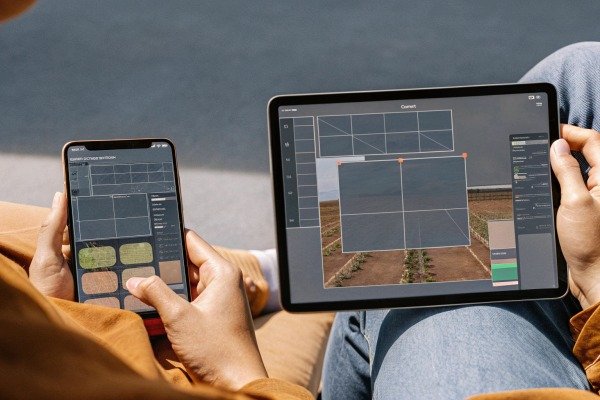
The "Gold Standard" for purchasing a drone is native integration. This means the drone manufacturer has a formal partnership with platforms like John Deere Operations Center, Trimble Ag, or Climate FieldView. In this scenario, you log in once, and the data appears in your dashboard automatically. However, many mid-market drones provide excellent hardware without these expensive formal partnerships.
If native integration is missing, it does not mean the drone is incompatible. It just means the workflow is different. You need to verify that the drone's "As-Applied" maps (which show where spray was dispensed) or "Scouting" maps (NDVI imagery NDVI imagery 8) can be ingested by your platform. We recommend performing a "dummy run" during the negotiation phase. Ask the supplier to send you a raw data file from a recent test flight. Try to upload this file into your specific farm management software. If it fails or requires complex conversion, you will face that same headache every single day after purchase.
The "Walled Garden" Risk
Some large manufacturers create what we call a "Walled Garden." They make excellent drones, but they force you to use their proprietary analysis software. They might encrypt the flight data so it can only be read by their own apps. This is dangerous for a procurement manager because it locks you into one vendor.
When evaluating compatibility, look for freedom of data movement. Your agronomy team might use Pix4Dfields for analysis, while your logistics team uses FarmWorks. The drone must satisfy both.
Common Platform Compatibility Check
| Farm Management Platform | Preferred Connection Method | Backup Import Method |
|---|---|---|
| John Deere Ops Center | API (Wireless Data Transfer) | Shapefile (.shp) via USB stick |
| Trimble Ag Software | Connected Farm / API | ISOXML or Shapefile |
| Climate FieldView | Cloud-to-Cloud Integration | Manual Data Inbox (Script/Map) |
| SMS (Ag Leader) | Direct Device Setup | Generic GeoTIFF / CSV Import |
Always ask the vendor to demonstrate the specific pathway your data will take from the drone to your specific platform. If they cannot demonstrate it, assume it does not exist.
Can the supplier assist me with custom software development if standard integration isn't available?
Generic, off-the-shelf software rarely fits every unique farming workflow perfectly, especially for large-scale operations. Our R&D team frequently collaborates with clients to build custom middleware that bridges specific hardware to their proprietary internal systems.
Suppliers with strong OEM/ODM capabilities can often develop custom middleware or API bridges to link their hardware with your specific software. Request a consultation with their engineering team to discuss your proprietary requirements and ask for case studies where they have successfully built similar custom data solutions.

The Value of ODM/OEM in Software
Many buyers assume that they must buy a drone "as is." However, working with a manufacturer that possesses strong engineering capabilities—like our teams in Xi'an and Chengdu—opens up new possibilities. If you have a proprietary Farm Management Information System (FMIS) that is unique to your company, standard drones may never support it out of the box.
In these cases, the ability of the supplier to offer custom development is the deciding factor. This is often referred to as "Middleware Development." The supplier creates a small piece of software that sits between the drone and your server, translating the drone's language into your system's language. This is a service that mere distributors cannot provide; it requires direct access to the factory's source code.
assessing Engineering Capability
How do you know if a supplier can actually pull this off? You need to move beyond the sales rep and speak to a product manager or engineer. During your inquiry, ask the following questions:
- "Do you have an in-house software team, or is it outsourced?"
- "Have you ever customized the Ground Control Station (GCS) app for a client?"
- "Can you modify the data packet structure to match our server requirements?"
If the supplier is purely a trading company, they will likely say no or quote an exorbitant price because they have to hire a third party. A manufacturer with OEM roots will view this as a collaborative project.
Collaboration Tiers
| Service Level | Descripción | Typical Supplier Profile |
|---|---|---|
| Standard Retail | You get what is in the box. No changes allowed. | Consumer Drone Brands / Resellers |
| API Access | You get access to data but must build the bridge yourself. | Prosumer / Enterprise Brands |
| Co-Development | Supplier engineers write code to link systems for you. | Industrial OEM Manufacturers |
Choosing a partner willing to co-develop ensures that as your farm management software evolves (e.g., adding AI analysis in 2026), your hardware supplier can update the drone's firmware to match.
What data output formats should I look for to ensure easy import into my farm management tools?
Receiving data in a proprietary format is like getting a letter written in a language you cannot read. We adhere to global standards in our export protocols to ensure your maps and logs are immediately usable without expensive conversion software.
Prioritize drones that export industry-standard formats including ISOXML for ISOBUS compatibility, Shapefiles (.shp) for boundary mapping, and GeoTIFF for aerial imagery. Avoid systems that only provide proprietary encrypted files, as these restrict your ability to analyze crop health or yield data in third-party management tools.

The Universal Languages of AgTech
Data friction occurs when formats do not match. If your drone saves a spray report as a proprietary .DAT file, but your tractor's terminal only reads .XML, you have a problem. To ensure your investment is future-proof, you must insist on standard formats.
ISOXML is rapidly becoming the most critical standard in precision agriculture. It is the language of ISOBUS, the standard that allows tractors ISOBUS, the standard 9, sprayers, and terminals from different brands to talk to each other. If your drone can export a "prescription map" in ISOXML, you can load that file directly into a John Deere or Case IH tractor terminal to control a ground sprayer.
Visual vs. Numerical Data
You also need to distinguish between visual data and numerical data.
- Visual Data (GeoTIFF, JPG with EXIF): This is for scouting. You fly the drone, take pictures, and stitch them into a map. Most software accepts GeoTIFF.
- Vector/Numerical Data (Shapefile, KML, GeoJSON): This is for boundaries and flight paths. If you want to define a field boundary in your office software and send it to the drone, you need Shapefile (.shp) or KML support. Shapefile (.shp) 10
Check Your Data Export Checklist
Before signing a purchase order, go down this checklist with the supplier. Ask them to confirm "Yes" or "No" for each output:
- Spray Logs: Does it output a CSV or Excel file showing exactly how much liquid was sprayed per second, stamped with GPS coordinates?
- Boundary Files: Can it import/export KML or SHP files so I don't have to re-draw my fields manually?
- Prescription Maps: Can the drone read a Variable Rate Application (VRA) map generated by my agronomist?
By ensuring these formats are supported, you avoid the "vendor lock-in" trap and ensure your drone is a versatile tool in your arsenal, rather than a standalone toy.
Conclusión
Confirming third-party integration requires a proactive audit of APIs, file formats, and vendor engineering capabilities. By demanding open standards like ISOXML and verifying SDK availability, you ensure your new drone fleet acts as a connected extension of your farm management system, maximizing efficiency and ROI.
Notas al pie
1. Wikipedia definition of information silos and their impact on data integration. ↩︎
2. Official product page for the specific farm management platform mentioned. ↩︎
3. Official ISO standard for data exchange in agricultural machinery. ↩︎
4. Clear definition of SDK from a leading cloud services provider. ↩︎
5. Authoritative definition of API from a major technology company. ↩︎
6. Technical documentation from AWS explaining the role of a Software Development Kit. ↩︎
7. Wikipedia entry defining the core concepts of an Application Programming Interface. ↩︎
8. NASA Earth Observatory explanation of NDVI imagery and vegetation measurement. ↩︎
9. The AEF is the industry organization responsible for maintaining the ISOBUS standard. ↩︎
10. Official documentation for the Shapefile format from its creator, Esri. ↩︎

 English
  Spanish
  German
  French
  Dutch
Dutch  Arabic
