
We have seen too many clients struggle after buying equipment that looked perfect on paper but failed in the field. When our engineering team designs flight systems in Xi'an, we know that a brochure number often differs from reality, and losing connection mid-spray is a nightmare you want to avoid.
To verify range accuracy, you must conduct controlled field tests measuring the Receiver Signal Strength Indicator (RSSI) and control latency under full payload conditions. Do not rely on spec sheets; instead, analyze flight logs for signal degradation patterns and test Return-to-Home triggers at safe altitudes to ensure the link remains stable despite local interference.
Reliable verification protects your investment and ensures your spraying operations run smoothly without costly interruptions.
Why is the actual flight range often shorter than the manufacturer's specified distance?
When we calibrate our flight controllers for export to the US, we measure maximum distance in ideal conditions to establish a baseline performance metric. However, we always warn our distributors that these "lab results" rarely survive contact with a real farm environment.
Manufacturers typically test drones in obstruction-free environments with zero radio interference, whereas real-world operations face physical barriers like trees and electromagnetic noise that degrade signals. This discrepancy significantly reduces effective control distance compared to the theoretical maximums listed in technical specifications.
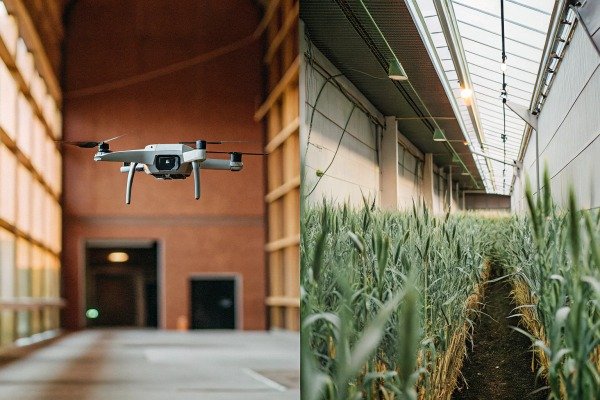
Understanding the gap between laboratory data and field reality is crucial for making an informed purchase. Most buyers look at a spec sheet and see "5 km range," assuming they can fly that far in any direction. In our factory testing, we achieve these numbers by flying in areas with an extremely low noise floor and perfect line-of-sight. perfect line-of-sight 1
The Physics of Signal Loss
The primary culprit is the Fresnel Fresnel zone 2 zone. This is an invisible, football-shaped area between the remote controller and the drone. In a lab or a flat desert, this zone is clear. On a farm, corn stalks, hills, or even the operator's truck can encroach on this zone. Even if you can still see the drone, if 40% of this zone is blocked, your signal Receiver Signal Strength Indicator 3 strength drops dramatically.
Battery Voltage and Transmission Power
Another factor we monitor closely during R&D is voltage sag. A drone flying with an empty tank requires less power from the motors. When you load a 30-liter tank on the drone, the motors draw significantly more current. This heavy load can sometimes cause slight voltage drops that impact the peak performance of the transmission module, especially if the battery is older.
Below is a comparison of how testing conditions differ from your daily reality:
| Característica | Manufacturer Lab Test | Real-World Farm Operation | Impact on Range |
|---|---|---|---|
| Interference | Near zero (remote areas) | High (Wi-Fi, power lines, cell towers) | Reduces range by 30-50% |
| Line of Sight | Perfect, uninterrupted | Partial (trees, barns, hills) | Signal cuts out unexpectedly |
| Carga útil | Often tested empty | Full liquid tank | Tank blocks internal antennas |
| Antenna Orientation | Optimized alignment | Variable/Random | sporadic "dead zones" |
We advise clients to view the advertised range as a "theoretical maximum" rather than a guaranteed operational radius. If a brochure claims 5 km, plan for a reliable 2.5 km in a working environment.
What environmental factors should I consider that affect signal transmission during field operation?
Our support team frequently troubleshoots range issues for customers in Texas and Europe, and the root cause is almost always the local environment. We have found that invisible elements in the atmosphere and surrounding infrastructure play a massive role in signal health.
Key environmental variables include high-voltage power lines that cause electromagnetic interference, dense vegetation blocking the Fresnel zone, and uneven terrain creating dead spots. Additionally, atmospheric moisture and local Wi-Fi congestion in the 2.4GHz or 5.8GHz bands can further weaken signal stability.
You need to survey your land before you even launch. An agricultural drone is not just fighting gravity; it is fighting the invisible soup of radio waves and physical barriers around it.
Electromagnetic Interference (EMI)
High-voltage power lines are the biggest enemy of drone signals. High-voltage power lines 4 They emit a strong magnetic field that creates "noise." If your drone flies too close to these lines, the remote controller's signal gets drowned out by this noise. In our field tests, we have seen control links sever instantly when a drone passes within 20 meters of a major transmission line. Even underground pumps or electric fences can generate enough noise to reduce your effective range.
The "Payload Shading" Effect
This is a factor many buyers overlook. Agricultural drones carry large tanks of liquid (water, pesticides, fertilizers). Water is an excellent absorber of radio waves. If you fly the drone away from you and then turn it so the liquid tank is between the remote controller and the drone's antenna, the liquid itself can block the signal. We call this "body blocking" or "payload shading."
Weather and Humidity
Radio waves, particularly at higher frequencies like 5.8 GHz, struggle to penetrate moisture.
- High Humidity: On very humid mornings, the air itself absorbs more signal energy.
- Wet Vegetation: Leaves covered in dew or rain reflect and scatter radio signals much more than dry leaves.
- Temperature: Extreme heat can affect the thermal performance of the amplifiers in both the remote and the drone, potentially lowering output power slightly.
Terrain Mapping and Dead Zones
Uneven terrain is dangerous. If your drone flies behind a small hill, the radio link is physically severed. Unlike a video game, the signal does not curve around the earth. We recommend using the following checklist to assess your field before buying:
| Environmental Factor | Nivel de riesgo | Mitigation Strategy |
|---|---|---|
| High-Voltage Lines | Critical | Keep a 50m buffer zone; fly parallel, not across. |
| Dense Tree Lines | Alto | Maintain altitude above the canopy; ensure VLOS. |
| Wet Foliage | Medio | Reduce operational distance by 20% on wet days. |
| Urban Proximity | Medio | Check for Wi-Fi interference; switch to 5.8 GHz. |
Which transmission technologies ensure stable control over long distances in complex terrain?
In our quest to build more durable machines, we have moved away from basic Wi-Fi protocols toward proprietary transmission systems. We know that standard off-the-shelf communication modules simply cannot handle the complexity of modern precision agriculture.
Advanced transmission systems utilizing frequency-hopping spread spectrum (FHSS) technology and dual-band auto-switching between 2.4GHz and 5.8GHz offer the best stability. These technologies dynamically select the cleanest channel to maintain a robust link despite terrain complexities and external signal noise.
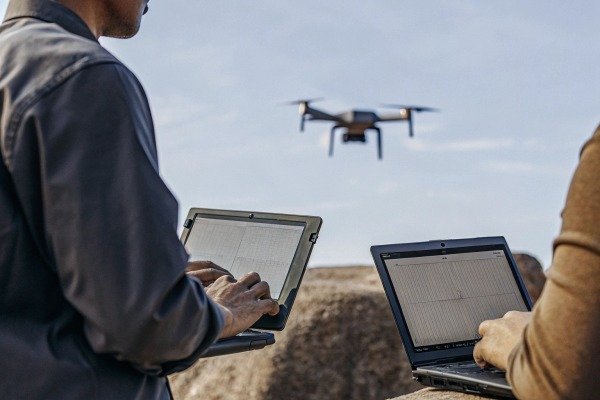
When evaluating a drone, the transmission technology is just as important as the motors or the battery. You want a system that "thinks" faster than the interference can disrupt it.
Frequency-Hopping Spread Spectrum (FHSS)
Think of the radio signal as a car changing lanes on a highway to avoid traffic. FHSS allows the drone and remote to jump between different frequency channels hundreds of times per second. If one channel is blocked by interference from a nearby farm's Wi-Fi or a cell tower interference from a nearby farm 5, the system instantly hops to a clear channel. This happens so fast that you, the pilot, never notice a glitch. We prioritize FHSS in our flight controllers because it provides the most consistent connection.
2.4 GHz vs. 5.8 GHz
Most modern industrial drones support both bands, but they behave differently.
- 2.4 GHz: This frequency has a longer wavelength. It is better at penetrating soft obstacles like leaves and flying over longer distances. However, it is very crowded because most home Wi-Fi and Bluetooth devices use it.
- 5.8 GHz: This frequency carries more data (better video quality) but has a shorter range and struggles to penetrate obstacles.
- Auto-Switching: The best drones automatically switch between these two. If the 2.4 GHz band gets too noisy, the drone jumps to 5.8 GHz without you pressing a button.
MIMO Antennas
Multiple Input Multiple Output (MIMO) technology uses multiple antennas to send and receive data simultaneously. Multiple Input Multiple Output (MIMO) 6 Instead of one stream of data, you have two or four. If one stream is corrupted by interference, the others keep the link alive. Look for remotes with external, high-gain antennas.
4G/5G Cellular Backup
This is the future of range verification. Some of our advanced models include a module for a SIM card. If the direct radio link fails (Radio Frequency), the drone switches to the cellular network (4G/5G). cellular network (4G/5G) 7 This effectively gives you unlimited range as long as there is cell service.
Comparing Tech Specs
When comparing supplier datasheets, look for these specific terms:
- OcuSync / Lightbridge (or similar proprietary tech): superior to standard Wi-Fi.
- Dual-Band Support: Mandatory for complex environments.
- Latency: Lower is better (aim for <28ms).
How can I request valid test data or live demonstrations from the supplier before ordering?
Before we ship a container to a new partner, we often perform live video verifications to build trust. We believe buyers should stop accepting generic PDF datasheets and start demanding proof of performance specific to their use case.
Demand raw flight logs showing Extended Kalman Filter (EKF) data and Receiver Signal Strength Indicator (RSSI) values from loaded flights. Request a live video demonstration verifying control latency at specific distances rather than relying solely on edited marketing brochures or theoretical datasheets.

Getting the truth requires asking the right questions. A reputable supplier will be happy to prove their product's capability. If they hesitate to share raw data, that is a red flag.
The "Proof of Life" Live Demo
Do not settle for a pre-recorded video. Ask for a live video call (via WhatsApp, Zoom, or WeChat) while they are at the test field.
- Ask for a "Load Test": Request that they fill the tank with water. An empty drone flies differently than a heavy one.
- Watch the Latency: Ask the pilot to move the stick and watch how instantly the drone reacts. If there is a visible delay at 500 meters, imagine the delay at 2 kilometers.
- Check the Screen: Ask them to point the camera at the remote controller screen. Look at the signal bars and the RSSI dBm number.
Analyzing Flight Logs
You can ask the supplier to email you a flight log file flight log file 8 (often .DAT or .CSV) from a recent long-range test. You can open these logs in various viewer programs. Look for the RSSI (Received Signal Strength Indication) graph.
- Good Signal: -50 dBm to -70 dBm.
- Weak Signal: -80 dBm to -90 dBm.
- Loss of Control: Usually occurs around -95 dBm or lower.
If the log shows the signal dropping to -90 dBm at only 1 km distance in an open field, the antenna quality is poor.
Third-Party Verification
If you cannot interpret the logs yourself, ask if the drone has passed any third-party certifications third-party certifications 9 (like FCC or CE, though these are for safety compliance, not performance guarantees). Better yet, look for user reviews on forums where pilots share their own range tests.
Buyer's Verification Checklist
Use this table when communicating with a supplier:
| Item to Request | Why it Matters | Acceptable Answer |
|---|---|---|
| Raw Flight Log (.CSV) | Proves actual performance history | "Here is a log from yesterday's 3km flight." |
| Loaded Flight Video | Verifies range with payload | Video showing full tank flight. |
| RTH Trigger Test | Safety check for signal loss | Video of drone returning automatically. |
| Antenna Gain Spec | Hardware capability | 5dBi or higher for industrial remotes. |
Conclusión
Verifying the remote control range of an agricultural drone is not about trusting the box; it is about validating the link between your hands and the machine. By understanding the physics of interference, demanding rigorous field tests physics of interference 10 with full payloads, and analyzing raw signal data, you can ensure the drone you buy will perform when it counts.
Notas al pie
1. Links to official FAA guidance on visual line-of-sight requirements. ↩︎
2. Scientific explanation of the Fresnel zone and its impact on radio signals. ↩︎
3. Provides a technical definition of RSSI for reader clarity. ↩︎
4. Authoritative source on electromagnetic fields and interference sources. ↩︎
5. Explains the physical phenomenon of EMI mentioned in the article. ↩︎
6. Technical overview of MIMO antenna technology in communications. ↩︎
7. Industry organization representing mobile network operators worldwide. ↩︎
8. Documentation on flight logging from a major open-source drone autopilot platform. ↩︎
9. Official government resource regarding equipment authorization and compliance. ↩︎
10. Educational reference explaining the physical principles of wave interference. ↩︎

 English
  Spanish
  German
  French
  Dutch
Dutch  Arabic
