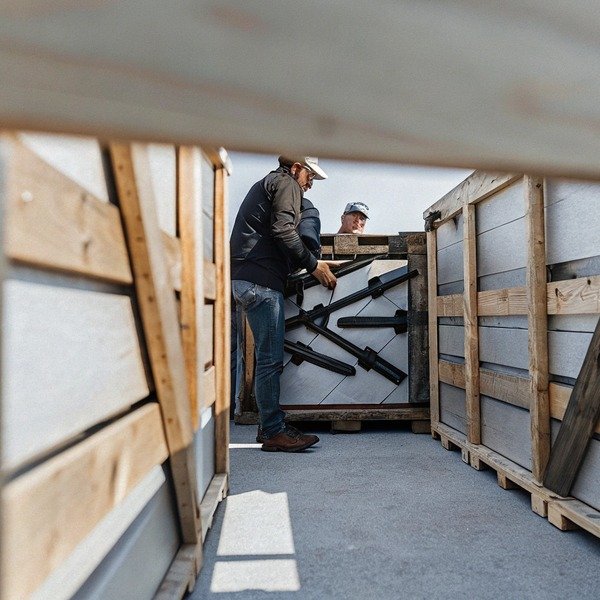
When our assembly team finishes a batch of sprayers, we often worry about how they will survive the journey. Seeing precision gear arrive crushed is a nightmare for any buyer.
To prevent damage during transport, request ISPM 15-compliant wooden crates with hinged ramps for structural integrity. Ensure internal packaging includes high-density polyethylene foam for immobilization, separate hazmat-certified boxes for lithium batteries, and silica gel desiccants to combat humidity during ocean freight.
Let’s examine exactly how to secure your investment before it leaves the factory floor.
Should I insist on aluminum flight cases instead of standard cardboard boxes for my bulk orders?
We have seen tri-wall cardboard collapse under stack weight in transit. Relying on cheap boxes often leads to snapped landing gear and frustrated clients who need operational machines immediately.
You should insist on reinforced aluminum flight cases or custom wooden crates for bulk orders. While cardboard saves upfront costs, it lacks the compressive strength to protect heavy agricultural drones from stacking pressure, impacts, and punctures common in international logistics.
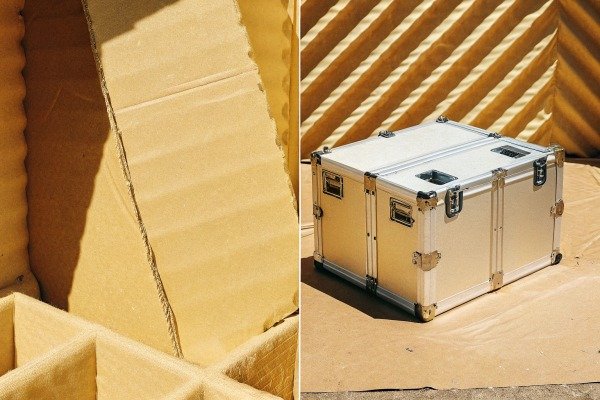
When you import heavy machinery, the container you choose acts as the first line of defense. In our factory, we often see buyers trying to save money on the packaging. They choose standard cardboard boxes. This is a risky move for agricultural drones. drones agrícolas 1 These machines are not small consumer toys. They are heavy, industrial tools often weighing over 50 pounds.
Cardboard, even the "heavy-duty" double-wall type, has limits. During ocean freight, containers experience humidity. ocean freight 2 Moisture makes cardboard soft. If your pallets are stacked, the bottom boxes will crush. This puts direct pressure on the drone arms and the liquid tank.
The Hidden Risks of Cardboard
Standard corrugated boxes offer little protection against punctures. Forklift drivers in busy ports move fast. A single slip can pierce a cardboard box and damage the sensitive electronics inside. Furthermore, cardboard cannot be reused easily. If you plan to move your drones between different farms or storage sites, cardboard boxes will fall apart after one or two uses.
Why Aluminum and Wood Are Superior
Aluminum flight cases or ISPM 15-treated wooden crates are worth the extra cost. ISPM 15-treated wooden crates 3 ISPM 15-treated wooden crates 4 They provide a rigid shell. This shell absorbs external shocks. It ensures that no weight is transferred to the drone itself. For bulk orders, these cases stack securely. They lock together, preventing sliding during rough sea voyages.
Additionally, these robust cases often feature handles and wheels. This makes unloading much easier for your team. You do not want your staff lifting heavy boxes awkwardly. Good packaging protects your equipment and your people.
Comparison of Packaging Materials
Below is a comparison of common packaging materials we use for exports. This helps you decide where to spend your budget.
| Característica | Standard Cardboard | Tri-Wall Corrugated | Aluminum Flight Case | Wooden Crate (ISPM 15) |
|---|---|---|---|---|
| Compressive Strength | Low (Crushes easily) | Medium (Good for light stacking) | High (Supports heavy loads) | Very High (Best for heavy loads) |
| Moisture Resistance | Poor (Absorbs water) | Moderate (If coated) | Excellent (Waterproof) | Good (Resistant) |
| Puncture Protection | Minimal | Moderate | Alto | Alto |
| Reusability | Low (1-2 trips) | Medium (3-5 trips) | High (Years of use) | High (Years of use) |
| Cost | Bajo | Low-Medium | Alto | Medium-High |
If you are buying high-value agricultural drones, do not risk using cardboard. The cost of replacing a broken spray tank is much higher than the cost of a good crate.
What shock-absorbing materials best protect the spray systems and rotors during transit?
Nothing hurts more than testing a perfectly calibrated nozzle only to have it arrive cracked. Vibration is the silent killer of sensitive spray mechanics during shipping.
High-density Polyethylene (PE) or EVA foam inserts are the best shock-absorbing materials. They must be custom-cut to immobilize the drone frame, isolating the rotors and delicate spray nozzles from the box walls to absorb G-force impacts and sustained road vibrations.
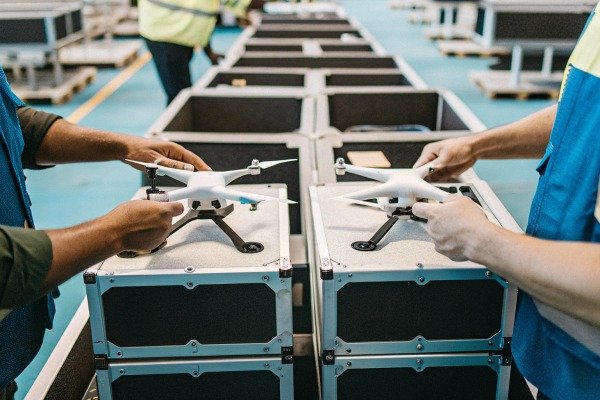
The internal cushioning is just as important as the outer box. We have found that simply filling a box with bubble wrap is not enough. Agricultural drones have heavy motors and fragile spray systems. If the drone can move inside the box, it will break itself.
The Importance of Immobilization
The goal of internal packaging is immobilization. The drone must not shift, even if the crate is dropped. Loose-fill packing peanuts are useless here. They settle during transport, leaving empty spaces. This allows the heavy drone to bang against the crate walls.
We recommend custom-cut PE (Polyethylene) or EVA foam. PE (Polyethylene) or EVA foam 5 This foam is dense. It does not compress under the weight of the drone. It is cut to fit the exact shape of the drone body. This holds the drone firmly in place. It absorbs the vibrations from the truck or ship engine.
Protecting the Spray System
The spray system is the most delicate part of an agricultural drone. The nozzles, pumps, and tubes are prone to cracking.
- Nozzles: These should be removed if possible. If not, they need their own foam cutouts. They must not touch the bottom or sides of the crate.
- Tanks: The liquid tank is large and hollow. It needs support from the inside or robust foam around it. If it is unsupported, it can crack under pressure.
- Pumps: The mounting points for pumps are often small. Vibration can snap them. Dense foam supports the pump body, taking the stress off the mounts.
Why Foam Density Matters
Not all foam is the same. Soft foam bottoms out too easily. Hard foam transfers too much shock. You need the right balance.
For heavy agricultural drones, we use high-density foam. This ensures the heavy components do not sink through the foam and hit the crate floor.
Wrapping Individual Components
Besides foam, individual wrapping is key. We wrap the rotors and arms in bubble bags. This prevents scratches. It also adds a small layer of extra damping.
- Propellers: These must be removed. They are long and brittle. We pack them in a flat slot in the foam lid.
- Landing Gear: We often detach the landing gear. This reduces the height of the box. It also prevents the gear from snapping off if the box is dropped flat.
Requesting these specific materials shows the supplier you know what you are doing. It forces them to upgrade their standard packing to meet your needs.
How can I ensure the packaging is waterproof enough to withstand ocean freight humidity?
Salt air corrodes circuit boards before the drone even flies. When we prepare shipments for ocean crossing, ignoring moisture protection guarantees electronic failure upon arrival.
Ensure packaging includes vapor corrosion inhibitor (VCI) bags and industrial-grade silica gel desiccant packs inside the crate. Additionally, request a vacuum-sealed electrostatic discharge (ESD) barrier for flight controllers to block saline moisture and prevent “container rain” condensation damage.

Ocean freight is a harsh environment for electronics. The air is salty and humid. Temperatures inside shipping containers fluctuate wildly between day and night. This causes "container rain." This is when moisture in the air condenses container rain 6 into water droplets on the ceiling of the container. These droplets rain down on your cargo.
The Danger of Hidden Corrosion
We have seen drones look perfect on the outside but fail immediately. This is often due to internal corrosion. Salt moisture gets into the flight controller and ESCs (Electronic Speed Controllers). It corrodes the copper contacts. This damage is invisible until you try to fly.
Essential Moisture Barriers
To stop this, you must demand a multi-layer defense.
- VCI Bags: Vapor Corrosion Inhibitor bags are essential. They release a chemical vapor Vapor Corrosion Inhibitor bags 7 that coats metal parts. This prevents rust and oxidation. The entire drone should be placed inside a large VCI bag.
- Desiccants: Silica gel packs absorb moisture. You need big, industrial packs, not the tiny ones found in shoe boxes. We calculate the amount of desiccant based on the volume of air inside the crate.
- Vacuum Sealing: For the most sensitive parts, like the remote controller and radar modules, we use vacuum sealing. This removes all air and moisture. It creates a complete seal against the salt air.
Protecting Connectors and Ports
Agricultural drones have many exposed connectors. These plug into spray tanks and batteries. If these connectors corrode, the drone will lose power or signal.
We recommend taping over all open ports. Better yet, use plastic dust caps. Then, wrap the connectors in anti-static plastic. This keeps the salt air away from the gold-plated pins.
Container Loading Strategy
You should also ask your supplier about how they load the container.
- Don't put pallets directly on the floor: Wooden pallets absorb water.
- Use plastic wrap: The entire pallet should be wrapped in stretch film. This acts as a final umbrella against drips from the container ceiling.
By controlling moisture, you ensure the drone’s brain remains healthy. A dry drone is a reliable drone.
| Item | Function | Placement |
|---|---|---|
| Silica Gel | Absorbs moisture from the air | Inside the main VCI bag, near electronics |
| VCI Bag | Chemically prevents rust on metal | Surrounding the entire drone fuselage |
| ESD Bag | Prevents static and seals out air | Around flight controllers and radar units |
| Clay Desiccant | heavy-duty moisture absorption | Placed in the corners of the wooden crate |
What specific safety protocols should I verify for the packaging of high-capacity drone batteries?
A single lithium battery fire can destroy an entire shipment. We strictly separate power cells from the fuselage because safety regulations are non-negotiable for importers.
Verify that batteries are removed from the drone and packed in UN-certified fireproof boxes with individual isolation slots. Ensure compliance with IATA/DOT regulations, including discharging cells to 30% state of charge and applying Class 9 dangerous goods labeling on the outer crate.
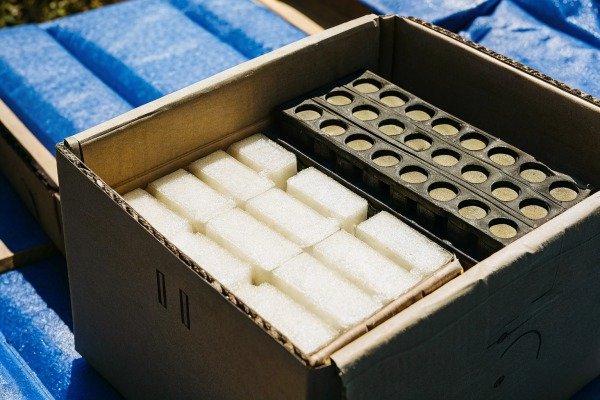
Shipping batteries is the most complex part of importing drones. Agricultural drones use massive batteries. These are high-capacity Lithium Polymer (LiPo) units. Lithium Polymer 8 They hold a lot of energy. If they are damaged or short-circuit, they can catch fire.
Separation is Non-Negotiable
In our export process, we never leave batteries inside the drone. This is a major safety risk. If the drone turns on accidentally, the propellers could spin. Or, the battery could drain and swell.
You must require that batteries are packed separately. They should be in their own box. This box must be UN-certified for dangerous goods. UN-certified for dangerous goods 9 UN-certified for dangerous goods 10
State of Charge (SOC) Rules
International regulations require batteries to be shipped at a low state of charge. Usually, this is 30% or less.
- Too Full: A fully charged battery is chemically unstable. It is more likely to ignite if punctured.
- Too Empty: A completely dead battery can become permanently damaged.
We discharge all batteries to the storage voltage before packing. You should verify this upon arrival. If batteries arrive fully charged, your supplier is breaking safety rules.
Fireproof Packaging
The battery box acts as a containment unit.
- Individual Slots: Each battery must sit in its own compartment. They cannot touch each other. If they touch, they could short out.
- Fireproof Liner: We use fiberglass bags or fire-retardant foam. If one battery catches fire, the packaging should stop the fire from spreading to the others.
- Sturdy Outer Box: The box containing the batteries must be strong. It must withstand a drop test of 1.2 meters without releasing the batteries.
Labeling and Documentation
Customs will seize your shipment if the paperwork is wrong. You need to check for specific labels.
- Class 9 Label: This is the diamond-shaped label for miscellaneous dangerous goods.
- UN Number: For lithium ion batteries packed separately, the code is usually UN3480. If packed with equipment, it is UN3481.
- Watt-Hour Rating: The label must state the capacity of the battery.
If you ignore these rules, your shipment can be stuck at the port for weeks. Worse, you could face heavy fines. Always prioritize safety over speed when shipping batteries.
Battery Packaging Checklist
Use this checklist to audit your supplier's battery packaging.
| Check Item | Requirement | Why it Matters |
|---|---|---|
| Charge Level | 30% SOC | Prevents thermal runaway and fire risk |
| Separation | Individual cells isolated | Prevents short circuits between batteries |
| Box Type | UN-Certified Cardboard/Crate | Legal requirement for hazardous materials |
| Inner Liner | Fireproof fiberglass/foam | Contains fire if ignition occurs |
| Connectors | Taped or capped | Prevents accidental contact with metal |
Conclusión
Protecting your agricultural drones starts with the right crate. Proper packaging ensures your fleet arrives ready for the field, not the repair bench. Specify these requirements to safeguard your investment.
Notas al pie
1. Product documentation for a leading industrial agricultural drone model. ↩︎
2. General background on the logistics and environment of sea shipping. ↩︎
3. International standard for phytosanitary measures regarding wood packaging in international trade. ↩︎
4. Official international standard for regulating wood packaging material in trade. ↩︎
5. Technical overview of the material properties suitable for shock absorption. ↩︎
6. Authoritative guide on moisture condensation risks in shipping containers. ↩︎
7. Industry definition explaining the mechanism of VCI technology. ↩︎
8. Technical overview of the battery chemistry used in agricultural drones. ↩︎
9. Official IATA regulations regarding dangerous goods packaging standards. ↩︎
10. Industry standard manual for dangerous goods regulations and UN-certified packaging. ↩︎

 English
  Spanish
  German
  French
  Dutch
Dutch  Arabic
