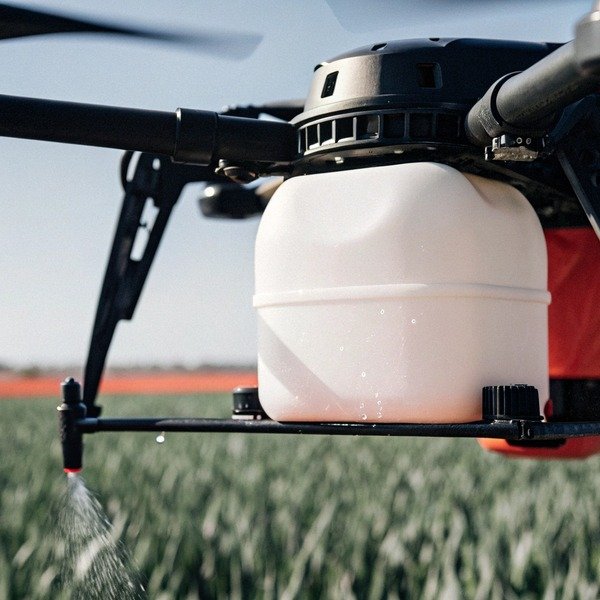
When we test our latest sprayers in Xi’an, we see firsthand how a single broken propeller can ground an entire operation. Downtime costs you money, and waiting weeks for a simple replacement part destroys your efficiency during the critical growing season.
A reasonable spare parts kit must include high-wear components like propellers, nozzles, and gaskets tailored to your fleet size. Evaluate the list by checking for critical redundancy, tool inclusion, and part availability to ensure your agricultural operations can recover immediately from common field failures.
Let’s examine the specific details you need to verify in the supplier’s list to protect your investment.
Which essential wear-and-tear components must be included in my agricultural drone spare parts kit?
Our engineers often see clients request bare-bones kits to save money, only to face massive leaks during their first heavy spray week. Neglecting small seals halts your heavy-lifting drones and frustrates your team when reliability matters most.
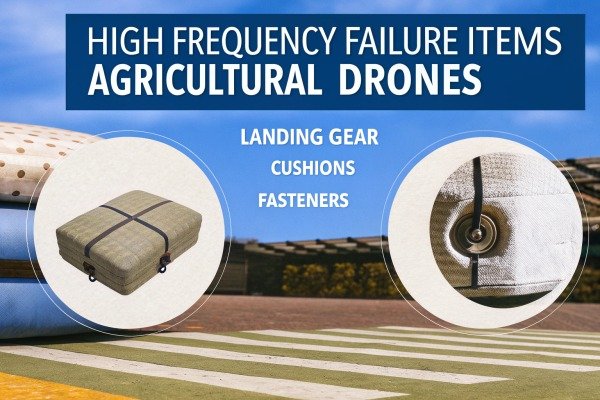
Your kit must prioritize high-frequency failure items such as carbon fiber propellers, spray nozzles, and chemical-resistant O-rings. Additionally, verify the inclusion of proprietary landing gear cushions and specialized fasteners, as these specific components degrade rapidly under heavy payloads and harsh chemical exposure.

Understanding the Environment
When you operate agricultural drones, you are not just flying; you are subjecting a high-tech machine to a hostile environment. From our perspective designing these airframes, we know that chemical corrosion and vibration are the silent killers of drone hardware. A kit that looks sufficient for a photography drone is often woefully inadequate for an agricultural sprayer. The chemicals used in pesticides and fertilizers are often corrosive or abrasive. pesticides and fertilizers 1 This means that rubber seals, gaskets, and plastic fittings degrade much faster than they would on a standard cargo drone.
The "Big Three" High-Wear Items
To evaluate if a list is reasonable, check for the "Big Three" first: Propellers, Nozzles, and Seals.
Hélices are the most vulnerable component. They spin at high speeds and are often close to the crop canopy. Even a small chip from a bug strike or a tall stalk can cause vibration. This vibration confuses the flight controller's IMU (Inertial Measurement Unit), leading to instability. Inertial Measurement Unit 2 Inertial Measurement Unit 3 You need at least one full set of spares per drone, not just one or two blades.
Nozzles are the second most critical item. In our lab tests, we see that certain wettable powders act like sandpaper inside the nozzle tip. Over time, the spray pattern distorts, leading to uneven application. Furthermore, if you switch between herbicides and fungicides, you might need different nozzle types to manage droplet size and drift. A reasonable kit includes spare nozzle tips and the specific caps required to hold them.
Seals and Gaskets are often overlooked but are vital. The plumbing system on a sprayer operates under pressure. Every connection point—from the tank to the pump, and from the pump to the boom—relies on O-rings. If the supplier does not include a bag of assorted O-rings and sealing washers, the kit is incomplete. A $0.10 O-ring failure can ground a $15,000 drone.
Hardware and Tools
Beyond the obvious parts, look for the "invisible" essentials. Vibration loosens screws over time. A good kit includes a set of the specific screws and bolts used on the airframe. Since many of our drones use high-strength thread locker during assembly, removing a stripped screw in the field can be impossible without the right replacement.
Check for these specific items in the table below to see if your supplier understands agricultural needs:
Table 1: Essential vs. Optional Components Checklist
| Categoría de componentes | Essential Items (Must Have) | Optional / Context-Dependent | Reason for Failure |
|---|---|---|---|
| Propulsion | Carbon Fiber Propellers (CW/CCW), Propeller Clips/Adapters | Spare Motor, Spare ESC (Electronic Speed Controller) | Impact damage, fatigue, vibration. |
| Sistema de rociado | Nozzle Tips, Nozzle Caps, O-rings, Sealing Gaskets | Replacement Water Pump, Flow Meter | Clogging, chemical corrosion, seal degradation. |
| Estructura del avión | Landing Gear Cushions, Arm Locking Sleeves, Assorted Screw Pack | Complete Replacement Arm, Tank Filter | Hard landings, vibration loosening, wear and tear. |
| Electronics | GPS Mast/Antenna Mounts, Radar Bracket | Radar Module, Flight Controller | Impact damage, vibration stress on mounts. |
The Verdict on Completeness
If the list provided by your supplier only contains propellers and batteries, it is not reasonable for commercial agriculture. It suggests they view the sale as a one-time transaction rather than a long-term operational partnership. You must demand a list that includes the wet-system components (seals and nozzles) because those are what distinguish an agricultural drone from a generic flying platform.
How do I calculate the optimal quantity of spare parts to avoid downtime during peak farming seasons?
We calculate usage rates daily at our factory to optimize supply chains, yet many buyers guess their needs supply chains 4 based on budget rather than data. Running out of charged batteries at noon means losing half your spray coverage and revenue.
Calculate quantities based on the “Distance to Service” metric; if support is over 48 hours away, stock at least two full sets of propellers and one spare motor per drone. For batteries, target a ratio that supports continuous cycling based on your charger speed and daily acreage goals.

The "Distance to Service" Metric
One of the most effective ways to determine quantity is to measure your "Distance to Service." This does not just mean physical miles; it means the time it takes to get a part in your hand. If you are operating in the US Midwest and your supplier ships from China without a local warehouse, your "Distance to Service" is 5-10 days. In this scenario, your on-hand inventory must be higher.
If you are close to a service center, you might get away with fewer major components like motors or pumps. However, for most of our international clients, we recommend a tiered approach. You need "Field Spares" (items you carry in the truck) and "Shop Spares" (items you keep at your base).
Calculating Battery Needs
Batteries are the fuel of the drone world. The quantity you need is simple math, not a guess. You need enough batteries to fly continuously while others charge.
- Flight Time: Measure how long one flight lasts with a full tank (e.g., 10 minutes).
- Charge Time: Measure how long it takes to charge a battery from 20% to 100% (e.g., 15 minutes with a rapid charger).
- Cool Down: Batteries need to cool before charging (e.g., 5-10 minutes).
If you have a 10-minute flight and a 25-minute turnaround (cool + charge), you cannot fly continuously with just two batteries. You would need at least 3 to 4 batteries per drone to keep the bird in the air non-stop. If you have a generator in the field, this cycle is critical. A reasonable list should reflect this cycle. If a supplier sells you a drone with only two batteries, they are setting you up for downtime.
Usage-Based Scaling
Different parts wear out at different rates based on flight hours. Manufacturers often have a maintenance schedule (e.g., replace props every 100 hours). maintenance schedule 5 You can estimate your seasonal hours based on your acreage.
- Example: If you spray 50 acres per hour and plan to cover 5,000 acres, that is 100 flight hours.
- Result: You will theoretically reach the end of life for one set of propellers and potentially the pump seals by the end of the season.
Therefore, the reasonable quantity is enough to cover the scheduled maintenance plus a buffer for accidents.
Table 2: Recommended Spare Part Quantities by Fleet Size
| Componente | 1-Drone Unit (Start-up) | 3-5 Drone Fleet (Commercial) | Replacement Frequency / Logic |
|---|---|---|---|
| Hélices | 2 Full Sets (e.g., 8-12 blades) | 1.5 Sets per Drone | High risk. 1 set for maintenance, 1 for accidents. |
| Baterías | 4-6 Batteries | 4 Batteries per Drone | Based on continuous cycling (Charge vs. Flight). |
| Smart Charger | 1 unidad | 1 Unit per 2-3 Drones | Redundancy in case one charger fails. |
| Motores | 0-1 Unit | 1-2 Units total for fleet | Low failure rate, but high impact if failed. |
| Boquillas pulverizadoras | 1 Full Set | 2 Full Sets total | Cheap to stock, critical for application quality. |
| Tren de aterrizaje | 1 Set (skids/feet) | 2 Sets total | Absorbs impact; frequently cracked in rough fields. |
Redundancy for Profitability
The goal of calculating these quantities is to protect your profitability. If a drone sits on the ground for two days waiting for a $50 part, you might lose a contract worth thousands. It is always better to slightly overstock on consumables (props, nozzles) than to understock. When evaluating the supplier's list, ask yourself: "If this part breaks at 2 PM on a Tuesday, can I finish the job?" If the answer is no, the quantity in the kit is insufficient.
Is it more cost-effective for me to purchase a comprehensive spare parts bundle upfront or buy items individually?
While finalizing export invoices for our American partners, we frequently notice clients buying ad-hoc parts pay significantly more in shipping and administrative processing. Buying piece-by-piece drains your budget and delays critical repairs when you can least afford it.
Purchasing a comprehensive bundle upfront is generally more cost-effective, often saving 15-20% compared to individual sourcing. Bundles reduce repeated shipping costs and ensure compatibility, whereas buying items individually risks stockouts and higher unit prices during urgent, mid-season procurement emergencies.

The Hidden Costs of Individual Sourcing
Many procurement managers look at the sticker price of a comprehensive kit and hesitate. It looks like a large upfront expense. However, when we look at the data from our sales department, the "pay-as-you-go" method is deceptively expensive.
First, there is shipping. Sending a drone battery or a set of carbon fiber props internationally involves hazardous goods fees hazardous goods fees 6 or dimensional weight charges. hazardous goods fees 7 If you buy these items one at a time, you pay that base shipping fee every single time. A bundle consolidates these costs.
Second, there is the "Emergency Premium." When a part fails mid-season, you do not have the luxury of choosing the slowest, cheapest shipping option. You are forced to pay for overnight air freight. A $50 part can easily cost $150 to land at your door overnight. A pre-purchased bundle eliminates this panic spending.
Bundle Compatibility and Completeness
When we create a "Service Kit" or "Maintenance Bundle," we do not just throw random parts in a box. We ensure that the versions match. Drone technology moves fast. A motor from 2023 might look the same as a 2024 model but have a slightly different KV rating or mounting hole pattern.
Buying a bundle ensures that all parts are verified compatible with your specific batch of drones. Furthermore, bundles often include the necessary tools—like a calibrated torque wrench or specialized prop-balancing rod—that you might forget to buy individually. These tools are crucial for installing the parts correctly so that the repair lasts.
Table 3: Cost Analysis: Bundle vs. Individual Purchase Scenario
| Cost Factor | Upfront Comprehensive Bundle | Individual "As-Needed" Purchase | Estimated Financial Impact |
|---|---|---|---|
| Unit Price | Generally discounted (Wholesale rate) | Full Retail MSRP | Bundle saves ~10-15% on part costs. |
| Shipping Fees | One-time fee (often palletized with drone) | Multiple fees per incident | Individual shipping can increase total cost by 30%. |
| Downtime Cost | Zero (Immediate repair) | High (2-5 days waiting) | $100s per hour lost in downtime revenue. |
| Admin Time | Single Purchase Order (PO) | Multiple POs, Invoices, Approvals | Saved administrative labor hours. |
| Riesgo | Inventory holding cost | Part obsolescence/Stockouts | Bundle guarantees availability. |
Strategic Inventory Management
From an investment perspective, spare parts are insurance. Buying them individually is like trying to buy car insurance after you have already crashed. The bundle price locks in your maintenance costs for the year. This makes budgeting much easier. You know exactly what your operational costs will be, rather than facing variable spikes in spending whenever a crash occurs.
However, be critical of the bundle's contents. If the bundle is stuffed with items that rarely fail (like the top canopy cover or LED covers) just to inflate the price, it is not a good deal. The bundle should be weighted heavily toward the consumables we discussed earlier: props, ESCs, motors, and spray system components. spray system components 8
What questions should I ask the supplier about the long-term availability and lead times of the listed replacement parts?
Our production team knows that discontinued molds cause nightmares for legacy users, and we strive to keep our older models supported. If a supplier vanishes or stops making a specific arm joint, your expensive fleet becomes grounded, useless plastic overnight.
Ask specifically about the guaranteed production lifespan of proprietary parts like motors and flight controllers. Confirm their current lead times for international shipping and whether they maintain a domestic warehouse to bypass customs delays, ensuring you are not left waiting weeks during critical spray windows.
Assessing Supply Chain Stability
In the agricultural drone industry, companies come and go. When evaluating a spare parts list, you need to look beyond the list itself and question the logistics behind it. You are not just buying a part; you are buying the assurance that the part will exist in two years.
We recommend asking: "What is the End-of-Life (EOL) plan for this model?" A reputable supplier should be able to tell you that they commit to producing parts for at least 3-5 years after a model is discontinued. If they cannot give you a straight answer, that is a red flag. You do not want to be stuck with a drone that becomes obsolete because a proprietary battery connector is no longer manufactured.
The Logistics of Lead Times
"Available" does not mean "Available Now." If the supplier says parts are available, ask where they are located.
- Scenario A: Parts are in a warehouse in California or Texas. Lead time: 2-3 days.
- Scenario B: Parts are in a factory in Shenzhen. Lead time: 7-14 days (plus customs clearance).
For a commercial operation, Scenario B is risky unless you hold your own heavy inventory. You should ask the supplier if they have a local distributor or a "Forward Stocking Location" in your region. If they are purely an exporter without local support, you must increase the size of your initial spare parts kit to compensate for the lag.
Technical Support and Documentation
Having the part is useless if you do not know how to install it. Agricultural drones are complex. Replacing a motor often involves soldering or calibrating the ESC. calibrating the ESC 9 Replacing a nozzle system might require updating the flow meter firmware.
Ask the supplier: "Does this spare parts kit come with repair manuals or video tutorials?"
We invest heavily in creating maintenance videos because we know our clients are fixing drones in the back of pickup trucks, not in clean labs. If the supplier provides a bag of parts but no documentation, you will likely install it incorrectly, leading to another failure.
Regulatory Compliance Questions
In the United States, under FAA Part 137, you are responsible for maintaining your aircraft in an airworthy condition. FAA Part 137 10 Using non-standard parts can sometimes jeopardize this or void your insurance. You should ask the supplier if their parts are OEM certified and if repairs done by the user affect the warranty. Some "Quick Swap" parts are designed for user replacement, while others (like internal flight controllers) might require a certified technician. Knowing this distinction helps you decide what to buy.
Table 4: Key Supplier Evaluation Questions
| Categoría de pregunta | Pregunta específica que se debe hacer | Desired Answer / Good Sign | Red Flag / Warning Sign |
|---|---|---|---|
| Disponibilidad | "Where is your nearest spare parts warehouse to my location?" | "We have a distributor in your country" or "We offer 3-day express shipping." | "Everything ships from the factory" (with no express option). |
| Lifecycle | "How long will you manufacture parts for this specific model?" | "At least 3-5 years after model discontinuation." | "We create new models every year, unsure about old ones." |
| Support | "Do you provide video guides for replacing these specific parts?" | "Yes, we have a YouTube channel/portal with step-by-step guides." | "We recommend sending the drone back to us for all repairs." |
| Compatibility | "Are these parts proprietary or standard off-the-shelf (e.g., standard XT90 connectors)?" | "Mix of proprietary and standard industry parts." | "Everything is 100% proprietary and cannot be substituted." |
Conclusión
To ensure your agricultural drone fleet remains operational, you must evaluate the spare parts kit based on the inclusion of high-wear items like propellers and seals, and the "Distance to Service" relative to your farm. Always prioritize comprehensive bundles to save costs and secure a commitment from your supplier regarding long-term part availability and support.
Notas al pie
1. Global standards for agricultural chemical management. ↩︎
2. Authoritative technical resource defining the component’s function. ↩︎
3. Explains the technical component mentioned in the text. ↩︎
4. Government resource on supply chain optimization and management. ↩︎
5. ISO standards for unmanned aircraft maintenance and operations. ↩︎
6. Official guidance on shipping lithium batteries and hazardous materials. ↩︎
7. International standards body regulating dangerous goods transport. ↩︎
8. Technical specifications for professional agricultural drone components and propulsion systems. ↩︎
9. Background on the ESC component mentioned in the propulsion table. ↩︎
10. Official FAA regulations for agricultural aircraft operations. ↩︎

 English
  Spanish
  German
  French
  Dutch
Dutch  Arabic
