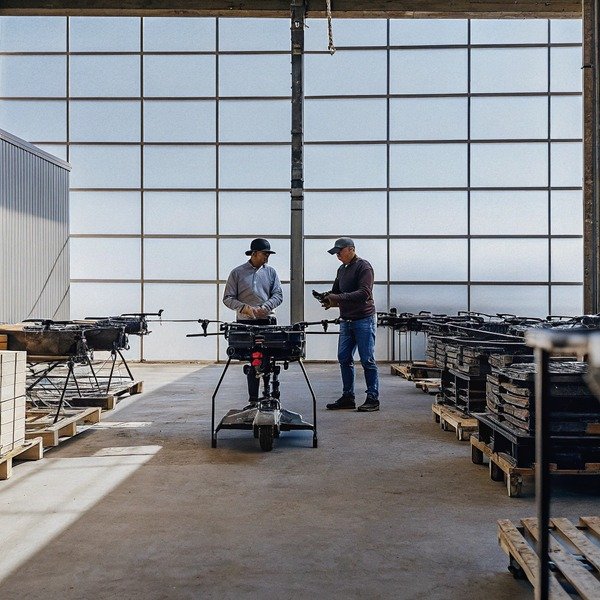
Every year, just as the planting window opens, our support lines light up planting window 1 with urgent calls from farmers and distributors desperate for equipment. The crops won’t wait, but warehouses across the industry often sit empty due to poor planning. Having managed production schedules in our Xi’an facility through many high-pressure seasons, we know that a supplier’s inability to deliver can cost you an entire year’s profit.
To evaluate supply stability, you must audit the manufacturer’s historical peak-season lead times and verify their monthly production capacity against your projected demand. Ensure they maintain a documented inventory of critical spare parts and utilize established logistics partnerships capable of handling lithium battery transport during high-volume periods.
Let’s examine the specific metrics and questions you need to ask to ensure your supplier does not become your bottleneck.
How can I verify the manufacturer's production capacity to ensure they meet my peak season demand?
Nothing is more frustrating than signing a contract based on promises, only to face silence when the delivery date arrives. When we plan our assembly lines in Chengdu, we calculate capacity based on worst-case scenarios, but many suppliers quote their “theoretical maximum.” To protect your business, you need to see hard data, not just optimistic projections.
Request production reports from the previous two peak seasons to identify delay patterns and confirm the factory’s maximum monthly output. Ask specifically about their ability to scale labor forces temporarily and whether they have secured raw materials like flight controllers well in advance of the surge.

Analyzing Theoretical vs. Actual Output
It is common for suppliers to claim massive production numbers on their websites. However, these numbers often represent what the factory could produce if machines never broke down, workers never got sick, and raw materials arrived instantly. This is rarely the reality. To verify true capacity, you must ask for the "effective run rate."
You should ask the supplier to demonstrate how they handle surge demand. For example, do they have a roster of trained temporary staff they can call upon? In our facility, we cross-train staff from different departments to assist on the assembly line during crunch time. If a supplier relies solely on a fixed number of workers, they will inevitably face bottlenecks when orders triple in the spring.
Upstream Supply Chain Audits
A drone manufacturer is only as fast as their slowest component supplier component supplier 2. The agricultural drone industry frequently faces shortages of specific semiconductors and high-torque motors shortages of specific semiconductors 3. You need to verify that your supplier has a "safety stock" strategy. Do they buy flight controllers six months in advance flight controllers 4? Do they have redundant suppliers for critical parts?
Use the following checklist to grade a potential supplier's capacity:
| Audit Category | Key Question to Ask | Red Flag Response |
|---|---|---|
| Raw Material Buffer | "How many months of flight controller inventory do you currently hold?" | "We order them as we get new customer contracts." |
| Labor Scalability | "What is your process for adding shifts during peak season?" | "We just ask our current team to work overtime." |
| Historical Performance | "Can you show me the average delay time for orders placed in May last year?" | "We don't track that data, but we are usually on time." |
| Testing Capacity | "Does your flight test field have the capacity for 200% volume?" | "We might skip some flight tests to speed up shipping." |
If a supplier admits to skipping quality assurance steps to meet volume targets, walk away immediately. A delivered drone that crashes due to a loose ESC is worse than a late drone.
What specific lead time commitments should I require to avoid missing critical farming windows?
A delay of two weeks might seem minor in consumer electronics, but in agriculture, missing the spraying window by fourteen days allows pests to destroy a harvest. We constantly emphasize to our partners that “shipping soon” is not a business term. You require binding dates and clear consequences for missed deadlines.
Negotiate a Peak Season Service Level Agreement (SLA) that defines exact shipping windows and imposes financial penalties for delays. Demand transparency on current lead times versus historical averages for that specific month, and ensure these dates include buffer time for customs clearance and local delivery.
The Importance of a Peak Season SLA
Standard contracts often protect the seller more than the buyer. During the off-season, a standard "30-day lead time" is acceptable. However, during the peak season, you need a Service Level Agreement (SLA) Acuerdo de Nivel de Servicio 5. This document dictates exactly what happens if the manufacturer fails to perform.
We recommend structuring your purchase orders to include a "Guaranteed Dispatch Date." If the supplier misses this date, the SLA should trigger a penalty. A common and effective clause is requiring the supplier to upgrade the shipping method at their own expense. For instance, if sea freight was planned but production is late, the supplier must pay for air freight to ensure the goods still arrive on time.
Understanding Production Slots
Treat your drone order like a reservation at a busy restaurant. You are not just buying a product; you are buying a "slot" on the production line. Large buyers often book these slots months in advance.
If you place an order in the middle of the rush without a reservation, you are at the back of the queue. You should ask the supplier to confirm your specific production slot number. This adds a layer of accountability.
Lead Time Breakdown
Lead time is not a single number. It is a sequence of events. When we calculate delivery dates for our US clients, we break it down to avoid misunderstandings. You should require this same level of granularity:
| Stage | Off-Season Duration | Peak Season Risk | Mitigation Strategy |
|---|---|---|---|
| Order Processing | 1-2 Days | 3-5 Days due to admin backlog | Pre-approve credit lines to skip financial checks. |
| Material Sourcing | 3-5 Days | 15-30 Days if stock runs out | Demand proof of in-stock components before deposit. |
| Assembly & QA | 5-7 Days | 10-14 Days due to volume | Ask for daily or weekly production status photos. |
| Customs Export | 2-3 Days | 5-10 Days due to inspection queues | Ensure the supplier has "AEO" or similar trusted exporter status. |
By forcing the supplier to commit to duration caps for each stage, you can identify exactly where a delay is happening and pressure them to fix it.
Does the supplier maintain adequate inventory of spare parts to support rapid maintenance needs?
When a drone crashes during a heavy work week, your client loses money every minute the machine is grounded. We have seen operations grind to a halt because a simple $5 propeller was out of stock. A supplier that focuses only on selling new units without stocking repair parts is a liability to your business.
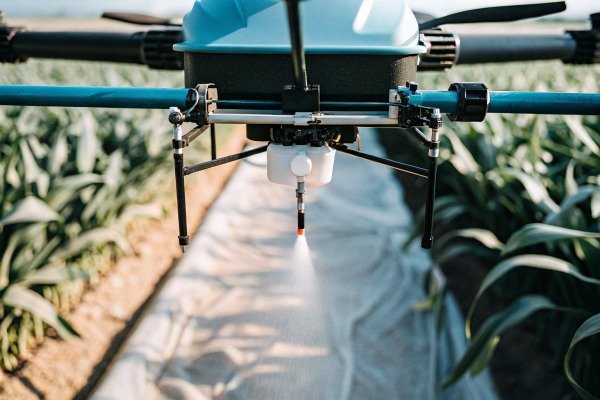
Verify that the supplier maintains a local or regional warehouse with real-time stock visibility for high-wear components like motors, propellers, and batteries. Require a minimum allocation of spare parts specifically reserved for your fleet to prevent stockouts when global demand spikes during the spraying season.
Critical vs. Non-Critical Inventory
Not all parts are created equal. You can wait a week for a replacement canopy cover, but you cannot wait an hour for a battery charger or a propeller. A stable supplier categorizes their inventory based on criticality.
When we set up support packages for our distributors, we recommend a "First Aid Kit" approach. However, for the supplier's own stock, you need to verify they have "depth." Ask them: "If I need 50 motors tomorrow, can you ship them?" If they have to order from their upstream motor vendor, they do not have true inventory stability.
The Problem of Cannibalization
In times of extreme shortage, some manufacturers will take parts intended for repairs and use them to build new drones to meet sales targets. This is known as "cannibalization," and it is disastrous for existing customers.
You must ensure that your supplier has a segregated inventory for after-sales support that is strictly ring-fenced from the production inventory. This ensures that your repair needs are not sacrificed to boost their quarterly sales figures.
Digital Visibility and Auto-Replenishment
Modern supply stability requires digital tools. You should not have to email supply stability 6 a sales rep to ask if a part is in stock. Ideally, the supplier should provide access to a B2B portal where you can view live inventory levels.
| Component Type | Examples | Recommended Supplier Stock Levels | Por qué es importante |
|---|---|---|---|
| Consumables | Propellers, Nozzles, landing gear feet | > 200% of monthly sales volume | High breakage rate; low cost but high impact on uptime. |
| High-Wear Electronics | ESCs, Motors, Pumps | > 50% of monthly sales volume | These fail under heavy load; essential for operation. |
| Core Avionics | Flight Controller, Radar, Remote | > 10% of monthly sales volume | Rare failures, but expensive; secure supply needed. |
| Baterías | Flight Batteries, Chargers | > 100% of monthly sales volume | Consumable over time; difficult to ship quickly due to regulations. |
Using this table, you can audit your supplier. If they only stock consumables but lack motors or pumps, they are not ready for the peak season intensity.
How do I evaluate their logistics partners and ability to provide secure door-to-door delivery?
Shipping agricultural drones is not like shipping furniture; the large lithium batteries classify them as Dangerous Goods (DG). Dangerous Goods (DG) 7 We have spent years cultivating relationships with specialized freight forwarders because one incorrect label can cause a shipment to be seized by customs for weeks. Your supplier’s logistics competence is just as important as their engineering.
Audit the supplier’s logistics network to ensure they work with freight forwarders certified for Class 9 Dangerous Goods transport. Confirm they offer Door-to-Door (DDP) service that handles customs clearance and taxes, and ask for tracking examples from previous peak seasons to verify transit reliability.
The Challenge of Class 9 Dangerous Goods
Agricultural drones run on massive high-voltage batteries. Under international shipping regulations (UN3480), these are Class 9 Dangerous Goods Mercancías peligrosas de clase 9 8. During peak seasons, air cargo space is limited, and captains will often prioritize general cargo over dangerous goods because it is less paperwork and risk.
A supplier with weak logistics connections will get their cargo "bumped" from flights. You need a supplier who has long-term contracts with carriers that guarantee space allocations for DG cargo. Ask to see their MSDS (Material Safety Data Sheet) and UN38.3 test reports. If they hesitate to provide these, their shipping compliance is questionable.
Door-to-Door (DDP) vs. Port-to-Port
Many suppliers prefer to sell Incoterms Incoterms 9 like FOB sell Incoterms like FOB 10 (Free on Board) or CIF (Cost, Insurance, and Freight), which leaves the complex import customs clearance to you. During peak season, customs authorities are overwhelmed. If you don't have a broker, your drones will sit at the airport.
We strongly advise looking for suppliers who offer DDP (Delivered Duty Paid). This means the supplier takes full responsibility until the drone is at your warehouse door. It shifts the risk of customs delays and regulatory paperwork onto them. They handle the tariffs, the VAT, and the complex battery import documentation.
Tracking and Route Diversification
Stability also comes from having options. If a storm closes a major port or a geopolitical issue affects a specific trade route, does the supplier have a backup plan?
- Route Redundancy: Can they switch from Air to Fast Sea boat? Can they route through different hubs?
- Real-Time Tracking: Do not accept a simple tracking number. Demand a logistics dashboard that shows milestones (e.g., "Cleared Customs," "Out for Delivery").
If a supplier treats logistics as an afterthought, your peak season will be spent refreshing a tracking page instead of managing your clients. Evaluate their logistics partners as rigorously as you evaluate the drone itself.
Conclusión
Evaluating a supplier for peak season stability requires looking beyond the product specifications. You must investigate their production scalability, enforce strict lead time contracts, audit their spare parts depth, and verify their expertise in dangerous goods logistics. By demanding transparency and binding SLAs in these four areas, you protect your business from the chaos of the rush. A reliable partner doesn't just sell you a drone; they guarantee your ability to operate when it matters most.
Notas al pie
1. Official government data on agricultural planting schedules and crop progress. ↩︎
2. Academic overview of component supplier roles in manufacturing and supply chain management. ↩︎
3. Detailed background on the global semiconductor shortage and its impact on electronics manufacturing. ↩︎
4. Technical specifications for industrial-grade flight controllers from a market leader. ↩︎
5. ISO standards related to service level agreements in IT and business services. ↩︎
6. Professional standards body defining supply chain stability and management best practices. ↩︎
7. Global authority on regulations for transporting dangerous goods by air. ↩︎
8. IATA standards for shipping lithium batteries as dangerous goods by air. ↩︎
9. Official organization that establishes and maintains international commercial terms rules. ↩︎
10. Explanation of international commercial terms like FOB and CIF used in global trade. ↩︎

 English
  Spanish
  German
  French
  Dutch
Dutch  Arabic
