
Buying industrial equipment from overseas often feels like a gamble, especially when you cannot visit the factory floor yourself. We frequently hear from clients who are worried about receiving machines that look good in photos but fail in the field. At our facility in Xi’an, we understand that trust is built on verifiable standards, not just marketing promises.
To determine ISO compliance, you must request the supplier’s valid ISO 9001:2015 certificate and verify it through the accreditation body’s database. Crucially, check that the certification scope explicitly covers “Unmanned Aerial Systems” manufacturing rather than just general electronics, and ask for recent surveillance audit records to confirm active status.
Here is a detailed breakdown of the documentation and inspection methods you need to filter out unreliable suppliers.
What specific documentation should I request to verify the authenticity of a supplier's ISO certification?
Many competitors claim to be “ISO compliant,” but we have seen documents that are either expired or completely fabricated. When we undergo our annual audits, our team prepares specific files that any legitimate manufacturer should be ready to show you immediately upon request.
You should request the official ISO 9001:2015 certificate containing a unique registration number, the accreditation body’s logo (like UKAS or ANAB), and a clear expiration date. Additionally, ask for the latest internal audit report summary and the Quality Manual to prove the system is fully operational.
When you are spending significant capital on agricultural drones, you cannot rely on a simple PDF sent via email. You need to dig deeper into the paperwork to ensure the supplier's Quality Management System (QMS) is real. A common issue in our industry is suppliers using a "borrowed" certificate or one that applies to a different part of their business.
Verify the Scope of Certification
This is the most critical step. We have seen trading companies show an ISO certificate where the scope only covers "Sales of Electronic Goods," yet they claim to manufacture drones. If the certificate does not explicitly state "Design, Manufacturing, and Assembly of Unmanned Aerial Vehicles (UAV)" or similar wording Unmanned Aerial Vehicles 1, the production line itself is not certified. You must ensure the scope matches the product you are buying.
The Paper Trail of Authenticity
Beyond the certificate itself, specific supporting documents prove the system is active. An ISO certificate is not a one-time award; it requires constant maintenance. If a supplier cannot produce a recent audit report, it is a red flag that their quality system might be dormant.
Table 1: Essential ISO Verification Documents
| Nombre del documento | Objetivo | Qué buscar |
|---|---|---|
| ISO 9001:2015 Certificate | Proof of registration. | Check the "Scope" section for manufacturing keywords. Verify the expiration date. |
| Quality Manual | Outlines the quality system. | Ensure it mentions specific procedures for drone assembly and testing. |
| Last Surveillance Audit Report | Proof of ongoing compliance. | Look for dates within the last 12 months. ISO requires annual checks. |
| Management Review Minutes | Proof of leadership involvement. | Check if top management actually discusses quality issues and improvements. |
Using Global Databases
Never take the document at face value. You should use the registration number found on the certificate to verify it online. Most legitimate certificates are issued by registrars accredited by the IAF (International Accreditation Forum). International Accreditation Forum 2 You can visit the registrar’s website (like TÜV SÜD, SGS, or BSI) and enter the certificate number. If the database says "No Record Found" or "Suspended," do not proceed with the order.
How can I conduct a factory audit to ensure the production line actually follows ISO standards?
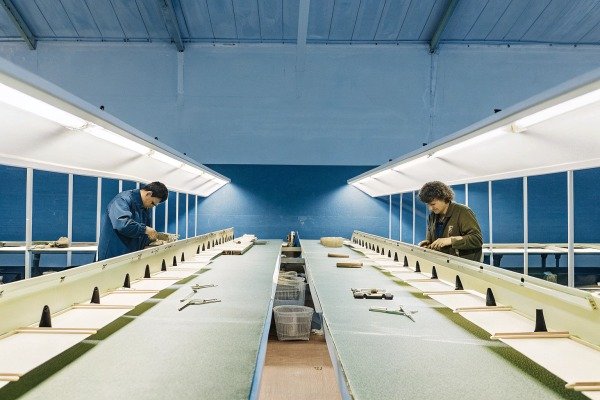
A certificate on the wall means nothing if the shop floor is chaotic or dirty. During client visits to our Chengdu factory, we walk them through specific stations to demonstrate how we control every step of the assembly process from the initial frame build to the final flight test.
To conduct an effective audit, observe the assembly line for standardized work instructions posted at every station and verify that calibrated tools are clearly labeled. You must also inspect the “Quarantine Area” to ensure defective parts are physically segregated from the production flow to prevent accidental usage.

If you or your representative can visit the factory, you need to look past the showroom. A true ISO 9001 factory follows strict visual management rules. When you walk onto the production floor, you should be able to understand the status of production without asking a single question.
Standardized Work Instructions (SOPs)
At every workstation in our facility, you will see a laminated sheet with pictures and text. These are Standard Operating Procedures (SOPs). Standard Operating Procedures 3 ISO 9001 requires that workers do not rely on memory. If you see workers assembling complex flight controllers or soldering motor wires without any instructions in front of them, that is a violation of quality consistency. Ask a worker to show you the step they are currently performing in the instruction manual. If they cannot match their action to the document, the process is not controlled.
Traceability and Part History
One of the biggest benefits of ISO standards is traceability. traceability 4 Pick a finished drone that is ready for packing and ask the factory manager to show you the history of its components.
- "Which batch did these motors come from?"
- "Who inspected the soldering on this ESC?"
- "When was the flight controller calibrated?"
In a compliant factory, every drone travels with a "Router Card" or a digital traveler ID. This document tracks who did what and when. If the supplier cannot tell you which employee installed the GPS module on a specific unit, they have no way to recall defective products if something goes wrong later.
Equipment Calibration
Agricultural drones rely on precise sensors. precise sensors 5 The tools used to install and test these sensors must be accurate. Look at the torque drivers used to tighten the propeller screws. Look at the multimeters used to check battery voltage. Each tool should have a sticker showing the "Last Calibration Date" and "Next Due Date." If these stickers are missing or expired, the supplier is guessing, not measuring.
Table 2: visual Audit Red Flags
| Observation | What It Means | ISO Risk Level |
|---|---|---|
| No SOPs at workstations | Workers rely on memory; inconsistent quality. | Alto |
| Red bins (rejects) mixed with Green bins | Bad parts might get installed on your drone. | Critical |
| Unlabeled tools | No proof that torque or voltage measurements are accurate. | Alto |
| Dusty or disorganized shelves | Poor inventory control; high risk of damaged components. | Medio |
Which quality control checkpoints should I look for during the manufacturing of agricultural drones?
Producing a drone that sprays crops autonomously requires rigorous testing, not just simple assembly. Our engineers spend days testing flight stability before shipping, and you need to know exactly which data points verify a unit is field-ready and safe for your farm.
Critical checkpoints include incoming material inspection for battery cells and motors, followed by in-process checks like soldering tension tests. The final stage must involve a wet-test flight simulation to verify pump pressure, nozzle flow rates, and GPS hold accuracy under actual load conditions before packaging.

Quality control (QC) is not something that happens only at the end. Quality control (QC) 6 In our experience, catching a defect after the drone is fully built is too expensive and risky. An ISO-compliant process breaks QC down into three distinct stages: Incoming, In-Process, and Final.
Incoming Quality Control (IQC)
This is the first line of defense. Before we even start building, we test the raw materials. For agricultural drones, the carbon fiber frame must be checked for cracks or delamination. The motors must be tested for resistance and spin smoothness. If a supplier skips IQC, they might build an entire batch of drones using faulty motors, leading to mass failures in the field. You should ask to see the "IQC Reports" for the latest batch of batteries and motors.
In-Process Quality Control (IPQC)
This happens during assembly. The most critical aspect here is the electrical system. electrical system 7 Agricultural drones carry heavy liquids and fly in humid environments, so connections must be perfect.
- Soldering: We perform pull tests on wire connections to ensure they won't vibrate loose.
- Waterproofing: Since these drones work with water and pesticides, the internal electronics must be sealed. IPQC should check the application of conformal coating on the circuit boards.
Final Quality Control (FQC) – The Wet Test
You cannot verify an agricultural drone without putting liquid in the tank. A static bench test is not enough. The "Wet Test" is where the system is pressurized.
- Pump Pressure: Does the pump maintain steady pressure?
- Flow Rate: Do the nozzles spray evenly?
- Leak Check: Are there any drips from the hose connectors?
- GPS Lock: We take the drone outside (or use a signal repeater) to ensure it locks onto satellites quickly and maintains position.
Table 3: Mandatory QC Checkpoints for Ag Drones
| Escenario | Test Item | Acceptance Criteria |
|---|---|---|
| Incoming | Motor Thrust Test | Current draw matches spec sheet ±5%. |
| In-Process | ESC Signal Calibration | All motors spin up simultaneously. |
| In-Process | Frame Rigidity | No flexing in arm joints when locked. |
| Final | Spray System Test | No leaks at 120% max pressure for 5 mins. |
| Final | Flight Simulation | Stable hover simulation with full payload weight. |
Can third-party inspection agencies help me validate the supplier's quality management system before I place an order?
If you cannot travel to China to visit us personally, we often welcome inspectors from major agencies like SGS or Intertek. SGS or Intertek 8 Using these agencies is a smart investment that provides an unbiased set of eyes on the production floor and protects your capital.
Yes, agencies like SGS, Bureau Veritas, or TÜV can perform a specialized Factory Audit based on ISO 9001 standards. They verify the supplier’s legal status, production capacity, and quality management system effectiveness, providing you with a detailed report and photos of the actual manufacturing conditions without travel.
Hiring a third-party agency is standard practice for professional buyers. ISO 9001 9 It bridges the gap between your location and the factory in China. However, to get the best results, you need to give the agency clear instructions. You cannot just ask them to "check the factory." You need to specify that you want a Technical Quality Audit based on ISO 9001.
Factory Audit (FA) vs. Pre-Shipment Inspection (PSI)
It is important to understand the difference.
- Factory Audit (FA): This happens before you place the order. The inspector visits the factory to check the systems, the machinery, the capacity, and the ISO compliance. They look for the documentation and processes we discussed earlier.
- Pre-Shipment Inspection (PSI): This happens after production is finished but before the goods leave the factory. The inspector picks random boxes, opens them, and tests the drones to ensure they work.
For checking ISO compliance, the Factory Audit is the correct tool. The inspector will act as your auditor, going through the quality manual and checking the calibration records on your behalf.
What the Report Will Tell You
When we host these inspectors, they produce a score-based report. They will rate the factory on several criteria:
- Machinery Maintenance: Are the CNC machines and winding machines well-maintained?
- Production Capacity: Can the factory actually build 50 drones a month as promised?
- Quality System: Do they actually use the "Red Bin" for defects, or is it just for show?
- Social Compliance: Are working conditions safe?
If a factory refuses to allow a third-party audit third-party audit 10, that is an immediate deal-breaker. It usually means they are hiding the fact that they are a middleman without their own production, or their facility is in poor condition.
Cost vs. Value
A typical audit might cost between $300 and $500 per man-day. When you compare this to the cost of a single agricultural drone (often $5,000+), the insurance is worth it. It prevents the nightmare scenario of paying a deposit to a supplier who cannot deliver quality products.
Conclusión
Purchasing agricultural drones is a significant capital investment, and relying on a supplier's word alone is a risk you do not need to take. By verifying the specific scope of their ISO 9001 certificate, requesting audit trails, and understanding the critical QC checkpoints for spraying systems, you can separate high-quality manufacturers from mere assemblers. Quality is not accidental; it is the result of a disciplined, documented process that you have every right to inspect.
Notas al pie
1. General background on UAV technology and classification. ↩︎
2. The IAF oversees the accreditation bodies that validate ISO certifications globally. ↩︎
3. Background on the role of SOPs in maintaining operational consistency. ↩︎
4. GS1 sets the global standards for supply chain traceability and identification. ↩︎
5. International standards body for measurement and tool calibration. ↩︎
6. ASQ defines the standard principles and methodologies for industrial quality control. ↩︎
7. IEEE is the world’s largest technical professional organization for electronic engineering. ↩︎
8. SGS is a globally recognized organization for third-party inspection and verification. ↩︎
9. Official ISO standard page for the 9001:2015 quality management requirements. ↩︎
10. ISO 19011 provides the international guidelines for auditing management systems. ↩︎

 English
  Spanish
  German
  French
  Dutch
Dutch  Arabic
