
We often see pilots struggle during critical spraying missions because they cannot fully understand English flight controls. This language barrier leads to dangerous operational errors and inefficiency, which is why verifying a supplier’s ability to localize software is just as important as checking the hardware specs.
To verify customization capability, request proof of Open SDK availability or API access for the Ground Control Station. Check if the supplier offers editable language resource files (like JSON or XML) and ask for case studies where they successfully deployed non-English interfaces for regional markets.
Here is how you can technically validate a supplier’s claims before signing a contract.
What specific case studies or demos should I request to verify their software customization experience?
Our team frequently demonstrates past projects to new clients because simply claiming to support Spanish or French is easy, but proving it technically is difficult. Without concrete evidence, your investment risks becoming unusable if the interface cannot actually adapt to your local dialect.
Ask for a live screen-share demonstration of the “Settings” menu to toggle existing languages. Request a “Beta” mobile app version version control system 1 version control system (like Git) 2 to inspect external string files and demand case studies showing successful UI deployments in markets with complex scripts like Arabic or Kanji.

When you are vetting a supplier for agricultural drones, do not settle for static screenshots. Photoshop is easy to manipulate, but a live software environment tells the truth. You need to verify that the software architecture is built to handle multiple languages dynamically rather than having English hard-coded into the system.
We recommend asking the supplier to send you a trial version of their Android application (APK file) Android application (APK file) 3. Even if you do not have the drone yet, you can install the app on a tablet. Once installed, you can look for the language settings. More importantly, if you have technical staff, they can inspect the file structure. A supplier capable of customization will store store text in external files 4 text in external files (often named strings.xml o en.json). If the text is buried inside the compiled code, that supplier will struggle to update languages for you.
The Importance of Script Support
You must also verify if their system supports “Unicode” (UTF-8). supports "Unicode" 5 This is critical if your target market uses non-Latin characters. For example, some older flight controllers display question marks or corrupted symbols (mojibake) when trying mojibake 6 to show Chinese or Arabic characters in the telemetry overlay. Ask for a case study or a video demo specifically showing the telemetry data—like altitude and battery voltage—labeled in a non-English script. This proves their rendering engine is robust.
Verification Checklist
Use the following table to guide your request for demos. This ensures you cover all technical bases during your video call with the supplier.
| Verification Item | What to Ask For | What Success Looks Like |
|---|---|---|
| Live Language Toggle | "Show me switching from English to another language in real-time." | The menu updates instantly without crashing or requiring a full firmware reinstall. |
| String File Access | "Can I see the format of your language resource files?" | They provide a JSON, XML, or Excel file containing a list of text keys and values. |
| Character Rendering | "Show me a flight log or warning message in a non-Latin script." | Text appears crisp and correct, not as boxes (□□□) or question marks (???). |
| Layout Adaptability | "Show me a language with long words, like German or Russian." | The text buttons resize automatically and do not overlap with other UI elements. |
How does the supplier's engineering team collaborate on translating technical flight control terms?
Our engineers have spent countless nights refining terms like “yaw” and “pitch” because "yaw" and "pitch" 7 standard dictionary translations often fail in an aviation context. If a supplier does not have a collaborative process, you will end up with confusing interfaces that lead to pilot crashes.
A capable supplier uses a “Translation String Map” approach where technical terms are isolated for your review. They should provide a dedicated spreadsheet containing original keys and context descriptions, allowing your local experts to input precise agricultural and aviation terminology before compilation.
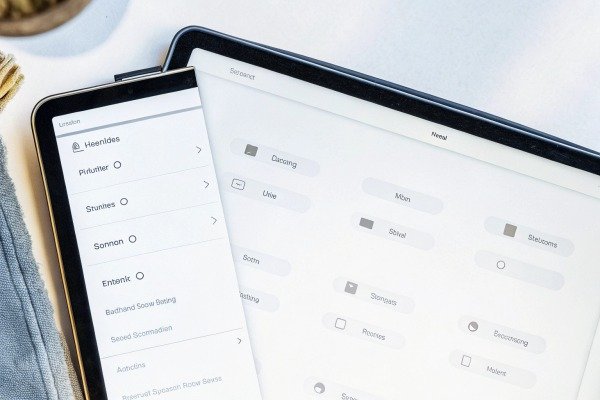
Translation in the drone industry is not as simple as using Google Translate. The word “Arm” (to start the motors) might be translated as the human body part “Arm” if the translator does not understand the context. This creates confusion and safety hazards. A supplier who is serious about customization will not just ask you for a list of words; they will provide a structured workflow.
Typically, this process involves the supplier exporting a “master file” from their development environment. This file lists every piece of text that appears on the screen, along with a “Key” (a unique ID for the code) and a “Comment” explaining where the text appears (e.g., “Main Flight Screen – Top Left”). You or your local agricultural experts then fill in the target language in the adjacent column. This ensures that terms like “Flow Rate” or “Spray Width” are accurate for your local farmers.
Handling Text Expansion
Another technical challenge is text expansion. English is a very compact language. When you translate “Settings” into other languages, the word might become twice as long. If the supplier’s engineers do not collaborate with you on this, the long text will get cut off on the screen. A good collaboration process involves an iteration phase: they send you screenshots of the new language in the app, and you approve the layout or request abbreviations.
Common Translation Risks
The table below highlights why direct collaboration is necessary to avoid dangerous errors in agricultural drone operations.
| English Term | Poor/Machine Translation | Risk to Pilot | Correct Contextual Translation |
|---|---|---|---|
| Arm (Motors) | Human Arm (Body part) | Pilot does not know how to start the drone. | Activate / Start Motors |
| Home Point | Domestic House | Pilot is unsure where the drone will return. | Return-to-Launch Location |
| Carga útil | Paid Load / Cargo | Confusion regarding the spray tank status. | Spray Tank Level |
| Pitch (Angle) | Pitch (Music/Baseball) | Pilot misinterprets flight orientation controls. | Tilt Forward/Backward |
Will adding a customized language interface significantly increase my lead time or minimum order quantity?
We understand that waiting months for a simple language patch destroys your market advantage, and many buyers fear that customization requires ordering thousands of units. However, modern software architecture usually allows for these changes without disrupting the hardware manufacturing line.
If the software architecture is modular, adding a language pack should not impact hardware lead times. However, initial software compilation may add 2-4 weeks. Reputable suppliers often waive high MOQs for software tweaks if you commit to a long-term partnership or standard hardware volume.

There is a distinct difference between “Hardware Customization” (like changing the color of the plastic mold) and “Software Customization” (like adding a language). Hardware changes require new molds and supply chains, which drastically increases the Minimum Order Quantity (MOQ) and lead time Minimum Order Quantity (MOQ) 8. Software changes, however, are digital. They do not physically change the drone.
Understanding the Timeline
If the supplier has a mature development team, adding a language is a “Configuration” task, not a “Development” task. Once you provide the translated text file (as discussed in the previous section), it should take their engineers about 1 to 2 weeks to compile a beta version for testing, and another 1 to 2 weeks to fix layout bugs. This process can happen in parallel while the drones are being assembled in the factory. Therefore, your total delivery time should not be delayed by more than a few weeks.
Negotiating MOQs
Regarding quantity, be wary of suppliers who demand an MOQ of 500+ units just to change the language. This usually implies they are outsourcing the software work and have to pay a high fee to a third party. A manufacturer with an in-house software team (like us) can often offer language customization for orders as small as 10 to 50 units, sometimes charging a one-time engineering fee that is refunded on future orders. This allows you to test the market without a massive upfront commitment.
Estimated Time Impact
The following table provides a realistic estimate of how different levels of customization affect your delivery schedule.
| Customization Level | Descripción | Estimated Delay | Typical MOQ Requirement |
|---|---|---|---|
| Standard Language Pack | Adding a new language using existing UI layout. | +2 Weeks | 10 – 50 Units |
| UI Layout Adjustment | Moving buttons or resizing text boxes for long scripts. | +3 – 5 Weeks | 50 – 100 Units |
| Deep Feature Customization | Changing icons, workflows, or adding new features. | +8 – 12 Weeks | 200+ Units |
| White Label App | Fully rebranded app with your logo and languages. | +4 – 6 Weeks | 100+ Units |
Do they offer long-term software support to ensure language packs work with future firmware updates?
Our support team frequently rescues clients whose customized apps stopped working after a generic firmware update was released. A one-time translation is useless if the next security patch erases your work or reverts the interface back to English.
Ensure the supplier includes “Linguistic Maintenance” in the Service Level Agreement (SLA). This guarantees that custom language files persist through firmware updates and that new features added in future versions are promptly localized to match your specific interface requirements.

Software is never finished; it evolves. Agricultural drones receive frequent updates to improve flight stability, spray accuracy, or battery management. frequent updates 9 A major risk with customized software is that the supplier releases “Version 2.0” of their standard firmware, but your customized “Spanish Version 1.0” is not compatible. This leaves you stuck on old software, missing out on critical bug fixes.
The Concept of Firmware Persistence
You need to ask the supplier how they handle “Merge Conflicts” in updates "Merge Conflicts" 10. A capable supplier uses a version control system (like Git) where your language file is a permanent branch of their main code. This means every time they update the core software, their automated tools will re-apply your language layer on top of it. If they do not have this system, they have to manually rebuild your app every time, which is slow and prone to errors.
Negotiating the SLA
When finalizing your contract, look for a “Software Maintenance” clause. It should explicitly state that the supplier is responsible for maintaining your language pack for the life of the product. Specifically, ask about “New Feature Localization.” If they add a “Fruit Tree Mode” in six months, who is responsible for translating that new button? A good partnership involves the supplier sending you the new terms for translation before the public release, ensuring your customers never see a mix of English and your local language.
Furthermore, ensure that the drone’s flight controller firmware and the mobile app version are synchronized. Sometimes, an app update requires a firmware update on the drone itself. If your language interface is only on the app, verify that it reads the error codes sent by the drone correctly, even after the drone’s internal firmware is updated.
Conclusión
Determining if a supplier can truly provide customized software interface languages requires looking beyond their sales brochure. You must verify their technical architecture through live API demos, audit their collaborative translation workflow, and secure a long-term maintenance agreement. By taking these steps, you ensure your agricultural drones are safe, efficient, and user-friendly for your local market.
Notas al pie
1. Technical guide to version control systems used for managing software code branches. ↩︎
2. Official website for the Git software tool. ↩︎
3. Official documentation for the Android platform. ↩︎
4. Background on the JSON format commonly used for software localization resource files. ↩︎
5. Explains the international standard for encoding diverse character sets in software. ↩︎
6. Definition of the specific technical term for garbled text. ↩︎
7. NASA technical explanation of flight dynamics terms. ↩︎
8. Standard business definition for manufacturing and procurement. ↩︎
9. Example of safety and firmware-related documentation from a major drone manufacturer. ↩︎
10. Technical documentation on handling code integration issues. ↩︎

 English
  Spanish
  German
  French
  Dutch
Dutch  Arabic
