
We see too many buyers stuck with grounded fleets because software support vanished GPS bug 1. Our engineering team ensures every line of code keeps your investment flying for years.
To confirm long-term firmware updates, demand a written Software Lifecycle Commitment detailing support duration post-discontinuation. Verify the supplier’s history of maintaining legacy models, check for Over-the-Air (OTA) infrastructure, and ensure the purchase contract explicitly covers security patches and regulatory compliance updates for at least three to five years.
Let’s explore the critical details ensuring your fleet remains operational and compliant.
What specific software maintenance terms should I look for in the purchase contract?
When drafting contracts for our US partners, we emphasize clarity. Vague promises about “support” often lead to operational nightmares when regulations change unexpectedly.
Look for specific clauses guaranteeing security patches and functional updates for a defined period, typically three to five years. The contract must define Service Level Agreements (SLAs) for critical bug fixes and explicitly state the End-of-Life (EOL) policy to prevent sudden obsolescence of your agricultural assets.
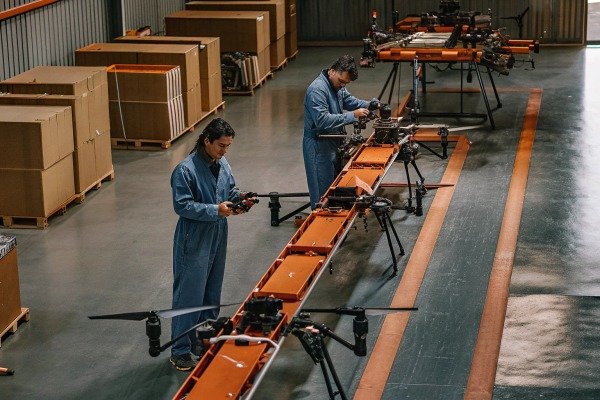
The contract is your only safety net against hardware becoming obsolete due to software neglect. In the agricultural drone industry, hardware often outlasts software. You might have a perfectly functional motor and airframe, but if the firmware cannot comply with new Remote Remote ID regulations 2 ID regulations Remote ID regulations 3 or fix a critical GPS bug, the machine becomes a paperweight. When we sit down with procurement managers, we advise them to look past the warranty on the physical parts and focus heavily on the digital warranty.
You need to demand a "Software Lifecycle Commitment." This is different from a standard hardware warranty. A hardware warranty covers a broken propeller arm. A software lifecycle commitment guarantees that the brain of the drone will continue to evolve. This is especially critical given the shifting regulatory landscape in the United States and Europe. If a new FCC rule mandates a change in signal transmission, your supplier must be contractually obligated to release a firmware patch to ensure compliance. Without this written clause, you are at the mercy of the manufacturer's goodwill.
Differentiating Between Critical Updates and New Features
It is important to distinguish between different types of updates in the contract. Manufacturers might charge for new features, but safety fixes should be free. You must ensure the contract separates these clearly so you do not get charged for essential repairs.
Table: Essential Contract Clauses for Firmware Support
| Tipo de Cláusula | Qué buscar | Por qué es importante |
|---|---|---|
| Security Patch SLA | Commitment to patch vulnerabilities within 30 days of discovery. | Prevents data breaches and protects sensitive crop data from hackers. |
| Cumplimiento normativo | Guarantee to update firmware to meet new FAA/FCC rules for 5 years. | Ensures your fleet remains legal to fly as laws evolve. |
| EOL Support Tail | Commitment to provide updates for 24 months después de a model is discontinued. | Protects your investment if the manufacturer releases a new model next year. |
| Bug Fix Turnaround | Defined timeline (e.g., 72 hours) for critical flight safety bugs. | Minimizes downtime during peak spraying seasons. |
Always ask for a definition of "End of Life" (EOL). Fin de vida 4 Some suppliers define EOL as the moment they stop manufacturing the unit. Others define it as the moment they stop selling it. You want the clock for software support to start ticking only after the last unit is sold, not when they announce a replacement. This ensures that if you buy a drone today, and a new version comes out tomorrow, you are not immediately cut off from support.
How can I verify the supplier's track record for updating previous drone models?
Our R&D department maintains logs dating back to our earliest prototypes. A supplier without accessible, transparent update histories usually hides a pattern of abandoning older models.
Verify a supplier’s track record by reviewing their official support portal for release logs of discontinued models. Consistent updates for products older than three years indicate reliability. Additionally, consult independent user forums to see if pilots report unresolved bugs or sudden support termination for legacy hardware.
Marketing materials will always promise "continuous innovation," but the truth lies in the release notes. Before you sign a purchase order, go to the manufacturer's support website. Look for their products that are three or four years old. Check the date of the last firmware update. If a drone released in 2021 has not had an update since 2022, that is a major red flag. It suggests the manufacturer abandons a product as soon as the sales curve flattens.
In our engineering reviews, we often see competitors release "beta" firmware and never finalize it. You want to see a history of stable, numbered releases (e.g., v2.1, v2.2) rather than a string of experimental patches. A consistent release cadence shows that the software team is active and that they are listening to user feedback. It also indicates financial stability; maintaining software for old products costs money, and only stable companies can afford to do it properly.
Investigating the "Ghost" Products
Every manufacturer has "ghost" products—models that didn't sell well. How they treat these failures tells you everything. Did they fix the bugs for the few customers who bought them? Or did they pretend the product never existed?
Table: Analyzing Firmware Release Logs
| Indicador | Positive Sign (Buy) | Warning Sign (Caution) | Danger Sign (Avoid) |
|---|---|---|---|
| Frecuencia de actualización | Quarterly updates or immediate patches for known bugs. | Updates only once a year or irregular intervals. | No updates for >12 months on a current model. |
| Changelog Detail | Specifics listed (e.g., "Fixed IMU drift at 5°C IMU drift 5"). | Vague descriptions like "Optimized performance." | No changelog provided; just a file download. |
| Soporte heredado | Updates released for discontinued models (3+ years old). | Updates stop exactly when the new model launches. | Old download links are broken or removed. |
| User Feedback | Forums show developers replying to bug reports. | Users complain about the same bug for months. | Forums are deleted or locked by the vendor. |
You should also look at the nature of the updates. Are they substantive? Some companies release "updates" that simply change the copyright date or logo to make it look like they are active. True support involves improving flight algorithms, extending battery efficiency through better power management, or adding compatibility with new third-party software. If the logs only show "minor text fixes" for years, the engineering team has likely moved on to other projects.
Does the manufacturer offer convenient Over-the-Air (OTA) update capabilities for my fleet?
Manually updating hundreds of drones in a field is inefficient. We integrated cloud systems early because we know large-scale farm operators demand seamless fleet management.
Manufacturers offering Over-the-Air (OTA) capabilities demonstrate a commitment to long-term fleet efficiency. OTA systems allow remote, simultaneous updates across multiple units, reducing downtime. Verify if the system supports breakpoint resumption and automatic integrity checks to prevent data corruption during field operations.

In modern agriculture, you are rarely managing just one drone. You might have a fleet of five or ten sprayers and scouts. Imagine having to connect each one to a laptop via USB cable, install a driver, download a file, and flash the firmware manually. This process is prone to human error and consumes valuable daylight human error 6 hours during the busy season. OTA updates are not just a convenience; they are a necessity for scalable operations.
A robust OTA system indicates that the manufacturer has invested in cloud infrastructure. This is a good proxy for their long-term intent. Building a secure cloud server for updates requires significant capital and ongoing maintenance. A "fly-by-night" supplier will simply email you a ZIP file. A serious partner will have a dedicated app that pushes updates to your remote controller and aircraft automatically.
The Risks of Poor OTA Implementation
However, OTA must be done right. We have seen instances where a bad OTA update "bricked" drones in the middle of a job because the signal was lost. You need to ask about the safety mechanisms. Does the system check the battery level before starting? Does it verify the file checksum to ensure the download wasn't corrupted? Can it resume the download if the internet cuts out?
Table: Manual vs. OTA Update Comparison
| Característica | Manual USB Update | Over-the-Air (OTA) Update |
|---|---|---|
| Velocidad de Despliegue | Slow (15-30 mins per drone). | Fast (Simultaneous fleet updates). |
| Riesgo de Error | High (Wrong file, cable disconnect). | Low (System handles verification). |
| Ubicación | Requires office/workshop (Computer needed). | Anywhere with 4G/5G/Wi-Fi signal. |
| Record Keeping | Manual logging required. | Automatic digital log of current versions. |
| Supplier Investment | Low (File hosting only). | High (Cloud servers + App development). |
Furthermore, consider the security aspect of OTA. As agricultural data becomes more sensitive, the connection between your drone and the update server must be encrypted. Ask the supplier if their OTA channel uses HTTPS/TLS encryption HTTPS/TLS encryption 7. HTTPS/TLS encryption 8 If they cannot answer this, or if they suggest sending files via unencrypted chat apps, their security practices are likely insufficient for professional use.
We believe safety patches should never have a price tag. However, some competitors lock essential firmware fixes behind expensive annual subscription paywalls.
Hidden costs often appear as mandatory annual subscriptions required to access basic firmware downloads or unlock geo-fencing features. Clarify if security patches are free for the product’s life versus paid feature upgrades. Scrutinize the contract for “software service fees” that kick in after the warranty period expires.

The "Hardware-as-a-Service" model is becoming common, but it can be a trap for the unwary buyer. You might buy a drone for a competitive price, only to find out that keeping it airworthy costs thousands of dollars a year in mandatory software subscriptions. Some manufacturers categorize firmware updates as a "premium service." If you stop paying the subscription, your drone remains on the old version. Eventually, that old version may become incompatible with your flight control app or ground station software, effectively grounding the hardware.
You must differentiate between "Maintenance" and "Upgrades." Maintenance—fixing bugs, patching security holes, and ensuring compliance with existing regulations—should always be included in the hardware purchase price. Upgrades—adding entirely new autonomous flight modes, new crop analysis capabilities, or unlocking higher flow rates for spraying—can reasonably be charged as add-ons. The danger lies when a supplier bundles them together, forcing you to pay for the "Upgrade" package just to get the "Maintenance" fixes.
The "Unlock Fee" Trap
Another hidden cost involves regional unlocking or feature unlocking. We have seen cases where a drone is sold with hardware capabilities (like RTK precision) that are software-locked mediciones de precisión RTK, 9. The buyer assumes they have bought a high-precision drone, but later realizes they must pay a "license fee" to activate the module they physically possess. Always ask for a full list of software license fees before purchase.
Key Questions to Ask About Costs
- "Is the firmware download portal open to the public, or is it behind a login paywall?"
If it is public, that is a good sign. If you need a paid account to even see the files, be careful. - "Do I lose access to bug fixes if I do not renew my annual maintenance contract?"
The answer should be no. You might lose phone support, but you should never lose access to safety software. - "Are there any mandatory updates that require a fee?"
Sometimes, a major version jump (e.g., v2.0 to v3.0) is treated as a new product purchase. Clarify this upfront.
By scrutinizing these financial details, you protect your operational budget (OPEX) from unexpected spikes. A cheap drone with expensive software is always more costly in the long run than a quality drone with inclusive support.
Conclusión
Securing a written commitment for software longevity is as vital software longevity 10 as the hardware itself. Choose a partner who values your long-term operational success over short-term sales.
Notas al pie
1. General background on the Global Positioning System and common technical challenges. ↩︎
2. Official FAA page outlining Remote ID compliance rules for drones. ↩︎
3. Official FAA regulations regarding the digital identification of drones in flight. ↩︎
4. A comprehensive corporate policy example for product end-of-life and software support. ↩︎
5. Technical documentation from MathWorks explaining inertial sensor drift. ↩︎
6. News reporting on the impact of human error in technical and industrial settings. ↩︎
7. Official NIST glossary definition for TLS encryption standards. ↩︎
8. The official IETF specification for the Transport Layer Security (TLS) protocol. ↩︎
9. Industry leader Trimble explaining Real-Time Kinematic (RTK) technology. ↩︎
10. General background on software long-term support policies. ↩︎

 English
  Español de México
  Deutsch
  Français
  Русский
  العربية
