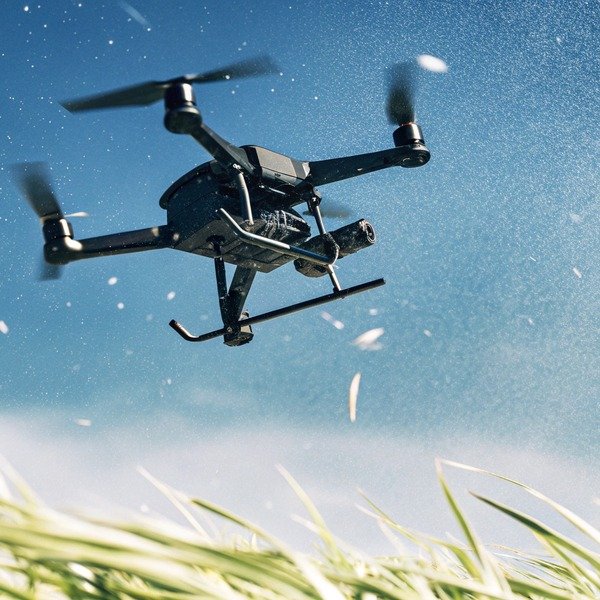
In our years of developing flight control systems at our Xi’an headquarters flight control systems 1, we have seen how quickly a sudden gust can disrupt a spraying mission and damage expensive equipment.
To verify a wind resistance report effectively, you must confirm that the testing was conducted at Maximum Take-Off Weight (MTOW) rather than an empty payload. You should also verify that the report distinguishes between maximum sustained wind speed and gust tolerance, while ensuring the data includes battery consumption rates under high-wind stress conditions.
Here is exactly how you can dissect these technical documents to ensure you get a reliable machine.
What specific technical parameters should I check in the wind resistance section?
When our engineering team calibrates ESC response times for new models, we focus heavily on the raw data metrics that define stability, as vague marketing terms often hide critical performance gaps.
You must check the report for specific wind speed ratings in meters per second (m/s) rather than generic “levels.” Crucially, verify the “Propeller-to-Motor” torque specifications and look for “Spray spray pattern 2 Drift Analysis” data to ensure the drone maintains an effective spray pattern, not just flight stability, during high-wind operations.

When you open a technical test report, it is easy to get lost in pages of graphs and numbers. However, based on our experience manufacturing drones for export to the US and Europe, only a few specific parameters truly dictate whether the machine will survive in a windy field or fail.
The Distinction Between Sustained Wind and Gust Tolerance
The most common trap for buyers is the confusion between sustained wind speed and gust tolerance. A report might claim "Level 5 Wind Resistance," but this is often based on a steady wind tunnel airflow. wind tunnel 3 Level 5 Wind Resistance 4 Real-world agricultural environments involve turbulence.
You need to look for two distinct numbers in the parameter list:
- Maximum Flight Wind Speed: This is the limit at which the drone can safely navigate and return home.
- Maximum Operational Wind Speed: This is the lower limit at which the drone can actually perform its job—spraying liquid—without the wind blowing the chemicals off target.
If the report only gives one number, it is likely the flight limit, not the working limit. This means your effective spraying days might be fewer than you expect.
Flight Telemetry and Power Spikes
We always advise our distributors to look at the power consumption graphs in the annex of the report. In calm weather, a drone might hover at 40% throttle. In high winds, the flight controller must aggressively spin the motors to maintain position.
Check the "ESC Response Latency". This measures in milliseconds how fast the Electronic Speed Controllers (ESC) react to a command from the flight computer. In windy corridors, a delay of even 50 milliseconds can cause the drone to drift into a tree line. You want to see low latency numbers combined with high torque reserves.
Here is a breakdown of the critical parameters you must locate in the document:
Table 1: Critical Wind Resistance Parameters Checklist
| Parameter Name | What It Means | Recommended Standard for Windy Areas |
|---|---|---|
| MTOW Test Condition | Was the drone fully loaded with liquid? | Must state "Tested at Maximum Take-Off Weight" |
| Sustained Wind Rating | Continuous wind speed it can handle. | At least 10 m/s (approx. 22 mph) for commercial use. |
| Gust Tolerance | Peak wind speed for short durations (<3s). | Should be 2-3 m/s higher than sustained rating. |
| Hover Accuracy (Wind) | How much it drifts while hovering in wind. | Vertical: ±0.1m, Horizontal: ±0.5m (with RTK). |
| Battery Drain Increase | Power loss penalty in high winds. | Should not exceed 20-30% reduction in flight time. |
Spray Drift Analysis
Finally, verify if the report includes a "Spray Drift Analysis." A drone can be perfectly stable in a 10 m/s wind, but if the nozzles are not designed correctly, the white mist you see in the product photos will end up on your neighbor's crop, not yours. This section of the report proves that the downward thrust of the propellers is strong enough to push the liquid down through the wind, rather than letting it blow away.
How can I verify the authenticity of the test report provided by the supplier?
We often assist our clients in validating documentation for customs, and we have noticed that legitimate reports always contain traceable metadata that links directly back to the testing facility’s central database.
To verify authenticity, cross-reference the report’s unique serial number with the issuing laboratory’s online verification system. You should also check for a digital signature or CNAS/CMA seal that cannot be copy-pasted, and ensure the testing dates align with the specific model’s production timeline to avoid recycled data.
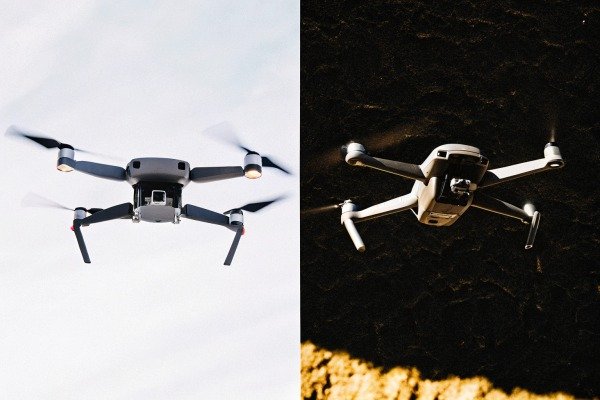
In the global drone market, unfortunately, documents can be forged or altered. As a company that values long-term reputation, we ensure our reports are verifiable, but not every supplier does. Determining if a piece of paper is real requires a bit of detective work.
Digital Verification Methods
The first step is digital verification. A professional third-party test report will almost always have a QR code or a unique Report ID number on the cover page. Do not just trust the PDF sent via email. Go to the official website of the laboratory (e.g., SGS, TÜV, or a national testing center) and input that ID.
If the report does not exist in the database, or if the product name in the database differs from the drone you are buying, it is a red flag. We have seen instances where a supplier takes a valid report for a "Model A" motor and edits the PDF to say "Model B" drone. The database check prevents this.
Analyzing Environmental Data Consistency
A subtle way to spot a fake or misleading report is to look at the environmental conditions recorded during the test. Every professional report lists the ambient temperature, humidity, and air pressure/density ambient temperature 5 at the time of testing.
- Air Density: Drones fly better in cold, dense air. If a report claims high wind resistance but was tested at 5°C (41°F) at sea level, those results might not hold up if you are operating in a hot summer in a high-altitude region like Colorado.
- Location Mismatch: If the lab is located in a tropical region but the test data shows sub-zero temperatures, the data may have been copied from a different test.
The "Golden Sample" Problem
You must also verify if the report applies to a "Golden Sample" or a mass-production unit. A Golden Sample is a unit hand-tuned by engineers to perform perfectly for the test.
Check the hardware specifications section of the report. Does the motor model number and firmware version listed in the report match exactly what is on the quote invoice? If the report lists a "T-Motor U8" but the drone ships with a generic unbranded motor, the test results are invalid for your specific purchase.
Table 2: Authenticity Verification Checklist
| Verification Step | Qué buscar | Warning Sign (Red Flag) |
|---|---|---|
| Database Check | Input Report ID on lab website. | "Record not found" or mismatched product name. |
| Digital Signature | Encrypted PDF signature or watermark. | Pixelated logos or editable text fields. |
| Component Match | Motor/ESC part numbers match your invoice. | Generic descriptions like "High-power motor" without model IDs. |
| Test Date | Recent date relative to model release. | Date is several years old for a "new" product. |
| Laboratory Accreditation | ISO/IEC ISO/IEC 17025 6 17025 accreditation number. | No accreditation standard mentioned. |
By taking these steps, you ensure that the document represents the actual physics of the drone you are about to deploy, protecting your investment from the start.
Which third-party lab certifications should I require for the test report to be credible?
In our dealings with international regulatory bodies, we have found that self-declared manufacturer reports rarely hold up against the rigorous scrutiny of accredited independent testing organizations.
You should require reports from laboratories accredited by ILAC-MRA ILAC-MRA mark 7 signatories, such as those holding ISO/IEC 17025 certification. Look for well-known international entities like TÜV NORD, SGS, or Intertek, as their standardized testing protocols ensure the data is objective and not manipulated by the manufacturer’s internal marketing teams.
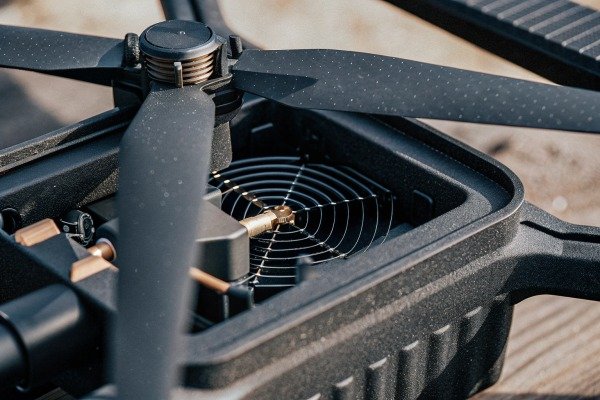
Not all test reports are created equal. A report stamped by the manufacturer's own internal quality department is better than nothing, but for a high-value agricultural drone, you need independent validation. When we export to strict markets, we rely on specific certifications to prove our claims.
The ILAC-MRA Standard
The gold standard for laboratory testing is ISO/IEC 17025. This is an international standard that proves a laboratory is competent to generate valid results.
When you look at a report, look for the ILAC-MRA mark. ILAC (International Laboratory Accreditation Cooperation) is a global network. If a lab in China has ILAC accreditation, its results are mutually recognized by accreditation bodies in the USA, Europe, and Australia. This means you do not have to worry about "local standards" that do not translate. If the report lacks an ILAC or ISO 17025 reference, it is essentially just a manufacturer's promise, not a verified fact.
Recognized International Bodies
While many local labs are accredited, recognized international names carry more weight because they have standardized protocols that are harder to cheat.
- TÜV NORD / TÜV SÜD: Highly respected for safety and industrial machinery testing. A wind resistance certificate from them is very credible.
- SGS: The world's leading inspection, verification, testing, and certification company. They have specific protocols for unmanned aerial vehicles (UAVs).
- CNAS (China National Accreditation Service): For drones coming from China, this is the official government accreditation. It is valid, provided it is accompanied by the ILAC mark for international recognition.
Why "In-House" Testing is Insufficient
We run extensive in-house tests on our drones. However, internal tests allow for "optimistic" setups. For example, an internal test might be stopped right before a motor overheats, and the result recorded as a "pass." An independent lab follows a strict protocol: if the motor overheats at minute 9 independent lab 8 of a 10-minute test, it is a "fail."
Table 3: Hierarchy of Test Report Credibility
| Credibility Level | Certification Body / Type | Reliability Score | When to Accept |
|---|---|---|---|
| Alto | TÜV, SGS, Intertek (ISO 17025) | 10/10 | Large fleet purchases; high-risk areas. |
| Medio | National Lab (CNAS) with ILAC Mark | 8/10 | Standard commercial procurement. |
| Bajo | Manufacturer's Internal "QC Report" | 3/10 | Only for low-cost spares or accessories. |
| Ninguno | Marketing Brochure / Spec Sheet | 0/10 | Never rely on this for safety specs. |
Requiring these specific certifications forces the supplier to prove their product has undergone rigorous, standardized abuse before it ever arrives at your farm.
How do I ensure the reported wind resistance matches the drone's actual field performance?
Our flight crews frequently travel to high-altitude test sites to validate our algorithms, because we know that laboratory wind tunnels cannot replicate the chaotic turbulence found in real agricultural valleys.
To verify real-world performance, request flight logs showing GPS/RTK position variance during high-wind flights and ask for raw video footage of the drone spraying in 10+ m/s winds. You must also analyze the battery voltage sag in the telemetry data, as high winds can drain power up to 30% faster than lab conditions suggest.

The gap between a wind tunnel and a cornfield is massive. A wind tunnel provides "clean" air—a steady, laminar flow. A field has "dirty" air—gusts that swirl around trees, hills, and barns. To bridge this gap, you need to ask for evidence that goes beyond the PDF report.
Analyzing GPS and RTK Drift
In agriculture, precision is everything. If the wind blows the drone 2 meters off course, you are spraying the wrong row.
Ask the supplier for flight logs (specifically .dat o .log files) from a windy test flight. You don't need to be a data scientist to read them; you can open them in standard flight viewing software.
Look for the Horizontal Position Error.
- In calm conditions, an RTK drone should hold within a few centimeters. RTK drone 9 RTK drone 10
- In wind, if you see the position error spiking to 50cm or 1 meter, the drone’s propulsion system is struggling to fight the wind. The report might say "Stable," but the logs will tell the truth about how hard the drone is fighting to stay there.
The Battery Reality Check
Wind kills battery life. A drone that flies for 20 minutes in the lab might only fly for 12 minutes in a stiff headwind because the drone must tilt forward aggressively to penetrate the wind, drawing significantly more current.
- Request a voltage curve: Ask for a graph showing battery voltage over time during a high-wind flight.
- Look for voltage sag: In strong gusts, if the voltage dips suddenly and recovers, the battery is under extreme load. If it sags too low, the drone may trigger a premature "Low Battery" landing, leaving your mission unfinished.
Video Evidence of Spray Quality
Finally, visual proof is undeniable. Ask for raw video footage (not a polished marketing edit) of the drone spraying in wind.
Watch the landing gear and the tank.
- Is the drone "shaking" or oscillating rapidly? This indicates the PID gains (stability settings) are working overtime.
- Look at the spray pattern. Is the mist being forced down into the crop, or is it instantly vaporizing horizontally?
- Check the yaw stability. Does the nose of the drone stay locked forward, or does the wind twist the drone sideways?
H3: The Importance of Terrain-Specific Validation
If your farm is in a flat plain, steady wind data is useful. If you are in a valley or near a treeline, you face wind shear.
We recommend asking the supplier: "Have you tested this platform in variable terrain?" Even better, if you are buying a fleet, ask for a demo unit to test in your specific micro-climate.
Table 4: Lab Data vs. Field Reality
| Metric | Lab / Wind Tunnel Condition | Real-World Field Condition | Qué verificar |
|---|---|---|---|
| Wind Flow | Constant, smooth, laminar. | Turbulent, gusty, chaotic. | Gust response time (ms) in specs. |
| Direction | Usually head-on only. | Multi-directional (crosswinds). | Stability in sideways flight. |
| Carga útil | Often static metal weights. | Sloshing liquid in a tank. | Flight stability with moving liquid center of gravity. |
| Battery | Ideal temperature (25°C). | Cold mornings / Hot afternoons. | Performance degradation curves. |
By demanding these real-world data points, you move beyond theoretical ratings and ensure the drone can handle the actual job you are paying for.
Conclusión
To ensure your agricultural drone can withstand windy conditions, do not rely solely on marketing claims. You must verify technical parameters like sustained wind vs. gust tolerance at full payload, confirm the authenticity of reports through lab databases, insist on ISO 17025 accredited certifications, and cross-reference lab data with real-world telemetry logs regarding battery drain and RTK stability.
Notas al pie
1. Research publication on flight control systems and stability in unmanned aerial vehicles. ↩︎
2. Leading manufacturer documentation on spray patterns and wind resistance for agricultural drones. ↩︎
3. General background on the controlled environments used for testing aerodynamic properties. ↩︎
4. Official definition of the wind force scale levels referenced in the text. ↩︎
5. NOAA definition of environmental conditions that affect flight performance and sensor accuracy. ↩︎
6. Official standard for the competence of testing and calibration laboratories globally. ↩︎
7. Explains the mutual recognition arrangement for international laboratory accreditation and data validity. ↩︎
8. Represents the global organization for laboratory accreditation standards discussed. ↩︎
9. Explains Real-time Kinematic positioning used for high-precision drone navigation and stability. ↩︎
10. Industry leader explanation of the precision positioning technology mentioned. ↩︎

 English
  Spanish
  German
  French
  Dutch
Dutch  Arabic
