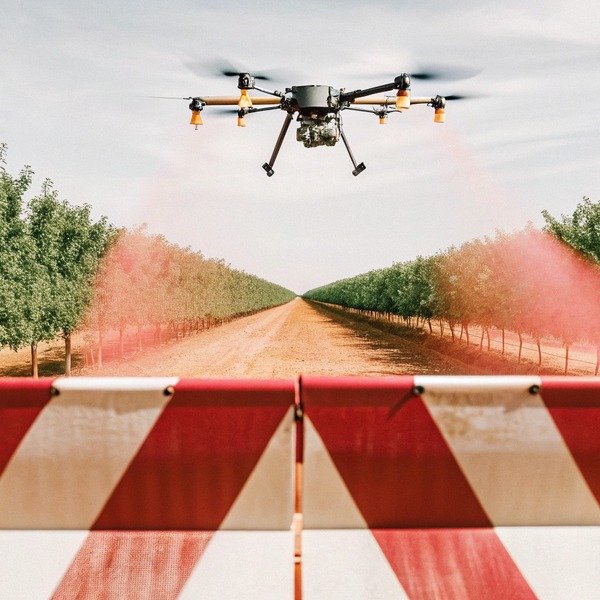
While testing new prototypes at our flight facility, we often see how standard drones fail in complex orchard environments compared to open fields. The dense canopies and uneven terrain present unique challenges that demand specific hardware configurations.
To ensure operational success, you must prioritize terrain-following radar for uneven slopes and high-pressure atomization Atomization 1 nozzles for deep canopy penetration. Additionally, look for RTK positioning to ensure centimeter-level accuracy between narrow rows and modular designs that allow for rapid field repairs during the busy season.
Let’s break down the critical specifications you need to evaluate before making a purchase decision.
How effective are terrain following and obstacle avoidance radars for my hilly orchard operations?
When we calibrate flight controllers for clients in mountainous regions, we find that standard GPS altitude holds are simply not safe enough. You need sensors that actively read the ground.
Effective orchard operations require 360-degree spherical radar systems that can detect obstacles in all directions, not just forward. These sensors must work in tandem with terrain-following algorithms to maintain a consistent height above the tree canopy, even on slopes as steep as 50 degrees.
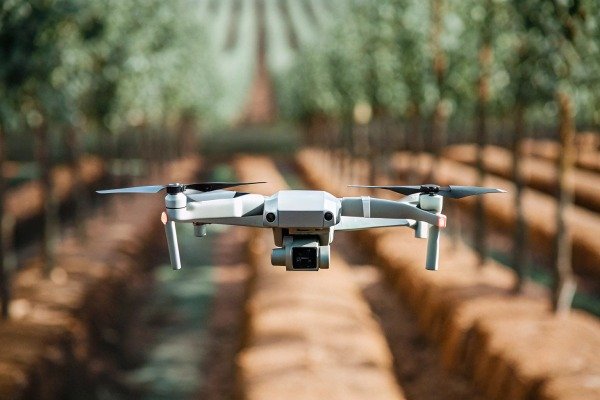
Orchards are rarely flat, especially those growing high-value crops like nuts or citrus. Navigating these environments requires more than just a pilot’s visual line of sight. visual line of sight 2 It requires a drone that can “see” the world in three dimensions. The primary challenge in orchards is the complex structure of the environment. Unlike a cornfield, an orchard has vertical depth, hanging branches, and often, steep topographical changes. If a drone relies solely on a barometer for height, it will crash into the side of a hill or fly too high to be effective.
The most critical feature to look for is Phased Array Radar. Older generations of drones used simple ultrasonic sensors, which were easily confused by thin branches or changes in light. Modern phased array systems emit radio waves that map the environment in real-time. This allows the drone to detect thin obstacles like power lines or guy wires that sustain fruit trees. Furthermore, the radar must be omnidirectional. In an orchard, a drone does not just fly forward; it slides sideways to move to the next row. If your obstacle avoidance only looks forward, the drone will drift sideways into a tree trunk during a turn.
The Importance of Ground Imitation
Terrain following, or “ground imitation,” is non-negotiable for consistent spraying. The drone must maintain a precise distance from the top of the canopy, not sea level. If the drone flies too high, the chemical drifts away in the wind. If it flies too low, the rotors clip the trees. Advanced flight controllers use radar data to adjust the drone’s pitch and throttle instantly, allowing it to climb slopes of up to 50 degrees without losing speed. This capability ensures that trees at the top of a hill receive the exact same dosage as trees at the bottom.
Radar Technology Comparison
Here is a comparison of the different sensor technologies we test in our labs, helping you understand why radar is the industry standard for agriculture.
| Sensor Technology | Key Advantage | Major Drawback in Orchards | Suitability for Orchards |
|---|---|---|---|
| Millimeter-Wave Radar | Works in dust, fog, and bright light; detects thin wires. | Lower resolution than LiDAR for mapping. | Alto (Essential) |
| Binocular Vision | Creates high-resolution 3D models of trees. | Fails in low light or direct sun glare; sensitive to dust. | Medio (Good for backup) |
| LiDAR | Extremely precise distance measurement. | Expensive; heavy data processing load reduces battery life. | Alto (For mapping only) |
| Ultrasonic | Cheap and simple. | Short range; absorbed by soft leaves; unreliable outdoors. | Bajo (Obsolete) |
When evaluating a supplier, ask specifically about the “blind spots” of the radar system. Top-tier drones combine radar with binocular vision sensors to cover the blind spots above and below the drone, ensuring total protection.
What spray system specifications ensure deep canopy penetration for my fruit trees?
Our engineers spend countless hours analyzing water-sensitive paper placed inside dense tree crowns water-sensitive paper 3 to verify our spray efficacy. Surface coverage is easy, but inner penetration is the real challenge.
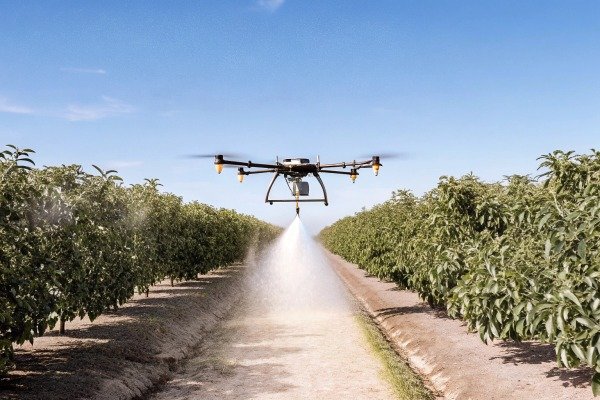
To reach pests hiding on the undersides of leaves and deep within the canopy, you need a spraying system that combines high-pressure atomization with powerful rotor downwash. Centrifugal centrifugal spray systems 4 nozzles are superior here, as they allow you to adjust droplet size efficiently without changing hardware.
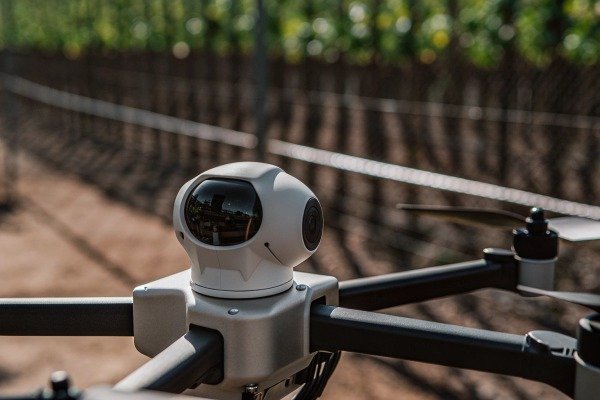
The biology of an orchard pest dictates your hardware requirements. orchard pest 5 Many pests, such as mites or aphids, reside on the underside of leaves or deep within the center of the tree where the foliage is densest. A traditional gravity-fed sprinkler system on a drone will simply wet the outer leaves, leaving the pests inside unharmed. This results in wasted chemicals and potential crop loss. The solution lies in two physical mechanisms: atomization and aerodynamic downwash.
Atomization refers to breaking liquid into tiny droplets. For orchards, you generally need a droplet size between 100 and 200 microns. Droplets larger than this will roll off the leaves, while droplets smaller than this may evaporate before contact. We highly recommend Centrifugal Nozzles over hydraulic pressure nozzles. Centrifugal nozzles use a spinning disk to fling liquid out. By controlling the speed of the disk, you can adjust the droplet size in real-time via the controller software. This is crucial when switching between a fungicide (requiring fine mist) and a herbicide (requiring coarser drops to prevent drift).
Harnessing the Downwash Field
The second factor is the air pushed down by the drone’s propellers, known as the “downwash.” In our wind tunnel tests downwash 6, we observe that a strong downwash field does two things:
1. It physically pushes the canopy branches open, exposing the inner layers.
2. It creates a turbulent airflow that flips the leaves over.
This leaf-flipping action is vital. It allows the chemical mist to coat the underside of the leaf, ensuring 360-degree coverage of the target area. When purchasing, look for drones with a rotor layout designed to maximize this downward pressure directly under the spray nozzles.
Nozzle Performance Guide
Choosing the wrong nozzle can render your flight useless. We created this guide based on field performance data.
| Nozzle Type | Mechanism | Droplet Consistency | Mejor caso de uso |
|---|---|---|---|
| Hydraulic Flat Fan | Liquid forced through a small hole. | Variable; prone to clogging. | Row crops; simple herbicides. |
| Centrifugal (Rotary) | Spinning disk breaks liquid. | Highly consistent; adjustable. | Orchards; fungicides; insecticides. |
| Electrostatic | Charges droplets to stick to plants. | Excellent wrap-around effect. | High-value, dense canopy crops. |
| Air Induction | Mixes air with liquid to create heavy drops. | Very coarse; low drift. | Windy conditions; buffer zones. |
Always verify if the drone’s pump system can handle high-viscosity liquids if you plan to spray heavy fertilizers, as some centrifugal systems struggle with thick fluids.
How do I balance payload capacity and flight time to maximize efficiency in my orchard?
We frequently discuss logistics with large agricultural cooperatives who realize that a bigger tank doesn’t always mean faster work. Efficiency is a math problem involving battery cycles.
You must balance the liquid tank capacity with battery endurance to ensure the drone returns empty just as the battery depletes. A 40-liter payload is often the sweet spot for orchards, offering a practical compromise between coverage area and rapid battery swapping cycles.
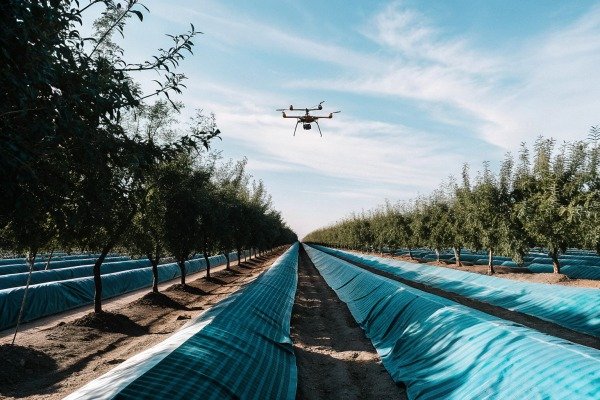
There is a misconception in the market that “bigger is better.” While a 70-liter drone sounds impressive, the physics of flight imposes strict penalties. A heavier drone consumes battery power exponentially faster. In an orchard environment, where the drone must constantly accelerate, decelerate, and climb altitudes, a massive payload can drain a battery in under 7 minutes. This leads to a logistical nightmare where you spend more time charging batteries than spraying trees.
The goal is Cycle Synchronization. Ideally, one tank of liquid should be dispensed using exactly one battery charge. If the drone lands with 30% battery but the tank is half full, you are carrying “dead weight”—liquid that cost energy to carry but wasn’t sprayed. Conversely, if the tank is empty but the battery is at 50%, you wasted flight potential. Through our field trials, we have found that the 30kg to 50kg payload class offers the best efficiency for most orchards.
Route Planning and Breakpoint Resume
Efficiency also comes from software. In large orchards, a drone will inevitably run out of battery in the middle of a row. You need a system with an accurate “Breakpoint Resume” function. This records the exact GPS coordinate where spraying stopped. After you swap the battery and refill the tank, the drone automatically flies back to that exact meter to resume work. Without this, you either double-spray areas (burning chemicals) or miss patches entirely.
Battery Management Strategy
The limiting factor in drone operations is often the charger, not the drone. High-capacity batteries generate immense heat. High-capacity batteries 7 They cannot be charged until they cool down. We recommend a 1-Generator-to-3-Battery ratio for continuous operation. This ensures that while one battery flies, one is cooling, and one is charging.
| Drone Payload Class | Avg. Flight Time (Full Load) | Acres per Hour (Orchard) | Battery Sets Needed for Continuous Ops |
|---|---|---|---|
| Small (10L – 16L) | 12 – 15 mins | 2 – 3 acres | 3 sets |
| Medium (30L – 40L) | 10 – 12 mins | 4 – 6 acres | 4 sets |
| Heavy (50L – 70L) | 7 – 9 mins | 6 – 8 acres | 5+ sets |
For orchards with difficult terrain, the Medium class often outperforms the Heavy class because the heavy drones are slower to maneuver around obstacles and drain batteries faster on slopes.
What structural durability features should I look for to withstand harsh orchard environments?
Our production line quality control involves subjecting frames to vibration tests and water jets because we know the field is unforgiving. A drone that is fragile is a liability.
Look for an IP67 rating to ensure the entire machine is washable and resistant to corrosive pesticides. Prioritize carbon fiber frames for their strength-to-weight ratio and modular arm designs that allow you to replace damaged components in the field without special tools.
An orchard is a hostile environment for electronics. The drone will be exposed to dust, high humidity, intense UV radiation, and most dangerously, the chemicals it sprays. Pesticides and fertilizers are often corrosive. If they penetrate the drone’s body, they can destroy flight controllers and speed controllers (ESCs) within weeks. This is why an IP67 Rating (Ingress Ingress Protection 8 Protection) is essential. “6” means it is completely dust-tight, and “7” means it can withstand temporary immersion in water. Practically, this means you can—and should—wash the drone with a hose after every operation to remove chemical residue.
Structurally, Carbon Fiber is the material of choice. It is lighter than aluminum and stronger than plastic. However, accidents happen. In an orchard, a pilot might clip a branch. If the drone frame is a single molded piece, a broken arm means replacing the entire chassis. This is costly and time-consuming. We advise buyers to look for Modular Designs. This means the arms, motors, and landing gear are separate modules. If a motor fails, you can unclip the arm and plug in a new spare in 5 minutes right in the field.
Connectors and Wiring
Another often overlooked feature is the quality of the cable connectors. Frequent folding and unfolding of the drone arms can wear out internal wiring. High-quality drones use industrial-grade plugs or reinforced internal routing to prevent wire fatigue. Additionally, check the landing gear. It absorbs the impact of every landing. In uneven orchard soil, rigid landing gear can snap. Flexible or shock-absorbing landing gear extends the lifespan of the frame significantly.
Durability Checklist
Before purchasing, use this checklist to assess the build quality of the drone.
| Característica | Requirement | Why it matters |
|---|---|---|
| Waterproofing | IP67 Rated Core Modules | Prevents corrosion from liquid fertilizer and pesticides. |
| Frame Material | Aviation-grade Carbon Fiber | High rigidity reduces vibration; lightweight increases flight time. |
| Arm Folding | Heavy-duty locking clamps | Must not loosen over time; ensures stability in flight. |
| Hélices | High-strength polymer/carbon mix | Must withstand minor impacts with leaves without shattering. |
| Cleaning | Fully washable body | Allows for daily maintenance to prevent chemical buildup. |
Investing in durability upfront reduces the Total Cost of Ownership (TCO). Total Cost of Ownership 9 A slightly cheaper drone that requires constant repairs will cost you more in lost productivity during the critical spraying window.
Conclusión
Selecting the right agricultural drone for your orchard is about matching hardware performance dron agrícola 10 to your specific environmental challenges. By prioritizing terrain-following radar, centrifugal spray systems, balanced payload efficiency, and rugged durability, you ensure a high return on investment. These features transform the drone from a novelty gadget into a reliable industrial tool that saves labor and improves crop health.
Notas al pie
1. Industry leader explaining the physics of liquid atomization. ↩︎
2. FAA regulations regarding visual line of sight for drone operations. ↩︎
3. Manufacturer guide on using water-sensitive paper to evaluate spray coverage. ↩︎
4. ISO standards for agricultural sprayers and centrifugal nozzle performance. ↩︎
5. Integrated pest management resources for citrus and other orchard crops. ↩︎
6. Authoritative government source defining aerodynamic downwash principles. ↩︎
7. Official government resource explaining battery technology and thermal characteristics. ↩︎
8. Official international standards body defining IP rating codes. ↩︎
9. Definition and importance of Total Cost of Ownership in industrial equipment purchasing. ↩︎
10. Provides general background on the use of drones in agriculture. ↩︎

 English
  Spanish
  German
  French
  Dutch
Dutch  Arabic
