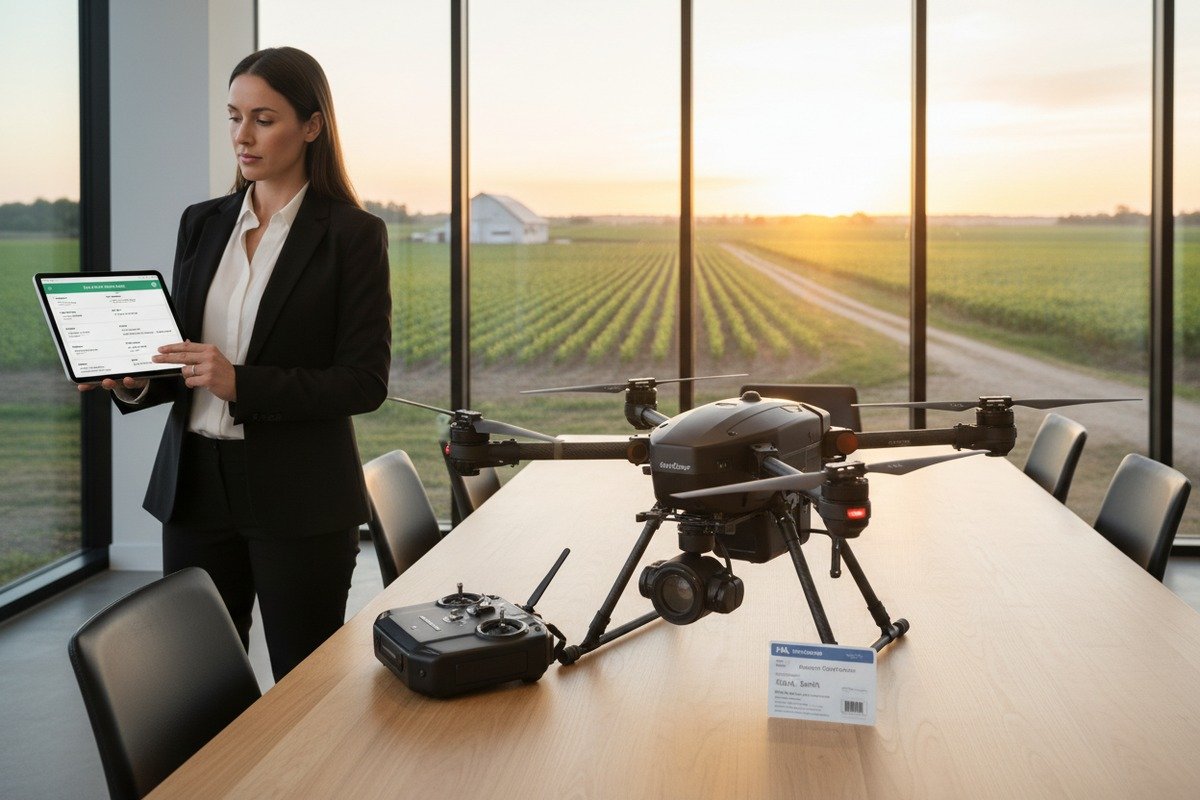
Every week, our export team fields calls from American buyers confused about certification requirements. They have the budget, they want our agricultural drones, but federal regulations feel like a maze.
When purchasing agricultural drones for US operations, buyers must obtain an FAA Part 107 Remote Pilot Certificate for basic commercial use. Chemical dispensing operations require additional Part 137 Agricultural Aircraft Operator Certification. Drones over 55 pounds need Section 44807 exemptions, and all operators must secure state-specific pesticide applicator licenses where applicable.
Let me walk you through each certification layer so you can plan your purchase and training timeline with confidence.
Do I need an FAA Part 107 Remote Pilot Certificate to operate my agricultural drones?
Our engineering team designs flight controllers that meet FAA standards, but we know hardware compliance means nothing if operators lack proper certification. FAA Part 107 Remote Pilot Certificate 1 Many first-time buyers underestimate this foundational requirement.
Yes, you need an FAA Part 107 Remote Pilot Certificate for any commercial agricultural drone operation in the US. This includes crop monitoring, field mapping, and scouting. You must pass the FAA Aeronautical Knowledge Test, be at least 17 years old, and complete recurrent training every 24 months to maintain certification.

What Does Part 107 Cover?
The Part 107 certification serves as your entry ticket to commercial drone operations 2. It covers visual line-of-sight (VLOS) activities that most farmers perform daily. Think crop health assessment, irrigation monitoring, and field boundary mapping.
The test itself costs approximately $175. You do not need flight hours to qualify. The FAA wants you to understand airspace rules 3, weather patterns, drone performance limits, and federal regulations. Most candidates study for two to four weeks before taking the exam.
Eligibility Requirements
Here is a clear breakdown of what you need:
| Requirement | Details |
|---|---|
| Minimum Age | 17 years old |
| Language | English proficiency (read, write, speak, understand) |
| Physical Condition | No formal medical exam required |
| Background Check | TSA security screening |
| Test Fee | Approximately $175 |
| Recurrent Training | Every 24 months |
The Testing Process
You will take the UAG exam at an FAA-approved testing center. The test contains 60 multiple-choice questions. You need 70% to pass. Topics include sectional charts, airspace classifications, weather services, and emergency procedures.
Many of our customers recommend online prep courses from providers like UAV Coach or ABJ Academy. These typically cost $150 to $300 and offer practice exams that mirror the real test format.
VLOS Operations on Your Farm
Part 107 permits standard agricultural tasks within visual line of sight. You can fly during daylight hours and civil twilight with proper anti-collision lighting. Maximum altitude is 400 feet above ground level. Speed limit is 100 mph.
For most crop monitoring and mapping applications, Part 107 provides everything you need. The drones we manufacture at our facility come pre-configured for these standard operating parameters.
Remote ID Compliance
Since 2023, all drones weighing more than 0.55 pounds must broadcast Remote ID 4. This is not optional. When you purchase from us, we ensure our agricultural drones include FAA-compliant Remote ID modules or are listed in the FAA declaration of compliance database.
What additional Part 137 certifications must I obtain for chemical dispensing and heavy-lift drone operations?
When we calibrate our spraying systems at the factory, we design them for Part 137 compliance from day one. However, the certification burden falls on you as the operator. This is where agricultural drone regulations get complex.
For aerial chemical application, you must obtain an FAA Part 137 Agricultural Aircraft Operator Certificate in addition to Part 107. This requires demonstrating competency in pesticide handling, dispersion systems, and emergency procedures. Drones weighing 55 pounds or more also need a Section 44807 exemption and Part 47 registration with an N-number.

Understanding Part 137
Part 137 specifically governs aerial application of agricultural chemicals. Part 137 Agricultural Aircraft Operator Certificate 5 This includes pesticides, herbicides, fertilizers, and seeds. The FAA treats chemical dispensing differently because of the safety risks involved.
You cannot simply upgrade from Part 107 to Part 137. They are separate certification tracks. Part 137 requires you to demonstrate practical knowledge of:
- Safe chemical handling procedures
- Dispersion system operation and calibration
- Emergency response for chemical spills
- No-discharge zone identification
- Environmental protection protocols
The Certification Process
| Step | Requirement | Timeline |
|---|---|---|
| 1 | Hold valid Part 107 certificate | Prerequisite |
| 2 | Complete ground training on chemical application | 1-2 semanas |
| 3 | Pass FAA practical knowledge demonstration | Varía |
| 4 | Submit Agricultural Aircraft Operator application | 30-60 days |
| 5 | Pass FAA equipment and records inspection | Scheduled |
| 6 | Receive Part 137 certificate | After approval |
Heavy-Lift Drone Requirements
Our heavy-lift spraying drones often exceed 55 pounds with full chemical tanks. This triggers additional requirements beyond Part 137.
Drones at or above 55 pounds need:
- Sección 44807 Exención: Special FAA authorization for large unmanned aircraft
- Part 47 Registration: Paper-based registration process with N-number assignment
- Class 3 Medical Certificate: Physical examination by an Aviation Medical Examiner
El Exención de la sección 44807 6 process can take several months. We advise customers to begin this paperwork well before their expected delivery date.
State Pesticide Applicator Licenses
Federal certification is only half the equation. Every state requires pesticide applicator licensing 7 for aerial application. Most states mandate two separate certifications:
- CORE Certification: General knowledge of pesticide safety, laws, and application principles
- AERIAL Category: Specific training for aerial application methods
Texas, California, and Florida have particularly detailed requirements. We always recommend our US customers contact their state department of agriculture before purchasing spraying equipment.
Costs and Investment
Part 137 operations require significant financial commitment:
| Item | Estimated Cost |
|---|---|
| Part 137 training programs | $500 – $2,000 |
| FAA application and inspection fees | $500 – $1,000 |
| State pesticide applicator license | $50 – $300 |
| US-made compliant spray drone | $20,000 – $100,000 |
| Insurance (ag aerial application) | $2,000 – $10,000/year |
These numbers explain why less than 5% of Part 107 pilots hold Part 137 certification. The barrier to entry is substantial but necessary for safe chemical application.
How can my drone supplier help me meet technical training and maintenance standards for my fleet?
In our experience exporting to the US market, we have learned that certification is just the beginning. Operators need ongoing technical support to maintain compliance and maximize fleet performance.
Your drone supplier should provide comprehensive technical training covering flight operations, maintenance procedures, software updates, and data integration. Quality manufacturers offer model-specific familiarization programs, maintenance manuals, spare parts support, and remote technical assistance to ensure your fleet meets FAA operational standards throughout its service life.
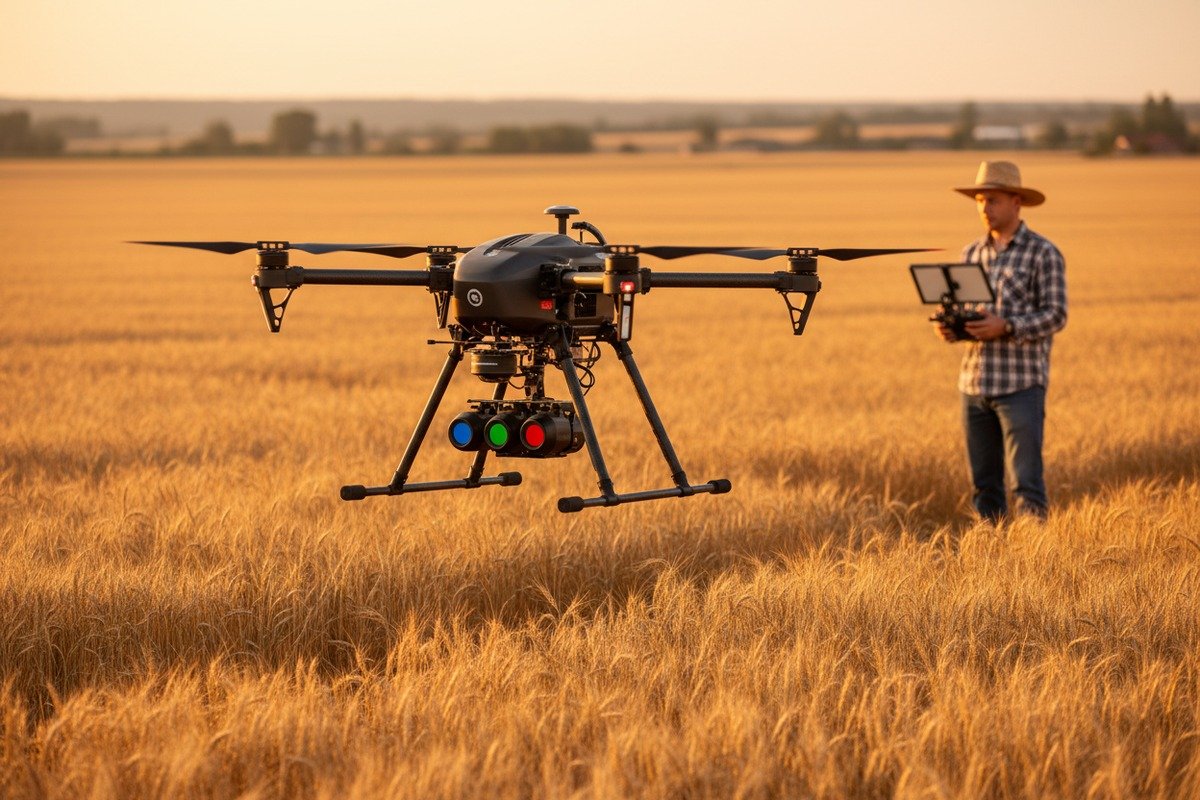
Model-Specific Training Programs
Every drone model has unique characteristics. Our engineers have found that generic training rarely prepares operators for real-world conditions. When we ship agricultural drones to US customers, we include detailed training materials specific to that exact model.
Effective supplier training should cover:
- Pre-flight inspection procedures
- Flight controller calibration
- Payload system operation
- Battery management and safety
- Emergency landing protocols
- Firmware update processes
Maintenance Standards and Schedules
The FAA does not mandate specific maintenance intervals for small unmanned aircraft. However, Part 137 operations require documented equipment inspections. Your supplier should provide clear maintenance schedules.
| Tarea de mantenimiento | Recommended Interval | Critical For |
|---|---|---|
| Visual frame inspection | Before each flight | Structural integrity |
| Motor and propeller check | Every 10 flight hours | Flight safety |
| Battery health assessment | Every 20 charge cycles | Fire prevention |
| Sprayer nozzle cleaning | After each application | Chemical accuracy |
| Flight controller calibration | Every 50 flight hours | Navigation precision |
| Full system inspection | Every 100 flight hours | Part 137 compliance |
Spare Parts Availability
One of the biggest pain points our customers report involves spare parts. When a drone goes down during planting season, every day matters. We maintain US-based parts inventory specifically to address this concern.
Ask your supplier these questions before purchasing:
- What is the typical shipping time for replacement parts?
- Do you stock critical components domestically?
- What is your warranty coverage on replacement parts?
- Can I purchase emergency spare parts kits upfront?
Software and Data Integration Training
Modern agricultural drones generate massive amounts of data. Training should include integration with farm management software. Operators need to understand how to process NDVI maps, variable-rate application prescriptions, and yield prediction models.
Our technical team provides remote training sessions on data export formats, third-party software compatibility, and cloud storage options. This is increasingly important as precision agriculture 8 becomes more data-driven.
Cybersecurity Education
Agricultural data has real value. Field boundaries, yield data, and application records deserve protection. The FAA and industry groups now recommend cybersecurity training for commercial drone operators.
Basic cybersecurity practices include:
- Secure password management for drone control apps
- Encrypted data storage and transmission
- Regular firmware updates from verified sources
- Network isolation for drone control systems
Remote Technical Support
Distance should not prevent you from getting help. We provide video call support for troubleshooting, firmware guidance, and operational questions. Many issues can be diagnosed and resolved without shipping equipment back to the manufacturer.
When evaluating suppliers, confirm they offer technical support in your time zone and language. Response time matters when your drone fleet is grounded.
What documentation should I request from my manufacturer to ensure my drones comply with US federal safety regulations?
Our production line generates extensive compliance documentation for every unit we ship. We understand that US importers face scrutiny from federal agencies, and proper paperwork protects everyone involved.
Request these key documents from your manufacturer: FAA Remote ID Declaration of Compliance, FCC equipment authorization certificates, product safety test reports, flight controller and GPS specifications, chemical resistance certifications for spraying components, and detailed technical manuals. For drones over 55 pounds, require documentation supporting your Section 44807 exemption application.
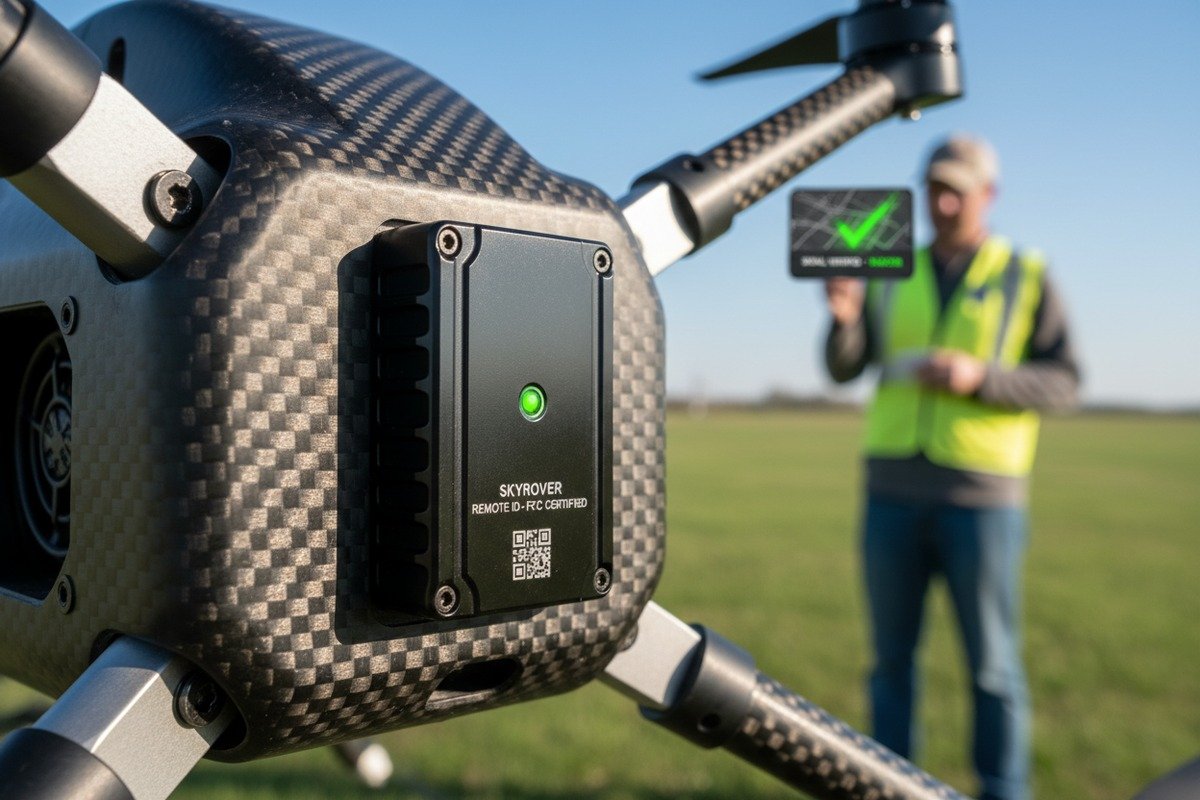
Essential Compliance Documents
The documentation requirements vary based on your intended use and drone specifications. Here is a comprehensive checklist:
| Documento | Objetivo | Required For |
|---|---|---|
| Remote ID Declaration of Compliance | Proves broadcast ID capability | All drones >0.55 lbs |
| FCC Equipment Authorization | Cumplimiento de las normas de radiofrecuencia | All drones with transmitters |
| CE/FCC EMC Test Reports | Compatibilidad electromagnética | Import clearance |
| Battery UN38.3 Certification | Lithium battery safety | Shipping and storage |
| Material Safety Data Sheets | Chemical compatibility | Spraying systems |
| Flight Controller Specifications | Performance parameters | Section 44807 applications |
Remote ID Verification
Since September 2023, Remote ID compliance is non-negotiable. Ask your manufacturer to provide:
- FAA-accepted Remote ID module model number
- Serial number listing in FAA database
- Broadcast specifications (frequency, range, data fields)
- Installation certification for integrated systems
We register every drone we manufacture in the FAA's Remote ID database before shipping. This eliminates delays at customs and simplifies your registration process.
FCC and Radio Frequency Documentation
Agricultural drones use multiple radio frequencies for control links, video transmission, and telemetry. The FCC regulates all radio-emitting devices sold in the United States. FCC equipment authorization certificates 9
Your manufacturer must provide FCC authorization certificates or verification documents. Without these, your drones cannot legally operate on US radio frequencies. Customs may seize non-compliant equipment at the border.
Chemical Application System Documentation
For spraying drones, you need additional documentation proving the chemical delivery system meets agricultural standards:
- Nozzle flow rate specifications
- Tank material chemical resistance ratings
- Pump pressure and volume data
- Calibration procedures and accuracy tolerances
- Compatible chemical classes and concentrations
This documentation supports your Part 137 application and demonstrates due diligence to state agriculture departments.
Section 44807 Supporting Documents
If your agricultural drone exceeds 55 pounds, the FAA requires extensive documentation for exemption approval. Request from your manufacturer:
- Detailed weight breakdown (frame, motors, batteries, payload)
- Maximum takeoff weight specifications
- Flight endurance data at various payload weights
- Emergency landing system documentation
- Reliability and failure mode analysis
Our engineering team prepares these technical packages specifically for US customers pursuing Section 44807 exemptions. This support significantly accelerates the approval timeline.
Import and Customs Documentation
Beyond FAA compliance, you need proper import documentation:
- Commercial invoice with accurate HS codes
- Packing list with serial numbers
- Country of origin certificates
- Any required export control documentation
We have years of experience navigating US customs requirements for industrial drones. Our export team prepares complete documentation packages that smooth the import process.
Ongoing Compliance Updates
Regulations change. The FCC Covered List restrictions effective December 2025 altered the landscape for foreign-manufactured drones. Ask your supplier how they communicate regulatory updates and what support they provide for compliance transitions.
Quality manufacturers maintain relationships with regulatory consultants and update customers proactively when rules change. This ongoing communication protects your investment and operational continuity.
Conclusión
US agricultural drone regulations require careful planning before any purchase. Start with Part 107, add Part 137 for spraying, and always verify manufacturer documentation. The right supplier partnership makes compliance achievable.
Notas al pie
1. Official FAA guidance for obtaining commercial drone pilot certification. ↩︎
2. Provides an overview of FAA regulations for commercial drone operations. ↩︎
3. Explains FAA regulations and guidelines concerning drone airspace rules. ↩︎
4. Official FAA information on Remote ID requirements for drones. ↩︎
5. Official FAA regulations for agricultural aircraft operations using drones. ↩︎
6. Details the FAA’s special authority for certain unmanned aircraft systems. ↩︎
7. The original specific EPA page for pesticide applicator certification and training is a 404. Replaced with the main EPA Pesticides page, which is an authoritative source for pesticide regulation. ↩︎
8. Provides information on the role and benefits of precision agriculture. ↩︎
9. Explains the FCC’s process for equipment authorization for radio-emitting devices. ↩︎

 English
  Spanish
  German
  French
  Dutch
Dutch  Arabic
