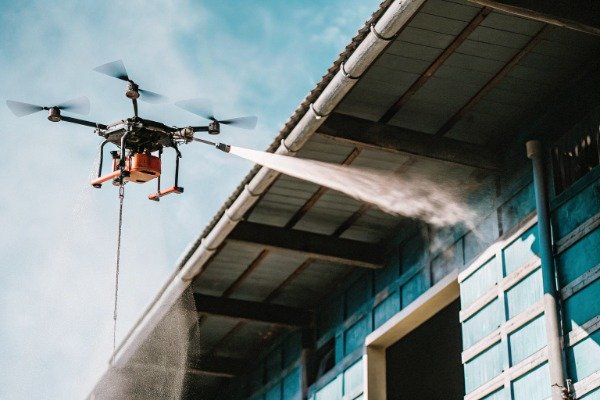
At SkyRover, we know that relying on brochure specs for firefighting drones can be dangerous. When lives are at stake, you need data that reflects the chaos of a real inferno.
You must evaluate flight time based on loaded performance metrics, not empty-frame hover times. Critical data points include discharge rates at 50°C+, power consumption spikes during wind resistance, and the linear decrease in endurance caused by specific payload weights like water or foam canisters.
Let’s break down the specific metrics that separate marketing claims from operational reality.
How significantly does a full payload reduce the advertised flight time?
When we test our heavy-lift drones, we see drastic changes once the tank is full. Ignoring this drop-off leads to failed missions and stranded equipment.
A full payload typically reduces advertised flight time by 40% to 60%. Heavy suppressants drastically alter the power-to-weight ratio, requiring motors to draw significantly more current to maintain lift, which depletes battery capacity much faster than standard surveying configurations.
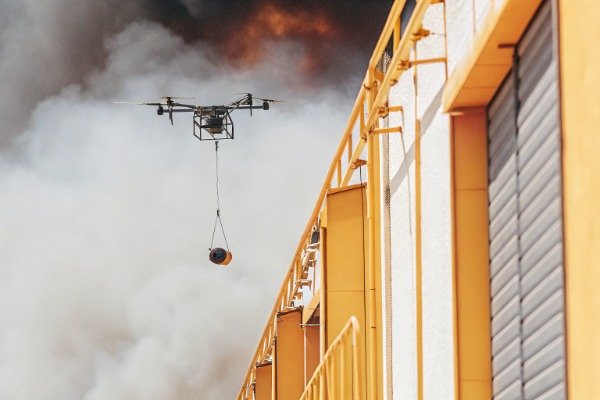
When you look at a spec sheet, the "max flight time" is almost always calculated at sea level with no wind and, crucially, no payload. However, in our factory testing at SkyRover, we see a completely different story when a drone is equipped for a mission. The relationship between weight and battery drain is not linear; it is exponential. As you add weight—whether it is a dry powder extinguisher, a water hose, or dropping balls—the motors must spin at a significantly higher RPM just to generate the necessary lift.
sea level 1
This increased RPM draws a massive amount of current (amperes) from the battery. For example, a drone that hovers at 25 amps while empty might spike to 65 amps or more when fully loaded. This rapid discharge creates two problems: it drains the capacity quickly, and it causes voltage sag, which can trigger a premature low-battery landing.
voltage sag 2
The Impact of Center of Gravity Shifts
Another factor we monitor closely is the Center of Gravity (CoG). When a drone releases a payload—like dropping a fire extinguishing bomb—the sudden loss of weight causes the flight controller to react instantly to prevent the drone from shooting upwards. This compensation requires a burst of power. Conversely, carrying liquid payloads creates a "sloshing" effect. The flight controller must constantly fight this shifting weight to keep the aircraft stable. This constant micro-adjustment drains the battery faster than carrying a static solid weight.
Below is a comparison based on typical industrial drone performance metrics we observe in the field:
| Load State | Advertised Time (Ideal) | Real-World Time (Conservative) | Primary Power Drain Factor |
|---|---|---|---|
| Empty (No Payload) | 55 Minutes | 48 Minutes | Basic propulsion and avionics. |
| Sensor Payload Only | 50 Minutes | 42 Minutes | Gimbal stabilization and video transmission. |
| 50% Max Payload | 35 Minutes | 28 Minutes | Increased motor RPM and drag. |
| 100% Max Payload | 25 Minutes | 12-15 Minutes | High current draw, voltage sag, and stability corrections. |
Mission Profile Segmentation
You must also account for the "Return to Home" (RTH) safety reserve. In a firefighting scenario, you cannot fly until the battery hits 0%. We recommend setting a safety margin of 20-30%. If your fully loaded flight time is 15 minutes, and you need a 30% reserve, your actual operational window to fight the fire is only about 10 minutes. This is the "real" flight time you need to plan for.
What is the difference between hover time and forward flight endurance?
Many clients assume hovering consumes less power, but our flight logs show otherwise. Static positioning in turbulent air often drains batteries faster than cruising.
Hovering generally consumes more energy than forward flight because the drone lacks translational lift. In firefighting scenarios, maintaining a static position against thermal updrafts requires constant motor adjustments, often reducing endurance by 15% compared to efficient forward cruising speeds.

It is a common misconception among new procurement managers that a drone hovering in place is "resting." In reality, hovering is one of the most energy-intensive states for a multirotor aircraft. When a drone is hovering, the propellers must generate 100% of the lift required to fight gravity. There is no aerodynamic assistance.
Understanding Translational Lift
When our engineers analyze flight logs, we see that forward flight is actually more efficient. As the drone moves forward, the propellers act somewhat like the wings of an airplane, generating "translational lift." This aerodynamic phenomenon means the motors do not have to work as hard to keep the drone airborne compared to a dead hover.
In a firefighting context, this distinction is vital. If your mission profile involves flying to a fire 5 kilometers away, the drone will be relatively efficient during the transit. However, once it arrives and needs to hover steadily to aim a water nozzle or monitor a hotspot, the power consumption will spike.
The Battle Against Updrafts
The environment near a fire makes hovering even harder. Fires create massive thermal updrafts—columns of hot, rising air. To maintain a static GPS position in these erratic air currents, the drone’s flight controller must make thousands of rapid adjustments per second. Each adjustment requires a surge of power to the motors. We often see that "hovering" near a fire draws 10-20% more power than hovering in calm air.
Furthermore, density altitude plays a role. Fire often occurs in mountainous regions or hot environments where the air is thinner. Thinner air requires higher motor RPMs to generate the same amount of lift, further reducing your hover endurance.
density altitude 3
| Flight Mode | Aerodynamic Efficiency | Motor Stress Level | Estimated Endurance Impact |
|---|---|---|---|
| Forward Cruise (Optimal Speed) | High (Translational Lift) | Moderate | Baseline (100% efficiency) |
| Static Hover (Calm Air) | Low (No Lift Assist) | Alto | -10% to -15% vs. Cruise |
| Static Hover (Thermal Updrafts) | Very Low (Fighting Turbulence) | Very High | -20% to -30% vs. Cruise |
| High Speed Dash | Low (High Drag) | Maximum | -40% vs. Cruise |
When evaluating a supplier, ask for separate data charts for "Hover Time" and "Max Range/Cruise Time." If they only provide one number, it is likely the optimistic cruise time, which will disappoint you during a stationary surveillance mission.
How do temperature extremes affect battery performance and flight duration?
We frequently calibrate our BMS for extreme heat, as standard batteries fail near fire fronts. Overheating causes voltage sag, risking sudden power loss mid-mission.
Extreme heat above 50°C increases internal resistance and degrades battery chemistry, causing voltage instability and potential thermal runaway. Conversely, cold temperatures reduce chemical activity, leading to capacity loss. Both extremes can cut effective flight duration by over 30% without proper thermal management.
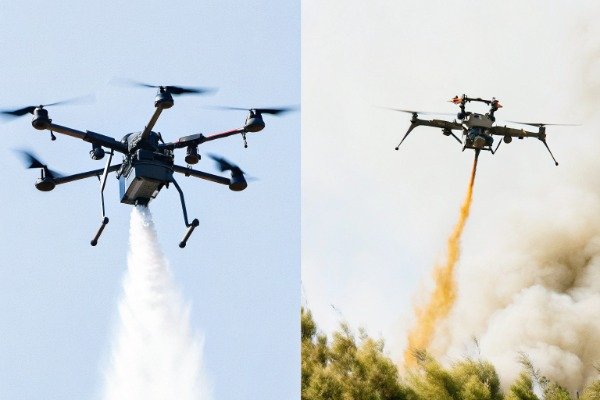
Firefighting drones operate in some of the most hostile environments on Earth. The ambient temperature near an active fire front can easily exceed 50°C (122°F), while the drone itself generates significant internal heat. At SkyRover, we have seen standard commercial batteries swell and fail under these conditions because they were not designed for high-temperature discharge rates.
The Chemistry of Heat and Cold
Lithium-ion and Lithium-polymer batteries rely on chemical reactions to release energy.
- High Heat: When the battery gets too hot, the internal resistance changes. The battery might show it has 40% charge left, but under the heavy load of a firefighting mission, the voltage can sag instantly, tricking the drone into thinking the battery is empty. This triggers an emergency landing—or worse, a crash.
- Extreme Cold: Conversely, if you are fighting a fire in a cold region or at high altitude, the chemical reaction slows down. A battery that lasts 30 minutes at 20°C might only last 18 minutes at 0°C.
Smoke and Cooling Systems
Another factor often overlooked is smoke particulate matter. Industrial drones rely on air cooling to keep motors and ESCs (Electronic Speed Controllers) operational. In a fire, the air is filled with soot and ash. These particulates can clog air intakes and coat the heat sinks of the drone.
When the cooling system is compromised by smoke, the internal components heat up faster. The flight controller may limit power to the motors to protect the hardware (thermal throttling), which makes the drone sluggish and reduces its ability to fight wind, indirectly reducing your effective flight time.
Ionization and Signal Boost
Large-scale fires create ionized air, which can interfere with radio transmission. The drone’s communication system often has to boost its signal strength to the maximum to penetrate this interference. While this power draw is smaller compared to the motors, it is a cumulative factor. Combined with thermal management fans running at 100%, the "hotel load" (power used by non-propulsion systems) becomes significant.
We advise our clients to look for batteries with high-C ratings (discharge capability) and robust thermal management systems, such as active cooling fans or heat-dissipating casings, rather than sealed plastic packs that trap heat.
Should I look for dual-battery redundancy for safety and longevity?
Our engineers prioritize redundancy because a single cell failure shouldn’t crash a valuable asset. Without backup power, a minor glitch becomes a total loss.
operate in parallel 4
Dual-battery redundancy is essential for firefighting drones to ensure safe landings during cell failures. While the extra weight slightly reduces maximum flight time, it prevents catastrophic power loss, balances discharge loads, and significantly extends the overall cycle life of the battery packs.
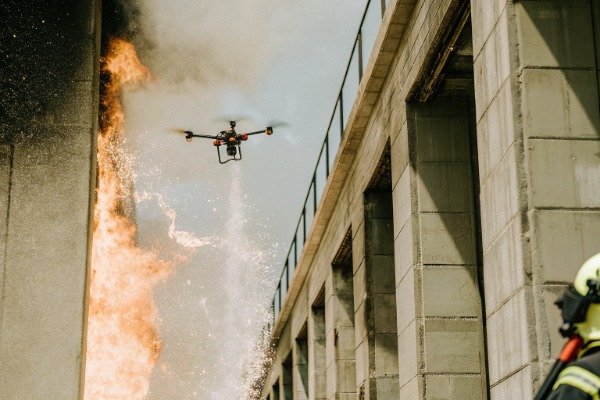
In the consumer drone market, a single battery is standard because it is lighter and cheaper. However, in the industrial sector, particularly for firefighting, we strongly advocate for dual-battery systems. You might ask: "Doesn’t adding a second battery make the drone heavier and reduce flight time?"
Electronic Speed Controllers 6
Technically, yes. A dual-battery setup adds weight. However, the trade-off is heavily skewed in favor of reliability and long-term performance.
internal resistance 7
Preventing Catastrophic Failure
The primary reason for redundancy is safety. If a drone is carrying a valuable thermal camera and operating over a burning building, a battery failure is not an option. In a single-battery system, if one cell inside the pack fails, the voltage drops, and the drone falls. In a dual-battery system, if one battery fails, the other can take over the full load immediately. This allows the pilot to bring the drone home safely.
Load Balancing and Cycle Life
There is also a hidden benefit regarding flight time longevity. When two batteries operate in parallel, the current draw is split between them.
- Single Battery: Draws 50 Amps. The cells are under high stress, heating up quickly.
- Dual Battery: Each battery draws 25 Amps. The cells are under less stress and run cooler.
Because the batteries are not being pushed to their maximum discharge limit, they stay cooler and maintain a stable voltage for longer. This means that while the total weight is higher, the efficiency of the power delivery is better. Furthermore, this lower stress significantly extends the lifespan of your expensive battery packs. A single battery pushed to the limit might last 200 cycles; a dual setup might last 400+ cycles.
thermal updrafts 8
| Característica | Single Battery System | Dual Battery System |
|---|---|---|
| Weight | Lighter | Heavier |
| Initial Flight Time | Slightly Higher (due to less weight) | Slightly Lower |
| Safety Margin | Low (Single point of failure) | High (Redundancy) |
| Battery Lifespan | Shorter (High stress per cell) | Longer (Load sharing) |
| Voltage Stability | Prone to sag under load | Very Stable |
For professional procurement, we always recommend prioritizing the stability and safety of a dual-battery architecture over the extra 2-3 minutes of flight time you might get from a lighter, single-battery unit.
translational lift 9
Conclusión
Real-world data beats brochure specs every time. To ensure mission success, you must evaluate flight time based on full payloads, hover endurance in turbulence, and performance in extreme heat, rather than ideal laboratory conditions.
Center of Gravity (CoG) 10
Notas al pie
- Standard reference for atmospheric pressure conditions used in flight calculations. ↩︎
- Explains the phenomenon of voltage drop under high electrical load. ↩︎
- Explains how heat and altitude affect air density and flight performance. ↩︎
- Explains electrical parallel circuits and how they divide current. ↩︎
- Explains the electrical properties of superheated air particles. ↩︎
- Defines the electronic component controlling motor speed in drones. ↩︎
- Technical explanation of resistance within battery cells affecting efficiency. ↩︎
- Meteorological definition of vertical air currents caused by heat. ↩︎
- Aviation definition of additional lift generated by forward motion. ↩︎
- Defines the physics of balance and stability in aircraft. ↩︎

 English
  Spanish
  German
  French
  Dutch
Dutch  Arabic
