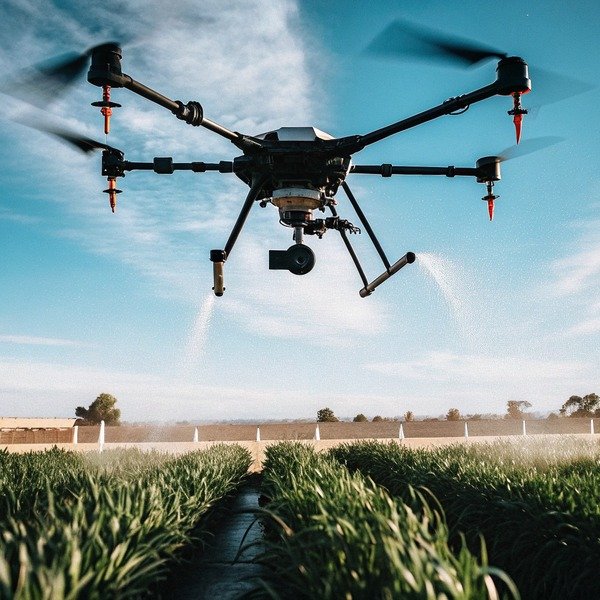
When we see a shipment leave our Xi’an facility, we know that the physical product is only half the value; the assurance of quality is the other half. assurance of quality 1 You are likely worried that the drones you import might fail mid-season, leaving your clients angry and your crops untreated. This fear is valid, but strong contractual terms can prevent these nightmares.
To secure your investment, you should focus on clauses that mandate measurable pre-shipment flight testing, specific component warranties distinguishing defects from wear, clear penalty structures for delivery delays, and guaranteed long-term spare parts availability. These provisions protect against operational downtime and ensure the manufacturer remains accountable for product performance.
Here are the critical details you need to negotiate to ensure you get exactly what you paid for.
How can I define specific pre-shipment flight testing standards in my contract?
Our flight engineers often spend hours calibrating a single unit to ensure the spray width is perfectly uniform, yet we know many suppliers skip this step to save time. If you do not demand proof of performance before the drone leaves the factory, you risk receiving equipment that looks perfect but fails in the field.
Define flight testing standards by including measurable metrics for spray width consistency, battery endurance under full payload, and obstacle avoidance reaction distance. Your contract must require video evidence of these specific tests for each serial number before the final balance payment is released to the manufacturer.

Moving Beyond "Good Working Order"
A generic phrase like "good working order" in a contract is dangerous. In our experience, this allows a supplier to ship a drone that turns on but cannot perform the actual job. You need to replace vague language with specific, quantifiable technical benchmarks. The contract must state that the drone is not considered "delivered" until these benchmarks are met and documented.
When we collaborate with clients on OEM projects, we encourage them to list the specific failure points that worry them most. For agriculture, this is usually pump pressure stability and flight stability under load. You should require a "Pre-Shipment Inspection (PSI) Protocol" as an addendum Pre-Shipment Inspection (PSI) 2 to your contract. This protocol mandates that the manufacturer performs specific maneuvers and records them.
specific Metrics to Include
You cannot simply ask for a "flight test." You must specify what the flight test entails. If the drone is rated for a 20-minute flight time, the test must prove it can fly for 20 minutes with a payload, not just hover empty for 5 minutes.
Here are the specific parameters you should insert into your testing clause:
Table 1: Pre-Shipment Testing Benchmarks
| Test Category | Metric to Define in Contract | Acceptance Criteria |
|---|---|---|
| Sistema de rociado | Flow Rate Accuracy | Flow rate matches spec sheet ±5% for 3 continuous minutes. |
| Autonomía de vuelo | Hover Time (Full Load) | Drone maintains stable hover with max payload for at least 80% of rated time. |
| Stability | Position Holding | GPS hold maintains horizontal position within ±10cm in windless conditions. |
| Safety | Return-to-Home (RTH) | Drone automatically returns and lands within 1 meter of takeoff point upon signal loss. |
| Obstacle Avoidance | Radar Detection | Radar detects obstacle at >10m and halts drone movement automatically. |
The Video Evidence Clause
Paper checklists are easy to fake. We always recommend our buyers include a "Video Verification" clause. This requires the manufacturer to provide a continuous video clip for every drone (identifiable by serial number) demonstrating the startup, spray activation, and landing. If a supplier refuses this request, it is a red flag regarding their quality control processes. quality control processes 3
What warranty terms should I include to cover critical components like motors and spray systems?
We know that agricultural environments are incredibly harsh, with corrosive fertilizers and dust constantly attacking the hardware we build. Standard consumer electronics warranties are useless here because they do not account consumer electronics warranties 4 for the chemical exposure and high-cycle usage inherent in farming operations.
Include warranty terms that specify cycle counts for batteries and flight hours for motors rather than just calendar days. Ensure the contract explicitly covers manufacturing defects in the flight controller and spray system while clearly defining what constitutes normal chemical corrosion versus material failure.

Separating Consumables from Core Components
In the drone industry, there is often a dispute about what constitutes a "consumable." If your contract does not define this, the supplier might claim that a burnt-out motor after 50 hours is "normal wear and tear." You must prevent this.
Your contract needs a "Component-Specific Warranty Schedule." This breaks the drone down into its parts and assigns a specific warranty logic to each. For example, a flight controller should last for years, whereas a propeller is expected to break flight controller 5 if it hits something. The gray area lies in motors, ESCs (Electronic Speed Controllers), and pumps.
Defining "Normal Use" in Agriculture
Suppliers often void warranties by claiming "improper use" or "water damage." Since agricultural drones carry liquid and fly over wet crops, water exposure is inevitable. You must negotiate a clause that states: “Warranty is not voided by exposure to standard agricultural chemicals or moisture, provided the equipment is cleaned according to the user manual.”
This protects you from a supplier denying a claim simply because they found residue on the drone.
Battery Cycle Warranties
Batteries are your most expensive ongoing cost. A time-based warranty (e.g., "6 months") is unfair if you fly intensively. You should push for a "Cycle-Life Guarantee." This means the battery is warranted to hold at least 80% of its capacity for a specific number of charge cycles (e.g., 300 or 500 cycles), regardless of how many months have passed, up to a reasonable limit (like 1 year).
Table 2: Recommended Warranty Durations
| Componente | Standard Market Offer | What You Should Negotiate |
|---|---|---|
| Frame / Structure | 12 Months | 24 Months (Structural integrity) |
| Motores | 3-6 Months | 12 Months or 200 Flight Hours |
| Baterías | 3 Months | 500 Cycles or 12 Months (whichever comes first) |
| Controlador de vuelo | 12 Months | 24 Months |
| Spray Tank & Hoses | No Warranty (Consumable) | 3 Months (Against leaking seams/cracks) |
How do I structure the penalty clauses for delivery delays or substandard drone performance?
In our export history to the US, we have seen buyers miss entire planting windows because a shipment was stuck in customs or delayed at the factory floor. Nothing hurts a business more than having clients waiting for services while the equipment sits in a container halfway across the world.
Structure penalty clauses to impose escalating financial deductions for every week of delay, capped at a specific percentage of the total order value. Additionally, include a “Right to Reject” clause that allows you to return the entire batch for a full refund if a defined percentage of units fail initial performance testing.

Escalating Late Delivery Penalties
A simple "delivery by [Date]" is not enough motivation for some suppliers. You need a "Liquidated Damages for Delay" clause. Liquidated Damages 6 This provision pre-defines the cost of the delay so you do not have to prove your exact losses in court later.
A common and effective structure we see in international trade contracts international trade 7 involves a percentage deduction. For example:
- 0.5% of the total contract value is deducted for every calendar day of delay.
- The penalty is capped at 10% or 20% of the total value.
- If the delay exceeds 30 days, the buyer has the right to cancel the order and receive a full refund immediately.
This gives the manufacturer a strong financial incentive to prioritize your production slot over others.
The "Lemon Batch" Clause
What happens if you order 10 drones, and the first three you test have critical GPS failures? GPS failures 8 You should not have to test the other seven. You need a "Batch Rejection Threshold."
This clause states that if a random sampling of the shipment (e.g., 20% of the units) fails the Pre-Shipment Inspection or the Acceptance Test upon Arrival, the entire batch is deemed non-conforming. This forces the supplier to pay for the return shipping of all units and replace them, rather than making you fight over each individual drone.
Performance vs. Specs
Sometimes a drone arrives on time but does not perform as advertised. Perhaps the payload capacity is 10% lower than the spec sheet promised. Your penalty clause should address "Performance Shortfalls." If the equipment falls short of critical specifications (like flight time or flow rate) by more than a certain margin (e.g., 5%), you should be entitled to a price reduction. This converts a performance failure into a discount, compensating you for the reduced utility of the machine.
What specific provisions should I add regarding spare parts availability and technical support?
When we design a new model, we also plan the parts supply chain, but we know that many small factories discontinue models quickly, leaving buyers with “zombie drones” that cannot be fixed. It is frustrating to scrap a $10,000 machine simply because a $50 plastic mount is no longer manufactured.
Secure a contractual commitment requiring the manufacturer to maintain a purchasable inventory of all spare parts for at least five years after the model is discontinued. Furthermore, define Service Acuerdos de Nivel de Servicio (SLA) 9 Level Agreements (SLAs) that mandate a maximum response time for technical support inquiries to minimize operational downtime.
The "Right to Repair" and Supply Continuity
In the agricultural drone sector, technology moves fast. A model from three years ago might look obsolete to a factory, but it is a workhorse for your farm. You must insert a "Discontinuation Notice and Supply Guarantee" clause.
This clause should require the supplier to:
- Give you at least 6 months' notice before discontinuing a model.
- Guarantee the availability of functional spare parts for a minimum of 3 to 5 years after the last unit is delivered.
- If they cannot supply the part, they must provide the technical drawings or CAD files so you can manufacture the part yourself (this is a "manufacturing license" triggered by supply failure).
Defining Technical Support SLAs
"Technical support available" is a meaningless promise. Technical support 10 Does that mean they answer in 1 hour or 1 week? During the harvest season, a 48-hour delay can mean a lost crop.
You need to define Acuerdos de Nivel de Servicio (SLA) for support. Since you are likely in a different time zone (like the US) than the manufacturer (China), email delays are common. You should require a dedicated communication channel (like WhatsApp or WeChat) for urgent technical issues.
Table 3: Technical Support Service Levels
| Nivel de soporte | Issue Severity | Required Response Time | Resolution Target |
|---|---|---|---|
| Tier 1 (Critical) | Drone unflyable; Safety hazard; App crash. | Within 4 hours (during business hours) | Fix or workaround within 24 hours. |
| Tier 2 (Major) | Feature malfunction (e.g., radar not working); intermittent errors. | Within 12 hours | Fix within 3 business days. |
| Tier 3 (Minor) | Documentation questions; Settings advice. | Within 24 hours | Within 5 business days. |
Software Updates and Compatibility
Hardware is useless without software. Your contract should ensure that the manufacturer will provide firmware updates to fix bugs for the life of the product. Additionally, ensure there is a clause stating that updates will not artificially lock out third-party batteries or accessories, which is a common tactic to force you to buy expensive proprietary consumables.
Conclusión
Negotiating a purchase contract for agricultural drones is about shifting the risk from your operation back to the manufacturer, where it belongs. By demanding rigorous pre-shipment video evidence, securing cycle-based warranties, establishing financial penalties for delays, and guaranteeing long-term parts availability, you protect your capital and your reputation. These clauses turn a simple transaction into a secure partnership, ensuring that when the season starts, your equipment is ready to fly.
Notas al pie
1. References the international standard for quality management systems relevant to manufacturing. ↩︎
2. Official US government definition of inspection protocols for imported goods. ↩︎
3. International standard for quality management systems and control processes. ↩︎
4. Provides authoritative context on standard consumer warranty protections versus industrial needs. ↩︎
5. Technical specifications and lifecycle information for industrial-grade drone flight controllers. ↩︎
6. Legal definition of liquidated damages in commercial contracts. ↩︎
7. US Department of Commerce resources on international trade and contract standards. ↩︎
8. Background information on Global Positioning System technology used in drone navigation. ↩︎
9. Industry-standard definition of service commitments and performance metrics. ↩︎
10. Official support documentation and service level expectations from a leading drone manufacturer. ↩︎

 English
  Spanish
  German
  French
  Dutch
Dutch  Arabic
