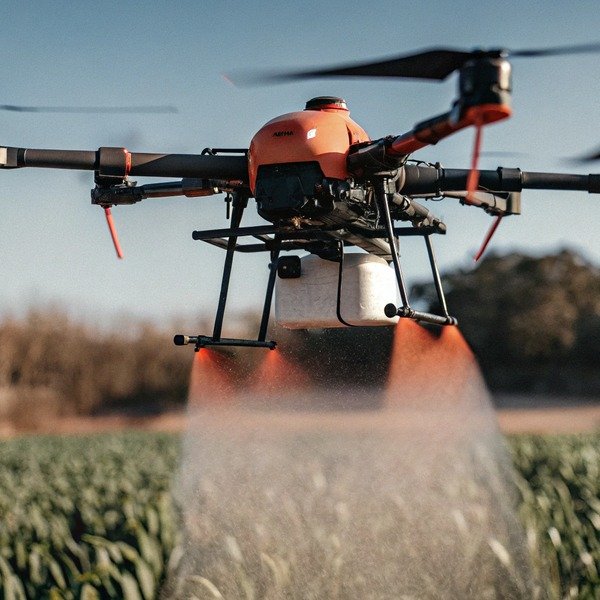
Watching our assembly team calibrate spray nozzles calibrate spray nozzles 1, I realize how fragile precision technology is. A single crash stops your entire operation, costing you time and money during critical seasons.
You should request a comprehensive warranty covering manufacturing defects for at least 12 months, specifically including key components like flight controllers and motors. Crucially, negotiate for local service center access, guaranteed spare parts availability, and clear terms regarding shipping costs for repairs to minimize costly operational downtime.
Let’s examine the specific terms you need to secure before signing that purchase order.
What specific components and software issues need to be covered in my drone warranty?
We often see buyers focus on the frame but ignore the sensors ignore the sensors 2. A single software glitch in the field can ruin your spraying schedule and endanger your investment.
Your warranty must explicitly cover core electronics like the flight controller, GPS modules, radar sensors, and the spraying system pumps. Ensure the policy includes protection against firmware failures that ground the aircraft and guarantees compatibility with future software updates to prevent premature hardware obsolescence.

When we assemble drones at our factory, we separate components into two categories: core systems and consumables. As a buyer, your warranty negotiations must reflect this distinction. A standard "blanket warranty" is often insufficient for the harsh environments where agricultural drones operate. You need line-item coverage details.
Core Electronics vs. Structural Integrity
The heart of your agricultural drone is its flight controller and sensing system. These are not wear-and-tear items; they are sophisticated electronics that should last the life of the machine. When reviewing a supplier's policy, look for specific mentions of the Flight Management Unit (FMU), ESC (Electronic Speed Controllers), and Radar Modules.
If a radar module fails to detect an obstacle due to a manufacturing defect, the resulting crash is not pilot error—it is a system failure. However, many basic warranties try to categorize all crashes as "operator error." You must request a clause that covers crash damage if the crash is proven to be caused by a covered component failure (like a sudden GPS signal loss or ESC burnout).
The Critical Role of Software Coverage
Hardware is useless without stable software. In our R&D labs, we spend months testing firmware stability, but bugs can still occur. Your warranty should include:
- Firmware Stability: Coverage for "bricked" devices caused by mandatory updates.
- App Compatibility: Assurance that the ground control station app will remain compatible with your tablet or controller OS for a set period (e.g., 3 years).
- Unlock Authority: A guarantee that the supplier will not remotely lock the device or restrict flight zones without cause.
Differentiating Consumables
You cannot expect a warranty on propellers or spray nozzles, as these naturally degrade with use. However, you must draw a line between a "consumable" and a "component." For example, a spray pump might wear out, but it should have a minimum hour rating (e.g., 500 hours) before it is excluded from warranty coverage.
Warranty Coverage Checklist
Use this table to evaluate if a supplier’s warranty coverage is comprehensive enough for professional use.
| Categoría de componentes | Standard Industry Offer | What You Should Request |
|---|---|---|
| Controlador de vuelo | 12 Months | 12-24 Months (Critical System) |
| Frame & Structure | 12 Months | 12 Months (excluding crash damage) |
| Spray System (Pumps) | 3-6 Months | 6 Months or 300 Hours of Operation |
| Software/Firmware | Often Unstated | Lifetime validation for defects |
| Propellers/Nozzles | None (Consumable) | DOA (Dead on Arrival) only |
Negotiating these specifics upfront prevents disputes later. If a supplier refuses to cover the flight controller for at least a year, it signals a lack of confidence in their own quality control processes.
How do I verify if the supplier offers remote technical support as part of the after-sales service?
Our engineering team receives urgent calls at 2 AM from overseas clients. Without a verified support channel, you are left stranded with a broken machine and frustrated customers.
Verify support by requesting a pre-purchase test of their technical helpdesk responsiveness and asking for specific Service Level Agreements (SLAs). Ensure they provide multi-channel access via video calls or instant messaging and have English-speaking engineers available during your operating hours to resolve complex diagnostic issues remotely.

Technical support is not just a bonus feature; for agricultural drones, it is an operational necessity. When a drone fails in the middle of a spraying season spraying season 3, you cannot afford to wait days for an email reply. You need immediate answers. Verifying the quality of this support before you pay is essential.
The "Ghost" Support Team Problem
Many suppliers claim to offer "24/7 Support," but in reality, this often means a chatbot or a generic email address monitored by sales staff, not engineers. To verify the reality of their support:
- Request a Trial Ticket: Before purchasing, ask a technical question via their support channel. Measure the time it takes to get a technically accurate response.
- Check Communication Tools: Do they use WhatsApp, Skype, or Zoom? Email is often too slow for field diagnostics. We find that instant messaging groups with our engineers and the client are the most effective way to solve problems.
- Language Proficiency: Ensure the support staff speaks fluent English. Misinterpreting a technical instruction during a calibration process can lead to a crash.
Data Analysis Capabilities
Modern agricultural drones generate massive flight logs. flight logs 4 A true technical support team must be able to read these logs to diagnose issues. Ask the supplier: "If my drone flies erratically, how do I send you the flight logs, and how long will it take you to analyze them?"
If they do not have a clear process for log analysis (e.g., a cloud portal or a specific software tool), they likely lack the engineering depth to support you remotely. They might just tell you to "reboot it" or "buy a new part" without understanding the root cause.
Defining Service Level Agreements (SLAs)
Do not rely on verbal promises. Request an SLA document that defines response times. A "response" should be defined as a meaningful technical engagement, not an automated receipt.
Remote Support Tier Evaluation
| Support Feature | Basic/High Risk Supplier | Professional/Reliable Supplier |
|---|---|---|
| Tiempo de respuesta | 24-48 hours (Email only) | < 4 hours (Instant Message/Phone) |
| Disponibilidad | China Working Hours Only | Overlapping Time Zones / 24h |
| Diagnostic Method | Guesswork based on description | Flight Log Analysis & Video Call |
| Staffing | Sales Reps / General Agents | Dedicated Engineers |
| Cost | Free (but useless) | Included or Paid Annual Subscription |
By insisting on these verification steps, you filter out trading companies that only move boxes and identify true manufacturers or partners who stand behind their technology.
Who is responsible for shipping costs and spare parts availability if my drone needs repairs?
Shipping a heavy drone back to our factory is expensive and slow. We advise clients to clarify logistics early to avoid surprise bills and weeks of downtime.
Ideally, the supplier should cover return shipping costs for confirmed manufacturing defects, while you pay for shipping the unit to the repair center. Negotiate a clause requiring them to maintain a local spare parts inventory or guarantee shipment of critical replacements within 48 hours to reduce downtime.
The logistics of warranty repair are often more painful than the repair itself. Agricultural drones are bulky, heavy, and contain lithium batteries contain lithium batteries 5, making them expensive and difficult to ship internationally. If your warranty policy does not address shipping costs and parts availability, you could face freight bills that exceed the cost of the replacement part.
The Hidden Cost of "Return to Base" Warranties
Many suppliers offer a warranty that requires you to ship the defective unit back to their factory in China for repair. This is impractical for two reasons:
- High Shipping Costs: Sending a 25kg drone via air freight is costly.
- Customs Delays: The drone could get stuck in customs for weeks, causing you to miss the entire spraying season.
Instead of a "Return to Base" policy, you should request a "Component Replacement" policy. If a motor fails, you (or your local technician) should be able to swap it out. The supplier should ship just the replacement part, not require the whole drone.
Negotiating Shipping Terms
Standard international practice (Incoterms) often places the burden on the buyer. However, for a manufacturing defect, this is unfair. manufacturing defect 6 A balanced approach to negotiate is:
- You pay to ship the defective part to the local center or verify it via video.
- The supplier pays to ship the replacement part to you via express courier (DHL/FedEx).
The Spare Parts Kit Strategy
Because shipping takes time, the best warranty is one you don't have to wait for. We often recommend that our distributors purchase a "Critical Spares Kit" (motors, ESCs, landing gear) along with the drone. You should negotiate a clause stating that if a warranty claim is validated, the supplier will replenish your stock of that part for free. This ensures zero downtime.
Spare Parts Availability Guarantee
Ask the supplier about the lifecycle of their parts. You do not want to buy a drone today and find out in two years that the motors are "discontinued." Request a guarantee that parts will remain available for at least 3-5 years after the model is discontinued.
Shipping Responsibility Matrix
| Escenario | Shipping to Service Center | Return Shipping to Customer |
|---|---|---|
| Manufacturing Defect (Valid Claim) | Customer (or waived via video proof) | Supplier (Express) |
| Operator Error / Crash | Customer | Customer |
| DOA (Dead on Arrival) | Proveedor (Pre-paid label) | Proveedor |
| Routine Maintenance | Customer | Customer |
Clarifying this matrix in your contract prevents arguments when a breakdown occurs. You want to be focused on farming, not fighting over FedEx bills.
What is the standard warranty duration I should expect for critical parts like batteries and motors?
Testing battery cycles in our lab reveals how quickly performance degrades under heavy loads. Expecting lifetime coverage on high-wear parts is unrealistic and creates false security.
Expect a standard 12-month warranty for main motors and structural parts, but significantly shorter terms for batteries, typically limited to 6 months or a specific number of charge cycles. Always request a written performance guarantee that ensures batteries retain minimum capacity levels during the coverage period.

Agricultural drones are workhorses. They lift heavy liquid payloads and fly in dusty, humid environments fly in dusty, humid environments 7. This puts immense stress on the propulsion system. Consequently, warranty durations for these machines are different from consumer camera drones. You need to align your expectations with industry realities while protecting yourself against premature failures.
The Battery Warranty: Cycles vs. Time
Batteries are the most expensive consumable. A supplier offering a "1-year warranty" on batteries without conditions is likely lying or planning to deny claims later.
- Smart Batteries: Look for a warranty based on Cycle Count. A common standard is 6 months o 200-300 cycles, whichever comes first.
- Capacity Retention: The warranty should specify that the battery will hold at least 70-80% of its original capacity within the warranty period. If a battery drops to 50% capacity after only 50 cycles, that is a defect, not wear.
Motors and ESCs
Brushless motors are durable, but bearings wear out. brushless motors 8 A 12-month warranty on motors is standard and reasonable. However, check the exclusions. Some warranties exclude damage caused by "dust ingress" or "corrosion." Since you are buying an agricultural drone, it will get wet and dusty. You must ensure the motors are rated (e.g., IP67) and that the warranty covers use in agricultural environments.
Frame and Carbon Fiber Parts
The structural frame should have a long warranty (12-24 months). Carbon fiber does not degrade easily. carbon fiber 9 Unless you crash the drone, the arms and body should not crack. If they do, it is a clear material defect.
Summary of Expected Warranty Durations
| Componente | Standard Duration | High-End / Negotiated Duration | Key Conditions |
|---|---|---|---|
| Airframe / Structure | 12 Months | 24 Months | No crash signs |
| Motores | 6-12 Months | 12 Months | Bearings excluded? |
| Baterías | 3-6 Months | 6-12 Months (or 300+ cycles) | Cycle count limits |
| ESC / Power Board | 12 Months | 18 Months | Water damage clauses |
| Remote Controller | 12 Months | 12 Months | Screen defects included |
By understanding these distinctions, you can spot a weak warranty policy immediately. Do not accept a generic "1-year warranty on everything" without seeing the fine print on batteries and moving parts.
Conclusión
Negotiating these warranty terms protects your capital investment. Secure clear remote support channels, define shipping responsibilities, and demand specific cycle-count guarantees for batteries cycle-count guarantees 10 to keep your agricultural operations running smoothly and profitably.
Notas al pie
1. Authoritative guide on the necessity of calibrating agricultural spraying equipment. ↩︎
2. Overview of sensor technologies used in modern agricultural drones. ↩︎
3. USDA resources on crop production cycles and seasonal timing. ↩︎
4. Technical guide for extracting and analyzing drone flight logs for diagnostic purposes. ↩︎
5. Official international regulations for shipping equipment containing lithium batteries. ↩︎
6. Legal definition and engineering context of manufacturing defects in product liability. ↩︎
7. International standard defining protection against dust and water (IP ratings). ↩︎
8. Technical background on the operation and durability of brushless DC motors in drones. ↩︎
9. Overview of carbon fiber properties and its application in aerospace structural components. ↩︎
10. Government guidelines on battery lifecycle management and performance metrics. ↩︎

 English
  Spanish
  German
  French
  Dutch
Dutch  Arabic
