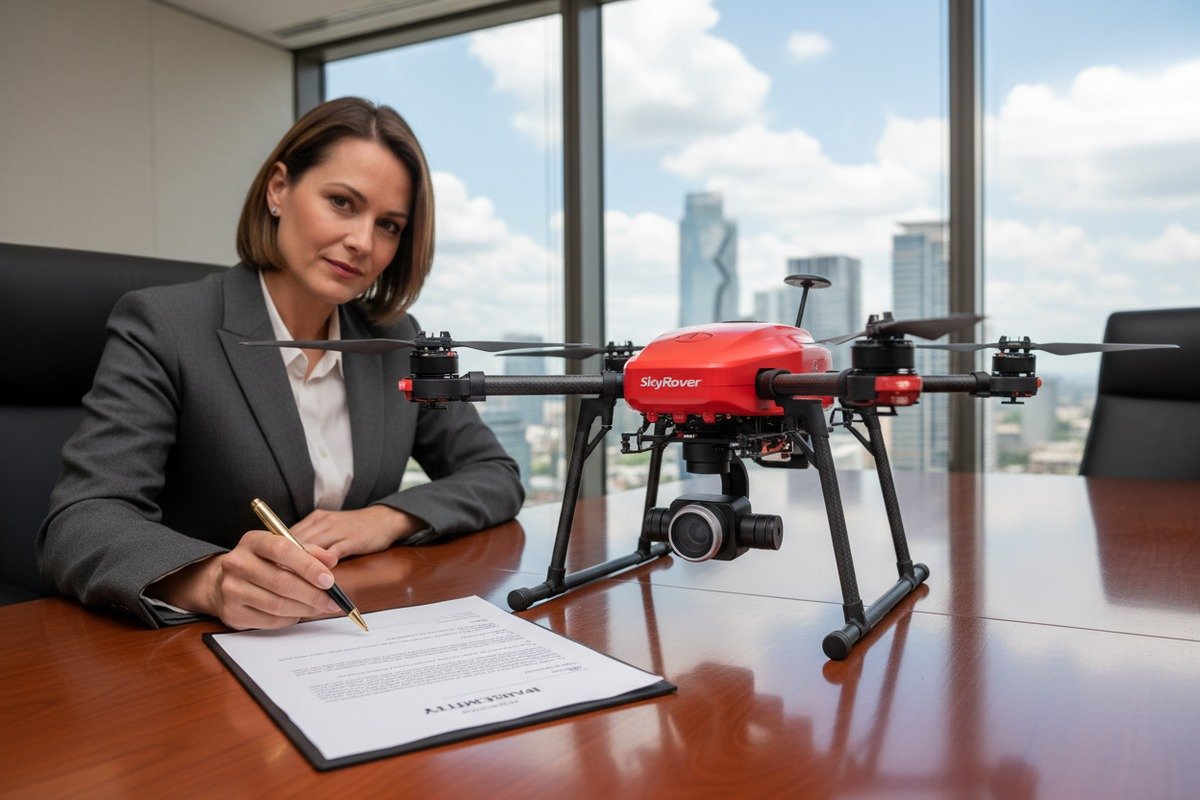
When our engineering team developed thermal imaging sensors for firefighting drones, we quickly learned that intellectual property risks 1 hide in every component. One patent dispute can halt your entire fleet.
Essential IP infringement indemnity clauses for firefighting drone contracts must cover patents, copyrights, trademarks, and trade secrets. They should require the supplier to defend against third-party claims, pay all legal costs and damages, provide replacement technology if infringement occurs, and maintain adequate insurance coverage throughout the contract term.
Understanding these clauses protects your investment and keeps your firefighting operations running. Let me walk you through exactly what you need in your contracts.
How can I ensure my contract fully protects me from third-party patent claims on firefighting drone technology?
Our production facility handles complex components from multiple suppliers, and we have seen how quickly patent disputes can escalate. third-party patent claims 2 A single thermal sensor or flight algorithm can trigger million-dollar lawsuits.
To fully protect yourself from third-party patent claims, your contract must include comprehensive indemnity language covering all drone components, require the manufacturer to assume complete defense obligations, specify worldwide patent coverage, and mandate prompt notification procedures with cooperation requirements from both parties.

Understanding the Scope of Patent Coverage
Patent claims in drone technology touch many areas. Your indemnity clause must cover hardware designs, navigation systems, embedded software, sensors, and AI models. Firefighting drones use specialized technology like thermal imaging, autonomous flight patterns, and fire-mapping algorithms. Each of these can face patent challenges.
The drone market for firefighting reached $1.2 billion by 2025 and continues growing at 25% yearly. IP lawsuits have increased 40% since 2020. This means your risk exposure is significant and growing.
Key Elements Your Contract Needs
Your contract should include these specific protections:
| Element | Qué cubre | Por qué es importante |
|---|---|---|
| Broad Patent Scope | All patents worldwide, not just U.S. | Foreign components may infringe international patents |
| Component Coverage | Hardware, software, firmware, sensors | Patent claims can target any part of the drone |
| Trigger Events | Actual lawsuits and formal claims | Defines when indemnity obligations begin |
| Defense Control | Manufacturer controls legal defense | Ensures experienced counsel handles the case |
| Settlement Rights | Buyer approval required for settlements | Protects your operational continuity |
Avoiding Common Contract Weaknesses
Many contracts limit patent indemnity to specific jurisdictions. This creates gaps. If you operate in multiple countries, you need worldwide coverage. Some manufacturers try to cap indemnity at the contract value. For high-value firefighting drones costing $10 million or more, this cap may not cover defense costs averaging $500,000 per claim.
Our experience shipping to the United States and Europe has shown that different regions have different patent landscapes. European drone regulations 3 under EASA now emphasize IP compliance for public safety contracts. U.S. federal firefighting RFPs increasingly require IP indemnity per FAR 52.227-20 4.
Flow-Down Requirements
Complex firefighting drone systems involve multiple vendors. Your contract should require that IP indemnification flows down through the entire supply chain. From the prime contractor to all subcontractors and component manufacturers, everyone must share responsibility.
When we source thermal cameras or flight controllers from third parties, we ensure our contracts with them include matching indemnity provisions. This protects everyone in the chain.
What specific indemnity language do I need to include to cover legal costs if my drone supplier faces an IP dispute?
When we draft supply agreements for our firefighting drones, legal costs always come up in negotiations. Defense against patent trolls alone can drain hundreds of thousands of dollars before any verdict.
Your indemnity language must explicitly state that the supplier will defend, indemnify, and hold harmless the buyer against all third-party IP claims. It should cover attorney fees, court costs, expert witness fees, settlement amounts, and damage awards, with no unreasonable caps on these costs.

The Three-Part Indemnity Formula
Strong indemnity language follows a three-part structure. First, the supplier must defend you. This means hiring lawyers and managing the case. Second, the supplier must indemnify you. This covers any money you lose. Third, the supplier must hold you harmless. This prevents future claims arising from the same issue.
Here is model language based on industry best practices:
"Provider shall defend, indemnify, and hold harmless Customer, its affiliates, officers, and end-users against any third-party claim alleging infringement of intellectual property rights arising from the drones, software, or related technology supplied under this agreement."
Breaking Down Legal Cost Coverage
| Cost Category | Descripción | Rango típico |
|---|---|---|
| Attorney Fees 5 | Hourly rates for IP litigation counsel | $400-800/hour |
| Court Costs | Filing fees, transcripts, motions | $10,000-50,000 |
| Expert Witnesses | Technical experts for patent analysis | $50,000-200,000 |
| Settlement Costs | Negotiated resolution amounts | $100,000-2,000,000 |
| Damage Awards | Jury or judge verdicts | $500,000-10,000,000+ |
Defense Mechanics and Control
Your contract should specify who controls the defense. Typically, the indemnifying supplier controls the legal strategy. However, you should retain approval rights over settlements that affect your operations. You do not want a settlement that requires you to stop using your firefighting drones mid-wildfire season.
The contract should require the supplier to:
- Select qualified IP litigation counsel
- Keep you informed of case developments
- Seek your approval before settling
- Cover all costs regardless of outcome
Notice and Cooperation Requirements
You must notify the supplier promptly when a claim arises. Delays can prejudice the defense. Your contract should define "prompt" with a specific timeframe, usually 30 days.
In return, you agree to cooperate with the defense. This means providing documents, making witnesses available, and not taking actions that harm the case. The supplier should cover your cooperation costs.
Avoiding One-Sided Traps
Some supplier contracts try to flip the indemnity. They ask buyers to indemnify sellers for IP claims. This is backwards for firefighting drone procurement. You are buying technology, not developing it. The seller should bear the IP risk for their own products.
When our legal team reviews contracts, we look for mutual indemnity clauses that seem balanced but actually favor the seller. True balance in firefighting drone contracts means the seller indemnifies for their technology, and the buyer indemnifies for their own modifications or specifications.
How does an IP indemnity clause safeguard my business when I request custom software or hardware features for my drones?
Our development team works closely with clients on custom features for firefighting drones. Custom fire-mapping algorithms and specialized thermal imaging configurations require careful IP planning from day one.
When requesting custom features, your IP indemnity clause must clearly allocate ownership of newly developed technology, specify who bears infringement risk for custom elements versus standard components, and include provisions for the supplier to obtain necessary licenses or replace infringing custom features without disrupting your operations.

The Custom Development IP Challenge
Custom development creates unique IP risks. When you provide specifications, you may unknowingly describe patented technology. When the supplier creates solutions to your requirements, those solutions may infringe third-party patents neither party knew about.
Standard indemnity clauses often exclude buyer-supplied specifications. This makes sense for the supplier but leaves you exposed. You need specific language addressing custom work.
Ownership Versus Indemnity
Ownership and indemnity are different issues. You might own the custom software but still face infringement claims. Or the supplier might own it while indemnifying you for using it. Your contract needs clarity on both points.
| Escenario | Ownership | Indemnity Responsibility |
|---|---|---|
| Standard components | Proveedor | Proveedor |
| Custom software to buyer specs | Often buyer | Negotiable – usually shared |
| Custom hardware designs | Varies by contract | Typically supplier for manufacturing IP |
| Data and analytics output | Usually buyer | Complex – depends on AI training data |
| Open-source modifications | Per OSS license | Often excluded – buyer risk |
AI and Machine Learning Considerations
Firefighting drones increasingly use AI for fire detection and behavior prediction. AI creates special IP risks. The training data may include copyrighted materials. The algorithms may implement patented methods. The outputs may generate new IP questions.
Your contract should address:
- Who owns AI training data
- Indemnity for AI algorithm patents
- Liability for AI-generated outputs
- Compliance with evolving AI regulations
Open-Source Software Risks
Most drone firmware includes open-source software components 6. OSS licenses vary widely. Some require disclosure of modifications. Others restrict commercial use. Violating OSS licenses can trigger IP claims.
Your indemnity clause should clarify responsibilities for OSS compliance. The supplier should warrant that all OSS is properly licensed and documented. They should indemnify you for OSS-related claims.
Data Ownership and Privacy
Firefighting drones collect valuable data. Thermal imagery, fire behavior analytics, and environmental measurements all have IP implications. When this data is shared or processed by third parties, ownership questions multiply.
Your contract should define:
- Who owns raw sensor data
- Who owns processed analytics
- What happens to data after contract ends
- How data sharing affects IP rights
When we develop custom features at our facility, we document IP ownership clearly from the project start. This prevents disputes later when the technology proves valuable.
What documentation should I demand from my manufacturer to prove I am not liable for any intellectual property violations?
Our quality assurance team maintains extensive documentation for every component in our firefighting drones. When customers ask for proof of IP compliance, we provide comprehensive records because we understand what is at stake.
You should demand IP origin documentation for all components, written warranties of non-infringement, certificates of insurance naming you as additional insured, evidence of patent searches and freedom-to-operate analyses, and ongoing disclosure of any IP claims or disputes affecting the technology you purchased.

Building Your Documentation Package
Documentation serves two purposes. First, it demonstrates due diligence if you face claims. Second, it gives you enforcement leverage if the supplier breaches their indemnity obligations.
Your documentation package should include:
| Tipo de documento | Objetivo | Frecuencia de actualización |
|---|---|---|
| IP Origin Certificates | Proves legitimate sourcing | Per shipment |
| Freedom-to-Operate Analysis 7 | Shows patent search conducted | Annual or per model |
| Insurance Certificates | Confirms coverage exists | Anual |
| OSS Compliance Reports | Documents license compliance | Per software version |
| Supplier Flow-Down Agreements | Proves supply chain coverage | Per new component |
Insurance Requirements
Insurance provides a financial backstop for indemnity obligations. A supplier who cannot pay their indemnity promise offers no real protection. Require policies that specifically cover IP indemnity.
Minimum requirements should include:
- Tech E&O coverage of $1 million or more
- IP indemnity explicitly covered
- Your organization named as additional insured 8
- Certificate provided before delivery
- 30-day notice of cancellation
Insurance premiums for drone companies have risen 20% recently due to increased litigation. This reflects real risks you need protection against.
Freedom-to-Operate Analysis
A freedom-to-operate analysis identifies patents that might cover the drone technology. This analysis should come from qualified patent counsel. It shows the supplier investigated infringement risks before selling to you.
Ask for:
- Summary of patents reviewed
- Conclusions on infringement risk
- Recommendations implemented
- Date of analysis
- Qualifications of analyst
Ongoing Disclosure Obligations
IP risks change over time. New patents issue. Lawsuits begin. Licensing negotiations happen. Your contract should require ongoing disclosure of developments affecting your technology.
The supplier should notify you within a specified period of:
- Any IP claims received
- Any licensing negotiations
- Any patent applications filed
- Any infringement opinions obtained
- Any changes to IP ownership
Supply Chain Transparency
When we build firefighting drones, we source components from multiple countries. Each supplier in our chain must provide IP documentation. This flow-down creates transparency throughout the supply chain.
Require your supplier to:
- Identify all component sources
- Obtain IP representations from each supplier
- Provide copies of key supply agreements
- Notify you of supplier changes
Government procurement rules increasingly demand this transparency. U.S. federal contracts and NDAA requirements restrict certain foreign components. Your documentation should prove compliance.
Conclusión
IP indemnity clauses are not optional extras in firefighting drone contracts. They are essential protection for your investment and operations. Get these clauses right, and your firefighting missions stay protected.
Notas al pie
1. Explains common IP challenges and threats in product development. ↩︎
2. Defines key legal challenges and implications of third-party patent infringement. ↩︎
3. Provides official information on regulatory frameworks for drone operations in Europe. ↩︎
4. Details a specific U.S. federal acquisition regulation concerning data rights and indemnity. ↩︎
5. Explains the typical costs associated with legal representation in IP disputes. ↩︎
6. Discusses intellectual property risks and licensing implications of open-source software. ↩︎
7. Describes the process of identifying and assessing patent infringement risks for new products. ↩︎
8. Defines a critical insurance provision for extending coverage to other parties. ↩︎

 English
  Spanish
  German
  French
  Dutch
Dutch  Arabic
