
When our engineering team first tested thermal cameras on unstabilized drone platforms, the footage was unusable 3-axis gimbal stabilization 1. Fire commanders couldn’t identify hotspots. The shaky imagery meant wasted flights and delayed response times brushless motors 2. This problem drives many procurement managers to ask the right questions before buying.
Clear imagery in firefighting drones requires 3-axis gimbal stabilization with angular deviation under 0.1 degrees, low KV brushless motors (26-50 KV), payload capacity matching your sensor weight, and vibration dampening algorithms handling frequencies from 0.5Hz to 200Hz for steady thermal footage in turbulent conditions.
Understanding these specifications will help you evaluate suppliers and avoid costly mistakes geo-tagged imagery 3. Let’s break down each critical factor that affects gimbal performance in fire emergency operations.
How many axes of stabilization do I need to ensure steady thermal footage during high-heat operations?
Our factory has tested hundreds of gimbal configurations for fire departments across three continents IP ratings 4. The difference between 2-axis and 3-axis stabilization becomes obvious the moment a drone flies near active flames. Thermal updrafts create chaotic air movements that expose weak stabilization systems instantly.
For firefighting operations, you need 3-axis stabilization covering pitch, roll, and yaw. This configuration reduces motion blur and geometric distortion by 70-90% compared to 2-axis systems. The third axis (yaw) is critical for maintaining stable imagery during rapid repositioning maneuvers common in hotspot scanning.

Understanding the Three Axes
Each axis handles a specific type of drone movement. Pitch controls the forward and backward tilt. Roll manages side-to-side tilting. Yaw handles rotational movement around the vertical axis. When flying near fires, all three movements happen simultaneously due to turbulent air.
Our engineers found that 2-axis gimbals struggle during turns. When a drone rotates to scan a fire perimeter, the yaw axis movement transfers directly to the camera. This creates a spinning effect in the footage that makes real-time assessment impossible.
The Budget Argument for 2-Axis Systems
Some budget-focused buyers argue that 2-axis gimbals work fine for lightweight reconnaissance drones. They save weight and reduce power consumption. This argument has merit for calm weather operations with light payloads.
However, fire zones rarely offer calm conditions. Our field tests show 2-axis systems fail consistently in three scenarios: high winds above 15 mph, rapid altitude changes, and quick directional turns. All three occur frequently during active fire response.
| Stabilization Type | Axes Covered | Mejor caso de uso | Limitation in Fire Operations |
|---|---|---|---|
| 2-Axis | Pitch, Roll | Light payloads, calm weather | Jitters during yaw movements |
| 3-Axis | Pitch, Roll, Yaw | Heavy thermal sensors, turbulent air | Higher power consumption |
| 3-Axis + Electronic | All + digital | Extreme conditions | Complex calibration needed |
Core Components That Make Stabilization Work
A gimbal relies on several internal components working together. The Inertial Measurement Unit 5 (IMU) contains gyroscopes and accelerometers. These sensors detect movement 1000 times per second. The data feeds into PID control algorithms 6 that calculate motor corrections in real-time.
When we calibrate our flight controllers at the production line, we test each IMU individually. A poorly calibrated IMU causes drift over time. This drift accumulates into visible image shake after just minutes of flight.
The gyroscope detects rotational velocity. The accelerometer measures linear acceleration. Together, they create a complete picture of drone movement. The PID controller then sends precise signals to the gimbal motors to counteract detected motion.
Will my gimbal maintain precision and image clarity when flying through heavy smoke and wind?
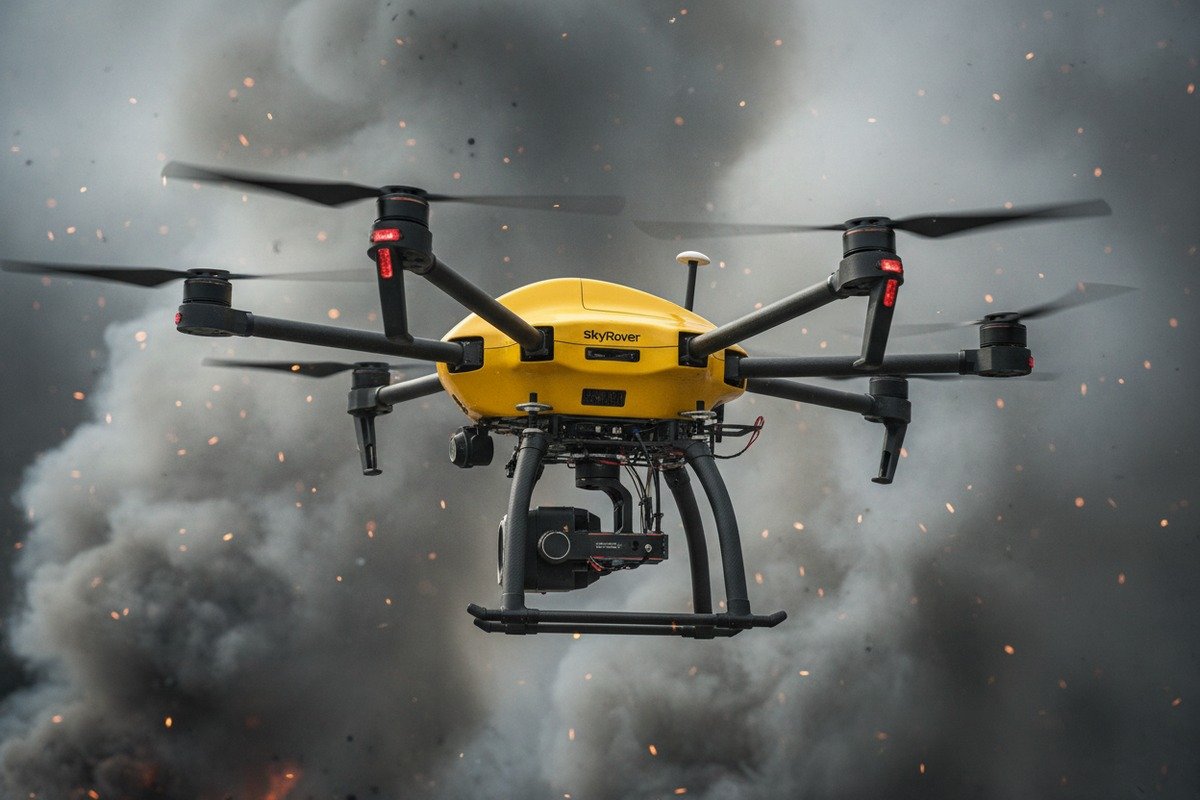
In our experience exporting to emergency response agencies in the US and Europe, wind performance questions come up in every serious procurement discussion. Fire zones create unique aerodynamic challenges that standard consumer gimbals cannot handle. The combination of thermal updrafts, smoke particles, and unpredictable gusts pushes stabilization systems to their limits.
High-quality gimbals maintain precision in wind by using low KV brushless motors (under 50 KV), high torque output exceeding 0.3Nm, and multi-frequency vibration algorithms. These specifications allow the gimbal to respond to disturbances from 0.5Hz normal flight vibrations up to 200Hz motor frequencies while keeping angular deviation under 0.1 degrees.
Motor Specifications That Matter
El KV rating 7 tells you how fast a motor spins per volt of input. Lower KV means slower rotation but higher torque. For gimbal applications, low KV motors provide smooth, precise movements without overshooting the target position.
When we select motors for our firefighting drone gimbals, we prioritize the 26-50 KV range. Motors like the GB36-2 at KV30 deliver 0.36Nm of torque while weighing only 128 grams. This torque-to-weight ratio handles heavy thermal payloads without straining the system.
Higher KV motors (above 100) rotate faster but produce cogging effects. Cogging creates micro-vibrations that transfer to the camera. In thermal footage, this appears as subtle jitter that obscures temperature readings.
| Motor Model | KV Rating | Torque (Nm) | Weight (g) | Recommended Payload |
|---|---|---|---|---|
| GB54-2 | 26 | 0.48 | 156 | 800g – 1200g |
| GB36-2 | 30 | 0.36 | 128 | 500g – 800g |
| GB36-1 | 50 | 0.24 | 88 | 300g – 500g |
| GB2208 | 128 | 0.08 | 88 | Under 300g |
Vibration Frequencies and How Gimbals Handle Them
Drones produce vibrations at multiple frequencies simultaneously. Normal flight creates low-frequency oscillations between 0.5Hz and 3Hz. Aggressive maneuvers spike this to 20Hz. The airframe itself resonates at 5-15Hz. Motor vibrations occur at the highest frequencies, typically 50-200Hz.
A well-designed gimbal must filter all these frequencies at once. Our production team uses multi-frequency stabilization algorithms that fuse IMU data with predictive models. The system anticipates common vibration patterns and pre-corrects before visible shake occurs.
Mechanical isolation also plays a role. Oblique shock balls and rubber dampeners between the drone body and gimbal mount absorb high-frequency motor vibrations. This physical barrier prevents micro-vibrations from reaching the camera even when algorithms can't fully compensate.
Wind Load Effects on Gimbal Motors
Wind adds external force that gimbal motors must overcome. Our testing shows that sustained 20 mph winds increase motor load by 20-50% depending on payload weight. This extra strain heats the motors faster and can cause temporary precision loss.
Heavier thermal sensors amplify this problem. A 1kg dual-camera payload in strong wind may exceed the gimbal's torque capacity. When this happens, the system cannot return to center position quickly enough. The footage shows a lagging effect where the image trails behind drone movements.
We recommend selecting gimbals with 30% more torque capacity than your calculated need. This safety margin ensures stable performance when wind gusts exceed expected conditions.
Can I customize the gimbal software to integrate seamlessly with my specific firefighting sensor payloads?
When we collaborate with clients on design and development, software integration ranks among the top concerns. A gimbal that works perfectly with one camera may fail with another. The control algorithms, communication protocols 8, and calibration profiles must match your specific sensor configuration.
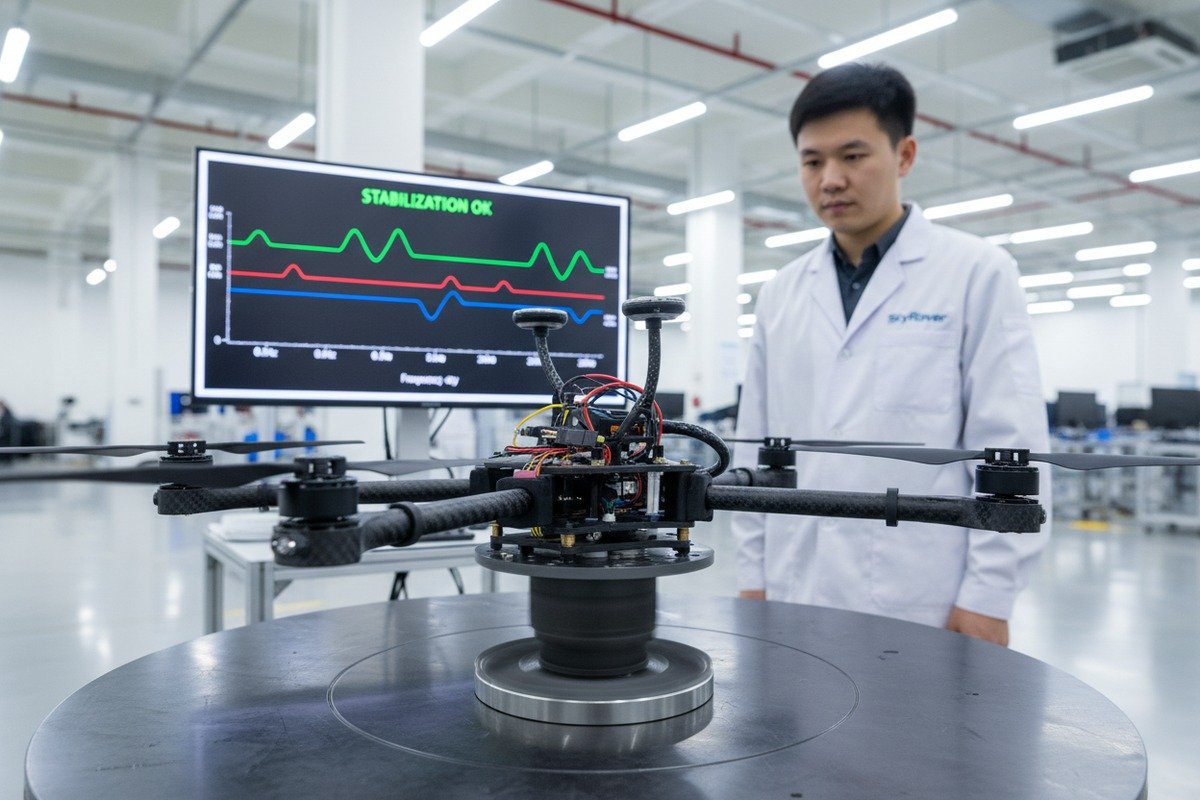
Yes, professional gimbal systems allow software customization through adjustable PID parameters, configurable payload profiles, and open communication protocols. Integration requires matching gimbal control loops to sensor weight distribution, syncing GPS triggers for geo-tagged imagery, and calibrating response curves for your specific camera center of gravity.
PID Tuning for Custom Payloads
PID stands for Proportional, Integral, Derivative. These three values control how the gimbal responds to detected movement. The proportional term determines immediate response strength. The integral term corrects accumulated errors over time. The derivative term predicts future movement to prevent overshoot.
When mounting a new sensor, the default PID settings rarely work perfectly. A heavier thermal camera needs higher proportional values to move the gimbal quickly. A lighter sensor needs lower values to prevent jerky movements.
Our engineers tune PID parameters during integration testing. The process involves mounting the payload, observing response behavior, and adjusting values until smooth tracking occurs. Some gimbal systems offer auto-tuning features, but manual adjustment typically produces better results for specialized firefighting sensors.
Communication Protocol Compatibility
Gimbals communicate with flight controllers through specific protocols. Common options include PWM, S.Bus, CAN, and serial UART. Your drone's flight controller must speak the same language as the gimbal.
Additionally, camera control signals pass through the gimbal to trigger recording, adjust zoom, or change thermal palettes. These commands require compatible protocols between your ground station software and the payload interface.
| Protocol | Data Rate | Typical Use | Integration Complexity |
|---|---|---|---|
| PWM | Bajo | Basic position control | Simple |
| S.Bus | Medio | Multi-channel control | Moderate |
| Bus CAN | Alto | Full telemetry + control | Complex |
| Serial UART | Variable | Custom commands | Moderate |
GPS Synchronization for Mapping
Firefighting drones often capture imagery for post-fire mapping and damage assessment. This requires geo-tagging each frame with precise GPS coordinates. The gimbal must synchronize its trigger signal with the flight controller's position data.
Timing accuracy matters greatly here. A delay of even 100 milliseconds at 30 mph flight speed means position errors of several feet. For accurate fire perimeter photogrammetry, the gimbal trigger and GPS timestamp must align within 10 milliseconds.
Our systems include trigger sync ports that connect directly to the flight controller. This hardware link ensures timing accuracy that software-only solutions cannot match. When sourcing firefighting drones, verify that the gimbal supports hardware trigger synchronization for mapping applications.
Payload Balance and Center of Gravity
Software cannot fully compensate for poor physical balance. Before calibrating software, the sensor must be mechanically centered on the gimbal. This means adjusting mounting plates and sliding the camera until it balances neutrally on all three axes.
When the center of gravity sits off-center, motors work continuously just to hold position. This drains batteries faster and reduces available torque for stabilization. Our assembly technicians spend significant time balancing each payload before software calibration begins.
What durability ratings should I look for to prevent gimbal failure in harsh industrial environments?
Our production line builds gimbals that ship to desert firefighting operations in Arizona and cold weather rescue teams in Scandinavia. The environmental demands vary dramatically, but the core durability requirements remain consistent. A gimbal that fails in the field doesn't just waste money—it can cost lives when fire commanders lose situational awareness.
Look for IP ratings of at least IP54 for dust and water resistance, operating temperature ranges from -20°C to +50°C, EMI shielding certification, and construction materials rated for thermal shock. Motors should use sealed bearings, and electronics must withstand exposure to smoke particles and potentially corrosive fire retardant chemicals.

IP Ratings Explained
The Ingress Protection (IP) rating system uses two numbers. The first indicates dust resistance on a scale from 0-6. The second indicates water resistance from 0-9. For firefighting applications, IP54 represents the minimum acceptable standard.
IP54 means the gimbal resists dust intrusion sufficient to prevent harmful deposits and handles water splashes from any direction. This protects internal electronics during smoky conditions and light rain operations. Higher ratings like IP67 (fully dust-tight and submersible) provide additional safety margins but increase weight and cost.
Temperature Extremes Near Fires
Active fires create extreme temperature gradients. A drone may fly from 30°C ambient air into 60°C thermal plumes within seconds. This rapid temperature change causes metal components to expand and contract at different rates. Poorly designed gimbals develop mechanical play in their bearings after repeated thermal cycling.
Our gimbal housings use aluminum alloys specifically chosen for thermal stability. The motor windings include high-temperature insulation rated for continuous operation at 80°C. Electronics are conformally coated to prevent condensation damage when moving between hot and cold zones.
| Environmental Factor | Minimum Spec | Recommended Spec | Por qué es importante |
|---|---|---|---|
| Clasificación IP | IP54 | IP67 | Smoke and water exposure |
| Temperatura de funcionamiento | -10°C to +40°C | -20°C to +50°C | Thermal plume exposure |
| Storage Temp | -20°C to +60°C | -30°C to +70°C | Vehicle storage in sun |
| EMI Resistance | Basic shielding | MIL-STD-461 9 | Radio interference near emergency vehicles |
| Vibration | 2G continuous | 5G continuous | Turbulent flight conditions |
EMI Shielding for Emergency Environments
Fire scenes concentrate emergency radio communications, vehicle electronics, and sometimes power line interference. This electromagnetic noise can disrupt gimbal control signals and cause erratic behavior. In extreme cases, EMI induces false readings in the IMU sensors, making the gimbal fight against phantom movements.
Quality gimbals include shielded cable assemblies and grounded enclosures. The most demanding specifications follow military standards like MIL-STD-461 for electromagnetic compatibility. While this level of protection increases cost, it prevents the frustrating intermittent failures that EMI causes.
Bearing and Motor Seal Quality
Smoke particles are abrasive. Over time, they wear into unsealed bearings and create mechanical friction. This friction manifests as noise first, then as binding that prevents smooth movement. Eventually, the bearing fails completely.
Sealed bearings with rubber or metal shields prevent particle intrusion. They also retain lubricant better, extending service life. Our maintenance records show sealed bearing gimbals lasting 3-5 times longer than unsealed versions in smoky environments.
Motor windings also require protection. Open motor designs allow smoke particles to deposit on windings, eventually causing shorts or insulation breakdown. Enclosed motor housings with filtered ventilation maintain reliability through extended fire season deployments.
Conclusión
Selecting the right gimbal specifications determines whether your firefighting drone delivers actionable intelligence or useless footage. Prioritize 3-axis stabilization, low KV motors with adequate torque, and durability ratings that match your operational environment. These investments pay dividends through reliable performance when it matters most.
Notas al pie
1. Explains the function and types of gimbals, including 3-axis stabilization. ↩︎
2. Provides an overview of brushless DC motor basics from a manufacturer. ↩︎
3. Replaced HTTP 403 link with an authoritative Wikipedia page explaining geotagging of various media, including imagery. ↩︎
4. Official explanation of Ingress Protection (IP) codes by the IEC. ↩︎
5. Provides a comprehensive definition and explanation of IMUs. ↩︎
6. Replaced HTTP 403 link with an authoritative Wikipedia page explaining PID control algorithms. ↩︎
7. Explains motor constants, including Kv, from a motor manufacturer. ↩︎
8. Provides an overview of industrial communication protocols. ↩︎
9. Describes the military standard for electromagnetic compatibility. ↩︎

 English
  Spanish
  German
  French
  Dutch
Dutch  Arabic
