
Every month, our export team fields dozens of calls from EU distributors confused about evolving drone regulations EASA Delegated Regulation (EU) 2019/945 1. The paperwork maze frustrates buyers. Missing one certificate can hold your shipment at customs for weeks.
When sourcing agricultural drones from China for EU markets, you must comply with EASA Delegated Regulation (EU) 2019/945 and Implementing Regulation (EU) 2019/947. These rules require C-class marking, Remote ID systems, CE certification, proper operator registration, and category-specific documentation based on your drone’s weight and operational risk level.
The sections below break down each compliance area Implementing Regulation (EU) 2019/947 2. You will learn exactly what to ask your supplier, what documents to prepare, and how to avoid costly delays at EU borders.
How do I ensure the agricultural drones I import from China meet the latest EASA C-class marking requirements?
Our quality control engineers spend significant time verifying that every unit leaving our facility carries the correct markings Remote ID systems 3. Many buyers underestimate how critical these small labels are. Without proper C-class identification, your agricultural drone cannot legally operate in most EU scenarios.
To meet EASA C-class requirements, your Chinese supplier must provide drones with the appropriate C0-C6 class label, a valid EU Declaration of Conformity (DoC), CE marking, and user manuals in required EU languages. The class depends on weight, sensors, and intended operation type.

Understanding the C-Class System
EASA created seven drone classes: C0 through C6. Each class sets specific limits on weight, speed, noise, and safety features. Agricultural drones rarely qualify for C0 because they exceed 250 grams and carry sensors or spraying equipment.
Most agricultural spraying drones fall into C2, C3, or C4 categories. Here is a breakdown:
| C-Class | Max Weight | Key Features | Typical Ag Drone Use |
|---|---|---|---|
| C0 | <250g | No Remote ID required | Rarely applicable |
| C1 | <900g | Remote ID, <19m/s speed | Light scouting drones |
| C2 | <4kg | Remote ID, low-speed mode | Small sprayers, mapping |
| C3 | <25kg | Remote ID, geo-awareness | Medium sprayers |
| C4 | <25kg | No auto modes, VLOS only | Large sprayers, manual ops |
| C5/C6 | <25kg | STS-01/STS-02 compliant | Specialized operations |
What Your Supplier Must Provide
When we ship to EU distributors, our documentation package includes several items. You should demand the same from any Chinese supplier:
-
EU Declaration of Conformity (DoC): This document states the drone meets all applicable EU directives. EU Declaration of Conformity (DoC) 4 It must list the manufacturer, product model, and relevant standards.
-
Marcado CE: The physical CE label must appear on the drone body. This is not optional.
-
C-Class Label: The specific class (C1, C2, C3, etc.) must be visible on the aircraft.
-
User Manual: Translated into the official languages of your target EU markets.
-
Technical File: Contains design specs, risk assessments, and test reports.
Common Mistakes to Avoid
Some importers assume Chinese domestic certifications transfer to the EU. They do not. A CAAC certificate from China has no legal weight in Europe.
Another error involves buying drones labeled for the US market. FAA requirements differ significantly from EASA rules. A drone compliant in America may lack Remote ID hardware that meets EU specifications.
Our engineering team always recommends requesting sample units before large orders. Test the Remote ID broadcast. Verify the labels match your documentation. Check that firmware includes geo-awareness features required for EU airspace.
Which EASA operational category will my heavy-payload agricultural spraying drones fall under?
In our experience exporting agricultural drones to European distributors, payload weight creates the most confusion. Buyers often think heavier means more regulation. The reality is more nuanced. EASA focuses on risk, not just kilograms.
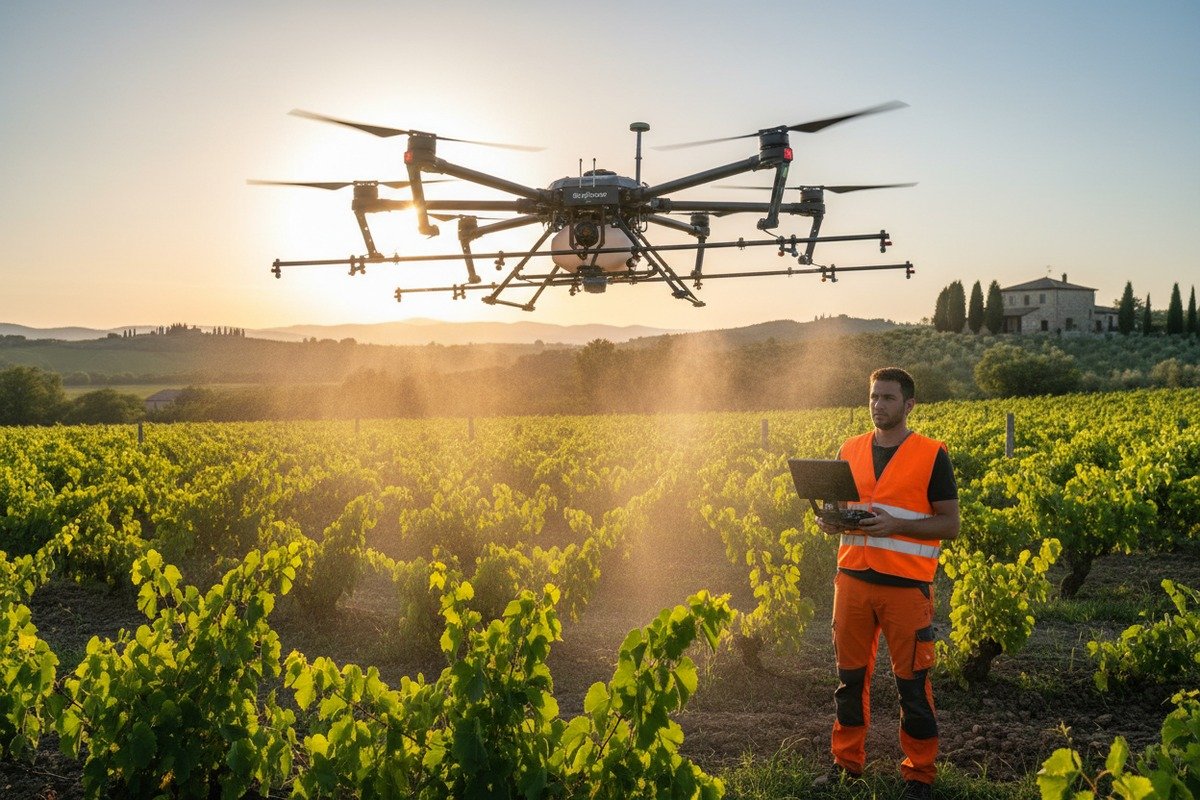
Heavy-payload agricultural spraying drones typically fall under EASA's Specific category due to operations over crops near people, BVLOS flights, or payloads that push total weight beyond Open category limits. Operators must submit risk assessments through PDRA or SORA methodologies to national aviation authorities.
The Three EASA Categories Explained
EASA divides all drone operations into three risk-based categories:
| Category | Risk Level | Typical Operations | Authorization Required |
|---|---|---|---|
| Open | Bajo | Recreational, light commercial, VLOS, <25kg | Self-declaration only |
| Specific | Medio | BVLOS, over people, higher risk commercial | Risk assessment + authority approval |
| Certified | Alto | Passenger transport, dangerous goods, urban air mobility | Full type certification |
Agricultural spraying drones almost never operate in the Open category. Here is why:
- Weight: Sprayers with full tanks often exceed 25kg total.
- Overflight: Crops near workers or public areas trigger Specific rules.
- BVLOS: Efficient spraying requires beyond-visual-line-of-sight operations.
- Payload Release: Dropping chemicals adds operational risk.
Navigating the Specific Category
When our customers plan agricultural operations in the EU, we guide them toward the Specific category 5 pathway. This requires one of three approaches:
Standard Scenarios (STS): EASA publishes pre-approved operational scenarios. STS-01 covers VLOS over controlled areas. STS-02 addresses BVLOS operations. If your spraying matches these scenarios, approval is faster.
Pre-Defined Risk Assessment (PDRA): For operations that do not fit STS but follow established patterns, national authorities accept PDRA submissions. This middle-ground option saves time compared to full SORA.
Specific Operations Risk Assessment (SORA): Complex operations require detailed risk analysis. SORA examines ground risk, air risk, and mitigation measures. Our technical team has helped customers prepare SORA documentation for specialized vineyard spraying operations in France.
Member State Variations
Each EU country has a national aviation authority that implements EASA rules. Processing times and interpretation details vary. Germany's LBA operates differently than France's DGAC.
| País | Authority | Typical Processing Time | Notes |
|---|---|---|---|
| Alemania | LBA | 4-8 semanas | Strict documentation review |
| Francia | DGAC | 3-6 weeks | Strong ag drone sector |
| España | AESA | 4-6 weeks | Growing market |
| Netherlands | ILT | 3-5 weeks | Efficient digital systems |
| Italia | ENAC | 6-10 weeks | Longer processing |
We recommend that importers work with local aviation consultants when entering new EU markets. National requirements shift frequently.
What technical documentation must my Chinese supplier provide to satisfy EASA compliance during EU customs clearance?
When we calibrate our flight controllers and finalize export paperwork, documentation accuracy is paramount. Our logistics team has seen shipments held at Rotterdam and Hamburg ports due to incomplete files. One missing certificate can cost your business weeks of delay and thousands in storage fees.
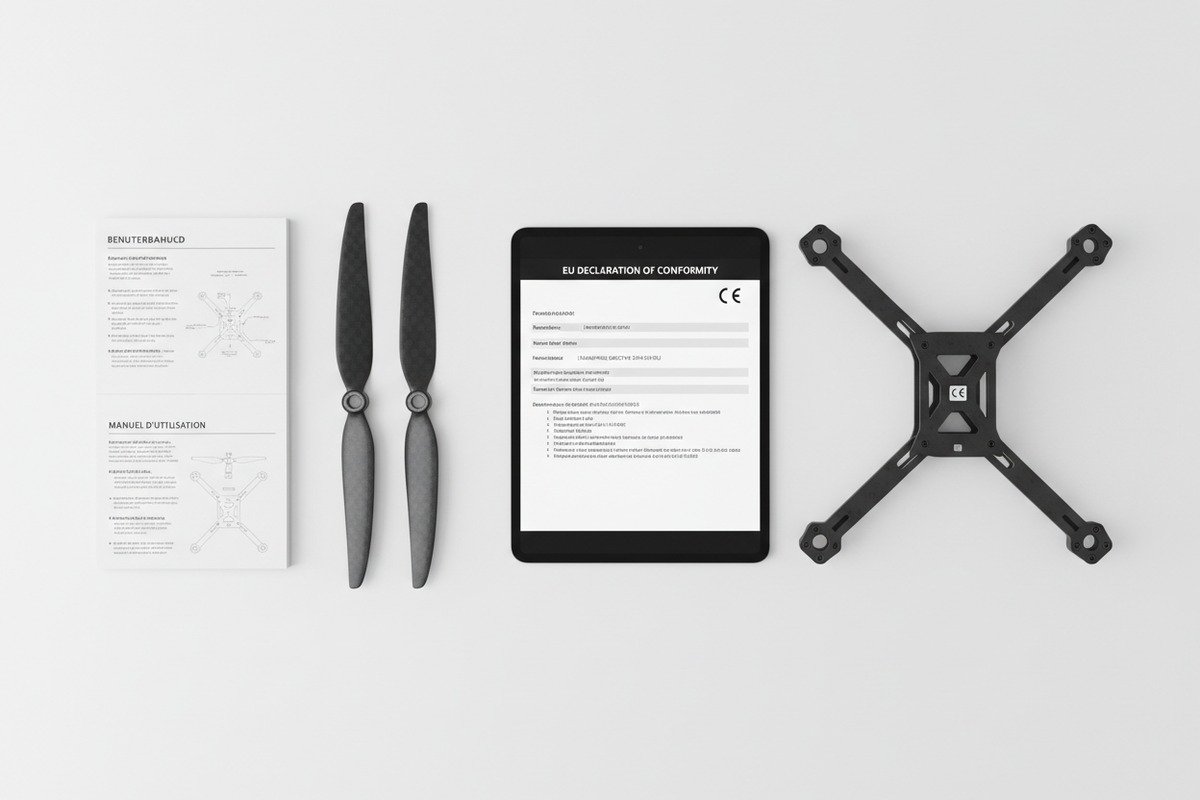
Your Chinese supplier must provide an EU Declaration of Conformity (DoC), CE marking certificates, C-class identification documents, Remote ID compliance proof, user manuals in EU languages, UN38.3 battery test reports, and technical files containing design specifications, test results, and risk assessments.
Lista de verificación de documentación esencial
Every agricultural drone shipment entering the EU needs a complete documentation package. Below is what we include with every export order:
EU Declaration of Conformity (DoC): This is your most critical document. It declares that the product meets all applicable EU harmonized standards. The DoC must include:
- Manufacturer name and address
- Product identification (model, serial numbers)
- Reference to applicable directives
- Signature of authorized representative
- Date of issue
CE Marking Certificate: Physical CE labels appear on the drone. Supporting certificates prove the marking is legitimate.
Remote ID Compliance Documentation: Since January 2024, drones over 250g need active Remote ID. Your supplier must prove the system broadcasts required data: position, altitude, speed, pilot location, and unique identifier.
Battery and Component Compliance
Agricultural drones use large lithium batteries. These require separate compliance:
| Documento | Objetivo | Who Issues It |
|---|---|---|
| Resumen de la prueba UN38.3 | Proves battery safe for air/sea transport | Accredited testing lab |
| MSDS (Material Safety Data Sheet) | Chemical hazard information | Manufacturer |
| IEC 62133 Certificate | Battery safety standard compliance | Notified body |
| Declaración de mercancías peligrosas | Transport classification | Shipper/forwarder |
Our battery suppliers provide all these documents. We compile them into the export package. Missing UN38.3 reports cause the most frequent customs holds.
Technical File Requirements
Beyond certificates, EU authorities may request your technical file. This detailed dossier contains:
- Design Documentation: CAD drawings, component lists, electrical schematics
- Risk Assessment: Analysis of potential hazards and mitigation measures
- Test Reports: Electromagnetic compatibility (EMC), noise levels, functional safety
- Production Quality Records: ISO 9001 certificates, quality control procedures
- Software Documentation: Firmware version, update procedures, cybersecurity measures
At our facility, we maintain technical files for every product line. When customers request this documentation for their regulatory submissions, we provide complete packages within 48 hours.
Customs Clearance Tips
Work with freight forwarders experienced in drone imports. They understand which documents customs officers prioritize.
Pre-clear your shipment electronically using the EU's Import Control System (ICS2) 6. Upload documentation before physical arrival.
Keep duplicate copies. Store originals separately from the shipment. If one set gets lost, you have backups.
Include commercial invoices with accurate HS codes. Agricultural drones typically fall under 8806.10 (unmanned aircraft). Batteries may have separate codes.
Can I customize my drone's software and hardware while still maintaining EASA safety standards for my fleet?
Our engineering team collaborates with European partners on custom development projects regularly. Customers want branded interfaces, specialized spraying patterns, and integrated farm management software. The question of compliance always arises. Customization is possible, but boundaries exist.
Yes, you can customize agricultural drone software and hardware while maintaining EASA compliance, provided modifications do not alter safety-critical systems, void the original C-class certification, or disable required features like Remote ID and geo-awareness. Document all changes and verify continued conformity.

Understanding Modification Boundaries
EASA distinguishes between cosmetic changes and safety-critical modifications. The line determines whether your customized drone remains compliant.
Permissible Customizations:
- Branding and color schemes
- User interface language and layout
- Mission planning software additions
- Data analytics integrations
- Non-structural mounting accessories
- Spray nozzle configurations (within rated specs)
Potentially Problematic Modifications:
- Flight controller firmware changes
- Motor or propeller swaps outside manufacturer specs
- Battery chemistry changes
- Remote ID system alterations
- Geo-awareness feature disabling
- Structural frame modifications
Working With Your Supplier on Custom Development
When customers approach us for OEM projects, we follow a structured customization process:
- Scope Definition: We identify which changes are cosmetic versus safety-related.
- Compliance Impact Assessment: Our engineers evaluate whether modifications affect certification.
- Documentation Update: We revise technical files to reflect approved changes.
- Revalidation: If safety systems are touched, we conduct new conformity testing.
- New DoC Issuance: Significant modifications may require updated declarations.
| Customization Type | Compliance Impact | Documentation Needed |
|---|---|---|
| Logo and branding | Ninguno | Photo update only |
| UI language change | Ninguno | User manual revision |
| Spray pattern software | Bajo | Software version documentation |
| Flight controller tuning | Medium-High | Engineering assessment, possible retesting |
| Motor upgrade | Alto | Full revalidation, new DoC |
| Remote ID modification | Critical | Not recommended, likely voids compliance |
Software Customization Best Practices
Agricultural customers often want integration with their existing farm management systems. This is achievable through API connections rather than core firmware changes.
Our SDK allows developers to build companion apps that communicate with the drone. The flight control system remains untouched. Data flows between platforms without affecting safety-critical code.
For customers requiring deeper integration, we offer firmware branches with locked safety modules. Custom features operate in separate software containers. This architecture preserves EASA compliance while enabling business-specific functionality.
Maintaining Fleet Compliance Over Time
Customization is not a one-time consideration. EASA rules evolve. Firmware updates from manufacturers may override custom settings. New noise regulations arriving in 2026 could affect previously compliant modifications.
We recommend establishing a compliance maintenance schedule:
- Quarterly firmware review against EASA updates
- Annual documentation audit
- Pre-season flight testing after any modifications
- Immediate review when regulations change
Our support team notifies customers when EASA updates affect their customized units. Proactive communication prevents compliance gaps that could ground your fleet.
Conclusión
Importing agricultural drones from China into the EU requires attention to C-class marking 8s, operational categories, documentation, and customization limits. Work closely with suppliers who understand EASA requirements. Prepare your paperwork thoroughly. Your compliance investment protects your business and your customers.
Notas al pie
1. Official EU legal text for drone systems. ↩︎
2. Official EU legal text for drone operations. ↩︎
3. Official EASA information on mandatory Remote ID for drones. ↩︎
4. Official EU guidance on the Declaration of Conformity for products. ↩︎
5. Official EASA guidance on the ‘Specific’ operational category for drones. ↩︎
6. Official EU information on the Import Control System 2. ↩︎
7. Information on UN 38.3 testing requirements for lithium batteries. ↩︎
8. Official EASA guidance on drone C-class identification labels. ↩︎

 English
  Spanish
  German
  French
  Dutch
Dutch  Arabic
