
Every week, our export team handles calls from American buyers whose drone shipments got stuck at customs FCC certifications 1. They ask us the same question: what went wrong with my documents? The 2026 regulatory changes have made this problem worse FAA Remote ID declarations 2. Without proper paperwork, your firefighting drones will sit in a warehouse while wildfires rage.
U.S. Customs requires commercial invoices, packing lists, bills of lading, HTSUS classification codes, FCC certifications, FAA Remote ID declarations, lithium battery UN38.3 reports, country of origin certificates, and end-user statements for firefighting drone imports. Missing any document can delay or block your shipment entirely.
This guide breaks down every document you need. We will cover supplier requirements, OEM branding compliance, and common mistakes lithium battery UN38.3 reports 3. Let us help you clear customs without delays.
What specific certifications do I need to present for my firefighting drone to pass U.S. Customs?
When we ship firefighting drones to American fire departments, we always prepare a complete certification package first country of origin certificates 4. Many buyers think a simple invoice is enough. They learn the hard way that U.S. Customs agents check multiple regulatory boxes before releasing drone shipments.
Firefighting drones entering the U.S. need FCC equipment authorization certificates, FAA Remote ID compliance declarations, lithium battery UN38.3 test reports, and CE or equivalent safety marks. Federal-funded projects also require NDAA compliance documentation proving non-prohibited country origins.
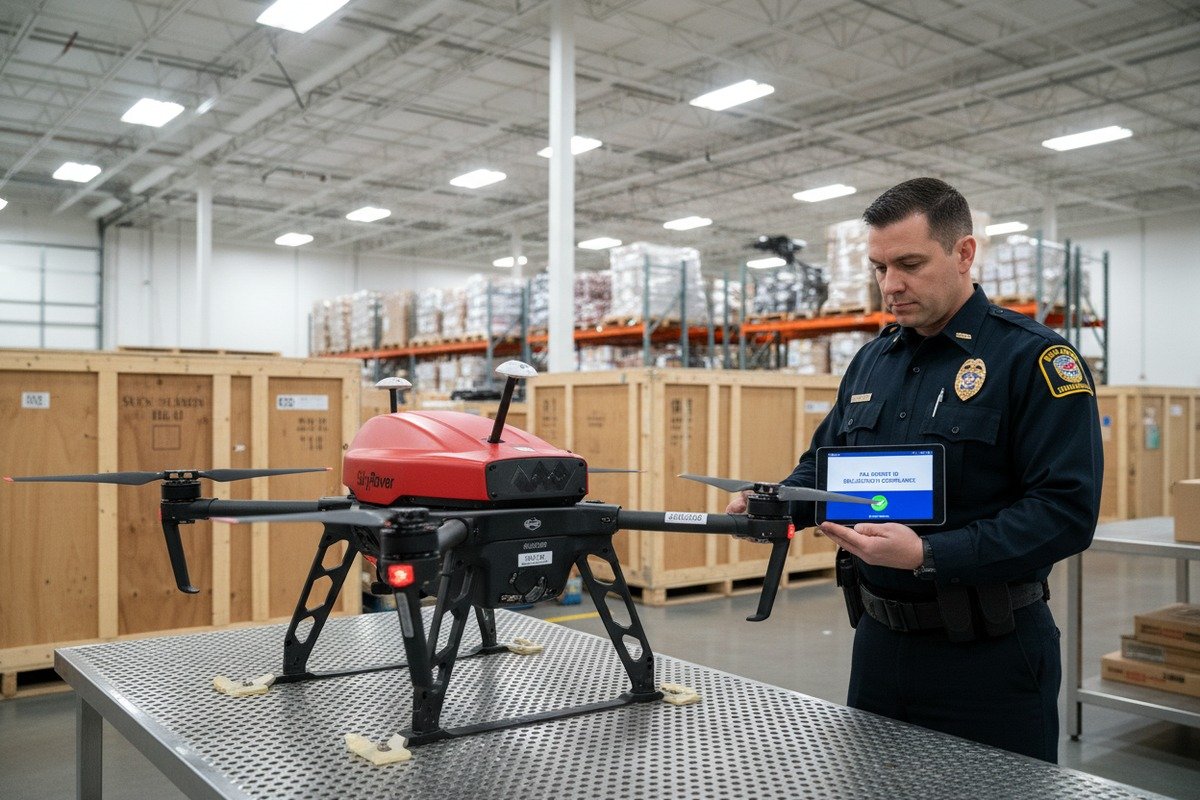
FCC Equipment Authorization
El Federal Communications Commission 5 controls all radio-frequency devices in America. Your firefighting drone transmits signals for control, video, and telemetry. Without FCC authorization, customs will reject your shipment.
Our engineering team submits each drone model for FCC testing. The process takes 4-6 weeks. We receive a Grant of Equipment Authorization 6 upon approval. This document lists the FCC ID number, which must appear on the drone body.
For Chinese-made drones, the December 2025 FCC Covered List creates new barriers. New drones from prohibited entities cannot receive FCC approval. However, existing authorized models remain valid. We strongly recommend checking the Covered List before ordering.
FAA Remote ID Requirements
Since 2023, all drones sold in America must broadcast Remote ID. This system transmits the drone's identity, location, and takeoff point. Firefighting drones need Remote ID for legal operation.
| FAA Document Type | Lo que demuestra | Who Issues It |
|---|---|---|
| Remote ID Declaration of Compliance | Drone meets broadcast requirements | Manufacturer |
| FAA Registration Certificate | Drone is registered for commercial use | FAA |
| Part 107 Remote Pilot Certificate | Operator is certified | FAA |
| BVLOS Waiver (if applicable) | Approved for beyond-visual-line-of-sight | FAA |
Our drones ship with Remote ID pre-installed. We provide declaration documents showing FAA portal verification. Customs agents increasingly check these documents for commercial drone imports.
Lithium Battery Safety Certifications
Firefighting drones use high-capacity lithium polymer batteries. These batteries are dangerous goods for shipping. Customs requires proof of safe battery design.
The UN38.3 test report confirms your batteries passed eight safety tests. These include altitude simulation, thermal cycling, vibration, shock, short circuit, impact, overcharge, and forced discharge. Our battery suppliers provide UN38.3 certificates for every batch.
You also need a Material Safety Data Sheet (MSDS). This document describes battery chemistry, hazards, and emergency procedures. Shipping carriers require MSDS copies for dangerous goods classification.
NDAA Compliance for Government Sales
El National Defense Authorization Act 7 restricts federal agencies from buying certain foreign drones. If your customers include fire departments or government contractors, they need NDAA compliance proof.
| Compliance Path | Requirement | Documentación necesaria |
|---|---|---|
| DoD Blue List | Drone appears on approved list | Blue List certificate |
| Buy American (60%) | >60% U.S. component cost | Cost breakdown sheet |
| Country of Origin | Not from prohibited entities | Origin certificates |
| Security Audit | No data security risks | Third-party audit report |
We help customers navigate NDAA requirements. Our supply chain documentation shows component origins. For sensitive contracts, we offer drones with verified non-prohibited components.
Which shipping and export documents should my Chinese supplier provide for my drone shipment?
During our fifteen years of exporting drones, we have learned that complete shipping documents prevent 90% of customs problems. Your Chinese supplier must prepare these documents correctly. Errors in supplier paperwork become your problem at the port.
Chinese drone suppliers must provide commercial invoices with detailed item descriptions, packing lists with weights and dimensions, bills of lading or airway bills, export licenses for dual-use technology, certificates of origin, and manufacturer declarations for battery safety and electromagnetic compliance.

Commercial Invoice Requirements
El commercial invoice 8 is your most important customs document. It must include specific details that customs agents verify.
Our commercial invoices always contain:
- Seller and buyer names with complete addresses
- Invoice date and unique number
- Detailed product descriptions with model numbers
- HTSUS tariff codes (8806.94 for drones over 250g)
- Unit prices and total value in USD
- Payment terms and conditions
- Country of origin statement
- Incoterms (usually DDP or CIF)
Customs calculates duties based on invoice values. Undervaluing goods is illegal and triggers audits. We recommend accurate pricing to avoid penalties.
Packing List Details
The packing list describes physical shipment characteristics. Customs compares it against actual cargo during inspection.
| Packing List Element | Example Entry | Por qué es importante |
|---|---|---|
| Total packages | 4 wooden crates | Matches cargo count |
| Gross weight | 285 kg | Freight calculations |
| Net weight | 248 kg | Product weight only |
| Dimensions | 120x80x60 cm each | Storage and handling |
| Package contents | 2 drones per crate | Verification check |
| Marks and numbers | SkyRover-FF-2026-001 | Tracking identification |
We use reinforced wooden crates with ISPM-15 certification. This international standard prevents pest transmission through wood packaging. American ports require ISPM-15 stamps on all wooden materials.
Export License and Dual-Use Controls
Firefighting drones contain technology with potential military applications. Thermal cameras, GPS systems, and long-range communications fall under dual-use export controls.
China requires export licenses for certain drone specifications. High-resolution thermal imagers and encrypted communications trigger licensing requirements. We handle export paperwork as part of our service.
The U.S. side may require an End-User Statement (EUS). This document confirms the drones will not be re-exported to prohibited countries. Your supplier should provide this form for your signature.
Certificado de origen
Country of origin affects duty rates, trade program eligibility, and security screenings. The 2025-2026 regulatory changes make origin documentation critical.
El Ley de Prevención del Trabajo Forzoso Uigur 9 (UFLPA) allows customs to detain shipments suspected of forced labor origins. Xinjiang region components require extra documentation. We source components from verified ethical suppliers and provide supply chain transparency reports.
Our certificates of origin come from the China Council for Promotion of International Trade (CCPIT). This official body verifies manufacturing location. Customs accepts CCPIT certificates as proof of origin.
How can I ensure my custom-branded OEM drones meet all U.S. import documentation requirements?
Our OEM customers often ask about branding and compliance. When you put your logo on our drone, you become the importer of record. This means documentation responsibilities shift to you. We guide every OEM partner through this process.
OEM branded drones require the same base certifications plus additional documentation: trademark usage agreements, labeling compliance verification, FDA registration for any medical-adjacent features, consumer product safety attestations, and updated FCC filings reflecting the new brand name on equipment labels.

Branding and Labeling Compliance
Your custom brand creates legal obligations. Product labels must meet U.S. requirements even when manufactured overseas.
Required label elements include:
- Brand name and model number
- Country of origin ("Made in China")
- FCC ID number
- Manufacturer or importer contact information
- Warning statements for batteries
- Compliance marks (FCC logo)
We provide label templates that meet U.S. standards. Our design team works with your brand guidelines. Labels are printed in weather-resistant materials suitable for outdoor firefighting equipment.
FCC Filing Updates for OEM Products
When you rebrand our drones, FCC records need updating. The original FCC authorization lists our company name. Your branded product needs additional documentation.
Two options exist for OEM FCC compliance:
Option 1: Grantee Code Transfer
You apply for your own FCC Grantee Code. We transfer authorization to your code. This takes 6-8 weeks and costs approximately $3,000-5,000.
Option 2: OEM Agreement Filing
We file an OEM agreement with the FCC. The original authorization remains valid. Your brand appears as authorized distributor. This takes 2-3 weeks and costs less.
Most of our OEM partners choose Option 2 for speed and cost savings. We prepare all paperwork and submit filings on your behalf.
Supply Chain Documentation for OEM
Custom products need detailed supply chain records. Customs may request proof that your branded drone meets all origin requirements.
| Tipo de documento | Objetivo | Who Prepares It |
|---|---|---|
| OEM Manufacturing Agreement | Proves authorized production | Both parties |
| Component Origin Matrix | Lists all part sources | Manufacturer |
| Quality Control Records | Shows inspection history | Manufacturer |
| Trademark License | Proves brand authorization | Brand owner |
| Import Bond | Covers potential duties | Importer |
We maintain complete component traceability. Every drone has a serial number linked to production records. These records show component batches, test results, and quality checks.
Quality Assurance Documentation
American importers increasingly need quality proof. Product liability laws make quality documentation valuable.
Our quality documents include:
- ISO 9001 certification for manufacturing processes
- Test flight reports for each unit
- Calibration certificates for sensors
- Waterproofing test results (IP ratings)
- Thermal cycling test data
- Drop and vibration test reports
We photograph every drone before shipping. These photos prove condition at departure. If customs damage occurs, you have evidence for claims.
What are the most common documentation mistakes I should avoid to prevent U.S. Customs delays?
In our export operations, we see the same mistakes repeatedly. Each error causes days or weeks of delay. Some mistakes trigger formal investigations. Learning from others' failures saves you time and money.
The most common documentation mistakes include incorrect HTSUS codes, missing battery certifications, incomplete country of origin declarations, outdated FCC authorizations, wrong product descriptions on invoices, missing end-user statements, and failing to update documents for regulatory changes effective in 2025-2026.

HTSUS Classification Errors
Wrong tariff codes cause immediate problems. Customs compares your declared code against the actual product. Mismatches trigger holds and audits.
Drone classification depends on weight, purpose, and features:
- 8806.94.00: Unmanned aircraft over 250g
- 8525.89: Video transmission equipment (cameras)
- 8506.50: Lithium battery packs
- 9014.80: Navigation instruments
Many importers use generic codes. Customs agents know drone-specific codes. Using wrong codes suggests either ignorance or intentional misclassification. Both outcomes are bad.
We provide correct HTSUS codes for every shipment. Our customs broker verifies classifications before shipping. This prevents classification disputes at entry.
Battery Documentation Gaps
Lithium batteries cause the most customs holds. Missing or outdated battery documents trigger dangerous goods investigations.
Common battery documentation errors:
| Error Type | Consecuencia | How to Avoid |
|---|---|---|
| Missing UN38.3 | Shipment hold | Request from battery supplier |
| Expired test report | Retesting required | Check dates before shipping |
| Wrong battery specs | Classification error | Verify capacity and voltage |
| No MSDS | Carrier rejection | Request from manufacturer |
| Wrong packing group | Safety violation | Use certified dangerous goods shipper |
Our batteries come with current UN38.3 reports. We update certifications annually. Every shipment includes fresh MSDS copies matching actual battery specifications.
Country of Origin Declaration Problems
Origin mistakes now carry serious consequences. The UFLPA allows customs to presume forced labor involvement for Xinjiang-linked products. Detention can last months.
Avoid these origin documentation errors:
- Vague statements ("Made in Asia")
- Missing component origin details
- Outdated supplier certifications
- No supply chain verification
We provide detailed origin documentation. Our supply chain transparency report shows where every component comes from. We audit suppliers for UFLPA compliance quarterly.
Regulatory Change Adaptation
The 2025-2026 regulatory changes caught many importers off guard. Documents valid last year may not work this year.
Key changes affecting documentation:
- December 2025: FCC Covered List activated
- Late 2025: NDAA grace period ended
- 2026: Part 108 BVLOS rules finalizing
- 2026: Remote ID enforcement increasing
We track regulatory changes constantly. Our documentation packages update automatically. When rules change, we notify customers immediately with new requirements.
Invoice and Description Accuracy
Customs agents read invoices carefully. Vague descriptions raise suspicion. Missing details trigger information requests.
Poor description: "Drone with accessories"
Good description: "Model FF-200 Firefighting Quadcopter, 8-rotor, carbon fiber frame, 30L water tank, thermal camera, 45-minute flight time, including 4 lithium batteries, charger, remote controller, and carrying case"
Specific descriptions show legitimate commerce. They also help customs select correct duty rates. We write detailed descriptions for every invoice item.
Conclusión
Proper documentation protects your firefighting drone investment. Work with suppliers who understand U.S. requirements. Update your paperwork for 2026 regulatory changes. Contact our team for a complete documentation checklist tailored to your specific needs.
Notas al pie
1. Explains the necessity of FCC certifications for importing RF devices. ↩︎
2. Details the FAA’s Remote ID rule for drones and compliance. ↩︎
3. Explains UN38.3 testing requirements for safe transport of lithium batteries. ↩︎
4. Explains the purpose and importance of country of origin documents for customs. ↩︎
5. Links to the official website of the U.S. regulatory body for communications. ↩︎
6. Describes the official document issued by the FCC for equipment authorization. ↩︎
7. Provides information on NDAA’s impact on drone procurement and restrictions. ↩︎
8. Outlines the essential requirements for commercial invoices in customs clearance. ↩︎
9. Explains the UFLPA and its implications for import compliance. ↩︎

 English
  Spanish
  German
  French
  Dutch
Dutch  Arabic
