
We often see international clients struggle with project delays not because of technical failures, but because they missed subtle cues during the negotiation phase. Our engineering team in Xi'an has watched promising deals stall simply due to misinterpreted silence or rushed meetings, which can be frustrating when you need units ready for the harvest season.
To improve efficiency, prioritize "Guanxi" (relationship building) over immediate transactions and adopt an indirect communication style where silence often signals hesitation rather than agreement. Respect hierarchy by addressing seniors first, use WeChat for faster updates, and avoid public criticism to save "Mianzi" (face) during technical negotiations.
Understanding these nuances is the key to unlocking smoother production runs and reliable delivery schedules.
How should I adapt my communication style to build trust with Chinese drone manufacturers?
When we receive emails that jump straight to pricing without a greeting, our sales team feels a disconnect that can slow down the entire process. We value partners who take a moment to establish a human connection before diving into flight controller specifications flight controller 1, as this signals a desire for a long-term partnership rather than a one-off purchase.
You should adopt a high-context communication style by starting conversations with personal pleasantries and avoiding overly direct refusals. Building trust requires patience, so use platforms like WeChat for informal check-ins and frame technical critiques as constructive suggestions rather than demands to preserve the manufacturer’s dignity.

In Western markets, particularly the United States, business communication is often business communication 2 "low-context." This means efficiency is king: get to the point, say what you mean, and move on. However, in our interactions with clients, we operate in a "high-context" culture. high-context culture 3 The context of the message—who is saying it, how it is said, and the relationship between the parties—is just as important as the words themselves.
The Art of Indirectness and "Face"
One of the biggest friction points we encounter is the direct "No." If you ask our engineers if a custom 50L tank modification is possible by next week, they will rarely say "No, that is impossible." Instead, you might hear, "That might be difficult," or "We need to study the feasibility." To a Western ear, this sounds like a "Maybe." To us, it is a polite refusal designed to save your face (so you don't feel rejected) and our face (so we don't look incapable).
Pushing for a "Yes or No" answer can be perceived as aggressive. Instead, try to read between the lines. If the response isn't an enthusiastic "Yes," it is likely a "No."
WeChat vs. Email
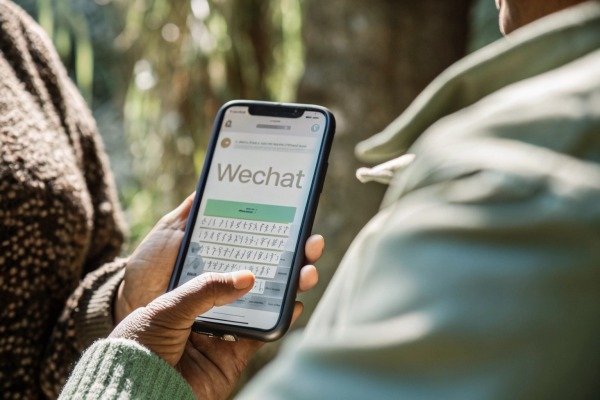
While we use email for formal contracts and final specifications, the real work happens on WeChat. happens on WeChat 4 It is where trust is built. We often find that clients who are willing to chat briefly about the weather, food, or family on WeChat get faster responses to their technical queries. It blurs the line between personal and professional, which is exactly the point. It shows you view us as people, not just a factory.
Below is a guide on how to translate your intent into a style that resonates with our team:
| Western Direct Approach (Avoid) | Chinese Indirect Approach (Recommended) | Why This Works |
|---|---|---|
| "This price is too high. Lower it." | "We have a strict budget target. Is there any way we can adjust the configuration to meet it?" | It frames the issue as a shared problem to solve, not a conflict. |
| "Your deadline is unacceptable." | "We are worried that this timeline might affect our launch. Can we explore faster shipping options?" | It expresses concern without accusing the supplier of being slow. |
| "This prototype is wrong." | "We noticed some differences from the design. What do you think is the best way to align this?" | It invites collaboration and avoids "Face" loss for the engineers. |
| "I need an answer by tomorrow." | "When would be a convenient time for you to update us on this?" | It shows respect for our internal processes while still prompting a reply. |
What role does 'Guanxi' play when I am negotiating OEM terms for agricultural drones?
Our long-term partners who visited our Chengdu factory know that the best terms aren't finalized in the boardroom, but often over a shared meal. We prioritize clients who invest time in knowing us, as this mutual obligation ensures we prioritize their orders during peak production seasons or when component shortages strike.
Guanxi acts as social capital that facilitates smoother negotiations, better pricing, and priority during production bottlenecks. In OEM deals, having strong Guanxi means suppliers view you as a long-term partner, leading to greater flexibility with Minimum Order Quantities (MOQs) and faster resolution of technical issues.
Many new buyers misunderstand misunderstand Guanxi 5 Guanxi as simply "networking" or, worse, "bribery." It is neither. Guanxi is deeply rooted in Confucian Confucian values 6 Confucian values 7 values of reciprocity and mutual obligation. In the context of manufacturing agricultural drones, it acts as a safety net. When global supply chains are disrupted—like when chip shortages hit the flight controller market—who gets the limited stock? It is usually the client with whom we have the strongest Guanxi.
Beyond the Contract
In the West, the contract is the final authority. If a dispute arises, you point to clause 4.2. In China, while contracts are important, the relationship is the final authority. We view the contract as a snapshot of our agreement at a specific time, but we expect the relationship to allow for flexibility as circumstances change.
If you have strong Guanxi, you can often negotiate:
- Lower MOQs: We might waive the 100-unit minimum for a pilot run because we trust your long-term potential.
- Custom Development: Our engineers are more willing to work overtime on your specific software SDK integration if they feel a personal connection to your project.
- Credit Terms: Moving from 100% upfront T/T payment to a 30/70 split often requires the trust built through Guanxi.
Building Guanxi Remotely
You do not always need to fly to Xi'an to build this (though it helps). You can build Guanxi digitally by:
- Showing commitment to the partnership, not just the lowest price.
- Remembering personal details mentioned in previous calls.
- Sending small, thoughtful greetings during Chinese holidays (more on that later).
- Being patient when mistakes happen, rather than immediately threatening legal action.
The following table illustrates how the depth of Guanxi impacts the OEM services we provide:
| Característica | Transactional Relationship (No Guanxi) | Partnership Relationship (Strong Guanxi) |
|---|---|---|
| Pricing | Standard tiered pricing based strictly on volume. | Preferential pricing; access to "old friend" discounts. |
| Production Priority | First-in, first-out based on order date. | Ability to "jump the queue" during urgent rushes. |
| Quality Issues | Adherence to standard warranty terms; return-to-base repairs. | Immediate shipment of spare parts before receiving returns; trust-based resolution. |
| Information Sharing | Only what is required for the order. | Early insights into new tech (e.g., upcoming nozzle designs or battery tech). |
How can I ensure my technical specifications are clearly understood despite language barriers?
We sometimes receive spec sheets that rely heavily on Western colloquialisms or ambiguous terms, causing our engineers to guess the required payload capacity or battery endurance. Misunderstandings here lead to prototypes that miss the mark, wasting weeks of development time and shipping costs shipping costs 8 for both sides.
Ensure clarity by using visual aids like diagrams and annotated photos alongside simplified, standard English without idioms. Create a bilingual glossary for key components, double-check understanding by asking the supplier to re-explain the specs back to you, and use video calls for complex engineering discussions.

When sourcing complex machinery like agricultural drones, precision is non-negotiable. However, English proficiency varies wildly across China. While our sales managers usually speak fluent English, the engineers designing the spray system or the technicians assembling the wiring harness may not. If your instructions are lost in translation, the product will fail.
The "Yes" Trap
A common pitfall is the word "Yes." In Chinese culture, nodding or saying "Yes" often means "I hear you" or "I am listening," not necessarily "I understand and agree." If you ask, "Do you understand the new nozzle flow rate requirement?" and we say "Yes," do not assume it is settled.
The "Teach-Back" Method
To verify understanding, use the teach-back method. Instead of asking "Do you understand?", ask: "To ensure we are aligned, could you please explain how you plan to implement the flow rate adjustment?" This forces the engineering team to demonstrate their understanding. If they cannot explain it, they didn't understand it.
Visuals Over Text
We strongly recommend minimizing text and maximizing visuals. A diagram showing the exact mounting point for the radar module is worth a thousand words of email text.
- Annotated Photos: Take a photo of a sample and draw arrows to the specific part you are discussing.
- Video Demonstrations: If a folding mechanism needs to work a certain way, record a short video. We can show this directly to the assembly line workers.
- Standardized Terminology: Avoid slang. Do not say "swap out the prop"; say "replace the propeller." Do not say "it needs more juice"; say "increase battery capacity to 22000mAh."
Technical Specification Checklist
Use this structure to reduce ambiguity in your Requirement Documents (PRD):
| Componente | Ambiguous Description (BAD) | Clear Specification (GOOD) |
|---|---|---|
| Carga útil | "Needs to carry a heavy load." | "Maximum Payload Capacity: 50kg. Liquid Tank Volume: 50 Liters." |
| Flight Time | "Long battery life." | "Hover time (no load): >25 mins. Hover time (full load): >12 mins." |
| Range | "Good signal distance." | "Transmission Range: 5km+ in open interference-free environments (FCC compliant)." |
| Waterproofing | "Water resistant." | "Ingress Protection Rating: IP67 for the main body; IP65 for the remote controller." |
| Software | "Easy to use app." | "App must support English UI, offline Google Maps caching, and AB Point autonomous mode." |
Which Chinese holidays and business customs will impact my communication and delivery timelines?
Every year, we see panic from new buyers who didn't realize our production lines shut down completely for the Spring Festival, leaving them without stock. Ignoring these critical dates can leave your inventory empty right when the planting season begins in your region, as logistics grind to a halt nationwide.
The Lunar New Year (Spring Festival) causes the most significant disruption, often halting production for three to four weeks in January or February. Additionally, Golden Week in October and the Dragon Boat Festival can delay shipments, so you must plan inventory orders at least two months in advance.
Time in China flows differently around the major festivals. For a US buyer, a holiday might mean the office is closed for a Monday. In China, specifically in the manufacturing sector, the Spring Festival (Chinese New Year) is a massive annual migration. Spring Festival 9
The Spring Festival Impact
This is not just a few days off. While the official holiday is about 7 days, the disruption lasts for a month.
- Pre-Holiday Rush (2-3 weeks before): Factories are rushing to finish orders. Quality Control (QC) risks increase as workers are tired and eager to go home. Logistics costs skyrocket as everyone tries to ship goods out.
- The Holiday (1-2 weeks): Everything stops. No emails, no production, no shipping.
- Post-Holiday Recovery (2-3 weeks after): Workers return slowly. Some never return, meaning we have to hire and train new staff. Production ramps up slowly.
Managing the "Golden Weeks"
- Chinese New Year (Jan/Feb): Order by November to ensure shipment before the shutdown. Do not plan any product launches in February.
- National Day Golden Week (Early October): A full week of shutdown. Avoid scheduling factory visits during this time as travel is chaotic and expensive.
- Dragon Boat Festival (June) & Mid-Autumn Festival (Sept/Oct): Shorter breaks, but still impact lead times by a few days.
Gift Giving Customs
While not mandatory, acknowledging these holidays strengthens Guanxi. You do not need to send expensive gifts (which can cause compliance issues). A simple, culturally appropriate gesture goes a long way.
- Digital Greetings: A customized WeChat message card wishing "Prosperity in the Year of the Snake" is better than a generic email.
- Red Packets (Hongbao): In some contexts, small digital red packets on WeChat are common, but be careful. For B2B, a formal gift basket of fruit or chocolates sent to the office is safer and very appreciated.
- Taboos: Never give a clock (sounds like "attending a funeral") or green hats (implies infidelity).
Planning Your Logistics Calendar
| Month | Holiday/Event | Impact on Sourcing | Se requiere acción |
|---|---|---|---|
| January/February | Spring Festival (CNY) | HIGH. Total shutdown. | Ship everything before Jan 15. No new orders until March. |
| April | Qingming Festival | Low. 1-3 days off. | Minor buffer in schedule. |
| May | Labor Day | Medium. 3-5 days off. | Confirm shipment dates early. |
| June | Dragon Boat Festival | Low. 1-3 days off. | Send greetings. |
| September/October | Mid-Autumn Festival | Medium. 1-3 days off. | Mooncakes are a popular gift. |
| October 1-7 | National Day (Golden Week) | HIGH. 7 days off. | Avoid shipping or travel. Plan orders in September. |
Conclusión
Sourcing agricultural drones from China is about more than just comparing spec sheets drones agrícolas 10 and prices; it is about navigating a complex cultural landscape. By respecting Guanxi, adapting to high-context communication, visually clarifying your technical needs, and planning around the Chinese calendar, you move from being a "customer" to being a "partner." In our experience, this shift is the single biggest predictor of long-term success. We invite you to approach your next negotiation not just with a contract, but with curiosity and cultural awareness.
Notas al pie
1. Technical standards and research related to drone flight control systems from IEEE. ↩︎
2. Official US government guidance on business etiquette and communication in China. ↩︎
3. Academic explanation of high-context versus low-context communication styles. ↩︎
4. Official site for the primary communication platform used in Chinese business. ↩︎
5. General background on the fundamental Chinese concept of social networks and relationships. ↩︎
6. Authoritative academic source explaining the philosophical foundation of Guanxi. ↩︎
7. Background on the philosophical roots of Chinese business ethics and reciprocity. ↩︎
8. International Chamber of Commerce standards for international trade and shipping terms. ↩︎
9. Official information regarding China’s most significant traditional holiday and its societal impact. ↩︎
10. Product documentation from the industry leader in agricultural drone technology. ↩︎

 English
  Spanish
  German
  French
  Dutch
Dutch  Arabic
