
When lives and property are at risk, every second counts, and this urgency extends beyond the flight time of our firefighting drones to the very beginning of our relationship with a client. We have observed that procurement managers often focus heavily on technical specifications like thermal camera resolution or IP ratings, overlooking the subtle signals sent during the initial negotiation. If we cannot answer a simple inquiry promptly, it raises a red flag: how will we handle a critical request when a drone is grounded during wildfire season?
thermal camera resolution 1
Yes, response time is a critical criterion because it serves as a reliable proxy for a supplier’s internal organization and future technical support capabilities. A partner who responds quickly during the inquiry phase is statistically more likely to provide timely firmware updates, spare parts, and crisis troubleshooting for mission-critical firefighting operations.
Let’s explore why communication speed is not just a soft skill but a hard metric for evaluating supplier reliability in the drone industry.
What does a slow email response suggest about their after-sales support?
In our years exporting to the United States and Europe, we have frequently onboarded clients who were burned by previous suppliers who went silent the moment the wire transfer cleared. When we established our customer success team in Xi’an, we recognized that an ignored inbox is rarely just an accident; it is usually a symptom of a disorganized factory floor or a lack of dedicated engineering support personnel.
A slow email response typically suggests that the supplier lacks a dedicated support infrastructure or prioritizes new sales over existing customer care. It often foreshadows delayed warranty processing, unavailable spare parts during emergencies, and a lack of urgency that can ground your entire firefighting drone fleet when you need it most.

The "Iceberg" Theory of Communication
When you are evaluating a potential partner for high-stakes equipment like firefighting drones, the initial email exchange is just the tip of the iceberg. Beneath the surface, a delayed response often indicates structural issues within the manufacturing company. If a supplier takes four days to reply to a purchase inquiry—which is theoretically their highest priority activity—it is logical to assume they will take significantly longer to address a complex technical failure.
In the industrial drone sector, "after-sales support" is not just about fixing broken propellers. It involves complex interactions such as:
- Remote firmware debugging when a new update conflicts with your ground station.
- Urgent shipping of hazardous materials (LiPo batteries) which requires specific customs documentation.
- Providing engineering schematics for local repairs.
hazardous materials 2
If the sales team cannot navigate their own internal communication channels to answer a basic question quickly, their engineering team is likely walled off from customers entirely.
The Cost of Downtime in Firefighting
For our clients, such as fire departments and agricultural service companies, the cost of downtime is measured in more than just dollars. A firefighting drone that is grounded due to a software glitch that the supplier is too slow to resolve renders the department blind during an operation. We advise procurement managers to view response time as a "stress test" for the supplier’s crisis management.
Comparing Inquiry Speed to Support Reality
We have compiled data based on industry standards and our own competitive analysis to show the correlation between initial responsiveness and long-term support quality.
| Initial Inquiry Response Time | Likely Internal Structure | Predicted After-Sales Experience | Risk Level |
|---|---|---|---|
| < 4 Hours | Dedicated 24/7 Sales & Support Team | Rapid troubleshooting, immediate spare parts dispatch. | Bajo |
| 12 – 24 horas | Standard Business Hours (Local Time) | Reliable but subject to time zone delays; acceptable for non-emergency parts. | Medio |
| 48 – 72 Hours | Overloaded Sales Staff / No CRM | Frequent delays; "ticket" based support with no human contact. | Alto |
| > 4 Days | Trading Company / Middleman | Zero technical support; they must contact the actual factory for answers. | Critical |
By analyzing these timelines, you can filter out "trading companies" that pose as manufacturers. Real manufacturers like us have engineers on-site who can answer technical queries immediately, whereas middlemen must relay questions, adding days to the process.
How quickly should a professional manufacturer provide a detailed quote?
When we calculate costs for a custom firefighting payload or a specific heavy-lift configuration, our engineers need time to validate the design, but we also understand the pressure procurement managers face. We know that professionals like Olivia need accurate numbers fast to secure budget approvals before the fiscal quarter ends, and a delayed quote can mean missing a funding window entirely.
A professional manufacturer should provide a preliminary estimate within 24 hours and a detailed, itemized quote within 48 to 72 hours. This timeframe allows for necessary technical validation of custom configurations while demonstrating the supplier’s operational efficiency and respect for your procurement deadlines.
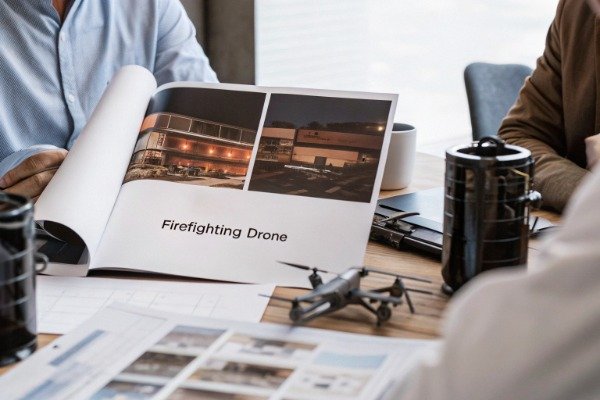
The Anatomy of a Professional Quote
A quote for an industrial drone is not as simple as a price tag on a consumer product. It requires a breakdown of the airframe, the specific sensor array (e.g., thermal cameras, laser rangefinders), the ground control station, and the logistics of shipping large batteries.
laser rangefinders 3
However, speed must be balanced with accuracy. If you receive a "detailed" quote in 30 minutes, be wary. It often means the supplier is sending a generic template that ignores your specific requirements (such as NDAA compliance or specific frequency bands). Conversely, if it takes a week, their internal pricing approval process is too bureaucratic.
NDAA compliance 4
The "Goldilocks" Zone of Quoting
We aim for the "Goldilocks" zone: fast enough to keep your project moving, but slow enough to ensure engineering review. When you request a quote for a fleet of firefighting drones, a competent manufacturer will likely need to check:
- Component Availability: Are the specific thermal sensors in stock?
- Customization Feasibility: Can the requested payload be integrated without affecting flight stability?
- Shipping Logistics: What are the current dangerous goods regulations for shipping to your specific country?
Timeline Expectations for Drone Quotes
To help you manage your procurement schedule, here is a breakdown of what to expect during the quotation phase.
| Quote Stage | Expected Turnaround | What Should Be Included? |
|---|---|---|
| Acknowledgment | < 2 Hours | Confirmation of receipt and introduction of a specific account manager. |
| Rough Estimate (ROM) | < 24 Hours | A price range based on similar past projects to help you gauge budget fit. |
| Technical Clarification | 24 – 48 Hours | Questions from their engineers regarding your specific use case (e.g., altitude, wind resistance). |
| Final Binding Quote | 48 – 72 Hours | Itemized list (Hardware, Software, Shipping, Training), validity period, and lead time. |
If a supplier skips the "Technical Clarification" step and jumps straight to a final quote for a complex order, they are likely quoting a standard product that may not meet your specific firefighting needs. This lack of due diligence is a major warning sign.
Does fast communication during the sales phase guarantee timely shipping?
We often warn our clients that a fast-talking salesperson does not necessarily equate to a fast-moving production line. At our Chengdu facility, we work hard to align our inventory with our sales forecasts, but we know that in this industry, sales teams are sometimes incentivized to overpromise to close the deal, regardless of the reality on the factory floor.
Fast communication during sales does not guarantee timely shipping, as sales teams often operate independently from production and logistics departments. While responsiveness indicates eagerness to sell, actual delivery depends on factory capacity, supply chain management for components like chips, and the supplier’s experience with complex export customs procedures.

The Disconnect Between Sales and Operations
It is a common scenario: the sales representative replies to your WhatsApp messages instantly at 2 AM, but once the deposit is paid, the updates stop. This happens because the skill set required to sell a drone is vastly different from the skill set required to manufacture and ship it.
High responsiveness during sales proves the company wants your money. It does not prove they have the chips, motors, or carbon fiber frames in stock. In 2025, the global supply chain for drone components remains tight. A manufacturer might be responsive but still be waiting on a shipment of flight controllers from a third-party vendor.
Verifying Production Capacity
To bridge the gap between communication speed and shipping reality, you must ask probing questions. Do not just ask "When can you ship?" Instead, ask for:
- Current Production Photos: Ask for a photo of the assembly line with a piece of paper showing today’s date.
- Component Stock Levels: Ask specifically about the lead time for the thermal cameras or batteries, as these are often the bottlenecks.
- Export Experience: Fast shipping means nothing if the goods get stuck in customs.
Sales Promises vs. Logistics Reality
Use this table to evaluate if the supplier’s speed is genuine or just a sales tactic.
| Sales Behavior | What It Might Hide | How to Verify |
|---|---|---|
| Instant "Yes" to all requests | Desperation to close; lack of technical feasibility check. | Ask for a technical drawing or a video call with an engineer. |
| Promises 3-day shipping | They are shipping old stock or demo units, not fresh production. | Check the manufacturing date on the batteries and airframe upon receipt. |
| Vague about shipping method | Lack of experience with Dangerous Goods (DG) shipping for batteries. | Ask for their MSDS (Material Safety Data Sheet) and carrier contract proof. |
| Slow to reply to "hard" questions | They are hiding a supply chain delay or certification issue. | Press for specific answers on certifications (CE, FCC) before paying. |
We believe in transparency. If we know a specific sensor has a 4-week lead time, we tell the client immediately. A supplier who hides this information behind fast, polite, but empty email replies will eventually cause you significant economic loss.
How do I test their responsiveness across different time zones?
Since our headquarters are in Xi’an, China, we operate on a completely different clock than our partners in Europe and the United States. However, we structured our shifts to overlap because we understand that a fire chief in California cannot wait for China to wake up to solve a critical issue. Testing this capability is essential for international procurement.
To test responsiveness effectively, send inquiries via multiple channels like email and instant messaging during your working hours and their off-hours. Track the time lag for the initial acknowledgment and the quality of the answer. This reveals if they have 24/7 global support or strictly local operating hours.

The "2 AM Test"
For a Procurement Manager like Olivia in the US, dealing with a Chinese supplier usually involves a 12 to 15-hour time difference. If a supplier only replies between 9 AM and 6 PM Beijing time, you will face a 24-hour delay for every single email exchange. This turns a simple clarification conversation into a week-long ordeal.
Material Safety Data Sheet 5
We recommend the "2 AM Test." Send a technical question during your afternoon (which is the middle of the night in Asia).
- Result A: You get an automated reply. (Acceptable, but not ideal).
- Result B: You get no reply until the next day. (Standard for small firms).
- Result C: You get a human reply within 2 hours. (Excellent).
Result C indicates the supplier has a rotating support shift or overseas representatives dedicated to your market. For firefighting applications, where emergencies happen around the clock, this global coverage is non-negotiable.
supply chain management 6
Tools for Global Communication
Don’t rely solely on email. In our experience, email is the slowest form of communication for international trade. We encourage our clients to test our responsiveness on instant messaging platforms.
ground control station 7
- WhatsApp / Skype: Standard for Western business.
- WeChat: The primary tool in China. If you are willing to use WeChat, you will often get faster replies because our engineers have it on their personal phones.
Evaluating the Quality of the Response
Speed is useless if the answer is unintelligible. When testing responsiveness, also evaluate the language proficiency and technical depth.
- Did they use a translation bot?
- Did they answer the specific question, or just paste a brochure?
LiPo batteries 8
If a supplier replies in 10 minutes but the English is broken and the answer is irrelevant, they are likely using a low-level sales bot. We invest in English-speaking technical staff because we know that miscommunication regarding technical specs (like voltage requirements or payload capacity) can lead to catastrophic drone failures in the field.
actualizaciones de firmware 9
Conclusión
Response time is a vital screening tool. It reflects a supplier’s culture, reliability, and respect for your mission. Choose a partner who values your time as much as their technology.
IP ratings 10
Notas al pie
- Defines the imaging technology used in firefighting drones. ↩︎
- Explains regulations for shipping items like batteries. ↩︎
- Explains the distance-measuring sensor technology. ↩︎
- Provides context on US regulations affecting drone procurement. ↩︎
- Explains the safety documentation required for hazardous goods. ↩︎
- Defines the management of component flow in manufacturing. ↩︎
- Defines the system used to pilot drones remotely. ↩︎
- Details the specific battery technology used in drones. ↩︎
- Explains the software embedded in drone hardware. ↩︎
- Official definition of Ingress Protection ratings by the IEC. ↩︎

 English
  Spanish
  German
  French
  Dutch
Dutch  Arabic
