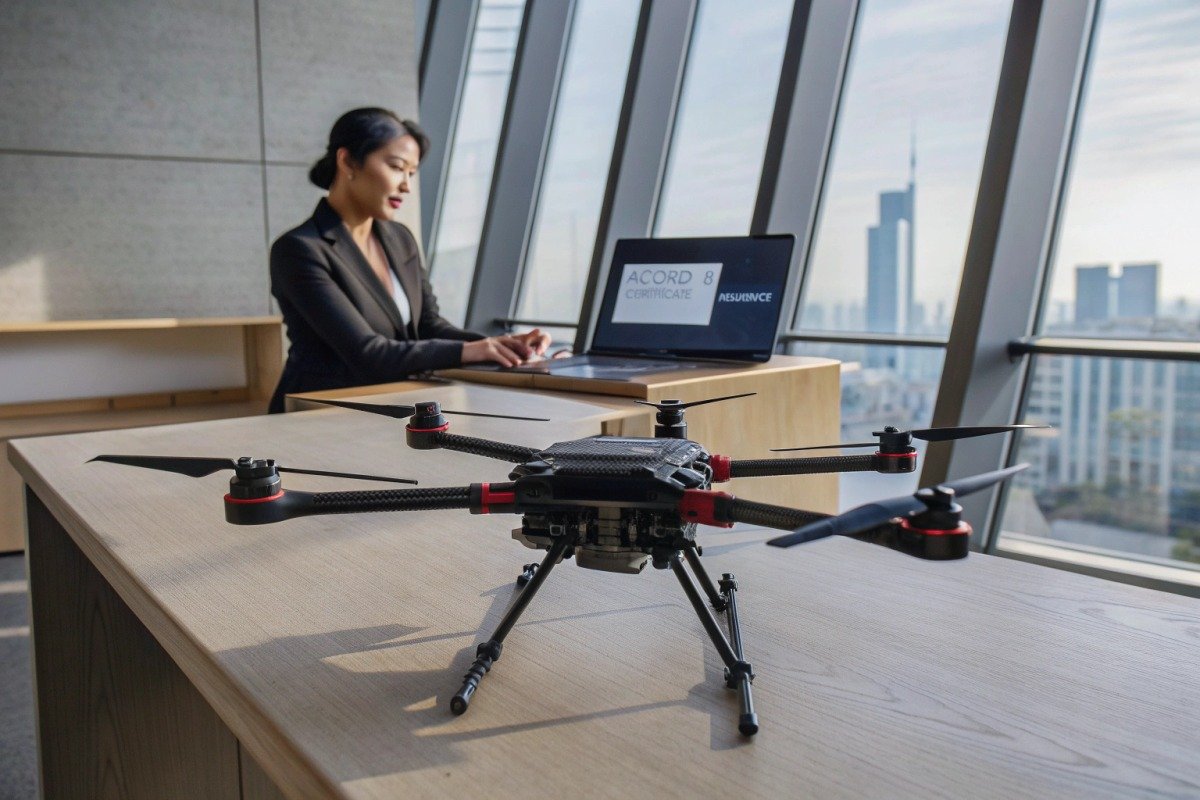
During production runs at our facility, we’ve witnessed distributors face devastating liability claims after drone malfunctions during wildfire operations ACORD 25 form 1. The problem is clear: unverified insurance leaves you exposed. The cost of one accident can destroy years of business.
To verify product liability insurance when sourcing firefighting drones, request the supplier’s Certificate of Insurance (COI), confirm policy validity directly with the insurer, check coverage limits meet $1M per occurrence minimum, ensure products-completed operations coverage exists, and verify your company is listed as additional insured.
This guide walks you through every step of insurance verification. You’ll learn practical methods to protect your business from costly gaps in coverage.
How can I verify that my drone supplier's product liability insurance is authentic and currently active?
When we ship drones to American distributors, they often ask us to prove our insurance is real. This concern makes sense. Fake certificates exist in this industry. One bad purchase decision can mean millions in unprotected liability.
To verify authenticity, request the original COI with ACORD 25 form, call the insurance company directly using contact details from their official website, confirm the policy number matches, check the effective dates, and verify your supplier's name exactly matches the named insured on the policy.
Request the Right Documents First
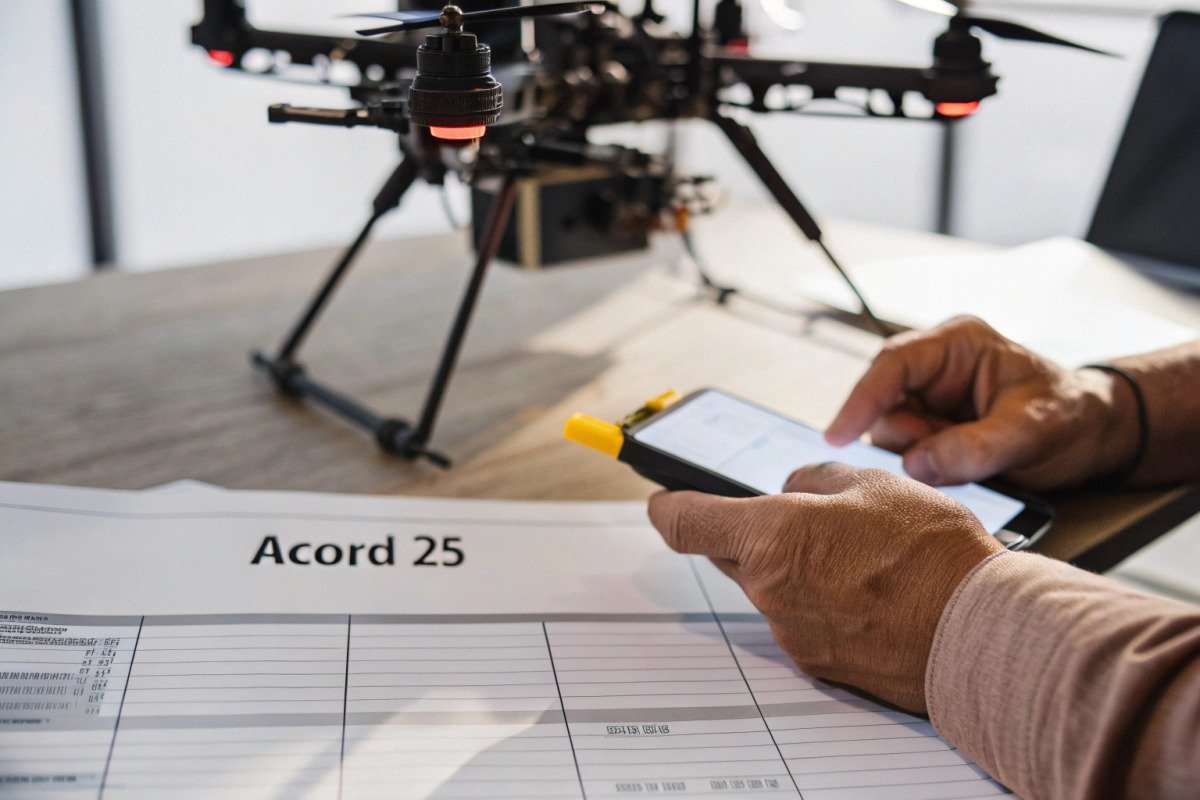
Start by asking your drone supplier for their Certificate of Insurance. Certificate of Insurance (COI) 2 The ACORD 25 form is the industry standard in North America. This document shows key details at a glance.
Look for these elements on the COI:
| COI Element | Qué revisar | Bandera Roja |
|---|---|---|
| Named Insured | Exact company name match | Misspellings or different entity |
| Policy Number | Unique identifier | Generic or missing numbers |
| Effective Dates | Current and future coverage | Expired or backdated |
| Coverage Limits | Meets your requirements | Unusually low limits |
| Insurance Company | A.M. Best rated carrier | Unknown or unrated insurer |
| Certificate Holder | Your company listed | Wrong name or address |
Direct Verification with the Insurer
Never trust a COI alone. Our quality team always recommends calling the insurance company directly. Use the phone number from the insurer's official website. Do not use numbers printed on the certificate itself.
Ask the insurer these questions:
- Is this policy currently active?
- Does it include products-completed operations coverage 3?
- Are there any pending cancellations?
- What are the actual coverage limits?
This call takes 10-15 minutes. It can save you from fraudulent documents.
Use Third-Party Verification Tools
Manual verification works for occasional purchases. But if you source from multiple drone suppliers, consider automated platforms. Tools like myCOI, Veriforce, and CertFocus handle bulk verification. They extract data automatically and alert you to gaps.
These platforms cost money. However, they reduce verification time from hours to minutes. They also catch exclusions that humans miss. For high-risk products like firefighting drones, this investment makes sense.
Check the Insurer's Financial Strength
A policy is worthless if the insurance company cannot pay claims. Check the insurer's A.M. Best rating 4. Look for ratings of A- or higher. This indicates financial stability.
You can verify ratings free on the A.M. Best website. Insurers with poor ratings may not honor large claims from drone accidents.
Does the manufacturer's insurance policy provide adequate coverage for the high-risk scenarios my firefighting drones will face?
Our engineering team designs drones for extreme conditions. Heat, smoke, and unpredictable winds challenge every component. Standard insurance policies often exclude these exact situations. You need to know what's actually covered before problems arise.
Adequate coverage for firefighting drones requires minimum $1M per occurrence and $2M aggregate limits, products-completed operations endorsement, no aviation or drone exclusions, coverage for thermal damage and equipment failure, and protection for third-party bodily injury and property damage claims.
Understand Coverage Types
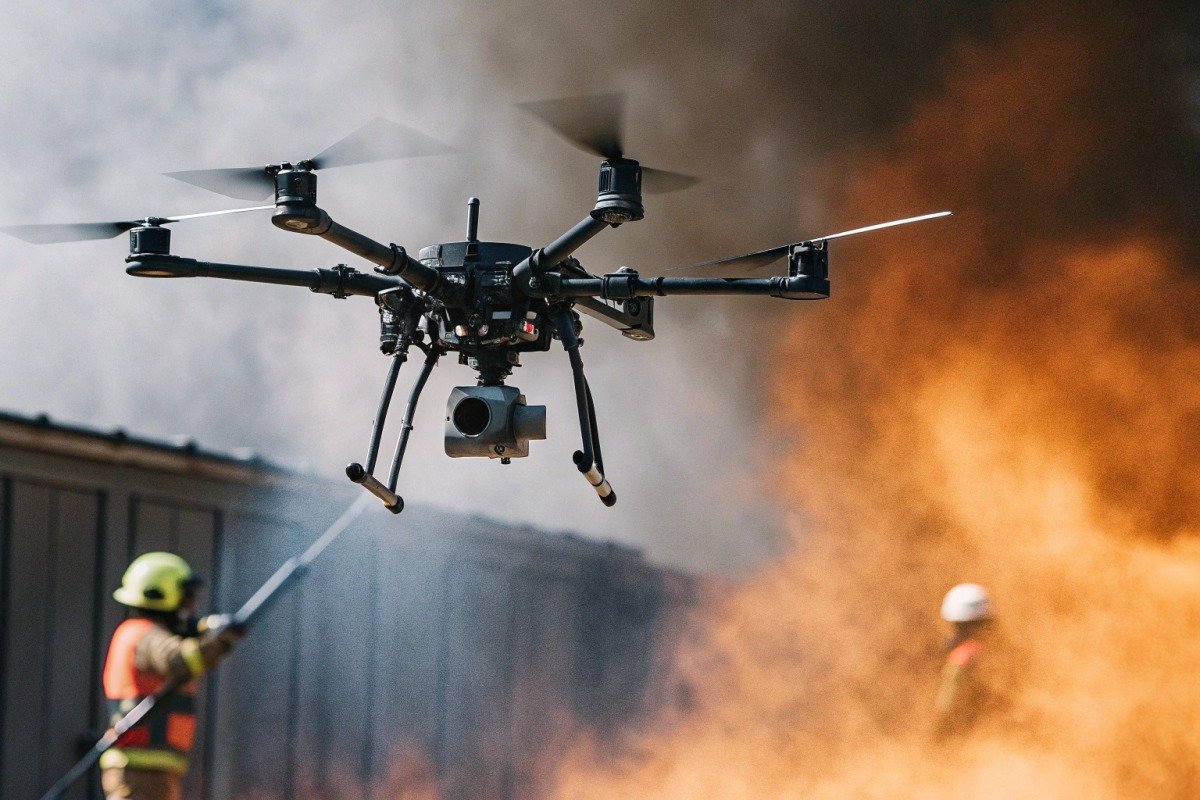
Product liability insurance 5 covers claims when a defective product causes harm. For firefighting drones, this includes:
- A propeller detaches and injures a firefighter
- A battery explodes and damages a fire truck
- Software failure causes the drone to crash into a building
- A design flaw leads to fire spread instead of suppression
General liability is different. It covers slip-and-fall accidents at a factory. Make sure your supplier has product liability specifically.
Review Minimum Limits for High-Risk Operations
Standard limits may not protect you adequately. Here's what we recommend based on our export experience:
| Tipo de cobertura | Minimum Recommended | High-Risk Operations |
|---|---|---|
| Per Occurrence | $1,000,000 | $2,000,000 |
| Aggregate | $2,000,000 | $5,000,000 |
| Products-Completed Ops | $1,000,000 | $2,000,000 |
| Personal Injury | $1,000,000 | $1,000,000 |
Some government contracts require up to $25 million in coverage. Check your customer requirements before finalizing supplier selection.
Identify Critical Exclusions
Policy exclusions kill coverage when you need it most. Ask your supplier for the full policy document. Look for these common exclusions:
Aviation Exclusions: Many general liability policies exclude aircraft operations. Drones count as aircraft. Your supplier needs a policy that specifically includes unmanned aerial vehicles 6.
War and Terrorism: Most policies exclude damage during armed conflicts. This matters for firefighting drones deployed near civil unrest.
Electronic Malfunction: Some policies exclude damage caused by software bugs or cyberattacks. For autonomous drones, this creates a major gap.
Known Defects: If the manufacturer knew about a flaw and didn't fix it, claims may be denied.
Products-Completed Operations Coverage
This endorsement is critical. It covers products after they leave the manufacturer's control. Without it, the policy only covers accidents that happen at the factory.
Your firefighting drone will cause damage in the field, not during assembly. Confirm this coverage exists with the exact phrase "products-completed operations" on the COI.
Assess Cyber Liability for Networked Drones
Modern firefighting drones connect to networks. They receive commands remotely. They transmit data constantly. This creates cyber risks.
Ask if the policy covers:
- System hijacking during operations
- Data breaches exposing flight patterns
- Software-induced crashes
- Ransomware attacks on drone control systems
If cyber coverage is missing, your supplier's product liability may not help when hackers cause a crash.
What steps should I take to ensure the insurance certificate covers my liability as an importer in the United States or Europe?
When we export drones to American and European distributors, they need protection too. The manufacturer's policy alone may not shield importers from lawsuits. You need your name on that policy. Otherwise, you're not covered.
As an importer, request additional insured status on the manufacturer's policy, obtain a waiver of subrogation clause, ensure the policy meets US and EU jurisdictional requirements, verify coverage extends to your territory, and maintain your own importer's liability policy as backup protection.

Get Added as Additional Insured
This is the most important step. When you're listed as additional insured, the manufacturer's policy covers claims against you too. Without this status, their insurance only protects them.
Request an endorsement that names your company specifically. Generic "all customers" language may not hold up in court. Your exact legal entity name should appear on the certificate.
Obtain a Waiver of Subrogation
Subrogation allows an insurance company to sue third parties after paying a claim. Without a waiver, your supplier's insurer could sue you to recover their losses.
A waiver of subrogation 7 prevents this. It protects you from being caught in the middle of insurance disputes. Always request this clause in writing.
Understand Jurisdictional Requirements
Insurance requirements differ by region:
| Requirement | Estados Unidos | Unión Europea |
|---|---|---|
| Minimum Limits | Varies by state ($1M common) | Often €1M+ per EASA guidance |
| Policy Language | English acceptable | Local language may be required |
| Admitted Insurer | State-licensed preferred | EU-authorized insurer needed |
| Regulatory Body | State insurance departments | National aviation authorities |
| Product Marking | CE mark not required | CE mark often mandatory |
European importers face additional complexity. The EU Product Liability Directive 8 holds importers directly responsible when manufacturers are outside the EU. Your supplier's Chinese policy may not satisfy European courts.
Maintain Separate Importer Coverage
Even with additional insured status 9, gaps exist. Consider purchasing your own product liability policy. This creates a second layer of protection.
Your policy should include:
- Coverage for products you import
- Defense costs for lawsuits
- Settlements and judgments
- Coverage territory matching your sales regions
Many importers carry $1-5 million in their own coverage. This supplements rather than replaces the manufacturer's policy.
Document Everything
Keep records of all insurance correspondence. Save emails requesting COIs. Store copies of certificates. Document phone verification calls with dates and representative names.
If a claim arises years later, these records prove you performed due diligence. Courts look favorably on importers who verified coverage properly.
Monitor Continuously
Insurance policies expire. Manufacturers change insurers. Coverage limits get reduced. A valid COI today may be worthless next year.
Set calendar reminders for policy expiration dates. Request updated certificates 30 days before expiration. Use automated platforms if you import from multiple suppliers.
Can I rely on the supplier's insurance if I choose to customize the drone design or use my own OEM branding?
Our OEM customers frequently ask about this. They want their logo on our drones. They request custom flight controllers or specialized payload systems. These modifications change the insurance equation dramatically. Standard coverage may not apply.
When you customize drone designs or add OEM branding, the original manufacturer's insurance may exclude coverage for your modifications. You should negotiate explicit OEM coverage in the policy, document all design changes thoroughly, consider design liability insurance, and clarify responsibility boundaries in written contracts.
How Customization Affects Coverage
Product liability insurance covers the product as designed and manufactured. When you modify the design, you become partially responsible. If your modification causes the accident, the manufacturer's insurer may deny the claim.
Common customization scenarios include:
| Tipo de modificación | Insurance Impact | Nivel de riesgo |
|---|---|---|
| Logo/branding only | Usually covered | Bajo |
| Paint color changes | Usually covered | Bajo |
| Software modifications | May void coverage | Medio |
| Hardware component swaps | Often excludes coverage | Alto |
| Structural design changes | Typically excluded | Alto |
| Rediseño del sistema de carga útil | Typically excluded | Alto |
Negotiate OEM-Specific Coverage
Before customizing, discuss insurance with your supplier. Ask them to add an endorsement covering your specific modifications. Get this in writing before production begins.
At our facility, we work with customers to document all approved changes. We coordinate with our insurer to ensure modifications remain covered. Not all manufacturers do this. Confirm yours will.
Clarify Responsibility Boundaries
Written agreements should specify who is liable for what. If you design a custom battery mounting system and it fails, is that your responsibility or the manufacturer's?
Su contrato debe abordar:
- Design approval processes
- Testing and certification requirements
- Quality control standards for modifications
- Liability allocation for each component
- Insurance requirements for both parties
Consider Design Liability Insurance
If you're heavily involved in design, standard product liability may not be enough. Design liability insurance covers claims arising from your design decisions specifically.
This coverage is essential when:
- You provide engineering specifications
- You select components the manufacturer doesn't normally use
- You approve final designs with your signature
- You modify software or control systems
Maintain Detailed Documentation
Documentation protects everyone. Keep records of:
- Original design specifications from the manufacturer
- Your modification requests and approvals
- Testing results for customized components
- Quality inspection reports
- Communication logs with dates
If a claim arises, these records help determine whose insurance should respond. They also demonstrate your due diligence.
OEM Branding Creates Perception of Manufacturing
When your logo appears on a drone, injured parties assume you made it. In many jurisdictions, brand owners face the same liability as manufacturers. This is called "apparent manufacturer" doctrine.
Even if you only imported the product, your branding may make you legally responsible. Your own product liability insurance becomes essential in this scenario.
Supply Chain Coverage for Custom Components
Custom drones often use specialized parts from multiple suppliers. Each supplier should have their own product liability coverage. A defect in any component can trigger claims against you.
Map your supply chain:
- Who supplies the motors?
- Where do batteries come from?
- Who wrote the flight control software?
- What company made the thermal cameras?
Request COIs from each critical component supplier. A drone is only as reliable as its weakest part.
Conclusión
Verifying product liability insurance for firefighting drones protects your business from catastrophic losses. Request COIs, verify directly with insurers, check coverage adequacy, secure additional insured status, and address OEM modifications carefully. Due diligence today prevents devastating claims tomorrow.
Notas al pie
1. Official source for the standard Certificate of Liability Insurance. ↩︎
2. Explains a document summarizing insurance coverage details. ↩︎
3. Defines coverage for product-related incidents after delivery. ↩︎
4. Explains the independent financial strength ratings for insurers. ↩︎
5. Replaced HTTP 403 link with an authoritative definition from IRMI. ↩︎
6. Provides a general definition of unmanned aerial vehicles (drones). ↩︎
7. Defines a clause preventing insurers from suing third parties. ↩︎
8. Official legal text for product liability within the EU. ↩︎
9. Explains how to extend policy coverage to other parties. ↩︎

 English
  Spanish
  German
  French
  Dutch
Dutch  Arabic
