Every year, we see crash reports from firefighting operations FCC certification 1. Power line strikes. Collisions with collapsing structures. These failures often trace back to inadequate radar verification during procurement ROHS certification 2. From our production line, we know that radar claims on spec sheets don’t always match real-world performance.
To verify omnidirectional obstacle avoidance radar, you must conduct real-world testing in smoke and heat, request complete technical documentation including detection range certifications, test software customization options, and evaluate durability under extended mission conditions. Lab specs alone are never sufficient for firefighting applications.
This guide walks you through a step-by-step verification process software development kits (SDKs) 3. You’ll learn exactly what to test, what documents to demand, and what red flags to watch for when sourcing firefighting drones.
How can I test the real-world effectiveness of omnidirectional radar in dense smoke and high-heat environments?
When we ship firefighting drones overseas, clients often ask about smoke penetration performance Multi-Sensor Fusion 4. The truth is, controlled lab tests rarely replicate actual fire conditions. Dense smoke, thermal crossover 5, and low visibility create challenges that only field testing can reveal.
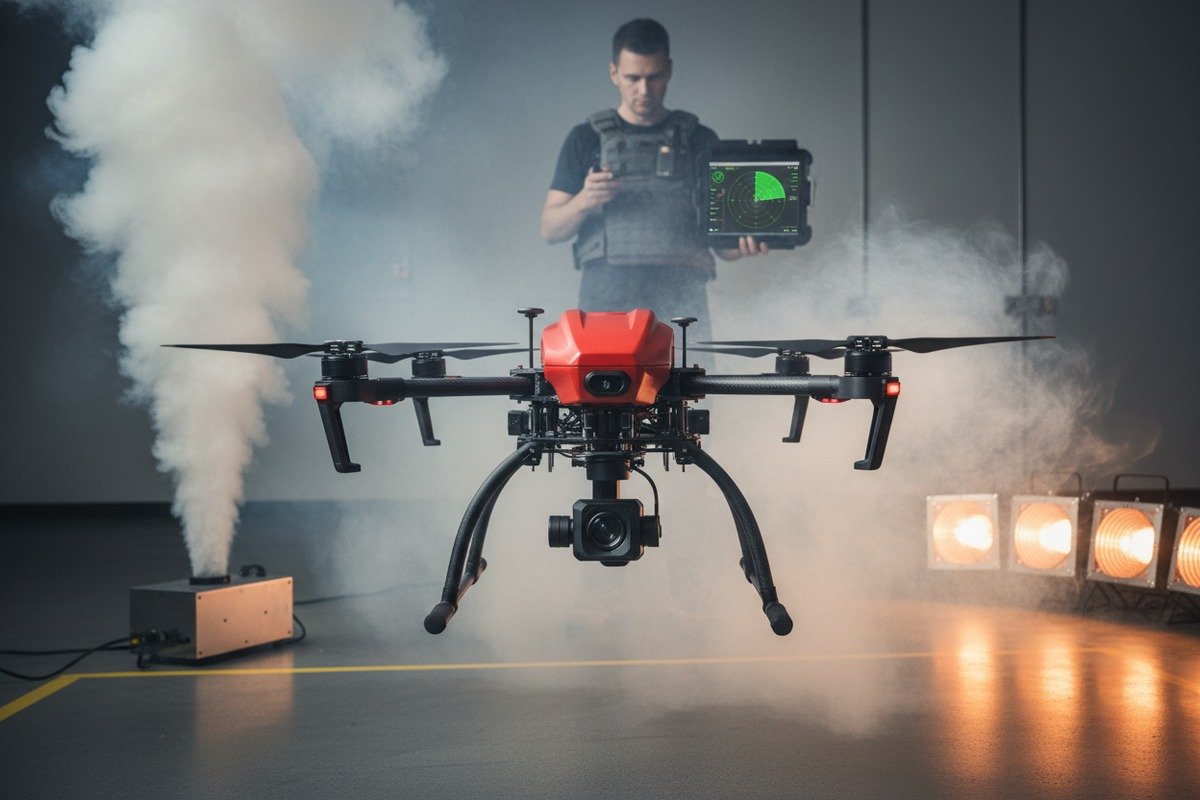
Real-world radar effectiveness requires simulated fire environment testing using smoke machines, heat sources, and mock obstacles. Test response time (under 1 second for braking), bypass success rate (above 95%), and detection consistency across all six directions. Document false positives and negatives over at least 10 flight cycles.
Why Lab Results Fall Short
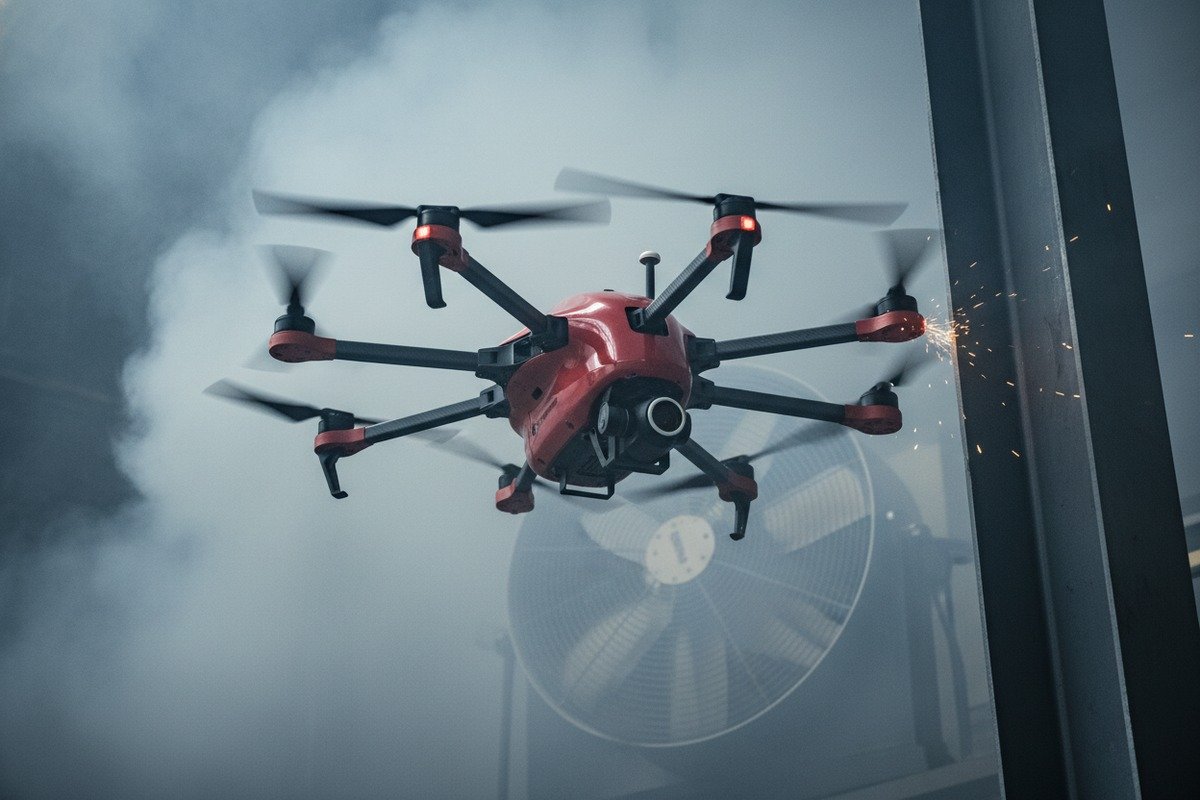
Laboratory testing happens in clean, controlled spaces. Real fires produce particulate matter, intense heat radiation, and electromagnetic interference. Our engineering team has documented significant performance gaps between lab specs and field results.
Millimeter-wave radar 6 performs better than optical sensors in smoke. But "better" doesn't mean "perfect." You need hard data from realistic conditions.
Setting Up Proper Test Protocols
Request supplier demos in simulated environments. Here's what a proper test setup should include:
| Test Element | Minimum Requirement | Por qué es importante |
|---|---|---|
| Smoke density | Commercial smoke machines at 50%+ visibility reduction | Replicates structure fire conditions |
| Heat exposure | Ambient temperature 60-80°C near drone | Tests sensor stability under thermal stress |
| Obstacle types | Wires, poles, flat surfaces, irregular shapes | Reveals detection blind spots |
| Flight patterns | Hover, forward flight, rapid direction changes | Tests responsiveness in various maneuvers |
| Test cycles | Minimum 10 complete flights | Establishes consistency baseline |
Key Metrics to Measure
Track these numbers during every test flight:
- Response time: Time between detection and drone reaction. Must be under 1 second.
- Detection range accuracy: Compare actual detection distance to claimed specs.
- False positive rate: How often does the radar trigger for non-threats like smoke plumes?
- False negative rate: How often does the radar miss actual obstacles?
- Battery drain: Radar typically adds 5-10% power consumption.
Multi-Sensor Fusion Verification
Modern firefighting drones combine radar with LiDAR 7, thermal imaging, and ultrasonic sensors. Test each sensor type independently, then test them together. Sensor fusion should improve overall performance. If combined performance drops, there's an integration problem.
Our experience shows that millimeter-wave radar (like Nanoradar MR72 with 80m forward range) handles smoke best. But thermal cameras help distinguish fire sources from other heat signatures.
What technical documentation should I request from my supplier to verify the radar's detection range and accuracy?
During quality control checks at our facility, we verify every claim with documentation. Too many buyers accept marketing materials without demanding proof. This creates problems months later when drones fail in the field.
Request these documents: FCC/CE/ROHS certification copies, independent lab test reports showing detection range by angle, field of view specifications (120° minimum), resolution data (1-5 meters ideal), track update rate (8Hz or higher), and heat resistance ratings. Verify all certifications through official databases.

Essential Certification Documents
Legitimate suppliers provide certification proofs without hesitation. Here's what you need:
| Certificación | What It Proves | How to Verify |
|---|---|---|
| FCC | US radio frequency compliance | Search FCC ID database |
| CE | Normas de seguridad europeas | Check EU RAPEX database |
| ROHS | Hazardous substance restrictions | Request test lab certificate |
| KC (Korea) | Korean market compliance | Validates broader testing |
| ETA | Type approval for specific applications | Request approval letter |
Nanoradar, for example, holds six certifications (KC, ETA, FCC, CE, ROHS, NCC). This indicates thorough testing across multiple regulatory frameworks.
Detection Range Specifications
Don't accept single-number range claims. Request directional breakdown:
- Forward detection range
- Rear detection range
- Left and right lateral ranges
- Upward detection range
- Downward detection range
Quality systems like DJI Matrice 350 RTK provide 6-direction sensor coverage with different ranges per direction. Budget systems often claim "360° coverage" but have significant weak spots.
Resolution and Accuracy Data
Resolution determines how precisely the radar locates obstacles. For firefighting operations near structures and wires, you need 1-5 meter resolution.
Ask for these specific metrics:
- Angular accuracy: How precisely can the system determine obstacle direction?
- Range resolution: Can it distinguish between two close obstacles?
- 4D height detection: Does it measure altitude differences accurately?
Track Update Rate Documentation
Update rate affects real-time responsiveness. Higher rates mean faster reaction to newly detected obstacles. Demand documentation showing:
- Update frequency in Hertz (8Hz minimum)
- Latency between detection and alert generation
- Processing speed under multiple simultaneous detections
Third-Party Audit Reports
Independent testing carries more weight than manufacturer claims. Request:
- Third-party lab test reports
- Customer reference contacts for similar applications
- Warranty terms and failure rate data
Can I customize the obstacle avoidance sensitivity through my manufacturer's software development support?
When we collaborate with clients on software development, sensitivity customization is a frequent request. Different firefighting scenarios require different avoidance behaviors. A drone fighting a warehouse fire needs different settings than one monitoring a forest fire.
Yes, reputable manufacturers offer software development kits (SDKs) enabling sensitivity customization. You can typically adjust detection thresholds, response behaviors (brake/bypass/hover), alert distances, and sector-specific sensitivity. Verify SDK documentation availability, API access, and technical support response times before purchase.

Understanding Adjustable Parameters
Quality obstacle avoidance systems offer these customization options:
| Parameter | Typical Range | Use Case |
|---|---|---|
| Detection threshold | 5-80 meters | Adjust for mission environment |
| Response behavior | Brake/Bypass/Hover/Off | Match operational requirements |
| Sensitivity level | Low/Medium/High/Custom | Balance safety vs. maneuverability |
| Sector prioritization | Per-direction settings | Focus detection on critical angles |
| Speed-based adjustment | Auto-scaling with velocity | Faster flight = earlier detection |
SDK and API Requirements
Before committing to a supplier, verify software capabilities:
SDK Documentation: Complete documentation should cover all adjustable parameters, code examples, and integration guides. Poor documentation indicates poor support.
API Access Levels: Some manufacturers restrict deep-level access. Ensure you can reach the parameters you need.
Firmware Update Process: How are updates delivered? Can you roll back if updates cause problems?
Integration with Flight Controllers: Verify compatibility with your chosen flight controller. BOYING's 360° modules, for example, integrate with Paladin V3 flight controllers.
Custom Payload Integration
Firefighting drones carry specialized equipment. Your radar software should integrate with:
- Thermal cameras for fire detection
- Fire extinguisher release mechanisms
- Water cannon aiming systems
- Communication relays
Our development team can collaborate on custom integrations. This requires clear API documentation from the radar supplier and willingness to provide technical support during development.
Testing Custom Configurations
After customization, re-test everything. Changed parameters affect overall system behavior. Common issues we've seen:
- Sensitivity too high = false positives interrupt operations
- Sensitivity too low = missed obstacles
- Conflicting settings between sensors = erratic behavior
Document your custom configuration and test results. This becomes critical for troubleshooting field problems.
Technical Support Evaluation
Before purchasing, test the supplier's technical support:
- Send technical questions via email. Measure response time.
- Ask for SDK access to review before purchase.
- Request contact with their engineering team.
- Verify support availability in your time zone.
Poor pre-sale support predicts poor post-sale support.
How do I ensure the radar system remains durable and stable during long-duration firefighting missions?
Our quality control process includes extended operation testing. Firefighting missions can last hours with multiple battery swaps. Radar systems that work perfectly for 20 minutes sometimes fail after continuous operation. Heat buildup, component fatigue, and power fluctuations all cause problems.
Ensure radar durability through extended stress testing (2+ hours continuous operation), heat resistance verification (components rated for 80°C+ ambient), vibration testing, EMI resistance confirmation, and post-mission data analysis protocols. Request supplier warranty terms covering component failure during extended operations.

Heat Management Verification
Firefighting environments combine external heat with internal component heat. Verify:
- Ambient temperature rating: What's the maximum operating temperature?
- Thermal throttling behavior: Does performance degrade as temperature rises?
- Cooling system design: Active or passive cooling? Heat sink specifications?
- Recovery time: After heat exposure, how quickly does normal operation resume?
Industrial-grade radar modules should operate reliably at 60-80°C ambient temperature. Some manufacturers claim 200°C resistance for brief exposures.
Vibration and Shock Resistance
Drone frames vibrate constantly during flight. Quality radar systems include vibration isolation. Test by:
- Running motors at full throttle while monitoring radar output
- Checking for false readings during aggressive maneuvers
- Inspecting mounting hardware design
Electromagnetic Interference Protection
Firefighting scenes have significant EMI sources:
| EMI Source | Impact on Radar | Mitigation |
|---|---|---|
| Radio communications | Signal interference | Shielded components |
| Power lines | Detection confusion | Filtering algorithms |
| Other emergency equipment | Spurious readings | Frequency isolation |
| Onboard transmitters | Internal interference | Proper antenna placement |
Request EMI test documentation. Radar should maintain consistent performance near typical emergency equipment.
Long-Duration Mission Testing Protocol
Before deploying new drones, run extended tests:
- Continuous operation test: Run radar for 2+ hours with battery swaps
- Cycle testing: Complete 20+ takeoff/landing cycles
- Environmental exposure: Test after exposure to rain, dust, cold
- Post-stress inspection: Check connections, mounting, and sensor alignment
Maintenance and Parts Availability
Durability includes repairability. Verify:
- Replacement parts availability
- Parts pricing and delivery times
- Field-serviceable components vs. factory-return requirements
- Preventive maintenance schedules
Our after-sales support includes spare parts inventory for common wear items. We've seen competitors with 8-week parts delivery times. This creates unacceptable downtime for firefighting operations.
Post-Mission Analysis Requirements
Establish data review protocols:
- Download and analyze radar logs after each mission
- Track near-miss incidents and false alerts
- Monitor performance degradation trends
- Schedule firmware updates based on manufacturer recommendations
This data improves operations and supports warranty claims if failures occur.
Conclusión
Verifying omnidirectional radar requires hands-on testing, thorough documentation review, software evaluation, and durability assessment. Don't trust spec sheets alone. Your firefighting operations depend on radar that performs when conditions are worst.
Notas al pie
1. Official overview of FCC equipment authorization from the Federal Communications Commission. ↩︎
2. Replaced HTTP 404 with the official European Commission page on the RoHS Directive. ↩︎
3. Amazon Web Services provides a clear explanation of software development kits and their benefits. ↩︎
4. Carnegie Mellon University’s Robotics Institute is an authoritative source on multi-sensor fusion in robotics. ↩︎
5. The National Protective Security Authority defines thermal crossover in the context of thermal imagers. ↩︎
6. Texas Instruments is a leading semiconductor company with expertise in mmWave radar technology. ↩︎
7. NOAA provides a clear explanation of LiDAR technology and its applications. ↩︎
8. Official information on CE marking requirements from the European Commission. ↩︎

 English
  Spanish
  German
  French
  Dutch
Dutch  Arabic
