
When our engineering team developed cloud connectivity features for SkyRover agricultural drones, we discovered that many buyers struggle to verify where their sensitive farm data actually resides Microsoft Azure 1. This uncertainty creates real compliance risks and operational headaches for US agricultural operations.
To verify local US server deployment, request Data Processing Agreements with explicit server location guarantees, SOC 2 Type II and ISO 27001 certifications, detailed data flow architecture diagrams, and contractual clauses with penalties for data residency violations. Always confirm backup servers are also US-based.
Let me walk you through the exact verification steps our US distribution partners use to ensure their drone data stays within American borders.
How can I confirm that my agricultural drone data is actually stored on a US-based server?
When we ship agricultural drones to our US partners, the first question they ask involves data sovereignty 2. Many buyers feel confused by vague marketing claims about "secure cloud storage" without concrete proof of server locations.
You can confirm US-based storage by requesting official Data Processing Agreements stating exact server locations, demanding SOC 2 Type II audit reports, asking for architecture diagrams showing data flow paths, and verifying through your own cloud account dashboards if the platform integrates with AWS or Azure.

Start With Official Documentation
The most reliable verification method begins with legal documents. Ask your cloud platform vendor for a Data Processing Agreement 3 that explicitly names US data center locations. This document should specify cities or regions, not just "North America."
Our experience exporting to the US market shows that serious vendors provide this information readily. If a vendor hesitates or offers vague responses, consider it a red flag.
Request Third-Party Audit Reports
SOC 2 Type II certifications 4 provide independent verification of data security practices. These audits examine where data is stored and how it flows through the system. ISO 27001 certifications 5 offer similar assurance.
| Tipo de certificación | What It Verifies | Request From Vendor |
|---|---|---|
| SOC 2 Type II | Data security controls, server infrastructure | Full audit report, not just certificate |
| ISO 27001 | Information security management systems | Certification document with scope details |
| NDAA Compliance 6 | Federal security standards | Compliance statement with specific provisions |
Use Cloud Provider Dashboards
Some agricultural drone platforms integrate directly with farmer-controlled cloud accounts like Amazon S3 7 or Microsoft Azure. This approach gives you direct visibility into data destinations.
When our team tests cloud integrations, we recommend buyers create their own AWS or Azure accounts. Then configure the drone platform to deposit data there. You can verify the storage region directly through your cloud console.
Verify Through Network Analysis
Technical buyers can use network monitoring tools to trace where data packets travel. This method requires more expertise but provides concrete evidence.
| Método de verificación | Technical Skill Required | Reliability Level |
|---|---|---|
| Data Processing Agreement review | Bajo | High (if contractual) |
| Cloud dashboard verification | Medio | Very High |
| Network packet analysis | Alto | Very High |
| Third-party security audit | Bajo | Alto |
Watch for Common Pitfalls
Some vendors claim US deployment but route data through international servers during processing. Others may store primary data in the US while backing up to overseas locations. Ask specifically about processing paths and backup locations.
Will local US server deployment significantly reduce the latency of my drone's cloud platform?
From our factory in Xi'an, we calibrate flight controllers for various global markets. Network latency 8 affects real-time drone operations more than most buyers realize. This becomes critical for fleet management and live data streaming.
Yes, local US server deployment significantly reduces latency for US-based operations. Typical latency drops from 150-300ms with overseas servers to 20-50ms with domestic servers. This improvement enables real-time fleet monitoring, faster image processing, and more responsive mission planning tools.
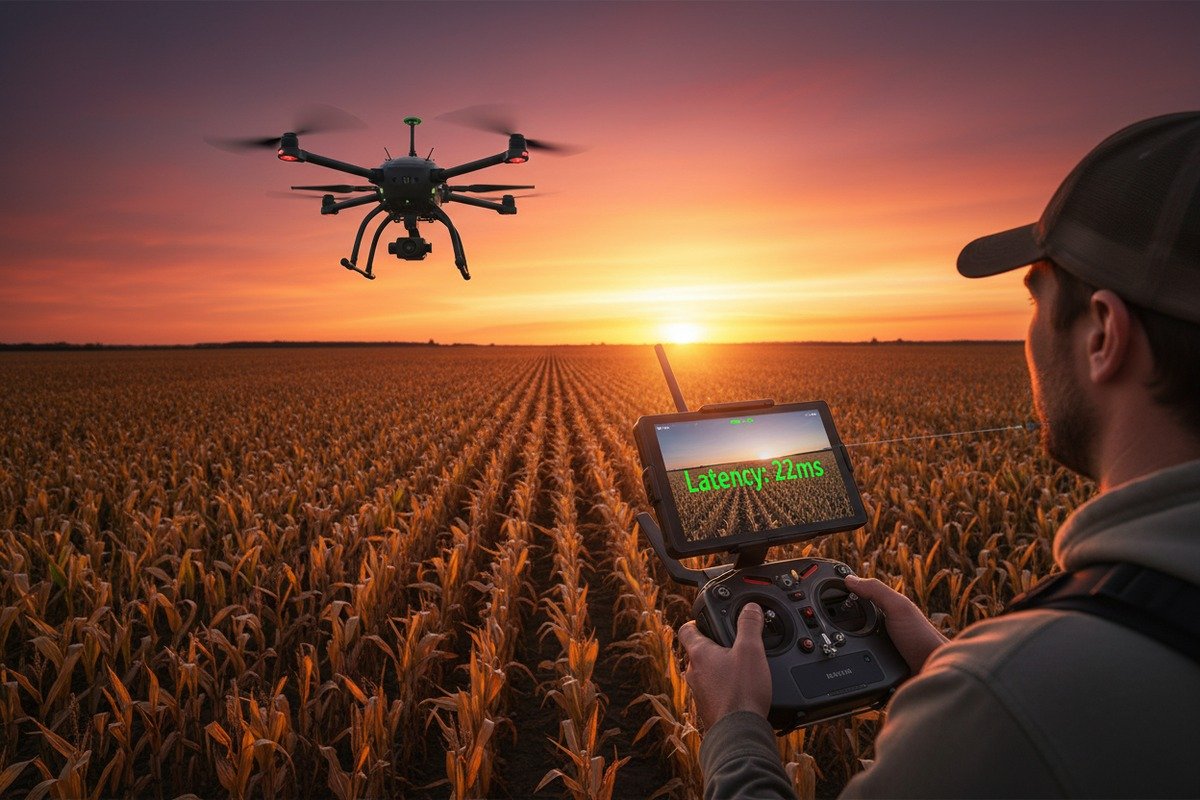
Understanding Latency in Agricultural Operations
Latency measures the delay between sending data and receiving a response. For agricultural drones, this affects several operations: live video feeds, real-time telemetry, mission updates, and data uploads.
When our engineers test cloud connections from US locations, we consistently observe dramatic latency differences based on server geography.
| Server Location | Typical Latency from US Midwest | Impact on Operations |
|---|---|---|
| US (East Coast) | 20-40ms | Excellent real-time performance |
| US (West Coast) | 30-50ms | Very good performance |
| Europa | 80-150ms | Noticeable delays in live feeds |
| Asia | 150-300ms | Significant impact on real-time functions |
When Latency Matters Most
Not all agricultural drone operations require low latency. Uploading field imagery for later analysis works fine with higher latency. But certain functions suffer noticeably.
Real-time fleet management dashboards need quick updates. If you manage multiple drones across large farms, delayed status information creates confusion. Live video streaming becomes choppy with high latency. Mission planning tools feel sluggish when every click requires a round-trip to distant servers.
The Trade-Off Question
Some platforms argue that global server distribution provides better redundancy. They may be right about disaster recovery. But for daily operations, local servers outperform distant ones every time.
Our US distribution partners consistently report smoother operations after switching to platforms with verified US server deployment. The improvement is especially noticeable during peak farming seasons when multiple drones operate simultaneously.
Testing Latency Before Purchase
Request a trial period with the cloud platform before committing. During the trial, run network diagnostic tools to measure actual latency. Compare these measurements against vendor claims.
Some platforms offer latency statistics in their dashboards. Verify these numbers match your independent measurements.
What specific documentation should I request to prove the cloud platform meets US data privacy standards?
When we prepare export documentation for US-bound drone shipments, we work closely with our partners on compliance requirements. Data privacy documentation has become essential for agricultural operations seeking federal contracts or handling sensitive farm data.
Request Data Processing Agreements with explicit US residency clauses, SOC 2 Type II and ISO 27001 certification reports, NDAA compliance documentation, detailed data flow maps showing all processing endpoints, sub-processor disclosure lists, and Service Level Agreements with data residency guarantees and violation penalties.

Essential Documents Checklist
Build a comprehensive documentation request before engaging vendors. This demonstrates your seriousness and helps identify vendors who cannot meet your requirements.
| Tipo de documento | Objetivo | Key Elements to Verify |
|---|---|---|
| Data Processing Agreement | Legal guarantee of data handling | Explicit US server locations, data flow restrictions |
| SOC 2 Type II Report | Third-party security audit | Audit scope, findings, remediation status |
| ISO 27001 Certificate | Information security management | Certificate validity, scope coverage |
| Data Flow Architecture | Technical transparency | Processing locations, backup destinations |
| Sub-processor List | Supply chain visibility | Third-party vendors, their locations |
| SLA with Residency Clause | Contractual guarantee | Penalties for violations, audit rights |
Understanding Regulatory Framework
US agricultural operations face multiple overlapping regulations. USDA standards govern certain data types. EPA requirements apply to chemical application records. NDAA compliance matters for government-adjacent operations.
Your documentation request should address all applicable frameworks. Ask vendors which specific regulations their platform addresses and how they demonstrate compliance.
Dig Into Sub-Processor Details
Cloud platforms often rely on underlying infrastructure providers like AWS, Google Cloud, or Azure. These sub-processors handle your data even if you never interact with them directly.
Request a complete sub-processor list. Verify each sub-processor's data residency practices. Some platforms use US-based primary infrastructure but route certain functions through international services.
Contract Language That Protects You
Generic privacy policies offer little protection. You need specific contractual language that:
- Names exact data center locations
- Prohibits data transfer outside the US without written consent
- Establishes penalties for violations
- Grants you audit rights
- Requires notification of infrastructure changes
Our legal team recommends reviewing contract language with an attorney familiar with data privacy regulations. The investment prevents costly disputes later.
Red Flags in Documentation
Watch for vague language like "primarily US-based" or "North American region." These phrases leave room for international data routing. Vendors who resist providing specific documentation often have something to hide.
If a vendor claims certifications but cannot produce actual audit reports, proceed with caution. Marketing materials mentioning certifications differ from verified documentation.
Can my drone manufacturer provide a dedicated local cloud instance for my fleet management needs?
Our production facility handles many customization requests from US buyers. Fleet management requirements vary widely based on operation size, data sensitivity, and compliance needs. Dedicated cloud instances represent one solution for demanding applications.
Yes, many drone manufacturers can provide dedicated local cloud instances. Options include private cloud deployment within US data centers, on-premises servers at your facility, air-gapped systems for maximum security, and hybrid configurations. Request detailed proposals comparing deployment options, costs, and ongoing support requirements.

Deployment Options Explained
Modern agricultural drone platforms offer multiple deployment models. Each balances security, cost, and operational complexity differently.
| Deployment Model | Security Level | Cost Range | Technical Requirements |
|---|---|---|---|
| Shared Cloud (US Region) | Bien | Bajo | Minimal |
| Dedicated Cloud Instance | Very Good | Medio | Low to Medium |
| On-Premises Server | Excelente | Alto | Significant |
| Air-Gapped System | Maximum | Very High | Extensive |
When Dedicated Instances Make Sense
Large fleet operators benefit most from dedicated instances. If you manage dozens of drones across multiple locations, shared infrastructure may create bottlenecks during peak operations.
Operations handling sensitive data also benefit. Government contractors, research institutions, and operations near sensitive facilities often require dedicated infrastructure for compliance reasons.
Evaluating Manufacturer Capabilities
Not all drone manufacturers offer dedicated cloud options. When we discuss customization with potential partners, we assess their technical infrastructure and support capabilities.
Ask these questions when evaluating manufacturers:
- Do you operate your own data center infrastructure or partner with cloud providers?
- What deployment options do you offer for US-based customers?
- Can you provide references from similar dedicated deployments?
- What ongoing support and maintenance is included?
- How do you handle software updates for dedicated instances?
Cost Considerations
Dedicated instances cost more than shared cloud services. But the premium buys isolation, guaranteed resources, and often better performance.
Calculate total cost of ownership, not just monthly fees. Include setup costs, migration expenses, ongoing maintenance, and eventual upgrade or migration costs.
Hybrid Approaches
Some operations benefit from hybrid configurations. Store sensitive data on dedicated infrastructure while using shared cloud resources for non-sensitive processing. This balances security with cost efficiency.
Our engineering team often recommends hybrid approaches for mid-sized operations. You get dedicated storage for field data while leveraging shared computing resources for analytics that don't require data isolation.
Long-Term Partnership Considerations
Dedicated infrastructure creates deeper relationships with manufacturers. Ensure your chosen partner has the stability and commitment to support your deployment long-term.
Evaluate the manufacturer's track record, financial stability, and strategic direction. A dedicated cloud instance represents a significant commitment from both parties.
Conclusión
Verifying US server deployment requires diligent documentation review, third-party certification verification, and clear contractual protections. Take time to request proper agreements, test latency claims, and evaluate dedicated instance options before committing to any agricultural drone cloud platform.
Notas al pie
1. Official product page for Microsoft Azure cloud services. ↩︎
2. Provides a comprehensive definition of data sovereignty. ↩︎
3. Replaced with an authoritative source on GDPR and data processing agreements. ↩︎
4. Official explanation of SOC 2 Type II by the AICPA. ↩︎
5. Official standard page for ISO 27001 information security management. ↩︎
6. Provides official US government information on NDAA Section 889 compliance. ↩︎
7. Official product page for Amazon S3 cloud storage service. ↩︎
8. Explains the concept of latency in engineering and computing. ↩︎

 English
  Spanish
  German
  French
  Dutch
Dutch  Arabic
