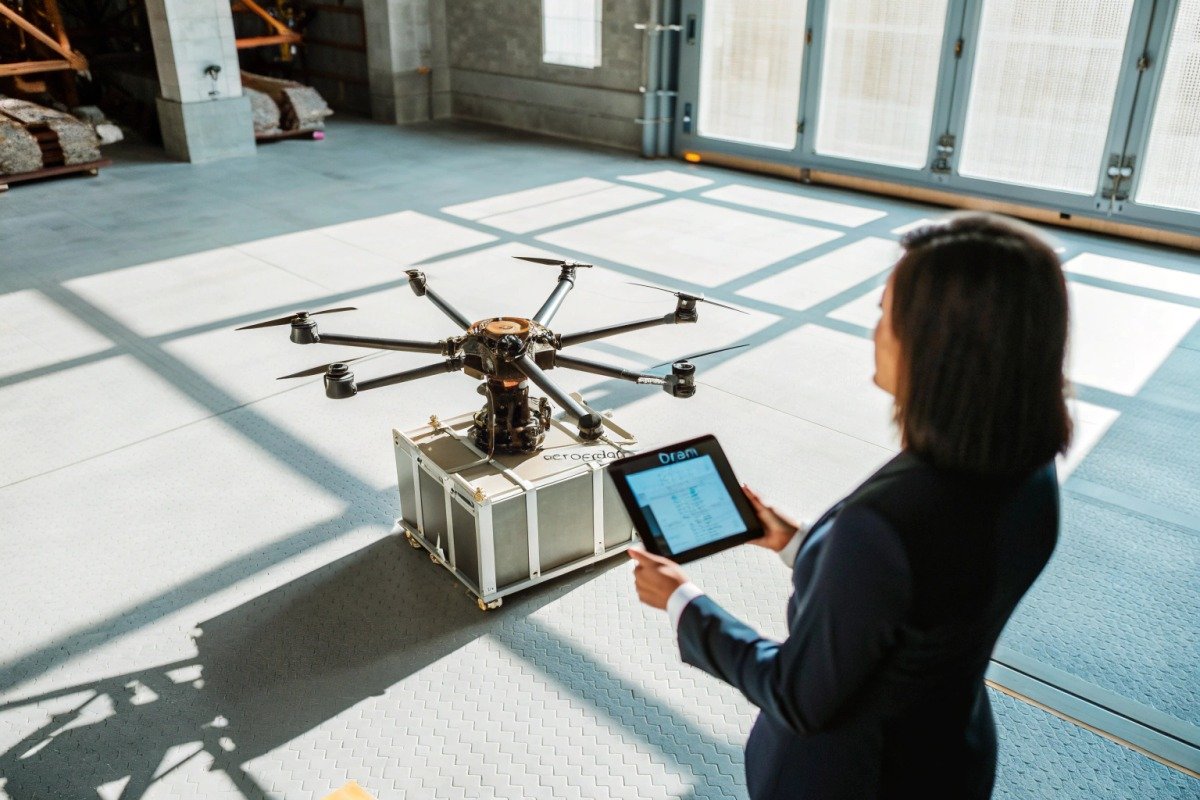
Every week, our engineering team receives calls from buyers who purchased firefighting drones without checking MTOW compliance 1 first. They face fines, grounded fleets, and revoked licenses. This problem costs businesses thousands of dollars and delays critical fire response operations.
To verify firefighting drone MTOW compliance, request the manufacturer’s official specification sheet and certificate of conformity, then cross-reference the declared MTOW against your local aviation authority’s weight thresholds. Physically weigh the drone with maximum payload using certified scales, and confirm the total weight stays under your operating license limits.
This guide walks you through each verification step local aviation authority’s weight thresholds 2. We will cover documentation review, payload calculations, supplier engineering support, and flight stability testing. Let us start with the most common question buyers ask.
How do I verify that the manufacturer's MTOW documentation matches my local operating license requirements?
Our export team ships firefighting drones to over 30 countries each year. We see buyers struggle with documentation mismatches all the time. The problem is simple: different countries use different weight thresholds and certification standards. EU Open Category 3
To verify documentation matches your license, first identify your regulatory threshold (FAA Part 107: under 55 lbs, EU Open Category: under 25 kg, Australia Medium: 25-150 kg). Then request the manufacturer's spec sheet, certificate of conformity, and any third-party test reports. Compare the declared MTOW exactly to your license conditions.

Understanding MTOW Definition
MTOW means Maximum Takeoff Weight. It includes everything: the drone frame, motors, batteries, fuel (if applicable), and payload. For firefighting drones, payload means water tanks, fire suppressant, thermal camera 4s, and drop systems.
Here is the formula:
MTOW = Empty Weight + Batteries + Maximum Payload
For example, our H300 series weighs 107.8 kg empty. Add a 150 kg water payload. The MTOW becomes 257.8 kg. This number must appear on official documents.
Key Documents to Request
When you contact any supplier, ask for these items:
| Tipo de documento | What It Shows | Por qué lo necesita |
|---|---|---|
| Official Spec Sheet | Declared MTOW, empty weight, max payload | Primary compliance reference |
| Certificate of Conformity 5 | Manufacturing standards met | Proves legitimate production |
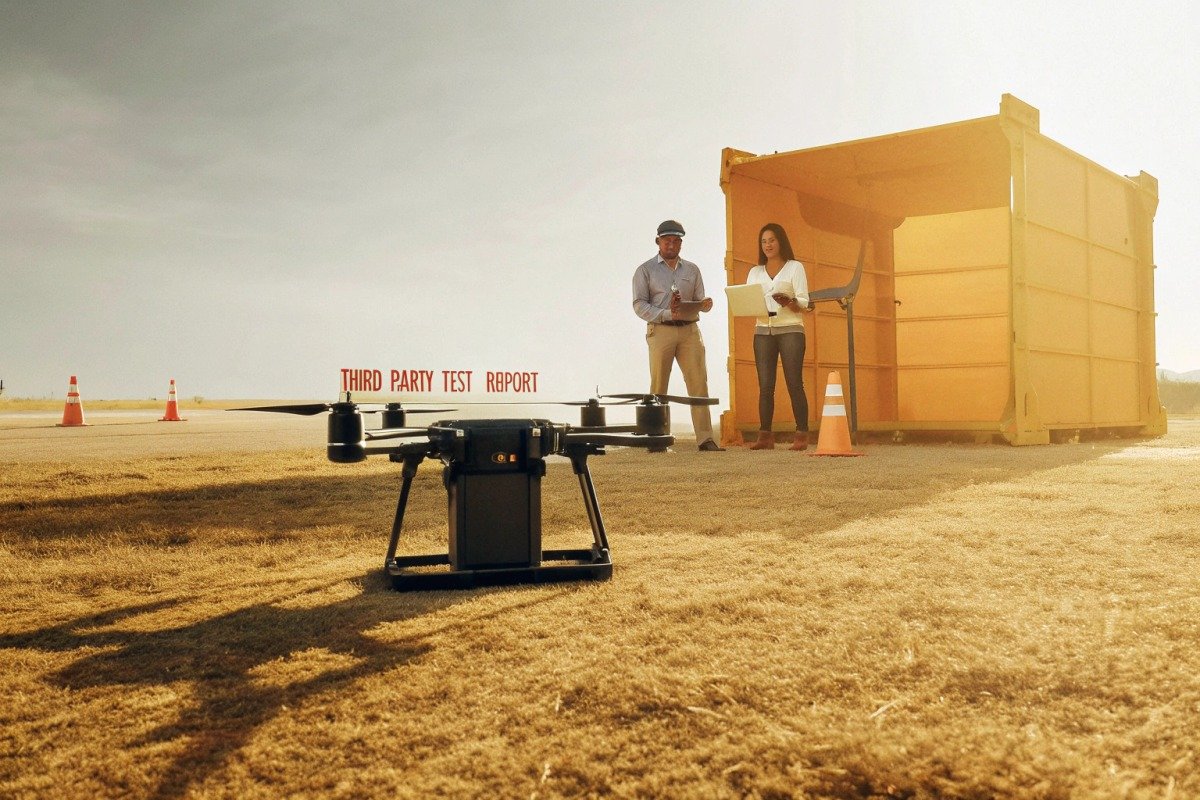
| Third-Party Test Report | Independent weight verification | Validates manufacturer claims |
| User Manual | Operating weight limits | Shows safe operating range |
| Type Certificate (if applicable) | Aviation authority approval | Required for heavy-lift drones |
Matching Documents to Your License
Different regions have different rules. Here is a quick reference:
| Region | Regulatory Body | Weight Threshold | License Type Needed |
|---|---|---|---|
| Estados Unidos | FAA | Under 55 lbs (25 kg) | Part 107 |
| Estados Unidos | FAA | Over 55 lbs | Section 44807 Exemption or Part 91/137 |
| Unión Europea | EASA | Under 25 kg | Open Category |
| Unión Europea | EASA | Over 25 kg | Specific Category |
| Australia | CASA | 25-150 kg | ReOC (Medium Category) |
When our team prepares export documentation, we include a compliance summary sheet. This sheet maps the drone's MTOW to major regulatory frameworks. Ask your supplier for something similar.
Red Flags in Documentation
Watch for these warning signs:
- MTOW listed without specifying what is included
- No third-party verification available
- Spec sheets with different numbers than user manuals
- Missing certificate numbers or dates
- Reluctance to provide original documents
Our quality control department catches documentation errors before shipment. We recommend you verify documents arrive before you transfer final payment.
What steps should I take to ensure my firefighting payload doesn't exceed the drone's legal MTOW limit?
When we design firefighting drones at our facility, payload weight is the first variable we calculate. Water is heavy. Fire suppressant is heavier. Many buyers underestimate how quickly payload pushes them over legal limits.
Calculate your total payload by adding water tank weight (1 liter = 1 kg), suppressant weight, thermal camera, drop mechanism, and any other equipment. Subtract this from your drone's declared MTOW to find remaining margin. Ensure total never exceeds your operating license threshold.
Breaking Down Firefighting Payload Components
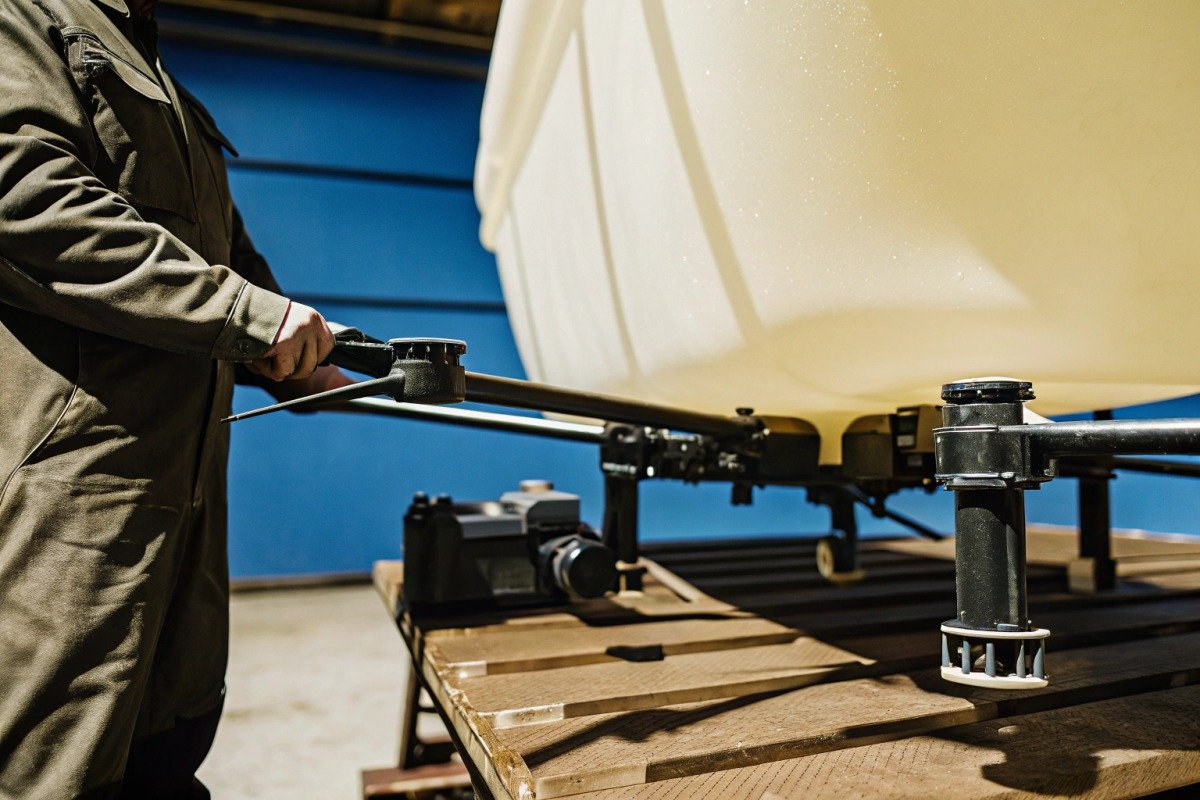
Firefighting drones carry more than just water. Here is what our engineering team includes in payload calculations:
| Componente | Typical Weight Range | Notas |
|---|---|---|
| Water Tank (empty) | 2-8 kg | Varies by capacity |
| Water (full) | 10-150 kg | 1 liter = 1 kg |
| Fire Suppressant | 15-180 kg | Denser than water |
| Thermal Camera | 0.5-2 kg | For fire detection |
| Drop Mechanism | 1-5 kg | Includes servo motors |
| Communication Module | 0.3-1 kg | For beyond visual line of sight |
| Extra Batteries | 2-10 kg | For extended missions |
Step-by-Step Payload Calculation
Follow this process before every mission:
-
Identify your regulatory limit. For Parte 107 de la FAA 6, this is 55 lbs (25 kg). For EU Specific Category, check your authorization document.
-
Record the drone's empty weight. Get this from the manufacturer spec sheet. Our YSF-150 series, for example, has an empty weight clearly listed.
-
List all attached equipment. Include cameras, sensors, and drop systems. Weigh them individually if unsure.
-
Calculate maximum water or suppressant. Remember: 1 liter of water equals 1 kg. Fire suppressant foam concentrate can weigh 1.1-1.3 kg per liter.
-
Add everything together. This is your actual takeoff weight.
-
Compare to your legal limit. Leave at least a 5% safety margin.
Real-World Example
Let us walk through a calculation. You operate under FAA Part 107. Your limit is 55 lbs (25 kg).
Your drone's empty weight: 12 kg
Battery pack: 3 kg
Thermal camera: 1 kg
Drop mechanism: 2 kg
Available for water: 25 kg – 18 kg = 7 kg
This means you can carry 7 liters of water maximum. Many buyers expect to carry 20 or 30 liters. They cannot under Part 107.
For larger payloads, you need FAA Section 44807 exemption or Part 137 certification. Our team helps buyers understand which path fits their mission profile.
Dynamic Payload Adjustments
Modern firefighting drones use software to track weight. Our flight controllers can monitor battery voltage and estimate remaining payload. Some systems warn pilots if they approach MTOW limits.
However, software estimates are not perfect. Temperature affects battery weight slightly. Altitude changes air density 7, impacting lift capacity. Always verify with physical weighing before missions.
Throughout our years exporting to the US and Europe, we learned that documentation alone does not satisfy regulators. Aviation authorities often request engineering data, test reports, and technical support letters. Not every supplier can provide these.
Quality suppliers provide engineering support including detailed weight breakdown sheets, flight test data, structural load analysis, and direct communication with your aviation authority if needed. Request sample compliance packages before purchase. Verify the supplier has experience with your specific regulatory framework.

What Engineering Support Looks Like
When our customers apply for FAA exemptions or EU Specific Category authorization, we prepare comprehensive support packages. Here is what a complete package includes:
Technical Documentation Package Contents
Weight and Balance Report: This document breaks down every component's weight and center of gravity location 8. Regulators use it to verify the drone remains stable at declared MTOW.
Structural Analysis Summary: Our engineers calculate stress loads on arms, motors, and frame at maximum weight. This proves the drone can safely handle its declared MTOW.
Flight Test Data: We conduct hover tests, maneuverability tests, and emergency landing tests at full MTOW. Video recordings and data logs document performance.
Motor and Propeller Specifications: These show thrust margins at maximum weight. Regulators want to see the drone has adequate lift reserve for emergencies.
Preguntas que debe hacerle a su proveedor
Before purchase, ask these specific questions:
- Can you provide a formal weight breakdown sheet signed by an engineer?
- Do you have flight test data at maximum MTOW?
- Will your team write a technical support letter for my regulatory application?
- Have you supported other customers with FAA exemptions or EU authorizations?
- Can your engineers join a call with my aviation consultant if needed?
If a supplier hesitates or cannot answer clearly, consider this a warning sign. Our export team handles these requests weekly. Good suppliers have processes ready.
Supporting FAA Section 44807 Exemptions
For firefighting drones over 55 lbs, US buyers typically need Section 44807 exemptions. The FAA requires:
- Detailed aircraft specifications
- Operating limitations proposal
- Risk mitigation measures
- Pilot training program outline
When we support exemption applications, we provide technical specifications in FAA-preferred formats. We also review operating limitation proposals to ensure they match the drone's actual capabilities.
EU Specific Category Support
European buyers operating drones over 25 kg need Specific Category authorization. This requires a risk assessment called SORA (Specific Operations Risk Assessment 9).
Our engineering team helps customers complete the technical sections of SORA. We provide ground risk buffer calculations, containment measures for flyaway scenarios, and failure mode analysis.
Response Time Matters
Regulatory applications have deadlines. Ask your supplier about response times. Can they provide documents within one week? Two weeks? Our standard commitment is five business days for most technical documents. Rush requests can be accommodated with advance notice.
How do I confirm the drone's flight stability and safety when operating at its maximum takeoff weight?
Our test pilots spend weeks validating each new firefighting drone model at maximum weight. Theoretical MTOW is one thing. Actual flight stability under full load is another. Environmental conditions, battery state, and pilot skill all affect real-world performance.
Confirm flight stability by requesting manufacturer test flight videos at declared MTOW, conducting your own hover tests with certified scales verification, testing in light wind conditions first, and monitoring motor temperatures after extended flights. Stable drones maintain position within 1 meter during 30-second hovers at full payload.
Why Manufacturer Specs Can Differ from Reality
Manufacturers test in ideal conditions. Our test facility is at 500 meters altitude with controlled wind. Your fire zone might be at 2,000 meters with gusting winds.
Air density decreases at higher altitudes. This reduces lift. A drone rated for 150 kg payload at sea level might only handle 120 kg at mountain elevations.
Temperature matters too. Hot air is less dense. Summer operations reduce payload capacity compared to winter.
Pre-Purchase Flight Testing Protocol
If possible, witness a test flight before final purchase. Here is our recommended protocol:
Phase 1: Static Weighing
- Weigh the drone empty on certified scales
- Add batteries and weigh again
- Add full payload and record final weight
- Compare to declared MTOW
Phase 2: Hover Test
- Fly at 3 meters altitude
- Hold position for 60 seconds
- Observe drift and stability
- Record motor temperatures immediately after landing
Phase 3: Maneuverability Test
- Perform slow forward flight
- Execute 90-degree turns
- Test descent rate control
- Verify the drone responds predictably
Phase 4: Emergency Response Test
- Simulate single motor failure (software-based if available)
- Test return-to-home function
- Verify emergency landing behavior
Stability Indicators to Monitor
| Indicator | Acceptable Range | Señal de advertencia |
|---|---|---|
| Position Hold Drift | Under 1 meter in 30 seconds | Drift exceeds 2 meters |
| Motor Temperature | Under 80°C after 10-minute hover | Any motor exceeds 90°C |
| Battery Voltage Sag | Under 10% during max throttle | Voltage drops over 15% |
| Response Latency | Under 200 milliseconds | Sluggish or delayed control |
| Vibration Level | Low, consistent hum | Rattling or irregular sounds |
Environmental Testing Considerations
Our factory tests in wind speeds up to 12 m/s. However, firefighting environments often have thermal updrafts and turbulent air near fires. We recommend:
- Initial operations in calm conditions
- Gradual increase to moderate wind
- Never fly at MTOW in gusty conditions above manufacturer limits
- Account for smoke reducing visibility and GPS reliability near fires
Post-Flight Verification
After each MTOW test flight, inspect the drone carefully:
- Check propeller condition for chips or cracks
- Examine motor mounts for loosening
- Verify battery connectors show no heat damage
- Review flight logs for any error messages
- Confirm frame shows no stress fractures
Our quality control team performs these checks after every test flight. We recommend customers develop similar post-flight checklists.
Conclusión
Verifying firefighting drone MTOW compliance protects your investment, your license, and your mission effectiveness. Request proper documentation, calculate payloads carefully, choose suppliers with engineering support capabilities, and test flight stability before committing to operations. These steps prevent costly regulatory problems and ensure your firefighting missions succeed.
Notas al pie
1. Explains the importance of Maximum Takeoff Weight compliance for drones. ↩︎
2. Provides information on regulatory weight limits set by aviation authorities. ↩︎
3. Explains the European Union’s regulatory framework for drone operations. ↩︎
4. Found an authoritative explanation of thermal cameras from a leading manufacturer. ↩︎
5. Defines the document proving a product meets specified standards and regulations. ↩︎
6. Details the specific regulations for small unmanned aircraft systems in the US. ↩︎
7. Describes how air density affects a drone’s lift capacity and performance. ↩︎
8. Explains the importance of weight distribution for drone stability and performance. ↩︎
9. Found official EASA page for Specific Operations Risk Assessment (SORA). ↩︎

 English
  Spanish
  German
  French
  Dutch
Dutch  Arabic
