
When our export team ships firefighting drones overseas, we constantly check customs records 1. Many buyers struggle to verify if Chinese suppliers truly export what they claim. This gap creates risk.
You can analyze China firefighting drone supplier export volumes by querying customs databases using specific HS codes (8806 or 8802), filtering by product descriptions like “firefighting UAV,” and reviewing exporter names, shipment quantities, values, and destination countries through platforms like Tendata or public GACC data.
Below, we break down each step. You will learn how to access reliable data, verify supplier experience, choose correct códigos HS 2, and judge production capacity through export frequency.
How can I access reliable customs data to track the export volumes of Chinese firefighting drone manufacturers?
Finding trustworthy customs data feels overwhelming at first supply chain disruptions 3. Our logistics team spent months testing different sources before finding what works. The key is knowing where to look and what to expect.
You can access reliable China customs data through the General Administration of Customs of China (GACC) for free aggregated reports, or use paid platforms like Tendata, OreaTAI, and ImportGenius for detailed shipment-level records including exporter names, quantities, values, and destinations.

Understanding Your Data Source Options
China customs data comes from two main sources. First, the GACC publishes official monthly statistics. General Administration of Customs of China (GACC) 4 These are free but aggregated. You see total export values by HS code and country. You do not see individual company names.
Second, commercial platforms offer granular data. They pull from shipping manifests, bills of lading, and customs declarations. These show specific exporters, importers, quantities, and unit prices.
| Data Source Type | Cost | Detail Level | Ideal para |
|---|---|---|---|
| GACC Public Data | Gratis | Aggregated monthly totals | Market trend overview |
| Tendata 5 | $200-500/month | Shipment-level with contacts | Supplier verification |
| ImportGenius | $99-299/month | Bill of lading records | Importer tracking |
| Panjiva | Enterprise pricing | Multi-country coverage | Global supply chain |
How to Use Tendata for Drone Export Queries
When we help customers verify our export history, we guide them to Tendata. Here is the process:
- Create an account and select China export data
- Enter HS code 8806 (unmanned aircraft 6) in the search field
- Add keyword filters like "firefighting" or "fire suppression"
- Set date range for the past 12-24 months
- Filter by province if you know the supplier location
- Export results to Excel for analysis
The platform returns exporter company names, registered addresses, product descriptions, quantities, total USD values, unit prices, destination countries, and transaction dates.
Data Accuracy Considerations
No data source is perfect. Our export records sometimes appear delayed by 30-60 days. Hong Kong re-exports cause confusion. A drone shipped from Shenzhen to Hong Kong, then to the US, may appear twice.
Partner country import data often shows higher values. This happens because China reports f.o.b. (free on board) prices. Import countries report c.i.f. (cost, insurance, freight) prices. The difference runs 5-15%.
Cross-verify by checking both China export records and your country's import records. If numbers align within 15%, the data is reliable.
How do I use historical shipment records to verify if a supplier has experience exporting to my specific market?
Our customers often ask us to prove we have shipped to their country before. Smart buyers verify claims before placing orders. Historical shipment records tell the truth.
To verify supplier export experience, search customs databases for the supplier's registered company name, filter results by your destination country, and review shipment frequency, quantities, and values over 12-24 months to confirm consistent export activity to your specific market.

Step-by-Step Verification Process
Start with the supplier's exact legal name. Chinese companies often use English trade names different from registered names. Ask for their official business license name in Chinese characters.
Enter this name in Tendata or similar platforms. The search returns all customs records linked to that entity. Filter by destination country to see shipments to your market.
Look for these indicators:
- Shipment count: More than 10 shipments per year shows active exporting
- Value consistency: Similar dollar amounts suggest standard products
- Frequency pattern: Monthly shipments indicate stable operations
- Product descriptions: Matching your needs confirms relevance
Red Flags in Supplier Records
Our engineering team once evaluated a competitor's claims. Their records revealed problems.
| Señal de advertencia | What It Means | Risk Level |
|---|---|---|
| No records found | New to export or wrong company name | Alto |
| Only 1-2 shipments total | Minimal export experience | Medium-High |
| Large gaps between shipments | Unstable operations | Medio |
| Wildly varying unit prices | Quality inconsistency or data errors | Medio |
| Only Hong Kong destinations | Possible re-export, unclear final buyers | Low-Medium |
Analyzing Export Destinations
When our US customers check our records, they find consistent shipments to North America and Europe. This proves we understand Western compliance requirements.
A supplier exporting only to Southeast Asia may lack experience with FDA, FCC, or CE requirements. They might not know how to prepare proper documentation for your customs clearance.
Check if the supplier exports to countries with similar regulatory standards. Germany, UK, Australia, and Canada have strict drone import rules. Success there suggests competence with your market.
Using Import Data for Verification
Flip the search. Instead of China export records, query your country's import database. The US International Trade Commission provides free data. European countries have Eurostat.
Search for the supplier's name in importer records. Or search your known competitors to see their Chinese suppliers. This competitive intelligence helps you find proven manufacturers.
Which HS codes should I use to accurately filter firefighting drone data from other industrial UAV categories?
This question comes up in almost every buyer conversation. Our export documentation team handles HS codes daily. Choosing wrong codes returns useless data.
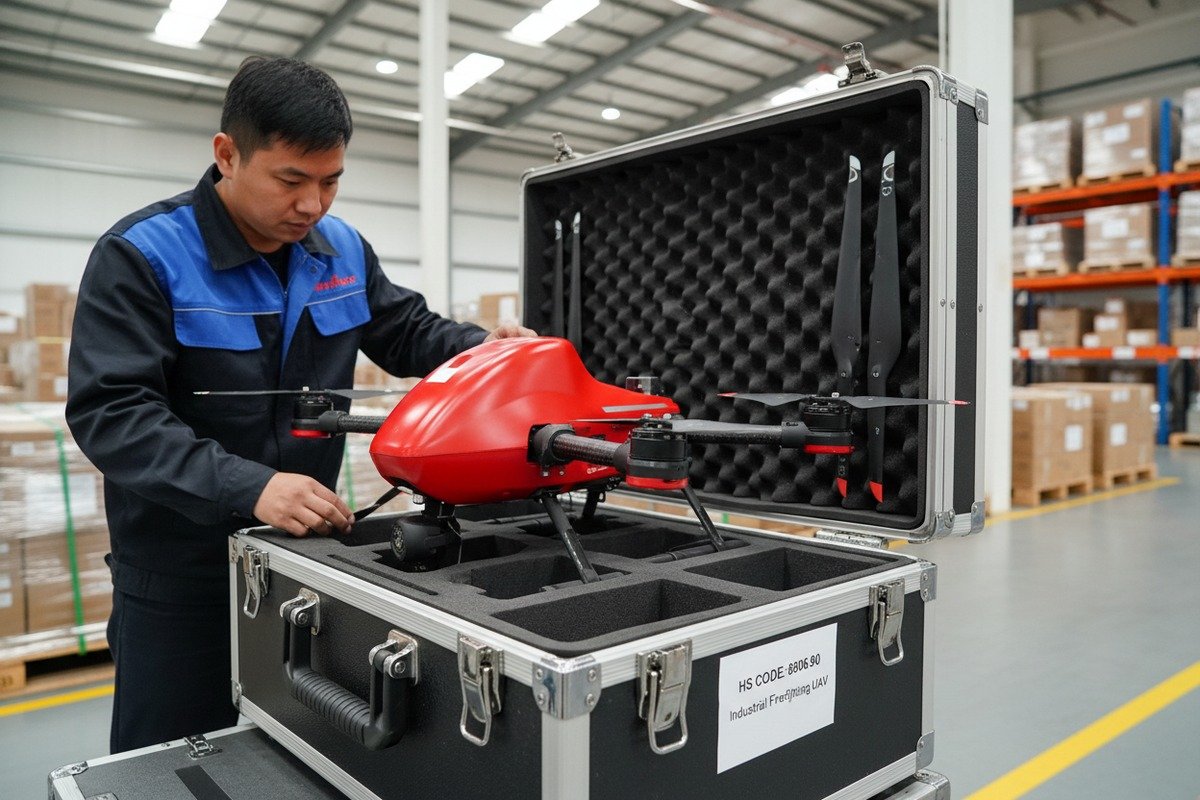
For firefighting drones, use HS code 8806 (unmanned aircraft and spacecraft) as your primary filter, supplemented by 8525 (cameras/transmission equipment) and 8424 (fire extinguishing equipment) for components. Combine HS codes with keyword searches for "firefighting," "fire suppression," or "emergency response" to isolate relevant records.
Primary HS Codes for Drone Products
El Harmonized System 7 classifies goods globally. Drones fall under several possible codes depending on their function and design.
| Código HS | Descripción | When to Use |
|---|---|---|
| 8806.10 | Unmanned aircraft with max takeoff weight ≤250g | Consumer mini drones |
| 8806.21 | Unmanned aircraft >250g but ≤7kg | Small industrial drones |
| 8806.22 | Unmanned aircraft >7kg but ≤25kg | Medium firefighting drones |
| 8806.23 | Unmanned aircraft >25kg but ≤150kg | Large payload firefighting drones |
| 8806.24 | Unmanned aircraft >150kg | Heavy-lift emergency response UAVs |
| 8806.90 | Parts for unmanned aircraft | Replacement components |
Our firefighting drones typically classify under 8806.22 or 8806.23. The weight includes the drone body plus maximum payload capacity.
Secondary Codes for Components
Firefighting drones include specialized equipment. These components sometimes ship separately and use different codes.
- 8525.80: Thermal cameras and video transmission gear
- 8424.10: Fire extinguishers and suppression systems
- 8526.91: Radio remote control apparatus
- 8501.10: Motors under 37.5W
- 8501.31: DC motors 37.5W to 750W
If you research a supplier's full capability, query all related codes. A manufacturer shipping complete drones plus spare motors and cameras shows integrated production.
Dealing with Classification Ambiguity
Here is where it gets tricky. Our customs broker sometimes debates classification with authorities. A firefighting drone could theoretically fall under:
- 8806: As an unmanned aircraft
- 8479: As a machine with specific function
- 8424: If the fire suppression payload dominates
Most countries now recognize 8806 as the primary drone code. But older records before 2017 might use 8802 (other aircraft) or 8479 (machines not elsewhere specified).
When searching historical data, run multiple queries. Use 8806 for 2017-present. Add 8802 and 8479 for pre-2017 records.
Keyword Combinations That Work
HS codes alone return all drones, including agriculture and photography units. Add keyword filters to isolate firefighting products.
Effective search terms include:
- Firefighting drone
- Fire suppression UAV
- Emergency response unmanned
- Aerial fire monitor
- Fire extinguishing aircraft
- Wildfire drone
Combine HS code 8806 with these keywords. The search returns only records with matching descriptions.
Can I judge a supplier's production capacity and reliability by analyzing their consistent monthly export frequency?
At our Xi'an headquarters, we track our own export data monthly. The pattern tells a story. Buyers can read that story to judge suppliers.
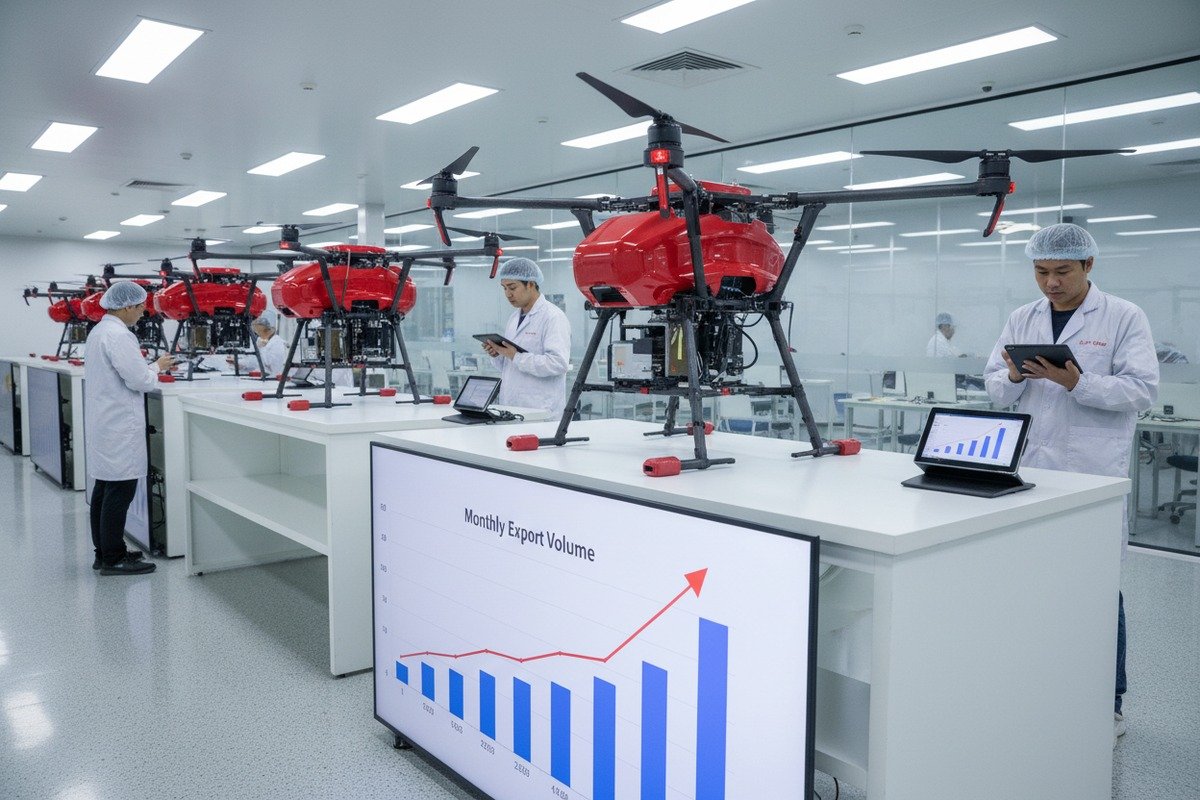
Yes, consistent monthly export frequency strongly indicates stable production capacity and reliability. Suppliers showing regular shipments of similar quantities over 12+ months likely have established manufacturing processes, quality control systems, and reliable supply chains, while erratic patterns suggest operational instability.
What Consistent Exports Reveal
When our production runs smoothly, we ship every month. Raw materials arrive on schedule. Workers follow established procedures. Quality checks pass. Shipments go out.
Look for these positive patterns in customs data:
- Monthly shipments: At least 8-10 months per year with exports
- Similar quantities: Unit counts within 20-30% variation
- Stable unit prices: Less than 15% price fluctuation
- Growing trends: Year-over-year increases show business health
Building a Supplier Scorecard
Create a simple scoring system from export data:
| Metric | Score 5 | Score 3 | Score 1 |
|---|---|---|---|
| Monthly frequency | 10-12 months active | 6-9 months active | <6 months active |
| Quantity consistency | <20% variation | 20-50% variation | >50% variation |
| Price stability | <10% change | 10-25% change | >25% change |
| Destination diversity | 5+ countries | 2-4 countries | 1 country |
| Year-over-year growth | >20% increase | 0-20% increase | Decline |
A supplier scoring 20-25 points demonstrates strong reliability. Below 15 points raises concerns.
Interpreting Export Gaps
Our factory once had a three-month export gap. A key battery supplier faced production issues. Buyers checking our records during that period would see the gap.
Common explanations for gaps include:
- Chinese New Year: January-February slowdowns are normal
- Supply chain disruptions: Component shortages affect everyone
- Seasonal demand: Some products peak in specific quarters
- Facility upgrades: Production pauses for improvement
One quarter missing is acceptable. Six months missing requires explanation. A full year missing suggests serious problems.
Calculating Production Capacity from Export Volume
Our monthly capacity is about 200 firefighting drones. Our export data reflects this. If customs records show a supplier exporting 500 units monthly but they claim 1000-unit capacity, skepticism is appropriate.
Use this rough formula:
- Claimed capacity should exceed maximum monthly exports by 30-50%
- Higher ratios suggest overclaimed capacity
- Lower ratios suggest they are at maximum output
If a supplier's records show maximum 50 units monthly but they promise 200 units for your order, ask hard questions. Either they have untapped capacity (verify with factory visit) or they are overpromising.
Triangulating with Other Data Points
Export frequency is one indicator. Combine it with:
- Factory certifications: ISO 9001 8 suggests process control
- Employee count: 50+ workers for serious manufacturing
- Years in business: 5+ years shows stability
- Customer references: Verify with actual buyers
Our 70-person team in Xi'an supports consistent production. A supplier with 10 employees claiming similar volumes may rely on outsourcing, which affects quality control.
Conclusión
Customs data transforms supplier evaluation from guesswork into evidence-based decisions. By accessing the right platforms, using correct HS codes, verifying historical records, and analyzing export patterns, you gain clarity on Chinese firefighting drone suppliers before committing to purchases.
Notas al pie
1. Explains the role of customs data in international trade classification and reporting. ↩︎
2. Provides a detailed explanation of Harmonized System codes and their use. ↩︎
3. Analysis of the causes and effects of supply chain disruptions on the global economy. ↩︎
4. Official website for China’s customs authority, providing official information and statistics. ↩︎
5. Official website of Tendata, a commercial platform for global import-export data. ↩︎
6. Explains the Harmonized System and its updates to include new products like drones. ↩︎
7. Official overview of the Harmonized System by the World Customs Organization. ↩︎
8. Official information on ISO 9001, the international standard for quality management systems. ↩︎

 English
  Spanish
  German
  French
  Dutch
Dutch  Arabic
