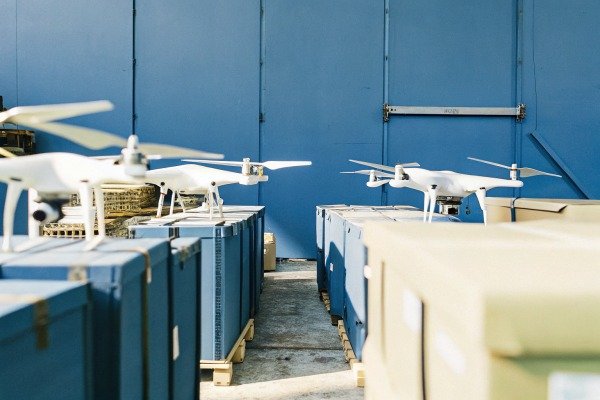
Seeing unsold units sit in your warehouse drains capital and increases stress Civil Aviation Law 1. At our factory in Xi’an, we know that stagnant inventory hurts both our distributors stagnant inventory 2 and our production planning.
To negotiate effective policies, define “slow-moving” metrics clearly, such as 180 days without sales, in your initial OEM agreement. Leverage your volume commitments to secure a tiered restocking fee structure between 10% and 25%, allowing you to rotate stagnant stock for credit towards newer, compliant models.
Let’s examine the specific contract terms that protect your investment.
What specific clauses should I include in my OEM agreement to cover slow-moving agricultural drone inventory?
Our legal department frequently reviews contracts that lack clear exit strategies for importers Ex Works 3. Without precise terms, you risk holding obsolete technology while regulations shift.
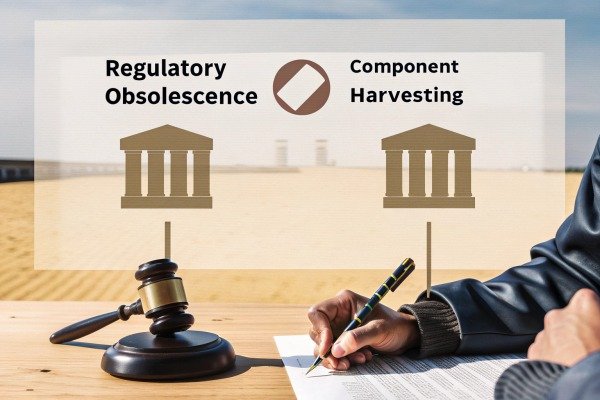
You must include a “Regulatory Obsolescence” clause that triggers return rights if FCC or CAAC rules change. Additionally, insert a “Component Harvesting” provision allowing you to strip high-value sensors from unsold airframes for local warranty use instead of shipping whole units back to China.

Defining the Terms of Engagement
When we sit down to finalize an OEM agreement, the most successful importers do not just talk about price; they talk about risk. As a manufacturer, I prefer clarity over disputes. The first step is to mathematically define "slow-moving" inventory. Do not leave this open to interpretation. We recommend a clause stating that any specific SKU with zero sell-through for 180 consecutive days qualifies for review.
The Regulatory Safety Net
The landscape is changing fast. With the FCC's potential ban on new foreign-made drones FCC 4 and China's upcoming Civil Aviation Law changes in July 2026, your inventory faces external risks. A standard return policy does not cover this. You need a specific "Regulatory Force Force Majeure 5 Majeure" or "Obsolescence" clause. This ensures that if a political decision renders your stock illegal to sell, you have a pre-agreed path to return or exchange it.
Critical Clauses for Your Contract
Below is a breakdown of the essential clauses you should propose during our negotiation phase.
H3 – Essential Inventory Protection Clauses
| Clause Name | Objetivo | Benefit to Importer |
|---|---|---|
| Component Harvesting | Allows local disassembly of unsold units. | Saves shipping costs; converts dead stock into valuable spare parts. |
| Price Protection | Credits you if the manufacturer lowers the price of the same model. | Protects your margin against factory price cuts on newer batches. |
| Firmware Re-flash | Permits changing regional software locks. | Enables resale of inventory to other non-restricted countries. |
| Sale-or-Return (SOR) | Consignment model for initial test batches. | Risks remains with the factory until the unit is actually sold. |
By including these specific terms, you shift the conversation from "asking for a favor" to executing a business agreement. It turns a potential conflict into a standard operating procedure.
How can I convince my Chinese supplier to agree to a stock rotation or buy-back policy?
We value stability in our production lines above almost anything else. If you can prove that a rotation policy helps maintain steady order volumes, we listen.
Convince suppliers by framing stock rotation as a tool for long-term partnership stability rather than a one-time refund. Offer to convert return credits into “Marketing Development Funds” (MDF) to subsidize aggressive local discounts, ensuring the manufacturer still moves units while you recover liquidity.
Understanding Manufacturer Motivation
To convince us, you must understand our pain points. Margins in hardware manufacturing are thinner than many realize. When you ask for a buy-back, we see a direct hit to our cash flow and a logistical headache. However, we also fear losing a reliable partner in key markets like the U.S. or Europe. The strategy here is to align your request with our need for future orders.
The "Future Order" Leverage
Do not ask for cash back. Instead, negotiate for a "Stock Rotation" plan credited against future orders. For example, for every $10,000 of new inventory you purchase, you earn the right to return $2,000 of old stock. This keeps our production line moving and ensures you are not stuck with old units. It proves you are committed to the long game.
Marketing Fund Conversion
Another effective tactic is the "Marketing Fund Conversion." Instead of shipping drones back to Chengdu—which incurs customs and freight costs for everyone—propose that we "buy back" the inventory on paper by giving you a credit to discount the product locally.
- Scenario: You have 10 unsold drones worth $5,000 total.
- Proposal: The factory gives you a $2,000 credit on your next order.
- Action: You use that margin to discount the 10 drones by $200 each to clear them out.
H3 – Negotiation Levers Comparison
| Negotiation Strategy | Manufacturer Resistance Level | Success Probability | Ideal para |
|---|---|---|---|
| Cash Buy-Back | Very High | Bajo | Defective batches only. |
| 1-for-1 Exchange | Alto | Medio | New product launches. |
| Credit for Future Orders | Medio | Alto | Seasonal stock rotation. |
| Marketing Fund Conversion | Bajo | Very High | End-of-life product clearance. |
This approach allows us to keep the revenue recognized while helping you clear your warehouse. It is a win-win that smart importers use often.
Can I negotiate to exchange unsold drones for spare parts or credit towards future orders?
Our engineers often see returned drones that are perfectly functional but simply outdated. We would much rather see you convert these into useful assets than scrap them.
Yes, you can negotiate a “Spare Parts Credit” system where you locally disassemble slow-moving drones. The value of the flight controller, motors, and spraying systems is then credited to your account flight controller 6 for purchasing high-demand maintenance parts, avoiding expensive return shipping.

The Hidden Value in Dead Stock
An unsold agricultural drone is essentially a collection of high-value spare parts assembled in a specific way. If the complete unit is not selling, the parts likely still are. Agricultural drones take a beating; end-users constantly need propellers, motors, ESCs, and nozzles. We often encourage distributors to view their slow-moving inventory as a "parts warehouse."
Structuring the Exchange
Negotiating a "Whole-for-Parts" swap is often easier than a "Whole-for-Whole" swap. Shipping a large drone with a 30L tank back to China is a logistical nightmare involving hazardous goods declarations hazardous goods declarations 7 (if batteries are included) hazardous goods declarations 8 and volume weight charges.
Instead, propose a Remote Decommissioning Protocol:
- Verification: You send us video proof of the unsold units and their serial numbers.
- Destruction/Harvesting: You strip the valuable electronics (flight controllers, pumps, radars). You destroy the frame or sell it as scrap locally.
- Credit: We issue a credit note for the value of the harvested parts, which you use to buy fast-moving consumables like nozzles or batteries.
Managing Technology Gaps
This strategy is particularly effective given the rapid pace of drone tech. A 2024 frame might be obsolete by 2026, but the brushless motors or the RTK module might still be compatible RTK module 9 with the new generation.
H3 – Component Value Retention Table
| Drone Component | Retained Value over 12 Months | Re-usability in New Models | Recommended Action |
|---|---|---|---|
| Controlador de vuelo | High (80-90%) | Alto | Harvest and keep as spare. |
| Motors/ESCs | Medium (60-70%) | Medio | Harvest for repair stock. |
| Frame/Chassis | Low (20-30%) | Bajo | Recycle locally. |
| Baterías | Depreciates Rapidly | High (if maintained) | Sell immediately at discount. |
By focusing on parts, you solve two problems: you clear space in your warehouse, and you stock up on the repair parts your customers actually call you for.
Who covers the shipping and customs fees if I need to return slow-moving stock to the factory?
Our logistics team deals with import/export regulations daily. The harsh reality is that returning goods to China is often more expensive and complex than the original export.
Typically, the importer bears return shipping and insurance costs. However, you can negotiate “FOB Destination” terms for returns caused by regulatory failures, or agree to a split-cost model where the supplier covers re-import duties into China while you handle the outbound freight.
The Sunk Cost Trap
When you import our drones, you pay shipping, insurance, US tariffs, and merchandise processing fees. If you return the goods, those import duties are often non-recoverable "sunk costs" unless you go through a complex "Duty Drawback Duty Drawback 10" process with US Customs, which can take years. Furthermore, shipping goods back into China is difficult. Chinese customs imposes strict taxes on "returned goods" unless we can prove they are defective.
Allocating the Costs
In a standard OEM agreement, the default position is Ex Works (EXW) for returns: you pay for everything until it hits our factory floor. This can wipe out the value of the return.
To protect yourself, you must negotiate exceptions:
- Defective vs. Slow-Moving: If the return is due to a quality issue, we should pay. If it is just slow sales, you usually pay.
- Regulatory Triggers: If the FCC bans the device, argue that this is a fundamental fitness-for-purpose failure. Negotiate a 50/50 split on logistics costs in this specific scenario.
The "Regional Re-export" Alternative
Because return shipping is so costly, we often suggest Regional Re-export. Instead of shipping the drones back to China, we grant you the right to sell the inventory to another one of our distributors in a different country (e.g., Brazil or Canada) where the regulations or market demands might be different.
We can facilitate this by:
- Providing the contact information of other distributors.
- Authorizing a Firmware Re-flash to ensure the drones work in the new region.
- Waiving any territorial breach penalties.
This usually costs significantly less than ocean freight back to Asia and keeps the goods moving forward in the supply chain, not backward.
Conclusión
Negotiating return policies for agricultural drones requires foresight, not just reaction. By defining "slow-moving" terms early, leveraging your purchasing power for stock rotation, and utilizing creative solutions like component harvesting, you protect your capital. As regulations tighten in both the US and China, these contract clauses become your safety net.
Notas al pie
1. Background on the specific Chinese regulation authority. ↩︎
2. Definition of the specific inventory risk mentioned. ↩︎
3. Official source for Incoterms definitions, including Ex Works (EXW) and FOB. ↩︎
4. Official website of the regulatory body mentioned. ↩︎
5. Legal definition of the contract clause suggested. ↩︎
6. General background on the hardware and software that manages drone flight stability. ↩︎
7. Overview of regulations and documentation required for shipping hazardous materials like lithium batteries. ↩︎
8. Industry standards for shipping batteries by air. ↩︎
9. Technical explanation of the high-value component mentioned. ↩︎
10. Official US Customs guidance on the refund process. ↩︎

 English
  Spanish
  German
  French
  Dutch
Dutch  Arabic
