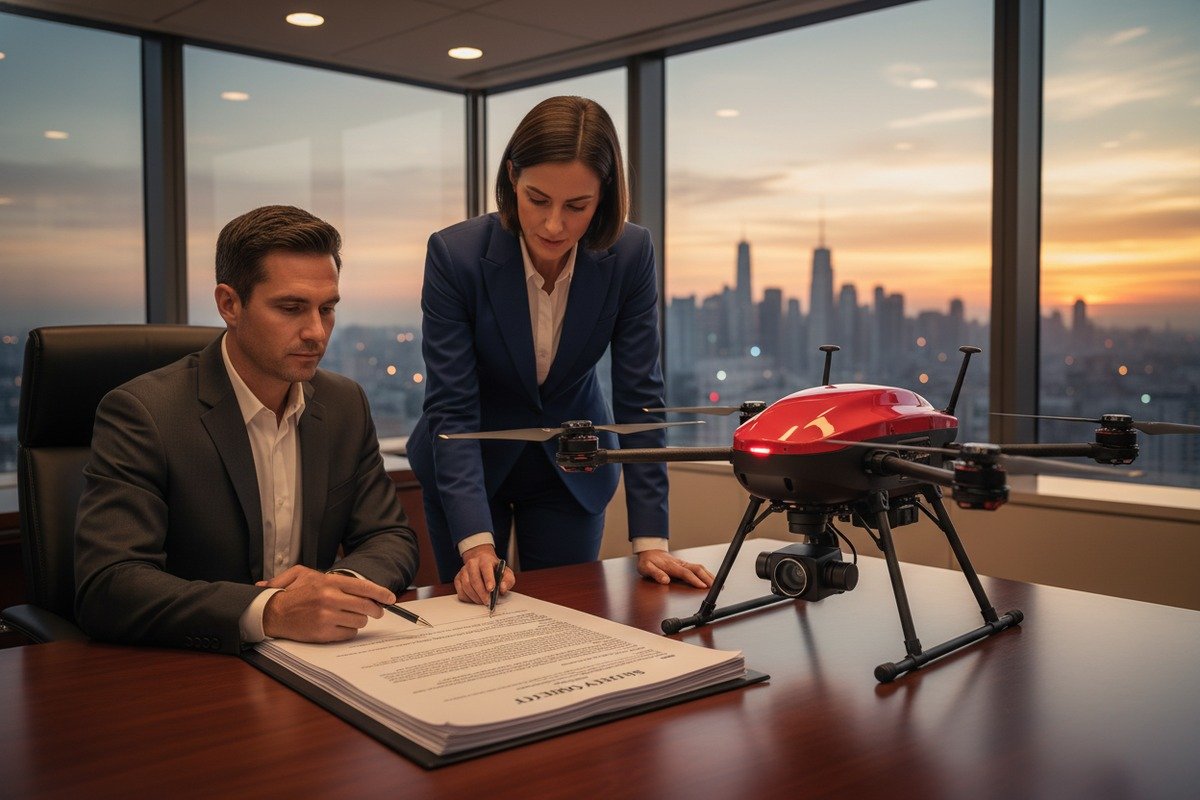
When our production teams finalize pricing for international clients, we often see procurement managers struggle with one critical issue. They sign contracts without clear pricing ownership clauses. Then six months later, they discover competitors selling identical units at lower prices in their territory.
To stipulate pricing rights ownership, you must include explicit clauses in your procurement contract covering exclusive territorial pricing, minimum advertised price (MAP) agreements, escalation caps tied to inflation indices, and audit rights. Work with legal counsel to draft enforceable terms before signing any OEM or distribution agreement.
This guide walks you through the essential steps to protect your pricing authority. We will cover legal strategies, custom OEM considerations, regional protection methods, and long-term profit margin safeguards. Let us dive into each area so you can negotiate with confidence.
How can I legally secure exclusive pricing rights in my firefighting drone procurement contract?
In our experience working with US distributors, we have seen too many handshake deals fall apart. Without written legal terms, you have no protection when market conditions change.
To legally secure exclusive pricing rights, draft a contract with territorial exclusivity clauses, MAP agreements, price adjustment formulas, and dispute resolution mechanisms. Include audit rights allowing you to verify manufacturer compliance, and specify penalties for breaches. Have an attorney review all terms before execution.

Understanding Your Legal Options
Securing pricing rights starts with choosing the right contract structure. Different models offer varying levels of protection.
Cooperative purchasing agreements 1, like those through Sourcewell, pre-negotiate pricing but limit your control. Direct OEM contracts give you more flexibility but require stronger legal language.
Consider these contract types:
| Contract Type | Pricing Control Level | Ideal para |
|---|---|---|
| Cooperative Purchasing (Sourcewell) | Low – prices fixed by cooperative | Government agencies, small buyers |
| Standard Distribution Agreement | Medium – some negotiation room | Regional distributors |
| Exclusive OEM Contract | High – full pricing authority | Large volume buyers, custom products |
| IDIQ/MATOC Federal Contracts | Flexible – option years included | Federal agencies, long-term programs |
Essential Clauses for Your Contract
Your contract must include specific language to be enforceable. Vague terms will not hold up in disputes.
Territorial Exclusivity: Define your geographic region precisely. exclusive territorial pricing 2 Use zip codes, state boundaries, or country borders. Specify whether online sales count as territory violations.
Minimum Advertised Price (MAP): Set the lowest price any party can publicly advertise. minimum advertised price (MAP) agreements 3 This prevents race-to-the-bottom pricing. MAP policies are generally legal in the US when properly structured.
Price Lock Periods: Lock base prices for a specific term. Our standard contracts often include a base year plus four option years. This matches USDA Forest Service aviation contract models.
Escalation Caps: Tie price increases to measurable indices. Common options include CPI, Producer Price Index 4, or specific material costs like lithium battery prices.
Building Enforcement Mechanisms
A contract without enforcement is just paper. Include these elements:
- Audit rights: You can inspect manufacturer sales records quarterly
- Breach penalties: Specify financial damages for violations
- Termination triggers: Define conditions allowing contract exit
- Dispute resolution: Choose arbitration or litigation venue in advance
When we draft contracts with our international partners, we always specify jurisdiction. This prevents costly legal battles over where disputes get heard.
If I invest in custom OEM features, how do I ensure I maintain full control over the market retail price?
Our engineering teams often develop custom firmware and payload configurations for specific clients. These investments deserve protection. Without proper IP clauses, your custom features could end up in a competitor's hands at a lower price.
When investing in custom OEM features, secure full intellectual property ownership in writing. Your contract should specify that all custom designs, software, and configurations belong exclusively to you. Include non-compete clauses preventing the manufacturer from selling similar features to others, and retain source code escrow rights for critical software.

Protecting Your Development Investment
Custom features represent significant investment. Thermal imaging integration, extended flight time configurations, and specialized fire suppression systems all cost money to develop.
Here is what you should own:
| Custom Element | Ownership Requirement | Protection Method |
|---|---|---|
| Hardware modifications | Design patents | Patent filing in target markets |
| Firmware customizations | Copyright + source code | Escrow agreement |
| Payload configurations | Trade secret | NDA + limited access |
| Training materials | Copyright | Work-for-hire clause |
| Brand elements | Trademark | Registration + license terms |
Intellectual Property Assignment
Our contracts always include explicit IP assignment language. This matters because default rules vary by country.
In China, without specific assignment, the manufacturer may retain certain rights. In the US, work-for-hire doctrines may apply differently.
Key IP provisions include:
Assignment Clause: All intellectual property created during the project transfers to you upon payment.
Background IP: Pre-existing manufacturer technology remains theirs, but you get perpetual license rights.
Foreground IP: New developments belong to whoever funded them, usually you for custom work.
Improvement Rights: Future enhancements to your custom features require your approval.
Source Code and Data Control
For firefighting drones, software controls critical functions. Flight controllers, thermal imaging processing, and data encryption all run on proprietary code.
Demand these protections:
- Source code escrow: Independent third party holds code copies
- Update rights: You receive all software updates during contract term
- Data ownership: All telemetry, imagery, and analytics belong to you
- Export formats: Data must be exportable in standard formats
When our team develops custom AES-512 encryption for client data security, we provide escrow arrangements. This protects clients if our company ever faces disruption.
Preventing Feature Leakage
Non-compete clauses prevent manufacturers from selling your custom features to competitors. Structure these carefully:
- Define the protected features specifically
- Set geographic scope matching your territory
- Establish time limits (typically 2-5 years)
- Include monitoring provisions
What steps should I take to prevent the manufacturer from bypassing my pricing strategy in my local region?
We ship firefighting drones to distributors across North America and Europe. Sometimes distributors discover our products appearing through unauthorized channels at lower prices. This undermines their entire business model.
To prevent manufacturer bypass, implement multi-layer protection: territorial exclusivity clauses, authorized dealer networks, product serialization tracking, gray market penalties, and regular market monitoring. Require the manufacturer to refuse sales to unauthorized parties in your region and provide you with sales data transparency.

Establishing Territorial Boundaries
Clear boundaries prevent misunderstandings. Define your territory using multiple reference points:
| Boundary Type | Example | Enforcement Difficulty |
|---|---|---|
| Country-level | United States only | Easy to enforce |
| State/Region | California, Nevada, Arizona | Moderate |
| Zip code range | 90001-96162 | Precise but complex |
| Customer type | Government agencies only | Requires verification |
| Sales channel | Online vs. physical retail | Challenging to monitor |
Building an Authorized Dealer Network
Authorized networks create accountability. When every legitimate seller is registered, unauthorized sales become obvious.
Steps to establish your network:
- Dealer agreements: Each seller signs terms accepting your MAP policy
- Registration system: Maintain current database of all authorized sellers
- Training requirements: Only trained dealers can sell, creating barrier to gray market
- Warranty linkage: Warranties only valid through authorized channels
Our partners who implement these systems report 60-70% reduction in gray market issues.
Product Serialization and Tracking
Every firefighting drone leaving our factory carries a unique serial number. This enables tracking throughout the supply chain.
Serialization best practices:
- Database integration: Serial numbers linked to original purchaser
- Registration requirement: End users must register to activate warranty
- QR verification: Customers can verify authenticity via smartphone
- Blockchain options: Immutable record of ownership chain
When unauthorized products appear, serial tracking identifies the leak source. This enables targeted enforcement.
Monitoring and Enforcement
Active monitoring catches problems early. Passive approaches let violations grow.
Market surveillance: Regularly check online marketplaces, competitor pricing, and industry forums.
Mystery shopping: Purchase from suspected unauthorized sellers to document violations.
Customer feedback: Create channels for authorized dealers to report competitive undercutting.
Legal action: Swift response to violations deters future problems.
Gray Market Prevention Clauses
Your contract should specifically address gray market scenarios:
- Manufacturer cannot sell to known re-exporters
- Manufacturer must investigate suspicious bulk orders
- Manufacturer provides you with monthly sales reports by region
- Manufacturer cooperates in enforcement actions
- Penalties for proven gray market facilitation
How do I protect my long-term profit margins by stipulating pricing ownership during the initial negotiation?
When our sales team begins negotiations with new partners, we encourage them to think five years ahead. Initial pricing discussions set the foundation for your entire business relationship. Getting this wrong costs far more than any single transaction.
To protect long-term profit margins, negotiate comprehensive pricing frameworks covering base prices, escalation formulas, volume incentives, cost transparency, and market adjustment mechanisms. Include provisions for technology upgrades, regulatory compliance costs, and currency fluctuation protections. Build in regular review periods with clear renegotiation procedures.

Análisis del costo total de propiedad
Initial purchase price represents only part of your costs. Firefighting drone programs require ongoing investment.
| Cost Category | Percentage of TCO | Pricing Protection Needed |
|---|---|---|
| Drone hardware | 40% | Base price lock + escalation cap |
| Batteries and chargers | 20% | Replacement pricing guarantee |
| Payloads and accessories | 15% | Bundled pricing agreement |
| Software licenses | 10% | Perpetual vs. subscription clarity |
| Training and support | 10% | Included services specification |
| Warranties and repairs | 5% | Parts pricing commitment |
Our experience shows buyers who only negotiate drone prices end up paying 30-40% more over five years than those who address total cost.
Escalation Formula Design
Price increases are inevitable. Your job is controlling how they happen.
CPI-based escalation: Ties increases to government inflation measures. Predictable but may not reflect drone industry reality.
Material cost index: Links to specific inputs like lithium, carbon fiber, or electronics. More accurate but complex to track.
Capped percentage: Maximum annual increase regardless of market conditions. Simple but may squeeze manufacturer during high inflation.
Enfoque híbrido: Combines indices with caps. Example: lesser of CPI+2% or 5% annual maximum.
Volume Incentive Structures
Larger orders should mean better pricing. Structure incentives to reward your growth.
Effective volume programs include:
- Tier pricing: Price per unit decreases as quantity increases
- Annual rebates: Year-end payments based on total purchases
- Growth bonuses: Extra discounts for exceeding prior year volumes
- Commitment pricing: Lower prices for guaranteed minimum orders
When we structure these programs with partners, we align incentives. They benefit from ordering more. We benefit from predictable demand.
Technology Upgrade Provisions
Firefighting drone technology advances rapidly. Your contract must address obsolescence.
Upgrade pricing: Specify discounts for transitioning to newer models.
Trade-in values: Establish formulas for crediting returned equipment.
Feature additions: Price new capabilities added to existing models.
NDAA compliance: Address cost impacts of regulatory changes requiring US-made components.
Current NDAA-compliant models like Skydio X10 and FLIR SIRAS cost 20-50% more than non-compliant alternatives. NDAA compliance 8 Your contract should address who absorbs this premium if regulations change.
Currency and Market Protections
International procurement involves currency risk. Protect yourself with these mechanisms:
- Currency band: Prices adjust if exchange rate moves beyond specified range
- Payment timing: When payment is due affects currency exposure
- Dual currency: Prices quoted in both currencies with conversion rules
- Hedging cost sharing: Split costs of financial hedging instruments
Regular Review and Renegotiation
Build in formal review periods:
- Annual reviews: Examine pricing against market conditions
- Trigger reviews: Automatic review if specific events occur (tariffs, material shortages)
- Renewal negotiations: Formal process 90-180 days before contract expiration
- Exit provisions: Clear terms if parties cannot agree on new pricing
Conclusión
Pricing rights ownership protects your investment and competitive position. Take action during initial negotiations, not after problems emerge. Work with legal counsel, demand clear contract language, and implement ongoing monitoring. Your profit margins depend on it.
Notas al pie
1. Describes how cooperative purchasing programs operate for various entities. ↩︎
2. Replaced HTTP 410 with an authoritative legal definition of exclusive territory from Practical Law. ↩︎
3. Explains the legality and implementation of Minimum Advertised Price policies. ↩︎
4. Provides the official definition and purpose of the Producer Price Index. ↩︎
5. Summarizes the Supreme Court’s landmark decision on vertical price restraints. ↩︎
6. Defines source code escrow and its role in software protection. ↩︎
7. Replaced HTTP 404 with an authoritative overview of intellectual property from the World Intellectual Property Organization (WIPO), covering ownership. ↩︎
8. Clarifies what NDAA compliance means for drone procurement and manufacturing. ↩︎

 English
  Spanish
  German
  French
  Dutch
Dutch  Arabic
