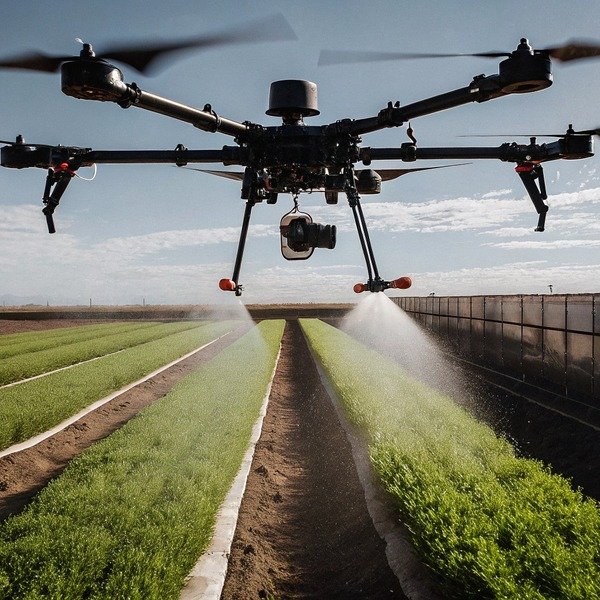
Drift during spraying operations can ruin crops Drift during spraying operations 1 and waste expensive chemicals. At our testing facility, we spend months tuning flight algorithms to ensure our drones fly straight, even when the wind fights back.
To test flight stability in strong winds, you must progressively fly straight lines, hovers, and orbital patterns at wind speeds increasing from 2 m/s to 6 m/s. Measure altitude consistency using RTK data and verify that horizontal drift remains within 0.5 meters while the drone carries its full rated payload.
Here are the specific methods we use to validate wind resistance before a unit leaves our factory.
What specific flight maneuvers should I execute to verify stability in crosswinds?
In our experience testing prototypes near Chengdu, static hovering is deceptive and hides flaws. You must force the drone to move dynamically against the wind to reveal its true handling characteristics.
Execute stationary hovers for 60 seconds, followed by high-speed straight-line passes perpendicular to the wind. You should also perform orbital circles and precision landings to verify that the drone compensates for the crab angle crab angle 2 without deviating from its intended GPS path.

Testing agricultural drones requires more than just seeing if they stay in the air. We design our tests to mimic the hardest work days a farmer faces. The wind does not always blow from the front. It shifts and gusts. To truly trust your equipment, you need to fly specific patterns that stress the navigation system.
The Crosswind Sprint
Flying straight into the wind is easy for most drones. The real challenge is flying sideways to the wind, or "crosswind." When you fly a straight line perpendicular to the wind direction, the drone must lean into the wind to stay on course. This is called the "crab angle."
If the flight controller is not tuned well, you will see the drone drift downwind flight controller 3, forming a curved line drift downwind 4 instead of a straight one. We run this test at different speeds—2 m/s, 4 m/s, and 6 m/s. We look for a straight spray path. If the nozzle angle changes too much because the drone is leaning, the spray width becomes uneven. This test confirms that the drone can spray a straight row even when the wind pushes from the side.
Orbital Precision Checks
The orbital test is one of the toughest maneuvers. You command the drone to fly a perfect circle around a center point. As the drone circles, the wind angle changes constantly—headwind, crosswind, tailwind, and back to crosswind.
During this 360-degree turn, the motors must adjust strictly and instantly. If you see the circle become an oval or an egg shape, the stability is poor. This maneuver proves that the drone can handle shifting wind directions without losing its position.
Vertical Hold and Descent
Many people forget to test vertical stability. In strong winds, air pressure changes can confuse the barometer. We hover the drone at 5 meters for one full minute. We measure how much it bobs up and down.
We also test a fast descent. If you come down too fast in the wind, the drone can enter its own "downwash." This makes it wobble dangerously. We test descent speeds to find the safe limit where the drone remains stable and lands within 0.5 meters of the target.
Maneuver Checklist
| Flight Maneuver | Wind Condition | Success Criteria |
|---|---|---|
| Stationary Hover | Gusting (Variable) | Position drift < 0.5m; Altitude change < 0.2m |
| Crosswind Sprint | 90° Crosswind | Path deviation < 0.5m; Consistent speed |
| Orbital Circle | All angles | Perfect circular path; No "egg" shaping |
| Fast Descent | High Wind | Smooth drop; No wobbling or loss of lift |
How does a full liquid payload affect my drone's performance during wind resistance tests?
We frequently remind our US clients that water acts differently than solid weight like a camera. Liquid sloshing creates unpredictable momentum shifts that challenge even the best flight controllers.
A full liquid payload significantly increases inertia and introduces sloshing effects that destabilize the center of gravity. You must test with a filled tank to ensure the propulsion system has enough torque overhead to counteract these dynamic mass shifts while fighting strong wind resistance.
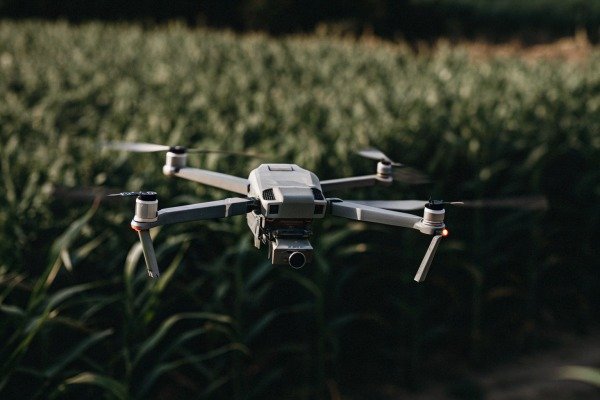
You cannot validate an agricultural drone with an empty tank. It is physically impossible to get accurate results. When we develop our SkyRover series, we spend weeks analyzing the physics of liquid movement. The liquid inside the tank is a "live" load. It moves independently of the drone frame.
The Physics of Liquid Sloshing
When a drone stops suddenly in the wind, the frame stops, but the liquid inside keeps moving forward. This hits the front of the tank wall. This impact pushes the drone nose-down just when it tries to level out. In strong winds, this can cause the drone to over-correct.
If the wind pushes the drone backward and the liquid sloshes forward, the flight controller receives conflicting data. It might think the drone is tilting more than it actually is. This leads to oscillation, where the drone rocks back and forth aggressively. We test with tanks at 100%, 50%, and 25% capacity. Surprisingly, a half-full tank often creates more sloshing instability than a full one sloshing instability 5 because the liquid has more room to move.
Inertia and Stopping Distance
A heavy drone fights wind better than a light one because it has more mass. However, once a heavy drone starts drifting, it is much harder to stop. We call this inertia.
In our tests, we measure the "braking distance." When flying at 6 m/s with a full payload, if a gust hits, the motors must work very hard to hold position. We verify that the drone does not drift into the next crop row. If the drone is too heavy for its motors, the wind will push it off course regardless of the GPS data.
Power System Response
Carrying a full load in high wind puts maximum stress on the motors. The drone needs power to lift the weight and extra power to fight the wind. If the payload is too heavy, the motors might run at 90% or 95% capacity just to hover. This leaves no room for "attitude correction."
If a gust hits, the motor needs to speed up to fight it. If the motor is already maxed out lifting the heavy liquid, it cannot speed up any further. The drone will then flip or drift. Testing with a full payload confirms you have enough "thrust overhead" for safety safety precautions 6.
Payload Impact Analysis
| Payload State | Flight Characteristic | Risk Factor in Wind |
|---|---|---|
| Empty Tank | High responsiveness, light weight | Easily blown around by gusts; Jittery movement |
| 50% Full Tank | Moderate weight, high fluid movement | Highest Instability; Excessive sloshing causes rocking |
| 100% Full Tank | High inertia, max weight | Motor saturation; Long braking distance; Hard to stop drift |
Which telemetry data should I analyze to confirm the flight controller is handling gusts effectively?
When we analyze black box data from our test flights, we look deeper than just the GPS path on a map. The motor outputs and sensor variances tell the real story of stability.
You should analyze the Root Mean Square Error (RMSE) for altitude and position to quantify drift. Additionally, monitor motor Pulse Pulse Width Modulation 7 Width Modulation (PWM) levels to ensure they do not exceed 85% saturation, and check pitch/roll angle deviations to verify the gimbal remains level.
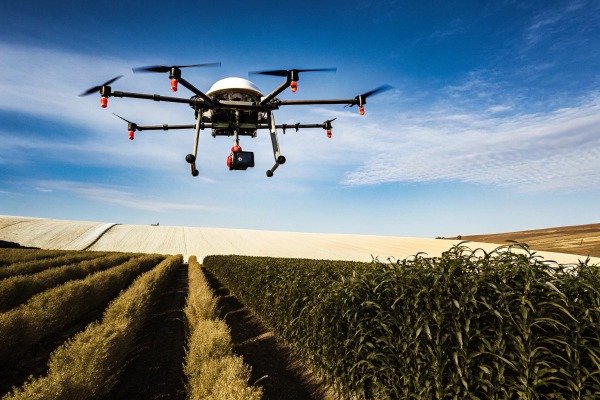
Watching the drone with your eyes is subjective. You might think it looks stable, but the data might show the motors are screaming for help. We rely on hard numbers to approve a design. We use ground station software to record every millisecond of the flight.
Understanding RMSE Values
RMSE stands for Root Mean Square Error RMSE stands for Root Mean Square Error 8. It is a mathematical way to measure how far the drone is from where it thinks it is.
- Horizontal RMSE: If the flight plan says "Fly along this line," the RMSE measures the average distance the drone strayed from that line. In standard wind conditions (Level 4 wind), we look for an RMSE of less than 0.3 meters.
- Vertical RMSE: This measures altitude holding. Spraying requires exact height. If the drone floats up and down by 1 meter, the spray coverage changes. We want this value extremely low, typically under 0.2 meters.
Motor PWM and Saturation
PWM (Pulse Width Modulation) tells us how hard PWM (Pulse Width Modulation) 9 the motors are working. It is usually a percentage from 0% to 100%.
In a hover with no wind, the motors should operate at around 50-60%.
In strong winds, the motors must speed up and slow down rapidly to keep the drone level.
If we see the PWM hitting 95% or 100% (saturation) during wind gusts, it is a fail. It means the drone has no power left to give. If a stronger gust hits at that moment, the drone will crash. We want to see peaks no higher than 85%, ensuring there is always a safety buffer.
Vibration and IMU Noise
Wind causes the frame to vibrate. High-frequency vibration can confuse the IMU (Inertial Measurement Unit). The IMU tells the drone which way is "down."
We analyze the raw vibration logs. If the wind causes the arms to shake too much, the IMU data gets noisy. This leads to "toilet bowling," where the drone swirls around in a circle. We check that the vibration dampening is working correctly even when the air is turbulent.
Key Data Metrics Table
| Metric | Acceptable Range | What Failure Looks Like |
|---|---|---|
| Horizontal RMSE | < 0.5 meters | Drone drifts into adjacent crop rows. |
| Vertical RMSE | < 0.2 meters | Uneven spray application; Tip collisions. |
| Motor PWM | < 85% Peak | Loss of control; Unable to fight gusts. |
| Roll/Pitch Angle | Smooth Oscillations | Sharp spikes; Jerky movement visible in video. |
| GPS Satellites | > 12 Locked | Sudden position jumps; Toilet bowl effect. |
What are the safety precautions I must take when testing heavy drones in turbulent weather?
Our safety protocols are strict because heavy agricultural drones become dangerous projectiles in gusts. We never skip pre-flight checks or emergency planning when the weather turns rough.
Ensure you have a clear emergency landing zone and verify that the Return-to-Home (RTH) altitude is set above all obstacles. You must also monitor real-time battery voltage sag, as high winds drain power faster, and keep a manual override ready for immediate intervention.
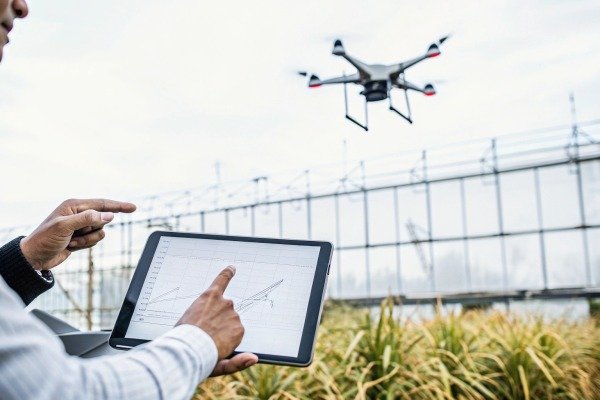
Testing in wind is necessary, but it is also risky. A 50kg drone flying at 10 meters per second has massive kinetic energy. If the wind overpowers the motors, you need a plan. At our test fields, safety is not just a rule; it is part of the engineering process.
Establishing the Safety Perimeter
You cannot test in a small backyard. You need a large buffer zone. We calculate the "drift radius." If the motors fail completely, how far will the wind carry the drone before it hits the ground?
If the wind is 10 m/s and you are flying at 20 meters altitude, the drone could drift 50 meters or more while falling.
We ensure that downwind of the flight path, there are no people, roads, or power lines for at least 100 meters. We also set a "geo-fence." If the drone breaks this invisible fence, the motors cut off automatically to prevent a flyaway.
Battery Sag and Voltage Management
Wind kills batteries. Fighting turbulence requires constant acceleration and deceleration. This draws huge spikes of current current spikes cause "voltage sag" 10.
These current spikes cause "voltage sag." The battery voltage might drop momentarily below the safety cutoff, triggering a forced landing.
- The Risk: The drone thinks the battery is empty (even if it is 40% full) and initiates an auto-landing. In high wind, an auto-landing is dangerous because the drone has limited control authority.
- The Precaution: We fly with higher voltage margins. If we normally land at 15%, in high wind tests, we land at 30%. We monitor individual cell voltages to ensure one weak cell doesn't cause a crash.
Structural Integrity Checks
After every wind test flight, we inspect the hardware. High winds create high-frequency vibrations and stress on the arm joints.
We check for:
- Micro-cracks in carbon fiber: Especially near the motor mounts.
- Loose Screws: Vibrations act like a screwdriver, loosening fasteners.
- Folding Mechanisms: The locking sleeves on folding arms take the brunt of the twisting force. We check for any play or wiggle.
Emergency Response Plan
The pilot must be ready to switch to "Manual Mode" (or Attitude Mode) instantly. In GPS mode, the drone tries to fight the wind to stay in one spot. If the sensors get confused, it might fight the wrong way and speed off.
Switching to Manual Mode turns off the GPS positioning. The drone will drift with the wind, but it stops fighting itself. This usually levels the drone and allows the pilot to gently guide it down. We drill this reaction until it is muscle memory.
Conclusión
Testing flight stability in strong winds is the only way to guarantee your agricultural drone will perform when it matters. By rigorously testing maneuvers, analyzing payload physics, monitoring deep telemetry data, and adhering to strict safety protocols, you protect your investment and ensure precise crop protection. Reliable equipment is built on the foundation of difficult testing.
Notas al pie
1. Official government guidelines on pesticide drift regulations and environmental impact. ↩︎
2. General background on the crab angle concept used in aviation to compensate for crosswinds. ↩︎
3. IEEE technical paper on flight controller tuning for multi-rotor stability in wind. ↩︎
4. Aviation safety resource explaining aerodynamic effects of crosswind on flight paths. ↩︎
5. General physics overview of liquid dynamics and movement within containers. ↩︎
6. Official safety guidelines for drone operations from the UK Civil Aviation Authority. ↩︎
7. Technical explanation of Pulse Width Modulation used to control motor speed in drones. ↩︎
8. Technical definition of the statistical metric used to measure accuracy. ↩︎
9. Industry explanation of the control signal method used for motor speed. ↩︎
10. Industry definition of power quality anomalies affecting electrical equipment. ↩︎

 English
  Spanish
  German
  French
  Dutch
Dutch  Arabic
