
When we run thermal stress simulations on our flight controllers flight controllers 1 thermal stress simulations 2 in Xi’an, we see clearly how catastrophic a minor engineering oversight can be. Yet, many buyers we meet focus solely on price, ignoring the financial devastation a design-based recall can cause.
To stipulate recall liability effectively, define design defects as inherent engineering flaws distinct from manufacturing errors, mandate full indemnification for third-party damages, and require the supplier to cover all recall costs including logistics and legal fees FAA 3. Ensure these terms are backed by valid product liability insurance.
Here are the specific contract clauses and strategies you need to implement to protect your business.
How do I clearly distinguish between design defects and manufacturing errors in the contract terms?
In our experience developing the SkyRover line, disputes often arise when a product matches the prototype but fails in the field. We advise partners to look beyond the physical unit and focus on the engineering intent behind it.
Contracts must explicitly differentiate between manufacturing defects, which are deviations from the agreed specifications, and design defects, which are flaws inherent to the engineering architecture. This distinction prevents suppliers from avoiding liability by claiming the product matched the approved “Golden Sample” despite underlying safety failures.

When importing complex machinery like a large quadcopter for firefighting, the line between "built wrong" and "designed wrong" is often blurred. If your contract does not separate these, you face a significant risk. In China, if a buyer signs off on a "Golden Sample" Golden Sample 4 (a pre-production prototype), courts often view this as the buyer accepting the design. If the mass-produced units match that sample, the supplier might argue they are not liable for defects, even if the drone falls out of the sky due to overheating.
The Golden Sample Trap
To avoid this, your contract must state that approval of a sample is for workmanship only, not for engineering validity. You must define a Manufacturing Defect as a failure to meet the agreed-upon Bill of Materials (BOM) or assembly standards. Conversely, a Design Defect must be defined as an error in the specifications, software logic, or material selection that renders the product unsafe, regardless of how well it was assembled.
Implementing a BOM Lock
We also recommend including a "BOM Lock" clause. In the electronics supply chain, it is common to swap components like capacitors or sensors based on availability. However, a cheaper sensor might alter the safety profile of a firefighting drone. The contract should categorize any unauthorized substitution of critical components as a fundamental design breach. This ensures the supplier cannot silently change the "recipe" of your drone.
Contractual Definitions Table
Use the following framework to define these terms in your agreement:
| Defect Category | Definition in Contract | Supplier Defense Limitation |
|---|---|---|
| Manufacturing Defect | The product deviates from the approved Golden Sample, BOM, or quality control standards (e.g., bad soldering, wrong screw torque). | Supplier cannot claim "industry standard" if it deviates from specific buyer specs. |
| Design Defect | The product meets specifications but fails due to inherent engineering flaws (e.g., insufficient battery cooling, unstable flight code). | Supplier cannot use "Buyer Approval of Sample" as a defense against safety failures. |
| Regulatory Defect | The design fails to meet destination standards (e.g., FAA Part 107, UL 268) regardless of physical function. | Compliance is a strict condition of sale; ignorance of foreign law is not a defense. |
By locking these definitions down, you prevent the supplier from shifting the blame back to you simply because you inspected a prototype.
What specific costs must the supplier cover if a design flaw triggers a product recall?
We have seen competitors face bankruptcy not because of the refund cost, but because of the logistical nightmare of retrieving hazardous goods. Replacing the hardware is often the cheapest part of a recall operation.
Your contract should list recoverable costs beyond the unit price, including return shipping logistics, import duties, storage fees, administrative overhead for managing the recall, and public notification expenses. Additionally, include liquidated damages for operational downtime to compensate for the loss of emergency service capabilities.
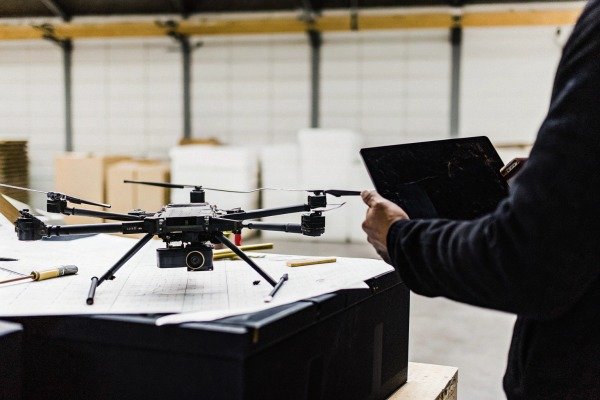
A firefighting drone is not a toy; it is a hazardous material shipment due to high-capacity lithium batteries baterías de litio 5 and a piece of critical emergency infrastructure. If a design flaw forces a recall, the costs spiral quickly. A standard warranty usually only covers "repair or replacement" of the defective unit. This is insufficient for international trade.
The Logistics of Hazardous Returns
Shipping heavy drones with potentially unstable batteries back to China is incredibly expensive and legally complex. It involves Class 9 Dangerous Goods certification Mercancías peligrosas de clase 9 6 and specialized freight forwarders. Your contract must explicitly state that the supplier bears the cost of logistics, not just the product value. If the batteries are deemed too dangerous to ship, the supplier must pay for certified local disposal in the United States.
Administrative and Public Relations Costs
Recalls require notifying federal agencies (like the CPSC or FAA) CPSC 7, tracking down end-users, and managing PR crises. These administrative tasks consume hundreds of man-hours. Your recall clause should include a provision for "Administrative Overhead," often calculated as a fixed percentage (e.g., 10-15%) of the total recall value, or actual costs incurred. This ensures you are reimbursed for your team's time spent cleaning up the supplier's mess.
Operational Downtime Damages
For mission-critical equipment, downtime costs money. If a fire department cannot use their drone fleet for three months, they may demand compensation from you. You must pass this risk to the supplier. We suggest a Liquidated Damages clause specifically for downtime. This pre-calculates a daily or weekly fee the supplier must pay if replacement units are not provided within a set timeframe.
| Categoría de costos | Scope of Coverage | Why It Must Be Explicit |
|---|---|---|
| Reverse Logistics | Freight, insurance, and hazmat fees for returning goods to China. | Returning lithium batteries is often 3x more expensive than outbound shipping. |
| Import/Export Duties | Refunds for tariffs paid on defective goods and coverage for replacement duties. | US tariffs on Chinese drones can be 25%; you shouldn't pay this twice. |
| Disposal Fees | Cost of certified destruction if return shipping is illegal or unsafe. | Unsafe batteries often cannot be legally exported back to the supplier. |
| Notification Costs | Legal fees for regulatory filings, mailings to customers, and PR agency fees. | Federal mandatory recalls involve strict, expensive notification protocols. |
How can I ensure the indemnity clause protects my business from third-party damages caused by design failures?
Our legal team always emphasizes that a drone falling from the sky creates liability far exceeding the cost of the drone itself. When we export, we understand that our partners need protection against lawsuits from the public.
Draft a comprehensive indemnification clause that explicitly covers third-party claims for bodily injury, property damage, and death resulting from design malfunctions. Crucially, require the supplier to carry product liability insurance naming your company as an “Additional Insured” to ensure financial backing for these obligations.

Indemnification is the legal mechanism that shifts the financial burden of a lawsuit from you to the supplier. However, a contract clause is only as good as the money behind it. Many Chinese suppliers operate as limited liability entities with few assets abroad. If a US court orders them to pay $5 million for a fire caused by their drone, and they have no US assets, you are left holding the bill.
The "Additional Insured" Requirement
To solve this, you must demand Product Liability Insurance from a reputable international insurer. It is not enough for the supplier to just have insurance; your company must be named as an Additional Insured on the policy. This gives you direct access to the insurance funds without needing to sue the supplier first. The contract should stipulate a minimum coverage amount (e.g., $5 million to $10 million per occurrence) and require a Certificate of Insurance (COI) before the first shipment leaves the factory.
Cooperation on Defense
US lawsuits are discovery-heavy. You need the supplier's engineering logs, quality control records, and sometimes witness testimony to prove the defect was not your fault. Include a "Cooperation on Defense" clause. This obligates the supplier to provide technical data and support immediately upon request. Without this, you might be unable to defend against a negligence claim, as you lack the technical proof that the design was flawed.
Dispute Resolution and Jurisdiction
Enforcing a US court judgment in China is nearly impossible. Therefore, your indemnity clause needs teeth. The dispute resolution section should mandate arbitration in a jurisdiction with mutual enforcement treaties, such as Hong Kong (HKIAC) or Singapore (SIAC). Chinese courts recognize Hong Kong arbitration awards much more Hong Kong arbitration awards 8 readily than US court judgments. This makes the threat of legal action real and enforceable.
Critical Indemnity Clauses Check
- Scope: Must cover "acts, omissions, design defects, and strict liability."
- Trigger: Must apply to "alleged" defects, not just proven ones, so legal defense costs are covered immediately.
- Survival: The clause must survive the termination of the supply agreement.
How long should the liability period for design defects extend beyond the standard warranty?
We track the lifecycle of our airframes carefully, knowing that fatigue in composite materials or memory leaks memory leaks 9 composite materials 10 in software may not appear in the first year. Short-term warranties simply do not capture the reality of industrial equipment lifespans.
Design defect liability should extend significantly beyond the standard one-year warranty, ideally covering the product’s entire expected service life or up to five years. This “statute of repose” ensures you remain protected against latent engineering faults that only manifest after prolonged operational use.
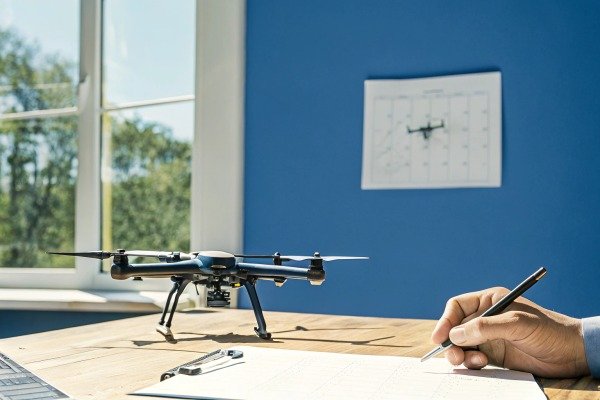
A standard 12-month warranty is designed for manufacturing defects—bad batteries or loose wires usually show up quickly. Design defects, however, are often latent. For example, a firefighting drone might have a structural weakness in the arm joints that only fractures after 500 flight cycles, or a memory leak in the firmware that crashes the system after 100 continuous hours of uptime. If your liability protection ends at 12 months, you are exposed to these "ticking time bomb" failures.
Differentiating Warranty from Liability Period
You must separate the "Warranty Period" (for free repairs) from the "Indemnity Survival Period" (for design liability). While you might agree to a 1 or 2-year warranty for parts, the clause covering design liability should last for the Useful Life of the Product (often defined as 3 to 5 years for industrial drones). This ensures that if a design flaw causes an accident in year 3, the supplier cannot say, "The warranty expired, so it's not our problem."
Software and Source Code Escrow
For modern drones, the design is as much code as it is carbon fiber. If the supplier goes out of business or refuses to fix a critical software bug that grounds your fleet, you are stuck. To mitigate this long-term risk, we recommend a Source Code Escrow agreement. This states that if the supplier triggers a "Release Event" (like bankruptcy or failure to fix a safety bug), the source code for the flight controller is released to you. This allows you to patch the design defect yourself and keep your customers flying.
Liability Timeline Recommendations
| Component / Risk | Recommended Warranty | Recommended Design Liability Period | Rationale |
|---|---|---|---|
| Consumables (Props/Batteries) | 6 Months / 200 Cycles | 1 Year | Wear and tear is expected; design flaws show early. |
| Airframe & Motors | 1-2 Years | 3-5 Years | Structural fatigue from design errors takes time to fail. |
| Software/Firmware | Lifetime of Support | 5 Years+ | Bugs can be latent; security patches are essential long-term. |
| Third-Party Injury | N/A | Indefinite (Statute of Limitations) | Liability for injury should track legal statutes, not contract dates. |
Conclusión
Securing your business when importing firefighting drones requires more than checking the price tag. By distinguishing design defects from manufacturing errors, demanding comprehensive insurance coverage, and extending liability periods to match the product's lifecycle, you build a safety net that protects your bottom line. We believe that a strong contract is the foundation of a safe, long-term partnership.
Notas al pie
1. Standard open-source flight control software ecosystem for drones. ↩︎
2. Leading industry software provider for engineering thermal analysis. ↩︎
3. Federal agency regulating civil aviation and drone operations. ↩︎
4. Definition of the pre-production manufacturing standard. ↩︎
5. Educational safety guide on lithium battery hazards. ↩︎
6. Official US government regulations for hazardous materials transport. ↩︎
7. US federal agency responsible for consumer product recalls. ↩︎
8. Official site of the arbitration center cited for dispute resolution. ↩︎
9. Technical explanation of the software defect mentioned. ↩︎
10. Authoritative resource on materials science and engineering standards. ↩︎

 English
  Spanish
  German
  French
  Dutch
Dutch  Arabic
