
We often see procurement teams focus heavily on flight time and payload capacity 1 flight time and payload capacity, overlooking the code that actually controls the aircraft. In our Xi’an R&D center, we have learned through rigorous testing that even the most robust hardware will fail in a high-temperature environment if the software logic cannot handle the stress. You need a partner who understands that firefighting missions are dynamic, dangerous, and unforgiving of software bugs.
Evaluate suppliers by auditing their specific experience with thermal imaging SDKs and real-time data processing in high-latency environments. Verify their ability to provide custom firmware modifications for mission-specific needs, conduct hardware-in-the-loop simulations to test stability, and guarantee rapid over-the-air updates for critical security patches.
Here is a detailed breakdown of the software criteria you must validate to ensure your fleet is mission-ready.
Can the supplier customize the flight software to meet my specific mission requirements?
We frequently receive requests from fire departments to tweak flight algorithms because standard commercial settings are too conservative for active fire suppression. If a supplier simply hands you a locked system without the ability to adjust parameters, your team will struggle when smoke interferes with obstacle avoidance sensors.
Suppliers must demonstrate the capability to modify flight control algorithms for specific payloads and environmental conditions. Look for an engineering team willing to tailor return-to-home logic, adjust sensitivity settings for smoke interference, and integrate custom sensor drivers rather than offering only a rigid, off-the-shelf software package.

The Necessity of Mission-Specific Logic
When we design flight controllers for agricultural use versus firefighting, the underlying logic is vastly different. A generic drone supplier often uses a "one-size-fits-all" approach to their codebase. However, in firefighting, standard obstacle avoidance systems can be disastrous. Thick black smoke is often interpreted by standard optical sensors as a solid wall. If the software is not customized to allow for "smoke penetration modes" or reliance on thermal data for navigation 2 thermal data for navigation thermal data 3, the drone will refuse to fly forward when you need it most.
You must ask the supplier if they can implement dual-sensor synchronization. This involves software that overlays thermal data onto the visual feed in real-time. This customization allows operators to see "through" the smoke to identify hotspots or victims. If the supplier relies on third-party software for this and cannot tweak the latency or the overlay transparency at the firmware level, the lag may be too high for safe operation in turbulent winds.
Validating Engineering Flexibility
It is critical to distinguish between a supplier who simply resells hardware and one who controls their source code. During your evaluation, propose a hypothetical scenario. Ask them: "If our mission requires the drone to hold position automatically when the thermal camera detects a temperature spike above 400°C, can you code that trigger?" A supplier with true development capabilities will explain how they would modify the API or flight script. A reseller will likely say that feature is unavailable.
We also recommend looking for specific customization features related to payload management. Firefighting drones often carry drop mechanisms for fire retardant balls or hoses. The software must automatically adjust the flight dynamics (PID gains) PID gains 4 the moment the payload is released. If the software does not account for the sudden weight change, the drone can become unstable and crash.
Comparison of Standard vs. Customized Software
The following table outlines the differences you should look for between standard commercial software and the specialized software required for firefighting duties.
| Feature Category | Standard Commercial Software | Firefighting-Grade Custom Software |
|---|---|---|
| Obstacle Avoidance | Stops at smoke/fog; treats it as a solid object. | Adjustable sensitivity; fuses radar/thermal data to navigate smoke. |
| Fail-Safe Logic | Returns to home (RTH) at a set altitude immediately on signal loss. | Smart RTH that avoids pre-mapped fire zones before ascending. |
| Payload Dynamics | Fixed settings; does not adjust for weight changes mid-flight. | Dynamic PID tuning; instantly recalibrates stability after payload drop. |
| Data Overlay | Basic video feed with telemetry. | Radiometric thermal analysis with isotherm overlays for heat tracking. |
| Motor Redundancy | Shuts down if a motor error is detected. | Attempts to stabilize and land safely even with motor failure (e.g., Octocopter logic). |
How do I determine if the drone's API and SDK are open for third-party integration?
Our partners in the US constantly emphasize the need for interoperability, as they cannot afford to have data trapped inside a proprietary ecosystem proprietary ecosystem 5. We design our systems to be open because we know that during a disaster, your drone needs to talk to ground units, command centers, and other software platforms seamlessy.
Review the supplier’s documentation to ensure they provide a comprehensive SDK and RESTful APIs that support standard protocols like MAVLink. Open architecture allows seamless integration with your existing Incident Command Systems, enables custom app development for specific workflows, and prevents vendor lock-in by allowing third-party software compatibility.

Avoiding the "Walled Garden" Trap
Many consumer drone brands build "walled gardens." This means you must use their proprietary app, their cloud server, and their analysis tools. For a fire department, this is a major liability. You likely already use platforms like ATAK (Android Team Awareness Kit) or other Incident Command Systems (ICS). If the drone supplier does not provide an open API (Application Programming Interface), you cannot feed the drone’s live video and location data directly into your map layers.
When we develop our communication protocols, we prioritize MAVLink compatibility MAVLink compatibility 6. MAVLink is the industry standard for small unmanned vehicle communication. If a supplier tries to sell you a system that uses a proprietary, undocumented communication protocol, you will face high integration costs later. You will be forced to pay them for every minor change or connection you need to make.
Key API Endpoints to Verify
To validate a supplier's claims about "openness," you need to ask your technical team to review their SDK (Software Development Kit) documentation SDK (kit de desarrollo de software) 7. You are looking for specific capabilities. Can you control the gimbal pitch programmatically? Can you access the raw thermal radiometric data, or only a compressed video feed?
Access to raw data is crucial. For example, edge computing applications—where AI analyzes the video on the drone itself to identify humans vs. fire—require access to the uncompressed video stream. If the SDK only allows you to pull the video after it has been saved to the SD card, real-time AI analysis is impossible.
Essential API Capabilities for Integration
We recommend using the checklist below to score the supplier's SDK documentation. If they cannot check off these boxes, their software is likely too closed for professional public safety use.
| API Function | Why It Matters for Firefighting |
|---|---|
| Real-Time Telemetry Stream | Allows the command center to track drone battery, location, and altitude on a central map without latency. |
| Gimbal & Camera Control | Enables remote operators to steer the camera independently of the pilot, or allows AI to lock onto a heat signature. |
| Waypoint Upload/Download | Essential for automated grid searches. You must be able to upload a new flight path mid-mission. |
| Raw Sensor Data Access | Required for third-party software to perform thermal analysis or create 3D maps in real-time. |
| Video Encryption (AES-256) | The API must support encrypted transmission to prevent unauthorized access to sensitive operational feeds. |
What steps should I take to validate the stability of the flight control system before ordering?
We spend months in our Chengdu testing facility running simulations before a new model is ever shipped to a client. Relying solely on a supplier’s marketing videos is dangerous; you need proof that the flight controller can handle the chaotic updrafts and magnetic interference generated by large-scale fires.
Request evidence of Hardware-in-the-Loop (HITL) simulations and field test logs showing performance under thermal stress and electromagnetic interference. Require a demonstration of fail-safe triggers, such as autonomous landing during signal loss, and verify the software’s error handling capabilities when sensors are obscured by thick smoke.
The Importance of Hardware-in-the-Loop (HITL)
Flying a drone in clear weather is easy. Flying a drone above a wildfire, where temperatures create massive updrafts and turbulence, is extremely difficult for the flight computer. Standard algorithms often fail to correct for these rapid pressure changes, leading to a loss of altitude or a crash.
You must ask the supplier if they utilize Hardware-in-the-Loop (HITL) simulation 8 Hardware-in-the-Loop (HITL) simulation Hardware-in-the-Loop (HITL) simulation 9. This is a testing method where the actual flight controller hardware is connected to a computer simulation. The computer feeds the controller "fake" sensor data that mimics a Category 5 storm or extreme heat updrafts. The flight controller then sends motor commands back to the computer. This verifies that the software logic remains stable even when the physics of the environment go haywire. If a supplier only tests their software by flying outdoors on sunny days, they have not validated the system for firefighting.
Assessing Electromagnetic Interference (EMI) Handling
Fire scenes are full of interference. High-voltage power lines may be damaged, and dozens of emergency vehicles are blasting radio signals. This creates an environment rich in Electromagnetic Interference (EMI), which can confuse the drone's compass and GPS.
A robust software stack includes "compass-denied" navigation logic. We program our octocopters to switch to inertial guidance or optical flow positioning if the magnetic compass detects an anomaly. During your evaluation, ask the supplier to demonstrate a flight where they intentionally jam the GPS or compass signal. The drone should not fly away; it should hover in place or switch to manual attitude mode. If the software panics and drifts when the compass is confused, it is not safe for industrial use.
Stability Testing Benchmarks
Use these benchmarks to assess the data provided by the supplier regarding their stability testing.
| Test Parameter | Minimum Acceptable Standard | Ideal Professional Standard |
|---|---|---|
| Wind Resistance | Software stabilizes in 10 m/s wind. | Software maintains position <1m deviation in 15 m/s gusts. |
| GPS Loss Behavior | Drone drifts with the wind (ATTI mode). | Drone holds position using vision sensors (Optical Flow). |
| Vibration Handling | Software filters standard motor vibration. | Software filters high-frequency vibration from heavy payloads/loose mounts. |
| Thermal Throttling | System shuts down if CPU gets hot. | CPU throttles performance but maintains flight capabilities up to 60°C ambient. |
What kind of remote software support and firmware updates can I expect post-purchase?
Our support team knows that a software bug discovered during the peak of wildfire season cannot wait weeks to be fixed. If your supplier treats software as a “ship it and forget it” product, your fleet will eventually be grounded by security vulnerabilities or compatibility issues with new tablet operating systems.
Ensure the supplier offers a clear Service Level Agreement (SLA) defining response times for critical software bugs, ideally under four hours. Verify they possess a Continuous Integration/Continuous Deployment (CI/CD) pipeline capable of pushing Over-the-Air (OTA) firmware updates to fix vulnerabilities or enhance features without requiring the drone to be returned to the factory.

The Criticality of Over-the-Air (OTA) Updates
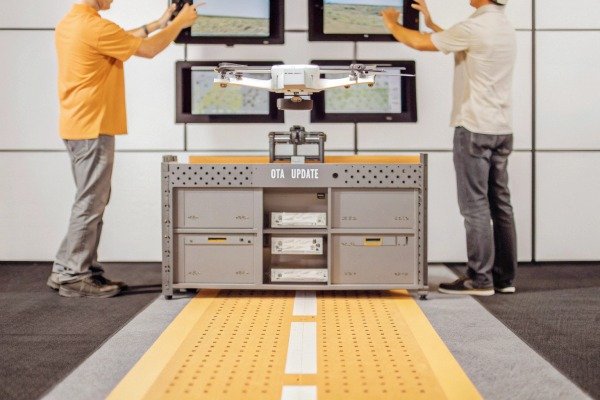
In the past, updating a drone's firmware often meant connecting it to a laptop via USB, downloading a file, and hoping the installation didn't fail. In a modern firefighting context, this is inefficient. You need a supplier who supports OTA updates OTA updates 10. This allows you to push critical patches to your entire fleet wirelessly, using the tablet controller's internet connection.
This is especially vital for security. If a vulnerability is found in the video transmission protocol that allows hackers to view your feed, you need that hole patched immediately. A supplier with a mature DevOps culture and a CI/CD (Continuous Integration/Continuous Deployment) pipeline can release a hotfix within 24 hours. Ask the supplier about their release cadence. How often do they update the firmware? If the last update was over a year ago, their software development has likely stalled.
Defining the Service Level Agreement (SLA)
Software support is not just about fixing bugs; it is about availability. When we draft contracts with our distributors, we include specific SLAs for software issues. You should demand the same.
You need to know:
- Response Time: If the drone's control app crashes every time you open the thermal map, how long until an engineer looks at the logs? For critical issues, this should be under 4 hours.
- Diagnóstico remoto: Does the software have a "black box" feature? We build our drones to record detailed flight logs. If a client has an issue, they can upload this log file to us. Our engineers can then replay the flight digitally to see exactly what the sensors saw. If a supplier does not have a tool for remote log analysis, they cannot support you effectively from overseas.
Evaluating Vendor Viability and Long-Term Support
Finally, consider the financial stability of the software team. Developing robust flight control code requires a large team of expensive engineers. If the supplier is a small assembly shop with only one or two freelance coders, they are a high risk. If that one coder leaves, the software is dead.
Look for suppliers with a dedicated software department. Ask for their organizational chart. A healthy ratio for an industrial drone manufacturer is to have at least 30-40% of their R&D staff focused purely on software and algorithms.
Conclusión
Selecting the right firefighting drone is about more than just airframe durability; it requires a deep audit of the invisible digital brain that pilots the aircraft. By prioritizing suppliers who offer customizable flight logic, open API architectures, rigorous HITL stability testing, and responsive remote support, you ensure that your investment actually saves lives rather than becoming a liability. Do not accept generic answers—demand flight logs, SDK documentation, and proof of chaos testing. Your mission success depends on the quality of the code just as much as the strength of the propellers.
Notas al pie
1. DHS SAVER reports provide authoritative benchmarks for evaluating drone flight time and payload capabilities. ↩︎
2. Teledyne FLIR is the industry authority on thermal imaging applications for firefighting and navigation. ↩︎
3. Background on thermal imaging technology used in firefighting. ↩︎
4. Explanation of PID controllers used for flight stability. ↩︎
5. ISO standards for open communication protocols to ensure interoperability and avoid proprietary lock-in. ↩︎
6. Official documentation for the MAVLink communication protocol standard. ↩︎
7. Example of a major manufacturer’s SDK documentation for drone development. ↩︎
8. MathWorks defines the industry standard for HITL simulation used in validating control systems. ↩︎
9. Research on advanced drone flight control and simulation. ↩︎
10. Manufacturer documentation for performing firmware updates on professional-grade drones. ↩︎

 English
  Spanish
  German
  French
  Dutch
Dutch  Arabic
