
When our engineering team in Xi’an configures flight controllers for high-heat environments, we see firsthand how easily verbal agreements can fail UN38.3 test report 1. Misunderstandings about thermal resistance or payload limits can ground your fleet during an emergency, putting lives and budgets at risk.
To avoid disputes, establish a centralized digital portal for all correspondence and mandate signed meeting minutes for every interaction. Incorporate detailed technical specification sheets directly into the contract as exhibits and implement a strict Change Order Management process requiring written justification and dual-party authorization for any scope deviations.
Let’s explore the specific documentation strategies that protect your investment and ensure operational readiness.
What specific technical specifications must I confirm in writing to ensure product quality?
Our engineers often receive vague requests for “high-capacity batteries,” which creates dangerous ambiguity in the final product. Without precise definitions, you might receive a drone that flies for thirty minutes instead of the necessary forty-five required for active fire suppression.
You must confirm exact metrics for flight endurance under load, thermal sensor resolution (such as 640×512 pixels), IP ratings for water resistance, and data transmission range in varied terrain. Explicitly document acceptance test procedures with pass/fail criteria to ensure the delivered units meet these distinct performance standards.

When you procure large quadcopters for emergency services quadcopters 2, "good quality" is subjective and legally unenforceable. We have seen contracts that simply state "adequate flight time," which leads to disputes when the drone carries a full payload of fire retardant balls and only lasts 15 minutes. To protect your department, you must translate operational needs into hard numbers.
Defining Performance Under Load
A drone behaves differently when it is empty versus when it is carrying a 10kg payload. In your written agreement, you must specify the performance metrics under Maximum Take-Off Weight 3 "Maximum Take-Off Weight" (MTOW). We recommend documenting the flight time at specific altitudes and wind speeds. For example, instead of asking for "long endurance," specify "minimum 35 minutes flight time with 5kg payload at 10 meters/second wind speed." This forces the supplier to test the drone in realistic conditions before shipping it to you.
Sensor and Data Integrity
Firefighting drones rely heavily on thermal imaging to locate hotspots. thermal imaging 4 A vague specification for "thermal camera included" allows a supplier to install a low-resolution sensor that cannot detect heat signatures through thick smoke. You must document the specific resolution, frame rate (e.g., 30Hz or higher), and temperature measurement accuracy. Furthermore, you should specify data transmission protocols. If your department requires encrypted video feeds to comply with local privacy laws, this must be written into the technical exhibit.
The Power System and Durability
Battery specifications are the most common source of disputes. We always advise clients to list the exact battery chemistry, capacity (in mAh), and expected cycle life (how many times it can be charged). Additionally, firefighting environments involve water and dust. You need to document the Ingress Protection (IP) rating for both the drone body Ingress Protection (IP) 5 and the remote controller. A rating of IP54 might be sufficient for light rain, but IP65 or higher is necessary for heavy downpours.
| Categoría de especificaciones | Vague Description (Avoid) | Precise Specification (Required) |
|---|---|---|
| Flight Time | "Long flight time" | "≥40 minutes hovering at sea level with 50% max payload" |
| Thermal Camera | "High-quality thermal sensor" | "640×512 resolution, <50mK sensitivity, radiometric data support" |
| Control Range | "Long range transmission" | "≥10km video transmission in low-interference environments" |
| Water Resistance | "Waterproof design" | "IP65 certified body; motors and ESCs sealed against moisture" |
| Battery Life | "Durable battery" | "Guaranteed 300 charge cycles retaining >80% capacity" |
How should I record design changes during the OEM development phase to prevent errors?
During collaborative design sessions, we frequently adjust payload release mechanisms to suit specific fire retardant canisters. If we rely on casual phone calls to approve these structural tweaks, the final mold may not fit your equipment, leading to costly retooling.
Record all design changes through a formal Change Request Form that details the technical modification, cost impact, and timeline adjustments. Require digital signatures from both the engineering lead and the procurement officer before implementation to create an immutable audit trail that prevents scope creep and unauthorized alterations.

The OEM (Original Equipment Manufacturer) process is dynamic. You might realize halfway through development that your fire trucks need a different mounting bracket for the drone, or that you need a specific software interface. These changes are normal, but if they are not documented correctly, they destroy budgets and timelines.
The Change Request Workflow
Never authorize a design change over the phone. Even if you trust us or any other supplier, memory is fallible. Establish a "Change Request" (CR) workflow. Change Request 6 When you or the supplier proposes a change, it must be written down. This document should describe the "Current State" and the "Proposed State." It must also explicitly state the impact on the price and the delivery date. A small change in the shape of the landing gear might require a new mold, which costs thousands of dollars and takes weeks to manufacture. If you approve the design change without approving the cost and delay, you are setting yourself up for a billing dispute later.
Version Control for CAD and Firmware
In the manufacturing world, version control is critical. If we modify the drone's frame to accommodate a larger battery, that is "Version 2.0." If you then decide to go back to the smaller battery but keep the new frame, confusion arises. You must insist on a "Design Freeze" document. This is a formal agreement that the design is final and production can begin. Any changes after the Design Freeze should carry a heavy penalty or require a new contract. This protects you from "scope creep," where the project expands uncontrollably. scope creep 7
Impact Analysis
Every change has a ripple effect. Changing the camera might change the center of gravity, which affects flight stability. Your documentation must show that the supplier has considered these side effects. We recommend requiring an "Impact Analysis" section in every Change Request form. This forces the engineering team to think through the consequences before you sign off.
| Change Request Element | Objetivo |
|---|---|
| Change ID & Date | Unique identifier to track the sequence of modifications. |
| Description of Change | detailed technical explanation of what is being altered. |
| Reason for Change | Why is this necessary? (e.g., "Client requested larger payload"). |
| Cost Impact | Exact dollar amount added or subtracted from the total contract. |
| Schedule Impact | Number of days added to the delivery timeline. |
| Technical Risk | Potential side effects (e.g., "Reduced flight time by 2 minutes"). |
| Firmas | Mandatory approval from both Client and Supplier. |
Do I need to archive instant messaging chats with my supplier for legal protection?
We use WeChat and WhatsApp constantly to coordinate quick shipping updates or debugging tips with our US clients. However, critical decisions made on these platforms often disappear, leaving you with zero leverage if a promised feature is missing upon arrival.
Yes, you must archive instant messaging chats because they often contain informal approvals or timeline promises that constitute binding agreements. Regularly export these chat logs into a searchable PDF format and upload them to your central procurement portal to ensure they become part of the official contract record.

In the fast-paced world of international trade, instant messaging is unavoidable. It is faster than email and allows for real-time troubleshooting. However, from a legal and procurement standpoint, it is a nightmare. A supplier might casually type, "Don't worry, we can include the extra propellers for free," or "We can ship by Friday." If they fail to do so, and you only have a screenshot on a personal phone, you will struggle to enforce that promise.
The Danger of Informal Approvals
The biggest risk with instant messaging is the "informal approval." You might send a photo of a component and ask, "Is this color okay?" If you reply with a thumbs-up emoji, the supplier interprets that as official manufacturing authorization. Later, if the color is wrong for your branding, the supplier will point to that chat log as proof of your approval. You need to treat chats as information exchanges, not decision points. If a decision is made in a chat, follow it up immediately with an email stating: "Per our WhatsApp conversation today, I am confirming X."
How to Archive Correctly
Do not rely on the app's history. Phones get lost, and employees leave companies. You should have a policy where project managers export chat histories at the end of every week. Most apps allow you to email the chat history to yourself. Save these text files or PDFs in the same folder as your formal contracts. Rename them clearly, such as "Chat_Log_Week_12_Project_SkyRover.pdf."
Moving from Chat to Contract
Ideally, your contract should have an "Entire Agreement" clause, which states that only written amendments signed by both parties are valid. However, courts sometimes look at the "course of dealing," meaning how you actually behaved. If you habitually used WhatsApp to change orders, a judge might view those chats as binding. Therefore, you must explicitly document in your communication plan that "Instant messaging is for coordination only; all changes to scope, price, or timeline must be confirmed via official email or formal change order."
How can a detailed communication log help me handle delivery delays or customs issues?
When we ship large quadcopters to Europe or North America, customs officials frequently request battery certifications or origin documents. A disorganized paper trail can cause your equipment to sit in a bonded warehouse for weeks, accruing storage fees and missing deployment deadlines.
A detailed communication log provides proof of timely submission for all required export/import documents, shifting liability for delays away from your organization. It allows you to demonstrate that you met all information requests promptly, helping you avoid demurrage charges and enforce contract penalty clauses against the supplier for non-compliance.
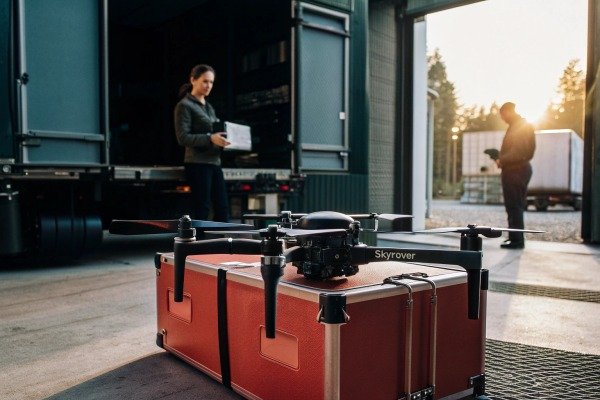
International logistics for drones is complex. Batteries are classified as dangerous goods (Class 9), and drones often fall dangerous goods 8 under dual-use regulations. Delays are common, but paying for them is optional—if your documentation is good.
Proof of Compliance
When a shipment is stuck in customs, the carrier or the customs broker will ask for specific documents, such as the MSDS (Material Safety Data Sheet) Material Safety Data Sheet 9 for the batteries or the UN38.3 test report. If you have a log showing you requested these from the supplier three weeks ago and they failed to provide them, the liability for the delay sits with the supplier. If you cannot prove when you asked, the supplier can claim you requested the documents too late.
Managing Force Majeure Claims
Suppliers often claim "Force Majeure" (unforeseeable circumstances) when deliveries are late. Force Majeure 10 They might blame a raw material shortage or a new government regulation. A detailed communication log helps you verify these claims. If the supplier mentioned a chip shortage in a casual email two months ago but didn't formally notify you of a delay until the day before delivery, they may not be protected by the Force Majeure clause. Your records allow you to challenge their narrative and enforce late delivery penalties.
The Timeline of Accountability
You should maintain a "Logistics Milestone Tracker." This is a shared document where both you and the supplier update the status of the shipment. It should track when the goods were ready, when the pickup was booked, when the export clearance was granted, and when the flight departed. If there is a delay, you can pinpoint exactly where it happened. As a supplier providing door-to-door delivery, we appreciate this clarity because it protects us from being blamed for airline delays that are out of our control. However, if the delay is due to our factory being slow, the tracker makes that undeniable.
| Tipo de documento | Purpose in Logistics | ¿Quién lo proporciona? |
|---|---|---|
| Factura comercial | Used for customs valuation and tax calculation. | Proveedor |
| Lista de empaque | Details the contents, weight, and dimensions of each box. | Proveedor |
| MSDS / UN38.3 | Safety certification required for shipping lithium batteries. | Supplier (from Battery Maker) |
| Air Waybill (AWB) | Proof of shipment and contract of carriage. | Freight Forwarder |
| End User Certificate | Declares that the drone will not be used for military purposes. | Buyer (You) |
| Arrival Notice | Alerts the buyer that goods have arrived at the destination port. | Carrier |
Conclusión
Effective documentation is your safety net in high-stakes procurement. By demanding precise specifications, formalizing design changes, archiving every chat, and tracking logistics milestones, you ensure that the fleet you receive matches the fleet you ordered. This level of rigor transforms a transactional purchase into a reliable partnership, protecting your department from legal disputes and operational failures.
Notas al pie
1. Industry association guidance on lithium battery transport testing. ↩︎
2. Product page for a major enterprise quadcopter used in emergency services. ↩︎
3. Government definition of weight classifications for drone operations. ↩︎
4. Leading manufacturer explanation of thermal sensor technology. ↩︎
5. Official international standard for enclosure protection ratings. ↩︎
6. Industry standard methodology for managing project scope changes. ↩︎
7. General definition of uncontrolled project expansion. ↩︎
8. Government guidelines on transporting hazardous materials like batteries. ↩︎
9. Government regulation regarding hazardous communication standards. ↩︎
10. Legal definition of the contract clause regarding unforeseeable events. ↩︎

 English
  Spanish
  German
  French
  Dutch
Dutch  Arabic
