
We often see first-time buyers frustrated because they purchased a drone that looks powerful but carries the wrong tools for their specific crops. At our Xi’an facility, we spend significant time helping clients reconfigure their setups because the initial payload choice didn’t match their field reality or operational goals.
You must distinguish payloads by function: imaging sensors collect data for health analysis and mapping, while operational systems apply liquids or granules. Match these to your crop type, ensuring the payload weight aligns with the drone’s lift capacity and battery endurance for your specific field size.
Let’s break down the technical specifics to help you choose the right configuration for your farm.
How do I determine the right payload capacity for my specific crop and field size?
When we calibrate flight controllers for our US clients, we notice that oversizing the tank often leads to unnecessary soil compaction risks and reduced agility soil compaction risks 1. It is painful to watch efficiency drop simply because a farmer chose a heavy 40-liter model for a small, fragmented vineyard that required a lighter touch.
Calculate capacity based on field acreage and application rate. Small fields under 15 hectares suit 8-10 liter tanks for agility, while large row crops over 20 hectares require 30-40 liter capacities to minimize refill downtime. Heavier payloads reduce flight time, so balance volume against battery endurance limits.

The Trade-off Between Volume and Agility
Choosing the correct payload capacity is not just about how much liquid Liquid payloads 2 the drone can carry; it is about how the drone behaves in the air. From our manufacturing perspective, we design smaller drones (like 10kg payload class) to be highly responsive. If you are managing an orchard with complex terrain or a small farm under 15 hectares (approx. 37 acres), a massive payload becomes a liability. The inertia of a heavy tank makes the drone harder to stop and turn, which is dangerous in tight spaces.
However, for large-scale row crops like corn or soybeans, frequency of refilling is the enemy of efficiency. A drone with a small 10-liter tank will force you to land every few minutes, wasting battery power on takeoff and landing cycles. For fields larger than 20 hectares, we recommend heavy-lift platforms (30kg+ capacity). These drones maintain a stable flight path over long straight lines, maximizing the "time-on-field."
Calculating Your Needs
You must look at your specific application rates. If your fungicide requires a high volume of water to be effective, a small drone will fail to cover the area efficiently. Conversely, ultra-low volume (ULV) spraying techniques allow smaller payloads to cover surprisingly large areas.
Matching Drone Class to Field Size
To help you visualize this, we have compiled a general guide based on our export configurations for varying farm sizes.
| Farm Size Category | Field Characteristics | Recommended Payload Capacity | Ideal Drone Class |
|---|---|---|---|
| Small (< 15 Hectares) | Complex terrain, obstacles, fragmented plots. | 8L – 10L (Liquid) / 10kg (Solid) | Consumer / Light Commercial |
| Medium (15 – 25 Hectares) | Mixed terrain, orchards, medium row crops. | 16L – 20L (Liquid) / 20kg (Solid) | Mid-sized Commercial |
| Large (> 25 Hectares) | Flat, open fields, extensive row crops. | 30L – 40L (Liquid) / 40kg+ (Solid) | Heavy-Lift Industrial |
Analyzing Crop Structure
The physical structure of your crop also dictates payload needs. Dense canopies, like those found in mature citrus orchards, require powerful rotor downwash to push the spray deep into the leaves. Heavier payload drones generally produce stronger downwash, which aids in penetration. However, if you are spraying young vegetable seedlings, that same powerful downwash could damage the plants. Therefore, payload capacity is also a proxy for the physical power of the airframe.
What are the key differences between liquid spraying and granular spreading systems I need to know?
Our engineering team spends months optimizing nozzle pressure and spreading disk speeds because using the wrong mechanism wastes expensive chemicals and seeds. There is nothing worse than seeing a client struggle with uneven distribution that ruins a harvest season, simply because the hardware wasn’t matched to the material.
Liquid systems use pumps and nozzles for spraying pesticides and fertilizers, requiring precise droplet control to prevent drift. Granular systems utilize spinning disks or pneumatic air to spread solid seeds and fertilizers. Liquid systems prioritize flow rate and pressure, while granular systems focus on hopper volume and spread width uniformity.

Liquid Spraying Systems: Precision and Pressure
Liquid payloads are the most common starting point for agricultural drones agrícolas 3 drones. The core components here are the tank, the pump, and the nozzles. When we design these systems, we focus heavily on the pump's flow rate (measured in liters per minute). pump's flow rate 4 A standard high-performance pump might deliver 4-8 liters per minute.
There are two main technologies you will encounter:
- Pressure Nozzles: These use hydraulic pressure to break liquid into droplets. They are simple and effective but can clog with thick mixtures.
- Centrifugal Atomization: These use spinning discs to fling liquid out, creating very uniform droplet sizes. This is superior for drift control and works well drift control 5 with powder-based mixtures that might clog standard nozzles.
You need to assess what chemicals you use. If you apply highly corrosive fertilizers, check if the internal pump seals are made of durable materials corrosive fertilizers 6 like Viton or ceramic. Standard plastic seals will degrade quickly, leading to leaks that can damage the drone's electronics.
Granular Spreading Systems: Flow and Width
Granular spreaders are distinct beasts. Granular spreaders 7 They replace the liquid tank with a hopper and use a spreading mechanism at the bottom. The primary use cases are seeding (like rice or cover crops) and spreading solid fertilizer (urea).
The key performance metric here is not pressure, but torque and spread width. The spinner disk must rotate at high speeds to throw heavy granules effectively. A poor-quality spreader will drop seeds directly below the drone, causing "striping" in your field where some areas are over-seeded and others are bare.
Comparing Operational Requirements
The maintenance and calibration for these two systems differ significantly. Liquid systems require flushing after every flight to prevent crystallization. Granular systems need to be kept perfectly dry; even a drop of moisture can turn fertilizer into a brick that jams the mechanism.
System Comparison Table
Here is a breakdown of the critical differences you must consider before purchasing.
| Característica | Liquid Spraying System | Granular Spreading System |
|---|---|---|
| Primary Material | Pesticides, Herbicides, Liquid Fertilizer | Seeds, Solid Fertilizer, Fish Food |
| Key Mechanism | Pumps (Diaphragm/Peristaltic) & Nozzles | Gravity Feed, Spinning Disks, Air Blowers |
| Critical Metric | Flow Rate (L/min) & Droplet Size (µm) | Mass Flow (kg/min) & Spread Width (m) |
| Main Challenge | Nozzle clogging, drift due to wind | Material bridging (jamming), uneven spread |
| Cleaning Needs | High: Must flush to prevent corrosion | Moderate: Must keep dry to prevent clumping |
How will heavy payload configurations impact my drone's flight endurance and battery efficiency?
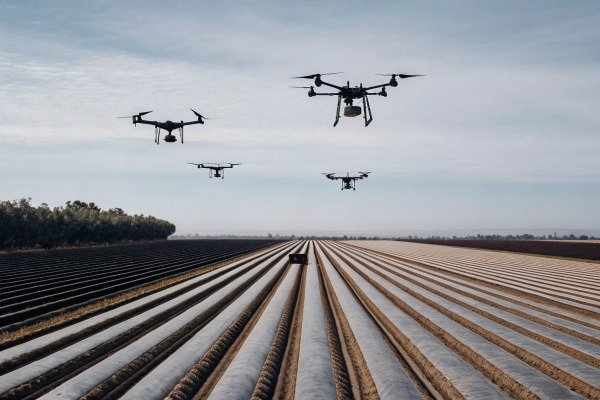
During our battery stress tests in Chengdu, we consistently find that maxing out the payload weight cuts flight time by nearly half compared to hovering empty. It is critical to avoid draining batteries too fast, which leads to safety risks, voltage sags, and high replacement costs for your operation.
Heavier payloads dramatically increase power consumption, reducing flight endurance by up to 50%. A fully loaded drone requires high-voltage output, causing batteries to heat up and degrade faster. To maintain efficiency, operate at 70-80% of max capacity or invest in higher-density LiPo batteries and rapid charging infrastructure.
The Physics of Lift and Power Draw
It is a simple rule of physics that limits our industry: to lift more weight, the motors must spin faster. This requires a significantly higher electrical current (amperage) from the battery. When a drone is fully loaded with 40kg of liquid, the motors are working near their peak capacity.
This high current draw creates heat. In our testing, we see battery temperatures spike significantly when pilots fly aggressively with a full tank. Excessive heat is the number one killer of Lithium-Polymer (LiPo) batteries Lithium-Polymer (LiPo) batteries 8. Lithium-Polymer 9 If you consistently push the payload to the maximum limit stated on the spec sheet, you might reduce the total lifespan of your battery pack from 500 cycles down to 300 cycles. That is a direct hit to your wallet.
Flight Time Reality vs. Spec Sheets
Manufacturers, including us, list "maximum flight time" usually under ideal conditions—hovering, sea level, no wind, and often without a payload. The reality in the field is different.
If a drone is rated for 20 minutes of flight:
- Empty: It might fly for 18-20 minutes.
- Full Payload: That time often drops to 8-12 minutes.
This means you have a very short window to complete your spraying run. You must plan your return-to-home point carefully. If the drone runs out of power far from the landing zone while carrying a heavy load, the voltage can sag suddenly, risking a crash.
Operational Efficiency Strategy
To mitigate this, smart operators do not always fill the tank to 100%. Flying with an 80% load can sometimes yield better efficiency because the drone is more agile and consumes less power per minute, allowing it to cover more ground on a single battery charge.
Impact of Payload on Battery Metrics
This table illustrates the relationship between load and endurance based on typical industrial drone performance curves.
| Payload Load Status | Estimated Flight Time | Power Consumption | Battery Stress Level |
|---|---|---|---|
| 0% (Empty) | 20 – 25 mins | Bajo | Minimal |
| 50% Load | 15 – 18 mins | Moderate | Normal |
| 100% (Max Load) | 8 – 12 mins | Very High | Critical (High Heat) |
The Charging Logistics
Because heavy payloads drain batteries so fast, you need a robust charging plan. For a continuous operation with a heavy-lift drone, you typically need at least 4 to 6 batteries and a high-power generator in the field. If you choose a lighter payload configuration, you might get away with fewer batteries, reducing your initial setup cost.
Can I switch between different payload modules on a single drone platform to save costs?
We design our frames with modular interfaces because buying separate airframes for every task is financially unsustainable for most operators. It is smarter to swap a tank for a spreader than to purchase a second machine, provided the interface is robust enough for field conditions.
Yes, modular drone platforms allow you to swap between liquid tanks, granular spreaders, and sometimes sensing cameras to save hardware costs. However, ensure the flight controller software supports quick reconfiguration and that the mounting interface is tool-free to prevent downtime during critical operational windows in the field.

The Economics of Modularity
For a first-time buyer, the "all-in-one" concept is very attractive. Why buy a spraying drone and a seeding drone when one machine can do both? Modern industrial drones, especially mid-to-high-end models like the ones we export to Europe, feature quick-release mounting systems.
This allows you to disconnect the liquid tank and pump system and snap in a granular spreader in under five minutes. The cost savings are substantial. You are essentially paying for one flight platform (motors, batteries, flight controller) and two inexpensive plastic attachments flight controller 10, rather than two expensive aircraft.
Critical Considerations for Swapping
However, switching payloads is not just about physical latches. The software is equally important. When you remove a 20kg liquid tank and replace it with a spreader, the drone's center of gravity and weight distribution change.
- Software Calibration: The flight controller must immediately recognize the new payload. High-quality systems will automatically detect the module and adjust the flight parameters. Lower-end systems might require you to manually connect a laptop and update settings, which is a nightmare in the middle of a muddy field.
- Cable Durability: The connectors (plugs) that link the payload to the drone's main power and data bus are wear points. If you plan to swap payloads daily, these connectors must be industrial-grade (waterproof and dustproof). We often see failures here on cheaper units.
Specialized vs. Multipurpose
There is a limit to modularity. While swapping between spray and spread is common, swapping between application (spraying) and high-end imaging (multispectral mapping) is less common on heavy-lift drones.
Heavy drones are not efficient for mapping; they fly too short a time and vibrate too much. Usually, it is better to have a small, dedicated mapping drone (like a Mavic class) and a large, modular application drone. Do not try to make one heavy drone do everything.
Payload Compatibility Check
When purchasing, ask the supplier specifically about the "ecosystem" of that model.
- Are the spreaders proprietary?
- Can third-party sensors be attached?
- Is the swap tool-free (hand latches) or does it require hex keys?
If you lose a screw in tall grass while changing a payload, your operation stops. Tool-free designs are mandatory for professional agricultural work.
Conclusión
Selecting the right agricultural drone payload is not just about buying the biggest tank or the most expensive camera. It requires balancing the physical realities of your farm—terrain, crop type, and size—with the technical limitations of flight time and battery power. Whether you prioritize the precision of liquid spraying or the versatility of a modular system, ensure your choice is supported by durable engineering and a reliable supply chain. Investing time in understanding these distinctions now will save you from costly upgrades and operational headaches later.
Notas al pie
1. University extension resource explaining the impact of heavy equipment on soil health. ↩︎
2. Official EPA portal for pesticide regulations, safety, and application standards. ↩︎
3. Provides a comprehensive overview of agricultural drone technology and its history. ↩︎
4. ISO standard for agricultural irrigation and spray equipment, including nozzle performance requirements. ↩︎
5. Official EPA guidelines for managing pesticide drift and environmental compliance. ↩︎
6. Industry organization providing safety and handling guidelines for various agricultural fertilizers. ↩︎
7. Official technical specifications for a leading industrial agricultural drone spreading system. ↩︎
8. Technical safety standards and handling procedures for high-energy lithium batteries. ↩︎
9. Technical background on the battery chemistry used in high-performance drones. ↩︎
10. Technical documentation for a major open-source flight controller platform. ↩︎

 English
  Spanish
  German
  French
  Dutch
Dutch  Arabic
