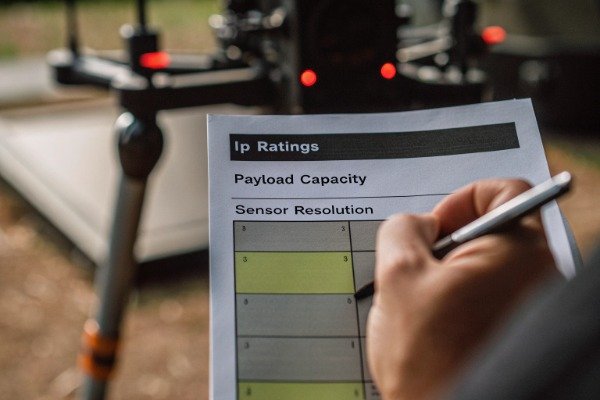
At SkyRover, we see many procurement managers struggle with vague requirements. Poor specifications often lead to acquiring equipment that fails in critical moments. You need a precise technical roadmap to secure the right tools for your team.
procurement managers struggle 1
To define technical specifications for firefighting drones, you must first document mission profiles like urban reconnaissance or wildfire suppression. Then, translate these needs into measurable requirements for airframe durability (IP rating), payload capacity, sensor resolution, and data security, using these metrics to create a mandatory checklist for vetting suppliers.
Let’s break down the exact technical details you need to secure the best equipment for your team.
What critical performance metrics must I include in my request for quotation (RFQ)?
We often receive RFQs missing key data points, causing unnecessary delays. Without clear metrics, you risk buying a drone that fails in high winds or heat. Here is exactly what matters for your operations.
Your RFQ must prioritize flight endurance under full payload, specific ingress protection (IP) ratings for water and dust resistance, and stable transmission range in urban environments. Additionally, specify the exact payload weight capacity and wind resistance levels required to ensure operational safety during active fire suppression missions.

When drafting your Request for Quotation (RFQ), generic terms like "long flight time" or "heavy lifting" are recipes for disaster. In our production facility, we calibrate drones for specific operational envelopes. If you do not define the envelope, the product may not fit the mission. You need to move from qualitative desires to quantitative requirements.
Defining Operational Endurance vs. Marketing Flight Time
One of the most common pitfalls we observe is buyers relying on "max flight time." This figure usually represents a drone hovering in zero wind with no payload. Real-world firefighting is never this ideal. You must request "operational flight time." This metric accounts for the weight of your specific payload (e.g., a 5kg dry powder extinguisher or a heavy thermal gimbal) and environmental factors like wind resistance.
max flight time 2
For example, a drone might fly 50 minutes empty but only 20 minutes with a full payload. In your RFQ, specify: "Minimum 30 minutes flight time carrying a 5kg payload in 10 m/s winds." This forces the supplier to calculate the energy budget based on your reality, not a laboratory test.
Environmental Durability and IP Ratings
Fire scenes are hostile environments. Ash, water spray, and intense heat are standard. If you do not specify an Ingress Protection (IP) rating, you might receive a drone with open vents that sucks in conductive carbon dust, leading to short circuits.
Ingress Protection (IP) rating 3
We recommend specifying at least IP54 for general reconnaissance and IP65 or higher for drones expected to fly near active suppression lines where water spray is inevitable. Furthermore, specify the operating temperature range. Standard drones may shut down at 40°C, but firefighting drones often need to withstand ambient temperatures up to 50°C or higher near the fire front.
Critical Metrics Checklist
Use the following table to categorize your requirements in the RFQ. This helps suppliers understand which features are non-negotiable (MUST) and which are nice-to-have (SHOULD).
| Componente | Metric | Recommended Specification | Por qué es importante |
|---|---|---|---|
| Propulsion | Wind Resistance | Level 6 (12m/s) or higher | Ensures stability in turbulent air caused by fires. |
| Estructura del avión | Clasificación IP | Min. IP54 (Dust/Water) | Prevents failure from ash ingestion or hose spray. |
| Transmission | Range (Loaded) | 5km+ with low latency (<200ms) | Maintains video feed through urban obstacles/smoke. |
| Carga útil | Capacity | Specific weight (e.g., >10kg) | Ensures the drone can lift required extinguishers. |
| Deployment | Setup Time | < 3 Minutes | Critical for rapid response; minimizes assembly time. |
By providing these specific numbers, you filter out consumer-grade drones that have been repackaged as "industrial" units. You ensure that the manufacturers responding to your RFQ are capable of delivering robust, engineering-grade solutions.
How do I specify the requirements for thermal imaging and optical zoom cameras?
Our engineers know that a blurry thermal image is useless in thick smoke. If you do not specify resolution, you might miss heat signatures. Precision in sensor specifications saves lives during search and rescue operations.
You should specify a minimum thermal resolution of 640×512 with radiometric capabilities to measure temperature differences accurately. For optical cameras, require at least 30x hybrid zoom to inspect details from a safe distance, and ensure the gimbal system offers 3-axis stabilization for clear footage in turbulent air.
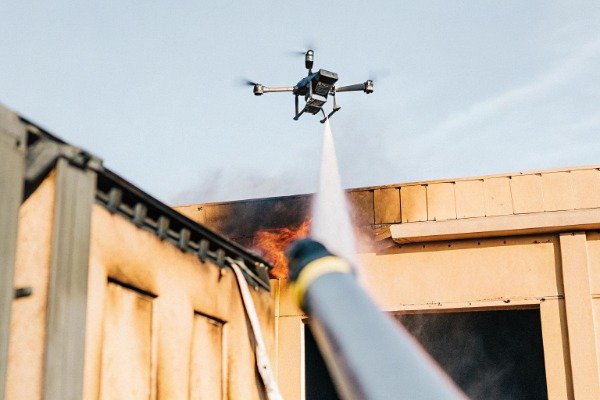
The payload is the eyes of the operation. In firefighting, seeing through smoke and accurately identifying hotspots is the primary function of the drone. Vague requests for "good cameras" often result in receiving standard photography equipment that fails in low-visibility conditions.
The Necessity of Radiometric Thermal Data
There is a massive difference between standard thermal imaging and radiometric thermal imaging. Standard thermal shows you relative heat—hot things look white, cold things look black. Radiometric thermal, however, measures the specific temperature of every pixel in the image.
radiometric thermal imaging 4
Why does this matter? When we develop software for our clients, radiometric data allows the drone to trigger an alarm if a specific pixel exceeds a temperature threshold (e.g., 300°C). This helps commanders distinguish between a warm roof (solar heating) and a smoldering fire underneath. In your specs, explicitly state: "Radiometric thermal sensor with point temperature measurement and area temperature measurement capabilities."
Optical Zoom and Standoff Distance
Safety dictates that the drone should stay as far away from the fire as possible while still gathering data. This is where optical zoom is critical. Digital zoom merely crops the image, resulting in pixelation. Optical zoom uses lenses to magnify the image without losing quality.
optical zoom is critical 5
We recommend specifying a minimum of 30x Optical Zoom. This allows the operator to read a hazardous material placard on a truck or inspect a window for survivors from 300 meters away, keeping the drone out of the direct heat plume and potential backdraft zones.
Sensor Specification Guide
When writing your requirements, use the table below to ensure you cover all aspects of the camera system.
| Característica | Specification | Operational Benefit |
|---|---|---|
| Thermal Resolution | 640 x 512 pixels (or higher) | High detail allows detection of smaller hotspots from altitude. |
| Frame Rate | 30 Hz (minimum) | Smooth video is essential for tracking moving targets or vehicles. |
| Zoom Type | Optical Zoom (20x – 30x) | Clear identification of hazards without flying dangerously close. |
| Gimbal | 3-Axis Brushless Stabilization | Keeps the image steady even when the drone is buffeted by wind. |
| Low Light | Starlight/Night Vision Mode | Essential for operations at night or in heavy smoke darkness. |
Additionally, consider requiring "Dual-Sensor" or "Hybrid" payloads. This means the drone carries both the thermal and optical cameras simultaneously on a single gimbal. This allows the operator to overlay the thermal image onto the optical image (often called MSX or fusion mode), providing context to the heat signatures.
What international safety and communication standards should I require from the manufacturer?
When we export to the US and Europe, compliance is non-negotiable. Ignoring safety standards puts your operation at legal risk. You must demand certified, secure, and reliable systems to protect your data and personnel.
Require manufacturers to comply with transmission standards like AES-256 encryption to protect sensitive data. Safety protocols should include redundant flight control systems, automatic return-to-home functions upon signal loss, and compliance with local aviation authority regulations, such as FAA or EASA standards, for BVLOS operations.

Safety in industrial aviation is built on redundancy and security. A firefighting drone operates over people and critical infrastructure; a failure can be catastrophic. Therefore, your specifications must go beyond performance and address reliability and data integrity.
Data Security and Encryption
Firefighting operations often involve sensitive data, including images of victims or critical infrastructure vulnerabilities. If the video feed is unencrypted, it can be intercepted by anyone with a standard receiver.
In your specifications, mandate AES-256 Encryption for the transmission link. This is the industry standard for secure data transfer. Furthermore, if you are a government entity, you might need to specify that no data is automatically uploaded to external cloud servers without user authorization. We often provide "Local Data Mode" for our government clients to ensure all flight logs and images remain on the device, physically secured.
Redundancy Systems
In aviation, "two is one, and one is none." Industrial drones should not rely on a single point of failure. When we design our heavy-lift platforms, we incorporate redundant sensors. You should specify:
- Dual IMU (Inertial Measurement Unit): If one fails, the backup takes over instantly to keep the drone stable.
- Dual Compass/GPS: Essential for navigation in environments with magnetic interference (common near large metal structures or power lines).
- Battery Redundancy: For larger drones, a dual-battery system is preferred. If one battery fails, the other provides enough power to land safely.
Regulatory Compliance and Obstacle Avoidance
Compliance with local aviation rules is critical. For example, in the US, Remote ID is now a requirement. Ensure your specs state: "Hardware and software compliant with FAA Remote ID requirements."
Remote ID is now a requirement 6
Additionally, for safety in smoke, specify Omnidirectional Obstacle Avoidance. Visual sensors often fail in smoke. Therefore, requesting Millimeter-wave Radar o LiDAR for obstacle avoidance is a smart move. These technologies can "see" through smoke better than optical cameras, preventing the drone from crashing into buildings or trees during low-visibility operations.
| Safety Feature | Requirement Level | Notes |
|---|---|---|
| Transmission Encryption | Mandatory (AES-256) | Prevents unauthorized video interception. |
| Signal Loss Behavior | Mandatory (Auto RTH) | Drone must automatically return home if link is lost. |
| Obstacle Avoidance | Mandatory (Radar/LiDAR preferred) | Visual avoidance is insufficient in smoke. |
| Remote ID | Mandatory (Region dependent) | Required for legal flight in US/EU airspace. |
How detailed should I be regarding battery life and charging cycle expectations?
We test batteries extensively to ensure they survive harsh field conditions. Vague battery specs lead to downtime when you need to fly. Clarity here ensures continuous mission readiness and accurate budget forecasting.
Specify the battery capacity in Watt-hours and the expected cycle life, typically requiring at least 300 to 500 cycles with minimal degradation. Demand smart battery management systems (BMS) that monitor cell health and request data on charging turnaround times to plan for continuous flight operations.
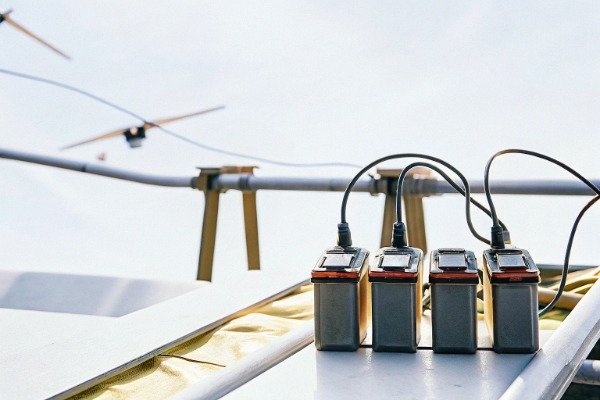
Batteries are the fuel of your drone fleet, and they are also a major consumable cost. If you do not define the quality and lifespan of the batteries, you may find yourself replacing expensive packs every few months, blowing your maintenance budget.
Cycle Life and Total Cost of Ownership
A battery’s "cycle life" refers to how many times it can be charged and discharged before its capacity drops below a usable level (usually 80%). Consumer drone batteries might only last 150 cycles. Industrial batteries should last much longer.
cell-level voltage monitoring 7
In your specs, require: "Minimum 400 charge cycles with >80% capacity retention." This ensures that the manufacturer uses high-quality cells. While these batteries might cost more upfront, the Total Cost of Ownership (TCO) is lower because you replace them less frequently.
Smart Battery Management Systems (BMS)
Firefighting drones are often stored for weeks and then used intensively for hours. Batteries that are stored fully charged degrade quickly. Batteries stored empty can die permanently.
Millimeter-wave Radar 8
You must specify "Smart Batteries with Self-Discharge capability." This feature allows the battery to automatically discharge itself to a safe storage level (usually 60%) if it hasn’t been used for a few days. Additionally, the BMS should provide cell-level voltage monitoring. This allows your maintenance team to identify a weak cell before it causes a mid-air power failure.
Charging Turnaround Time
In a continuous fire operation, the drone needs to be back in the air as soon as possible. You are not just buying batteries; you are buying a workflow.
AES-256 Encryption 9
Specify the charging speed. For example: "Fast charging capability: 20% to 90% in under 30 minutes." Also, ask for a charging hub that can manage multiple batteries simultaneously. If your drone flies for 30 minutes and takes 90 minutes to charge, you need a ratio of 4 batteries per drone to fly continuously. Knowing the charging speed helps you calculate exactly how many spare batteries to order in your initial RFQ.
Conclusión
Defining clear technical specifications prevents costly procurement mistakes. Use these guidelines to vet suppliers like SkyRover, ensuring you get durable, high-performance drones tailored to your critical firefighting missions.
conductive carbon dust 10
Notas al pie
- Highlights the importance of clear specifications in the procurement process. ↩︎
- Explains factors affecting real-world drone endurance versus manufacturer claims. ↩︎
- Defines the international standard for enclosure protection against dust and water. ↩︎
- Details the capability of thermal sensors to measure specific temperatures per pixel. ↩︎
- Distinguishes the quality benefits of optical zoom over digital cropping. ↩︎
- Links to the specific FAA regulation mandating identification broadcasts for drones. ↩︎
- Explains the function of Battery Management Systems in maintaining cell health. ↩︎
- Provides technical background on radar technology used for obstacle avoidance. ↩︎
- Explains the industry standard for securing sensitive data transmissions. ↩︎
- Describes the electrical hazards posed by conductive particles in industrial environments. ↩︎

 English
  Spanish
  German
  French
  Dutch
Dutch  Arabic
