
When we finalize designs at our Chengdu facility, our engineering team frequently debates how distinct the American agricultural landscape is compared to other regions. We realize that a drone optimized for a small rice paddy in Asia often struggles to meet the demands of a thousand-acre corn operation in Iowa. If you are importing equipment without analyzing these specific local nuances, you risk investing in hardware that gathers dust in a warehouse rather than flying over fields.
To assess US market needs, you must map regional crop types to specific drone payloads and verify strict compliance with FAA Part 107 and 137 regulations. It is critical to ensure software compatibility with major US farm management systems like John Deere John Deere Operations Center 1 and evaluate hardware durability against local weather patterns to guarantee a viable return on investment.
Let’s examine the critical factors that will define the success of your procurement strategy.
What payload capacity and flight endurance are necessary for the specific farm sizes in my region?
Our production line managers often adjust tank molding specifications based on the feedback we receive from partners operating in the vast expanses of the American Midwest American Midwest 2 versus the dense orchards of the West Coast. We have learned that offering a “one-size-fits-all” solution is a fast track to failure when dealing with the diverse scales of US agriculture.
Select high-capacity drones (40L+) with 20-minute flight times for large Midwest row crops to minimize refilling downtime and maximize acreage coverage. Conversely, choose smaller, agile models (10L-16L) with longer hover endurance for spot-spraying specialty crops in complex terrains like orchards or vineyards where maneuverability outweighs raw volume.
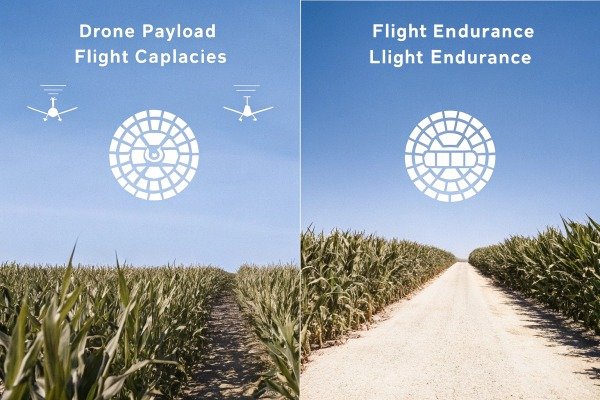
Matching Drone Specs to Crop Types
The United States is not a monolith; it is a collection of distinct agricultural biomes. When we configure our flight controllers, we see that the operational logic for spraying corn differs vastly from spraying almonds.
For Row Crops (Corn, Soybeans, Wheat), primarily found in the Midwest (Illinois, Iowa, Nebraska), the game is about speed and volume. Farmers here operate on thin margins across thousands of acres. A drone with a small tank requires frequent landings to refill, killing productivity. Here, heavy-lift drones or "swarm" capabilities—where one pilot controls multiple drones—are essential.
For Specialty Crops (Grapes, Nuts, Fruits), common in California and Florida, agility is key. The terrain is often hilly, and the crops are high-value. A massive drone might be too cumbersome to navigate between tree rows or follow strict terrain elevations. Here, endurance (battery life) is more valuable than tank size because the drone spends more time maneuvering than spraying.
The Battery vs. Payload Trade-off
A common misconception in procurement is that bigger is always better. However, as payload increases, flight time decreases. In our testing labs, we see a sharp drop in battery efficiency once payload exceeds 50 liters.
For a procurement manager, you must analyze the "Refill Cycle." If a drone drains its battery before its tank is empty, it is inefficient. If it empties the tank but still has 50% battery, you are carrying dead weight in lithium batteries. The sweet spot is when the battery and tank deplete simultaneously.
Regional Requirement Matrix
Below is a breakdown we use to help distributors match products to their local client base:
| Region | Dominant Crops | Ideal Tank Capacity | Key Flight Requirement | Recommended Drone Type |
|---|---|---|---|---|
| Midwest | Corn, Soy, Wheat | 40L – 50L | Speed & Swarm Capability | Heavy-lift Multi-rotor |
| West Coast | Grapes, Almonds | 10L – 30L | Terrain Follow & Obstacle Avoidance | Agile Hexacopter |
| South | Cotton, Peanuts | 30L – 40L | Heat Dissipation & Durability | High-Endurance Quadcopter |
| Northeast | Diverse Veg/Fruit | 10L – 16L | Precision Spot Spraying | Compact Multi-rotor |
How do I ensure the drones comply with FAA regulations and local spraying certifications?
We guide our export partners through the regulatory maze daily, knowing that a non-compliant shipment can sit indefinitely at customs or result in grounded fleets. We build specific remote identification modules into our US-bound units because we understand that regulatory adherence is not optional—it is the foundation of your business continuity.
Verify that the drone model supports Remote ID broadcasting as mandated by the FAA for all commercial UAVs. Ensure the manufacturer provides necessary documentation for Part 137 agricultural aircraft operator certification, and check that the specific unit meets local state department of agriculture requirements for aerial chemical application equipment.

The Critical Role of Remote ID
The Federal Aviation Administration (FAA) now enforces Remote ID Federal Aviation Administration 3, which acts like a "digital license plate" for drones. When we manufacture units for the US, we integrate these modules directly into the airframe.
If you purchase older models or cheaper alternatives that lack this hardware, your clients cannot legally fly them in the National Airspace System. Retrofitting aftermarket modules is clumsy, adds weight, and introduces potential failure points. Always ask your supplier for the Declaration of Compliance (DOC) that proves the specific serial numbers are registered with the FAA.
Part 137 and Chemical Dispensing
Flying a drone (Part 107) is different from dispensing chemicals (Part 137). dispensing chemicals (Part 137) 4 Part 137 5 The drone itself must be "airworthy" for dispensing. This often involves:
- Documentation: We provide comprehensive flight manuals and maintenance logs required for the Part 137 exemption process.
- Safety Features: The FAA looks for fail-safes. Does the drone stop spraying if the signal is lost? Does it have a "return-to-home" function that works when carrying a liquid load?
State-Level Nuances
While the FAA controls the airspace, state departments of agriculture control the chemicals. A drone might be legal federally but fail local checks.
- Drift Mitigation: Many states require specific nozzle types to reduce chemical drift. We often equip our export units with rotary atomizing nozzles or standard tee-jet compatible holders so users can swap nozzles to meet local compliance.
- Record Keeping: Some states require automated flight logs that record exactly where and how much chemical was sprayed. Your drone’s software must be able to export this data easily.
Compliance Checklist for Procurement
Use this checklist when vetting a supplier's regulatory readiness:
| Regulation Component | Requirement | Manufacturer Responsibility |
|---|---|---|
| Remote ID | Broadcast location/ID | Integrated hardware module compliant with ASTM F3411-22a. |
| Part 107 | Commercial Operation | Provide standard remote controller and reliable telemetry. |
| Part 137 | Dispensing Operations | Provide heavy-lift manuals, safety checklists, and maintenance schedules. |
| State Dept of Ag | Chemical Application | Compatible with approved drift-reduction nozzles (e.g., ASABE standards). |
Which software integrations are most critical for connecting with the precision agriculture tools my clients use?
Our software developers spend months coding APIs because we know American farmers hate manually transferring data between disjointed systems. We have seen superior hardware fail in the US market simply because it could not talk to the green and yellow tractors already sitting in the machine shed.
Prioritize drones that support standard shapefiles Shapefiles (.shp) 6 and integrate directly with Farm Management Information Systems (FMIS) like John Deere Operations Center or Climate Climate FieldView 7 FieldView. Essential features include variable rate application (VRA) capabilities and seamless data export for prescription mapping to ensure interoperability with ground-based tractors.
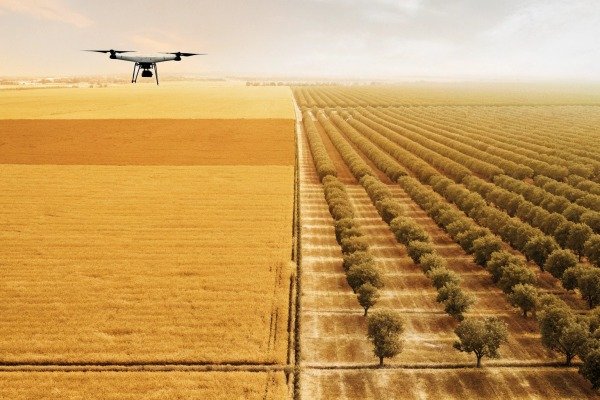
Breaking Down Data Silos
In the US market, data is as valuable as the crop itself. Farmers use Farm Management Information Systems (FMIS) to track everything from soil moisture to yield data. If your drone uses a proprietary file format that requires complex conversion, it disrupts the workflow.
We focus on using open standards. The ability to import and export Shapefiles (.shp) and ISOXML files ISOXML files 8 is non-negotiable. A farmer should be able to take a prescription map generated by a satellite or a scout drone, load it into the spray drone, and execute a mission without manual reconfiguration.
Variable Rate Application (VRA)
US agriculture is moving away from "blanket spraying" toward "precision application." precision application 9 VRA allows the drone to change the flow rate of chemicals based on the drone's location.
- Weed Spotting: The drone flies over a field; the map tells it, "There are weeds here, but not there." The drone turns the spray on and off automatically.
- Fertilizer: Areas with poor soil health receive more nutrients; healthy areas receive less.
If the drone's flight controller cannot process VRA maps rapidly, it will lag, spraying the wrong areas. We test our processors to ensure they can handle high-resolution prescription maps in real-time.
Connectivity in Rural Areas
A major oversight in software assessment is assuming internet connectivity. Many vast American farms are in "dead zones" with poor cellular service.
- Offline Mode: The software must allow mission planning and execution without an active internet connection.
- RTK Base Stations: Instead of relying on Network RTK (which needs cell service), we recommend bringing local RTK base stations. This ensures centimeter-level accuracy even in the middle of nowhere.
Essential Software Features Table
| Característica | Function | Why US Clients Need It |
|---|---|---|
| Shapefile (.shp) Import | Reads boundary/prescription maps | Compatibility with existing farm data. |
| Cloud Sync | Auto-upload flight logs | Insurance verification and regulatory reporting. |
| Terrain Following | Radar-based altitude adjustment | Maintains consistent spray height over uneven hills. |
| Obstacle Avoidance | Radar/Vision detection | Prevents crashes into irrigation pivots or power lines. |
| VRA Support | Adjusts flow rate on the fly | Reduces chemical costs and environmental impact. |
How should I evaluate the drone's durability to handle the unique terrain and weather conditions of my local market?
We test our carbon fiber frames in wind tunnels and rain chambers, simulating the harsh storms of the Great Plains to ensure reliability. We understand that a drone that looks sleek in a showroom but cracks under the vibration of a Kansas wind is a liability to your reputation and your customer’s harvest.
Assess the drone’s IP rating for water and dust resistance, aiming for at least IP67 to withstand frequent washdowns and field dust. Evaluate wind resistance ratings against local averages, and inspect the frame’s carbon fiber quality to ensure it survives constant vibration and rough landings on uneven rural terrain.
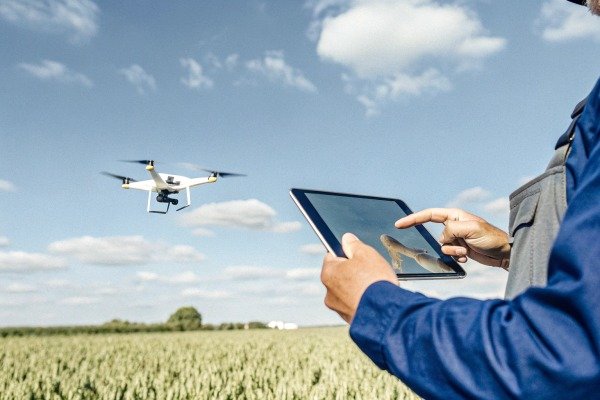
Weathering the Storm
The US climate is extreme. In the Midwest, wind gusts of 25-30 mph are common during the spraying season. In the South, humidity and heat can melt inferior plastics or overheat electronics.
- Wind Resistance: We design our propulsion systems (motors and propellers) to have a high thrust-to-weight ratio. This allows the drone to fight crosswinds and maintain a straight flight path. If a drone drifts off course, it leads to "striping" (missed crop rows).
- Heat Dissipation: Agricultural drones carry heavy loads, which heats up motors and batteries. Liquid-cooled batteries or actively cooled charging stations are essential for operations in states like Texas or Arizona.
The Importance of IP Ratings
Farming is dirty work. Drones get covered in mud, chemical residue, and dust. At the end of the day, the operator needs to hose the drone down.
- IP67 Rating: This means the drone is dust-tight and can handle low-pressure water jets.
- Corrosion Resistance: Fertilizer is highly corrosive. We use sealed electronics and corrosion-resistant connectors. If you buy a drone with exposed wiring or standard copper contacts, they will corrode within a season, leading to electrical failures.
Structural Integrity and Modularity
Accidents happen. A drone might clip a tree branch or land too hard. The difference between a minor annoyance and a total loss is modularity.
- Arm Design: Are the arms foldable? Are they easy to replace? We design arms that can be swapped out by the user in the field with basic tools.
- Landing Gear: This takes the most abuse. We reinforce landing gear with shock-absorbing materials to protect the expensive tank and sensors during rough landings.
Maintenance and Spare Parts Availability
Durability is also about how quickly you can fix it.
- Proprietary vs. Standard: We try to use standard industrial connectors where possible, but critical airframe parts are specific. standard industrial connectors 10
- Local Inventory: For a US distributor, holding a stock of propellers, motors, and landing gear is vital. Waiting two weeks for a replacement part from China during the harvest season is unacceptable. We support our partners by helping them predict necessary spare parts inventory based on historical crash data.
Conclusión
Successfully assessing the US market for agricultural drones requires a strategic balance between agronomy, regulation, and engineering. It is not enough to simply import the latest technology; you must match payload capacities to regional farm scales, ensure ironclad FAA compliance, verify interoperability with existing digital agriculture ecosystems, and demand hardware that can survive the rugged American environment. By addressing these four pillars, you position your business not just as a vendor, but as a reliable partner in the future of American farming.
Notas al pie
1. Official product documentation for the John Deere farm management platform. ↩︎
2. Recent news and market data concerning agricultural production in the Midwest. ↩︎
3. Official FAA portal for Remote ID compliance and drone registration. ↩︎
4. Official FAA guidance on Part 137 certification for agricultural drones. ↩︎
5. Official FAA regulations for agricultural aircraft operations and chemical dispensing. ↩︎
6. Official site of the organization that developed and maintains the shapefile format. ↩︎
7. Official site for the Climate FieldView precision agriculture software. ↩︎
8. ISO standard for data exchange between agricultural software and machinery. ↩︎
9. Official USDA resource defining precision agriculture practices. ↩︎
10. International standards body defining protection and connector specifications for industrial equipment. ↩︎

 English
  Spanish
  German
  French
  Dutch
Dutch  Arabic
