
There is nothing worse than watching a heavy payload drone fall from the sky because a battery cell failed mid-flight Bus CAN 1. When we test our SkyRover units in Chengdu, we intentionally push power systems to the limit to ensure this nightmare scenario never happens to our clients. A basic battery might power the drone, but it will not protect your investment when temperatures spike or voltage sags unexpectedly.
To evaluate an Intelligent Battery Management System (BMS), you must ask about its specific safety protocols, communication standards, storage features, and data logging capabilities. Verify that the BMS offers real-time cell balancing, overcharge protection, automatic self-discharge for storage, and CAN Bus integration to share health data directly with the flight controller.
Here is a detailed guide on the specific questions you need to ask suppliers to ensure you are getting a reliable, industrial-grade power system.
What specific safety protections should I verify to prevent battery overheating and overcharging?
We often see clients worried about fire risks, especially when charging large fleets of batteries fire risks 2 in hot warehouses. Our engineering team prioritizes safety logic above all else because a single thermal runaway event can destroy an entire operation thermal runaway event 3. You need to know if the system reacts proactively or just passively monitors the situation.
You should confirm that the BMS utilizes dual-layer protection for both software and hardware to prevent overcharging. Ask if the system includes active thermal monitoring that triggers an automatic cutoff if temperatures exceed 60°C (140°F), and verify it has individual cell monitoring to detect short circuits before they cause thermal runaway.
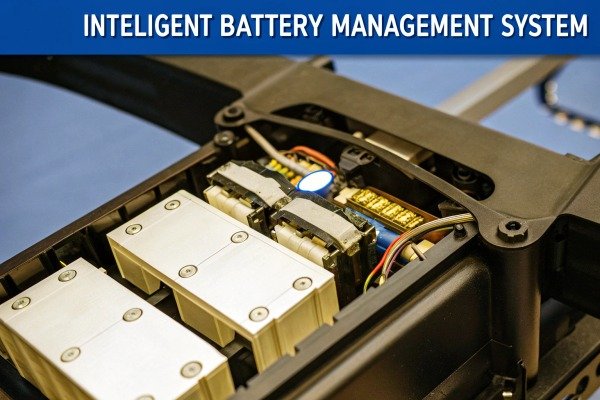
When you are spraying crops under the summer sun, your drone batteries are under immense stress. The load from the motors combined with high ambient temperatures can push battery cells to their limits. Therefore, simply asking "is it safe?" is not enough. You need to drill down into the technical layers of protection.
Hardware vs. Software Protection
A high-quality BMS does not rely on software alone. Software can freeze or glitch. You want to ask the supplier if there is a secondary hardware fuse or a physical disconnect mechanism hardware fuse 4. If the software fails to stop a charge cycle when the battery is full, the hardware must step in to cut the circuit. This redundancy is critical for agricultural drones that undergo daily charge cycles.
Temperature Thresholds
Agricultural environments are harsh. Ask the manufacturer for specific temperature cutoff numbers. Standard consumer batteries might cut off at 70°C, but for heavy-lift agricultural drones, we prefer tighter tolerances.
- Charging Protection: The BMS should stop charging if the battery is below 5°C (to prevent lithium plating) or above 45°C.
- Discharging Protection: The BMS should alert the pilot at 55°C and force a landing or cut power at 65°C to prevent fire.
Short Circuit and Overcurrent
In the field, debris or moisture can sometimes cause connection issues. connection issues 5 The BMS must detect a short circuit instantly—usually within microseconds—and isolate the battery. Furthermore, overcurrent protection is vital during takeoff with a full tank. If the pilot pushes the throttle max, the battery must handle the surge without shutting down, provided it is within safe limits.
| Safety Feature | Standard BMS | Advanced Agri-BMS | Why it Matters |
|---|---|---|---|
| Overcharge Protection | Single layer (Software) | Dual layer (Software + Hardware Fuse) | Prevents fires if the charger malfunctions. |
| Thermal Sensors | 1-2 probes per pack | Probes on individual cell groups | Detects hot spots in specific areas of the pack. |
| Tiempo de respuesta | >500 milliseconds | <100 microseconds | Faster reaction prevents permanent cell damage. |
| Moisture Protection | Basic coating | IP65/IP67 Potting | Prevents short circuits from pesticide mist. |
How does the BMS communicate real-time voltage and health data to my flight control system?
In our experience exporting to the US, we find that many crashes occur not because the battery died, but because the pilot did not know the battery was dying. When we calibrate our flight controllers, we ensure the battery speaks flight controllers 6 the same “language” as the drone, allowing for intelligent decision-making during the mission.
The BMS must communicate via robust industrial protocols like CAN Bus or UART to transmit real-time data to the flight controller. This integration allows the drone to see individual cell voltages, total current draw, and temperature, enabling the autopilot to trigger a “Return-to-Home” (RTH) failsafe based on accurate remaining energy rather than simple voltage estimates.

A "dumb" battery only provides power; a "smart" battery provides intelligence. When negotiating with suppliers, you need to verify that the BMS is not just an isolated circuit board but an integrated part of the drone's avionics.
The Importance of CAN Bus
Old or cheap drones often use simple voltage dividers to guess how much battery is left. This is dangerous because voltage fluctuates wildly under load. If you throttle up to lift a heavy spray tank, voltage sags. A dumb system might think the battery is empty and force a landing in a cornfield.
A BMS using CAN Bus (Controller Area Network) sends digital data packets. It tells the flight controller: "I am at 40% capacity, even though voltage is sagging due to load." This prevents false alarms and crashes.
What Data Points to Verify
When you speak to a supplier, ask them exactly what data is visible on the remote controller screen. You should look for:
- Cell-Level Voltage: Knowing the total voltage isn't enough. If one cell is at 3.0V and the others are at 3.8V, the pack is dangerous. The pilot needs to see this imbalance.
- Cycle Count: The pilot should see how old the battery is directly on the screen.
- Temperature: Real-time alerts if the pack is overheating.
Integration with Autopilot
The most critical function of communication is the automatic Return-to-Home (RTH). Return-to-Home 7 Ask the supplier: "Does the BMS calculate 'Smart RTH'?" This feature uses the distance from the home point and current power consumption to calculate exactly when the drone needs to turn back. It removes the guesswork for the operator.
Connection Reliability
Agricultural drones vibrate intensely. Ask about the physical connectors used for this data communication. Are they standard servo pins (which vibrate loose) or locking industrial connectors?
Does the intelligent battery system include automatic self-discharge functions for safe long-term storage?
During the off-season, our clients often store hundreds of batteries for months at a time. We have seen too many customers ruin perfectly good batteries by leaving them fully charged all winter. A swollen battery is not just a financial loss; it is a significant safety hazard that could be easily avoided.
Yes, a high-quality intelligent battery system must include a programmable auto-discharge function that releases excess energy as heat to reach a storage level of 3.80V–3.85V per cell. This feature typically activates after 3 to 10 days of inactivity, preventing the chemical decomposition that causes swelling and permanent capacity loss.
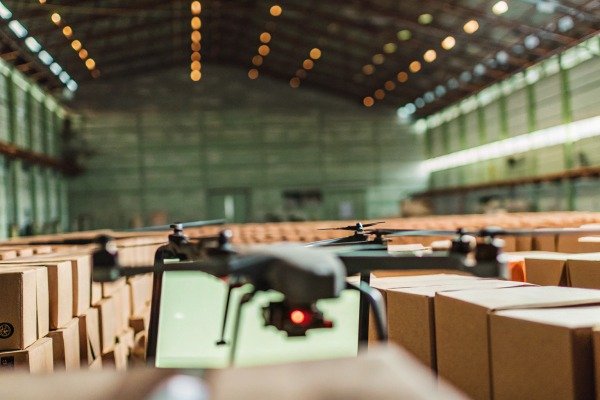
Lithium polymer batteries hate two things: being completely empty and being completely full for long periods. In agriculture, work is seasonal. You might fly intensely for three weeks and then not fly for two months. If the BMS cannot manage itself, you will lose your fleet.
The Science of Swelling
If a battery is left at 100% charge (4.2V or 4.45V for High Voltage cells), the electrolyte inside begins to decompose electrolyte inside begins to decompose 8 electrolyte inside begins to decompose 9 and generate gas. This puffs up the battery. Once a battery swells, it is unsafe to fly. It physically might not fit in the drone, and the internal pressure increases fire risk.
You must ask the supplier: "Does this battery discharge itself?"
User-Programmable Timers
The best BMS allows you to set the timer. For example, if you are flying every day, you don't want the battery to discharge overnight. You want it ready for tomorrow.
- Default Setting: Usually discharges after 10 days.
- Optimized Setting: For harvest season, set it to 2 days.
This flexibility is key. If the discharge function is hard-coded to 24 hours, you will waste energy recharging batteries every morning.
Heat Dissipation During Discharge
When the battery discharges itself, that energy has to go somewhere. It turns into heat. Ask the supplier where the heating elements are located. A poor design heats up the cells directly, which degrades them. A good design uses the BMS aluminum casing or external resistors to dissipate heat away from the delicate chemical cells.
| Storage Duration | Target Voltage Per Cell | BMS Action |
|---|---|---|
| < 2 Days | 4.20V – 4.35V (Full) | No action (Ready to fly) |
| 3 – 10 Days | Auto-discharge starts | Slowly drains to storage level |
| Long Term (>1 Month) | 3.80V – 3.85V | Enters "Sleep Mode" to minimize drain |
Can the BMS record charge cycles and error history to help me track maintenance needs?
We use historical data constantly to troubleshoot warranty claims and improve our product designs. When a customer claims a battery failed “for no reason,” the data log usually tells the true story. For a procurement manager, this transparency is your best tool for calculating ROI and managing inventory.
You should verify that the BMS acts as a “Black Box,” recording total cycle counts, maximum temperature events, over-discharge history, and specific error codes. This data should be accessible via a PC interface or mobile app, allowing you to identify abused batteries and predict when replacements will be needed based on health trends.

Treat your drone batteries like an asset, not a consumable. To do this, you need data. Intelligent BMS units store a history of the battery's life. This is often referred to as a "Battery Passport."
Why History Matters for Maintenance
Imagine you have 50 batteries. Five of them are performing poorly. Without data logs, you have to test them all. With a smart BMS, you plug them in and see:
- Battery A: 50 cycles, Health 99%.
- Battery B: 52 cycles, Health 75% (History shows it was overheated to 75°C twice).
Now you know Battery B is damaged due to misuse, not a manufacturing defect. You can retire it before it causes a crash.
Detecting "Abuse"
As a buyer, you need to know if your field operators are treating equipment correctly. The BMS logs can tell you:
- Over-discharge events: Did the pilot fly until the drone fell out of the sky?
- Storage violations: Was the battery left full for 3 months?
- Fast charging frequency: Was it always charged at the highest possible amperage?
Accessibility of Data
Data is useless if you can't read it. Ask the supplier how to access this info.
- Dongle/PC: Do I need a special cable and software?
- Mobile App: Can I see the cycle count via Bluetooth on my phone?
- Cloud: Does the charger upload data to the cloud? (This is a premium feature emerging in 2026).
Common BMS Error Codes to Ask About
Ask the supplier to provide a list of error codes the BMS can generate. This helps your maintenance team diagnose issues quickly.
| Error Code | Meaning | Se requiere acción |
|---|---|---|
| Cell Imbalance | Voltage difference >0.1V between cells | Perform balance charge cycle |
| Over-Temp Discharge | Battery exceeded safe temp during flight | Check cooling efficiency / Reduce payload |
| Short Circuit | External short detected | Inspect drone connectors for damage |
| Under-Voltage | Battery drained below critical level | Check for permanent capacity loss |
Conclusión
The safety and efficiency of your agricultural drone fleet depend heavily on the intelligence of the Battery Management System. Battery Management System 10 By asking targeted questions about safety protections, real-time communication protocols like CAN Bus, auto-discharge storage capabilities, and historical data logging, you can distinguish between a basic hobbyist battery and a professional industrial power system. Ensuring your supplier provides these advanced BMS features will reduce fire risks, extend the lifespan of your equipment, and ultimately maximize the profitability of your farming operations.
Notas al pie
1. The international standard for Controller Area Network (CAN) bus protocols. ↩︎
2. Official guidance on lithium-ion battery safety and fire prevention. ↩︎
3. Authoritative safety organization defining the specific battery hazard mentioned. ↩︎
4. Leading manufacturer documentation on physical circuit protection components. ↩︎
5. Manufacturer documentation for industrial-grade connectors used in harsh environments. ↩︎
6. Official site for the industry-standard open source flight control software. ↩︎
7. Technical explanation of RTH failsafe mechanisms from a leading drone manufacturer. ↩︎
8. Educational resource explaining chemical degradation in stored lithium batteries. ↩︎
9. Scientific definition and role of electrolytes in battery chemical reactions. ↩︎
10. General overview of BMS functions and architecture. ↩︎

 English
  Spanish
  German
  French
  Dutch
Dutch  Arabic
