
During our production runs in Xi’an, we constantly receive requests from US importers asking about compliance documentation. Many buyers feel lost navigating the complex web of FAA and FCC requirements 1. The stakes are high—one missing warning label can block your entire shipment or expose you to serious liability.
To request US safety warnings in agricultural drone manuals, buyers should provide suppliers with specific documentation requirements including FAA Part 107 and Part 137 compliance language, ANSI Z535 safety label standards, EPA chemical handling warnings, and FCC communication requirements before production begins. Always request supplier affidavits confirming compliance.
Let me walk you through exactly how to communicate these requirements to your manufacturer and what specific warnings your manual must contain for the US market.
How do I ensure my agricultural drone manual includes all necessary US-compliant safety warnings?
Our engineering team has spent years refining manuals for the American market. Many importers discover compliance gaps only after their drones arrive at US customs. This creates costly delays and rework that could have been avoided with proper upfront communication.
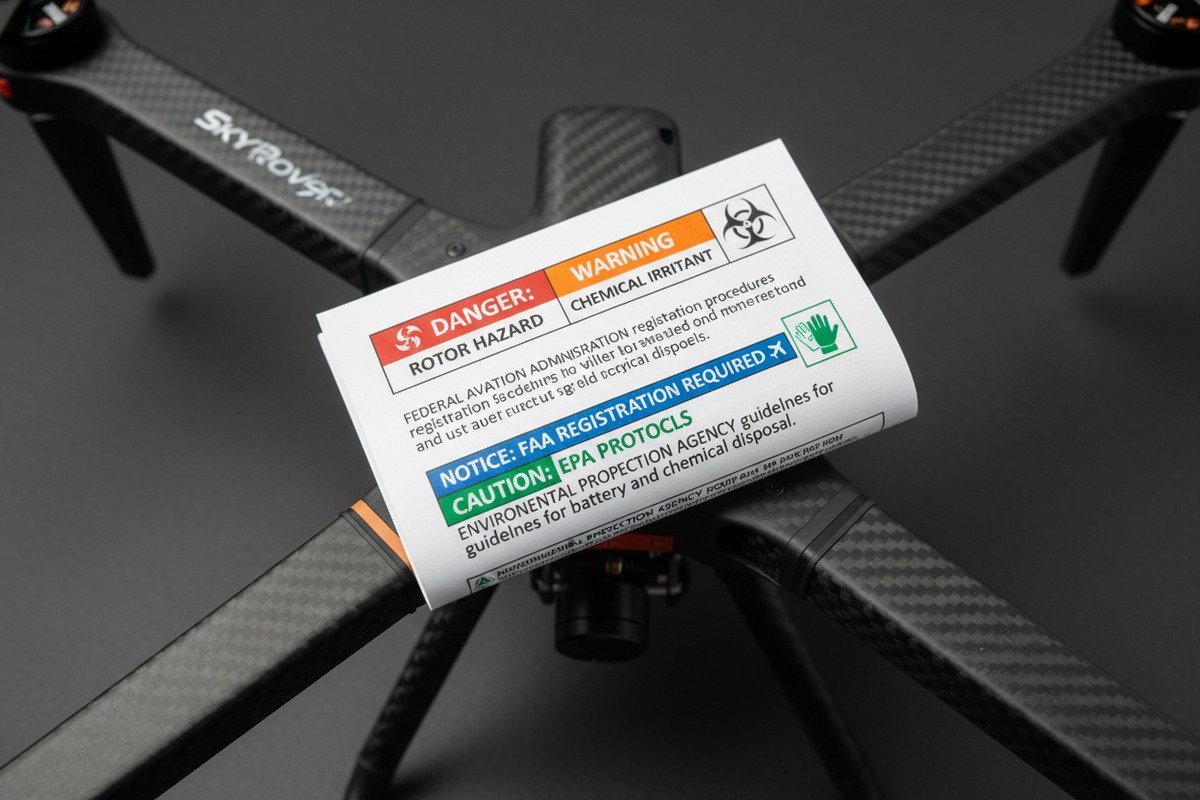
Ensure US-compliant safety warnings by requiring your supplier to include FAA registration requirements, Part 107 pilot certification notices, visual line-of-sight operational limits, chemical handling protocols per EPA guidelines, and ANSI Z535 formatted warning labels with standardized signal words like DANGER, WARNING, and CAUTION.
Start With a Compliance Checklist
Before placing your order, create a detailed checklist of required manual contents. Send this to your supplier during the quotation phase. This prevents misunderstandings later.
Your checklist should cover these core areas:
| Categoría | Required Manual Content | Regulatory Source |
|---|---|---|
| Registration | FAA registration process 2 for drones >250g | 14 CFR Part 48 |
| Certificación de piloto | Part 107 Remote Pilot Certificate requirements | 14 CFR Part 107 3 |
| Agricultural Operations | Part 137 Agricultural Aircraft Operator Certificate steps | 14 CFR Part 137 4 |
| Chemical Handling | Pesticide loading, mixing, and disposal warnings | EPA/FIFRA 5 |
| Airspace | No-fly zones and controlled airspace restrictions | FAA UAS Facility Maps |
| Weight Exemptions | Section 44807 exemption process for drones >55 lbs | 49 USC 44807 |
Specify Warning Label Formats
The US market requires specific warning label formats. ANSI Z535 is the standard. ANSI Z535 safety label standards 6 This standard uses specific colors and signal words that American users recognize instantly.
Request that your supplier use these signal word hierarchies:
- DANGER: Indicates hazards that will cause death or serious injury
- WARNING: Indicates hazards that could cause death or serious injury
- CAUTION: Indicates hazards that could cause minor or moderate injury
Include Operational Procedure Warnings
Manuals must contain step-by-step safety procedures. These include pre-flight checks, in-flight precautions, and post-flight protocols. Each section needs clear warnings about potential hazards.
Pre-flight warnings should cover propeller inspection, motor checks, battery level verification, and environmental assessment. In-flight warnings must address maintaining visual line of sight and safe distances from people and obstacles. Post-flight warnings need to detail proper shutdown sequences and chemical system cleaning.
Can I work with my supplier to customize safety labels and warnings for my specific drone model?
When we develop custom solutions at our facility, collaboration on safety documentation is standard practice. Yet many buyers hesitate to ask for customization, assuming it costs extra or delays shipment. The truth is that professional manufacturers expect these requests.
Yes, you can and should customize safety labels with your supplier. Provide your specific payload configurations, intended applications, and target user profiles. Professional manufacturers will adapt warnings to cover your exact chemical dispensing systems, flight controller features, and operational environments at minimal additional cost.

Define Your Specific Use Cases
Different agricultural applications require different warnings. A drone used for precision spraying needs different safety content than one used for crop monitoring. Be specific about your intended uses.
| Application Type | Additional Warnings Required | Special Considerations |
|---|---|---|
| Pesticide Spraying | Chemical exposure risks, buffer zone requirements, RPAS-approved pesticide list | EPA label compliance, 100-ft buffer zones |
| Fertilizer Distribution | Corrosion warnings, environmental contamination risks | Cleaning protocols, storage requirements |
| Crop Monitoring | Data security notices, sensor calibration warnings | FCC compliance for RF equipment |
| Seed Dispersal | Mechanical jam hazards, weight distribution warnings | Hopper capacity limits |
Request Multi-Language Options
The US agricultural workforce is diverse. Key safety warnings should be available in multiple languages. At minimum, request English and Spanish versions. Better yet, use universal pictograms that transcend language barriers.
Our production team regularly creates dual-language labels. We also develop pictogram-based quick reference cards. These help operators who may not read English fluently understand critical safety information.
Integrate Digital Safety Resources
Paper manuals are just the beginning. Request that your supplier integrate safety warnings into digital platforms. This includes drone control apps, interactive checklists, and video tutorials.
Digital integration offers several advantages. Updates can be pushed remotely when regulations change. Real-time alerts can warn operators about airspace restrictions. Training videos can demonstrate proper procedures more clearly than text descriptions.
Work with your supplier to establish a feedback mechanism. This allows your customers to report safety concerns or suggest improvements. Professional manufacturers will use this data to refine their documentation continuously.
What specific FAA and OSHA safety requirements should I verify in my drone's user documentation?
Our compliance team tracks regulatory changes weekly. The landscape shifts constantly, especially with recent FCC restrictions on foreign-made drones. Missing even one requirement can result in fines up to $75,000 per violation. Understanding exactly what to verify protects your business.
Verify that documentation covers FAA Part 107 Remote Pilot Certificate requirements, Part 137 Agricultural Aircraft Operator Certificate procedures, Section 44807 exemption processes for drones exceeding 55 pounds, FCC equipment authorization status, OSHA workplace safety standards, and EPA FIFRA pesticide application rules with specific chemical handling protocols.

FAA Certification Pathway
The FAA pathway for agricultural drones involves multiple steps. Your manual must explain each clearly. Operators need both Part 107 certification and Part 137 authorization for commercial spraying operations.
| Certification Step | Manual Requirements | Contact/Resource |
|---|---|---|
| Part 107 Remote Pilot | Test preparation guidance, certification maintenance | FAA IACRA system |
| Part 137 AAOC | Petition process, required documentation list | 9-******************@*AA.gov |
| Sección 44807 Exención | Application procedures for >55 lb drones | FAA UAS Integration Office |
| Registration | Marking requirements, renewal procedures | FAA DroneZone |
The Part 137 process requires more than just a user manual. Manufacturers often need to provide an Operations and Procedures Manual, a Training and Certification Manual, and an Operational Risk and Safety Manual. Verify that your supplier can provide these supporting documents.
FCC Compliance Considerations
The FCC ban effective December 2025 prohibits new foreign-made drones on US communications networks. This creates significant sourcing challenges. Your documentation must address communication equipment compliance.
Request that your supplier provide FCC equipment authorization documentation. Verify that communication modules are not on the FCC Covered List 7. This is especially critical given restrictions on Chinese manufacturers like DJI and Autel.
NDAA-compliant platforms are increasingly preferred. Consider sourcing from manufacturers who can demonstrate compliance with Section 1709 requirements. This protects your supply chain from future regulatory disruptions.
OSHA and EPA Requirements
Agricultural drone operations involve workplace safety and environmental regulations beyond FAA oversight. OSHA standards 8 apply to operators handling chemicals and working around rotating equipment. EPA regulations govern pesticide application.
Your manual should include:
- Personal protective equipment requirements
- Chemical exposure emergency procedures
- Proper pesticide storage and disposal
- Buffer zone requirements for sensitive areas
- Record-keeping obligations for chemical applications
Only pesticides with specific RPAS labeling are approved for drone application. Currently, the US EPA is reviewing drone-specific registrations. Your documentation should list approved chemicals and warn against using unapproved substances.
How can I confirm that my manufacturer's safety warnings will protect my business from liability in the US market?
We have seen importers face lawsuits because their documentation failed to warn about foreseeable risks. Protecting your business requires more than checking boxes. You need documentation that demonstrates due diligence and meets legal standards for adequate warning.
Confirm liability protection by requiring supplier affidavits certifying compliance with US standards, conducting third-party manual audits against ANSI Z535 requirements, verifying that warnings address all foreseeable use scenarios, and establishing documentation traceability showing your active role in specifying safety content requirements.

Obtain Supplier Compliance Affidavits
Request formal written confirmation from your supplier. This affidavit should state that manuals comply with specific US standards. It creates a paper trail showing your due diligence efforts.
The affidavit should confirm compliance with:
- ANSI Z535 warning label standards
- FAA-required disclosures
- EPA chemical handling guidelines
- FCC communication equipment rules
- OSHA workplace safety requirements
Keep these documents for your records. They demonstrate that you actively verified compliance rather than blindly accepting whatever your supplier provided.
Conduct Independent Manual Reviews
Do not rely solely on supplier assurances. Have an independent party review your documentation. This could be a US-based compliance consultant, an industry attorney, or a specialized testing organization.
Independent review catches gaps that suppliers might miss. It also provides additional documentation of your due diligence efforts. If litigation occurs, this evidence shows you took reasonable steps to ensure adequate warnings.
Address Foreseeable Misuse Scenarios
US product liability law requires warnings about foreseeable misuse. Your manual should address scenarios where operators might deviate from recommended procedures. This includes common shortcuts and mistakes.
| Foreseeable Misuse | Required Warning Content | Risk Level |
|---|---|---|
| Operating without proper certification | Legal consequences, insurance voidance | Alto |
| Flying in restricted airspace | Penalties, collision risks, national security | Alto |
| Using unapproved chemicals | Environmental violations, equipment damage | Medio |
| Exceeding payload limits | Structural failure, crash hazards | Alto |
| Ignoring weather restrictions | Loss of control, property damage | Medio |
| Bypassing pre-flight checks | Component failure, injury risk | Alto |
Establish Update Mechanisms
Regulations change. Your documentation must evolve with them. Establish a system with your supplier for ongoing updates. This shows continued commitment to safety compliance.
Request that your supplier notify you of regulatory changes affecting documentation. Build update costs into your ongoing relationship. Digital delivery methods make updates faster and cheaper than reprinting paper manuals.
The FCC ban implementation and evolving EPA drone pesticide regulations will require documentation updates. Planning for this now prevents scrambling later. Professional manufacturers like us track these changes and proactively communicate with customers about needed updates.
Conclusión
Requesting proper US safety warnings requires clear communication with your supplier before production begins. Specify FAA, FCC, EPA, and OSHA requirements explicitly. Obtain compliance affidavits and consider independent audits to protect your business from liability in this complex regulatory environment.
Notas al pie
1. Provides an overview of drone regulations from the FAA, which also covers FCC considerations. ↩︎
2. Official FAA portal for drone registration and managing UAS services. ↩︎
3. Official federal regulation detailing requirements for small unmanned aircraft systems. ↩︎
4. Official federal regulation outlining rules for agricultural aircraft operations. ↩︎
5. Summary of the federal law governing pesticide regulation by the EPA. ↩︎
6. Explains the American National Standards Institute’s standards for safety signs and labels. ↩︎
7. Official FCC page identifying communications equipment deemed a national security risk. ↩︎
8. Official OSHA page providing access to occupational safety and health standards. ↩︎

 English
  Spanish
  German
  French
  Dutch
Dutch  Arabic
