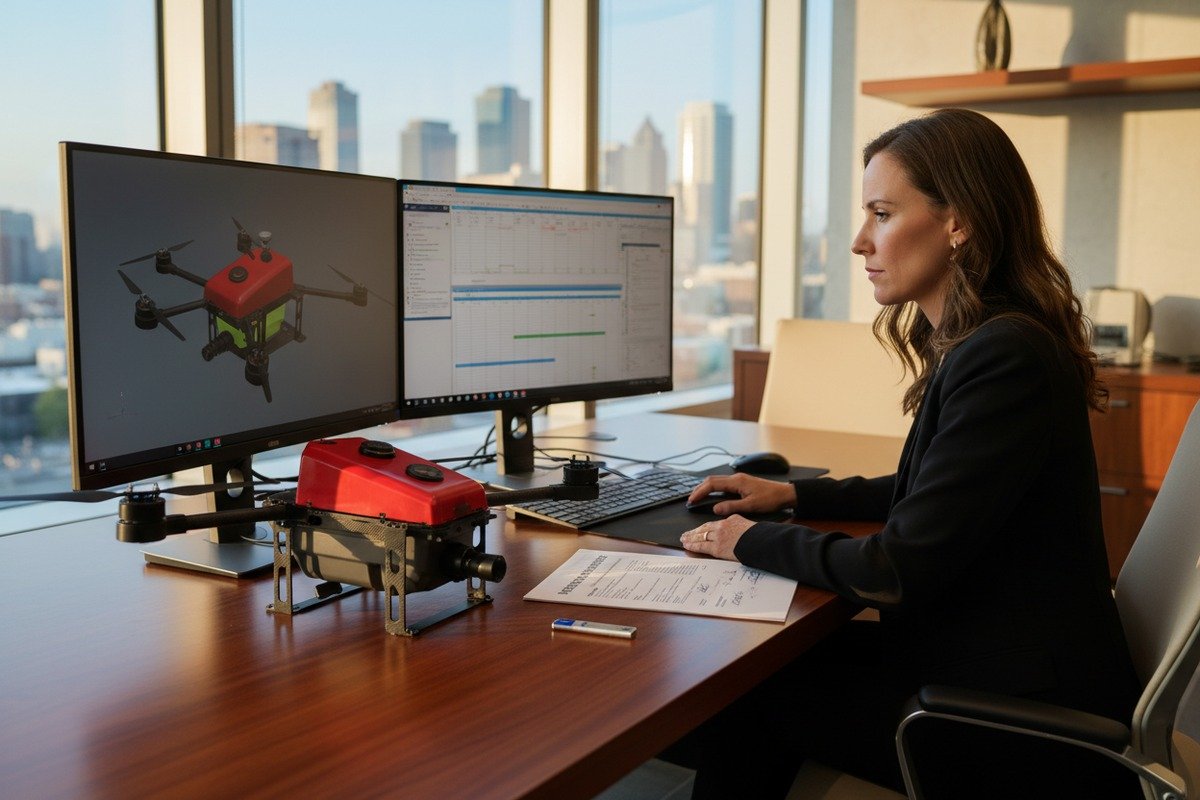
Every week, our engineering team reviews inquiries from buyers who want custom drones contra incendios 1. Many share detailed CAD files before signing any agreement. This openness creates massive IP risks 2.
To protect design drawings when sourcing firefighting drones, implement layered safeguards: legally binding NDAs with jurisdiction-specific clauses, technical file protection like watermarking and encrypted sharing, staged information release during supplier vetting, and continuous monitoring for unauthorized copies across global marketplaces.
The following sections break down each protective layer modular architecture 3. You will learn practical steps to secure your proprietary thermal imaging systems, CNN-based fire detection algorithms, and heat-resistant airframe designs throughout the entire sourcing process.
What legal safeguards should I put in place to prevent my firefighting drone blueprints from being leaked?
When our legal team drafts contracts for international clients, we see the same gaps repeatedly. Buyers trust verbal promises. They skip jurisdiction clauses. Then problems arise, and they have no recourse.
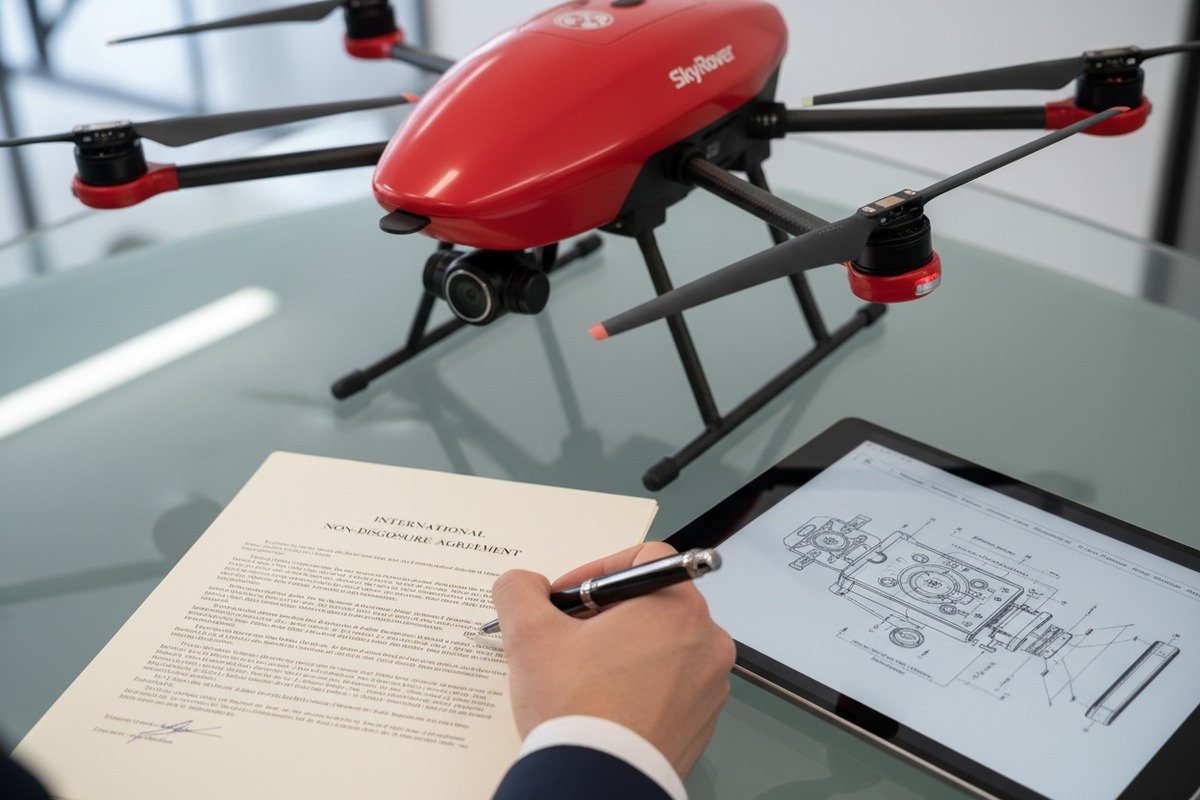
Essential legal safeguards include multi-jurisdictional NDAs with liquidated damages clauses, patent registrations filed before sharing designs, work-for-hire agreements clarifying IP ownership, and contracts specifying arbitration venues in enforceable jurisdictions like Singapore or Hong Kong.
Start With Patent and Trademark Registration
Before sharing any drawings, register your intellectual property. patent registrations 4 This applies to patents, trademarks, and copyrights. File in your home country first. Then file in manufacturing countries like China.
China operates on a "first-to-file" system. If someone else registers your design first, they own it there. We have seen Western companies lose rights to their own thermal camera housings because they delayed filing.
| IP Type | Where to Register First | Timeline Before Sharing | Cost Range |
|---|---|---|---|
| Patents | Home country + China | 6-12 months | $5,000-$25,000 |
| Trademarks | Home country + China | 3-6 months | $1,000-$5,000 |
| Copyrights | Home country | 1-3 months | $500-$1,500 |
| Trade Secrets | Document internally | Before any disclosure | Minimal |
Draft NDAs With Teeth
Generic NDAs fail in cross-border disputes. Your agreement must include specific elements to be enforceable.
First, specify governing law. Choose a jurisdiction with strong IP enforcement. Singapore and Hong Kong courts recognize international IP rights better than mainland China courts.
Second, include liquidated damages. Courts struggle to calculate IP theft losses. Pre-agreed damages of $100,000 or more deter violations and simplify litigation.
Third, add audit rights. Your NDA should allow you to inspect the manufacturer's systems. This catches problems early.
Fourth, define "confidential information" precisely. List CAD files by name. Describe your CNN fire detection algorithms. Mention thermal sensor specifications. Vague definitions create loopholes.
Work-for-Hire and Ownership Clauses
When you co-develop with a manufacturer, who owns what? Without clear terms, disputes are inevitable.
Our contracts always state that any improvements made during manufacturing belong to the original IP holder. If our engineers optimize a client's heat-resistant propeller design, that improvement goes back to the client.
Specify ownership for every deliverable: source code, manufacturing drawings, testing data, and tooling designs. Leave nothing ambiguous.
How can I evaluate if a drone manufacturer's internal data security meets my IP protection standards?
During factory tours, our clients often focus on production lines and ignore server rooms. They check propeller quality but skip asking about firewall configurations. This gap costs them later.
Evaluate manufacturer data security through ISO 27001 certification verification, on-site security audits, employee access control policies review, encrypted file transfer capability testing, and reference checks with previous clients who shared sensitive IP.

Request Certifications and Audit Records
ISO 27001 certification 6 indicates a manufacturer takes information security seriously. This international standard covers data handling, access controls, and breach response.
Ask for the certificate. Then verify it with the issuing body. Some factories display expired or fraudulent certifications.
Beyond ISO 27001, look for SOC 2 compliance or CMMI ratings. These demonstrate mature security processes.
| Certificación | Qué cubre | Red Flag If Missing |
|---|---|---|
| ISO 27001 | Information security management | Basic data protection gaps |
| SOC 2 Type II | Security controls effectiveness | Untested security claims |
| ISO 9001 | Gestión de calidad | Process inconsistency |
| CMMI Level 3 | Process maturity | Ad-hoc operations |
Conduct Your Own Security Assessment
Do not rely solely on certifications. Visit the factory. Ask specific questions.
How do they control access to design files? Who can view CAD drawings? What happens when an employee leaves?
At our facility, we use role-based access 7. Only engineers assigned to a project can view those files. When someone transfers to another project, access is revoked within 24 hours.
Ask about physical security too. Are servers in locked rooms? Do visitors need escorts? Can personal devices connect to the network?
Test Their Secure File Transfer Capabilities
Before sharing sensitive drawings, test the manufacturer's systems with non-critical files.
Send a watermarked test file through their preferred method. Track who accesses it and when. If they cannot provide access logs, their systems are inadequate.
Modern secure platforms like Autodesk Vault or Onshape provide detailed audit trails. If a manufacturer insists on receiving files via email attachments or WeChat, walk away.
Check References Carefully
Ask for references from clients who shared similar IP. Contact them directly.
Questions to ask: Did any designs leak? How did the manufacturer handle security concerns? Were there any suspicious copycat products after the partnership?
Our long-term clients in Europe and the United States provide references willingly. Manufacturers who refuse reference checks are hiding problems.
What specific clauses should I include in my NDA when sharing sensitive design files with a Chinese supplier?
Our experience exporting firefighting drones to Western markets has taught us what buyers fear most. They worry about copycat products appearing on Alibaba within months. These fears are valid without proper agreements.
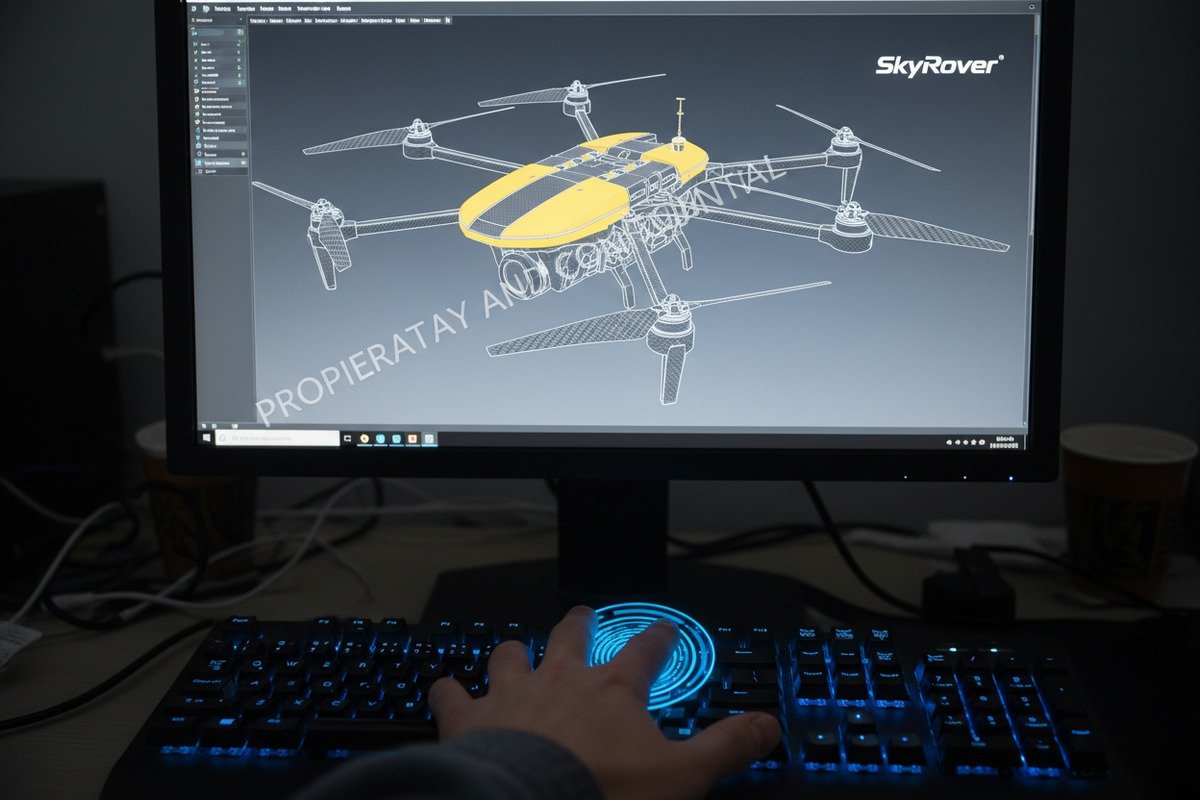
Key NDA clauses for Chinese suppliers include: Chinese-language versions with equal legal weight, liquidated damages of $100,000+ per breach, Hong Kong or Singapore arbitration venue, specific file handling and destruction requirements, employee confidentiality flow-down obligations, and post-termination restrictions lasting 3-5 years.
Bilingual Agreements With Equal Standing
A Chinese court may not accept an English-only contract. Draft your NDA in both English and Chinese.
More importantly, state that both versions carry equal legal weight. If discrepancies exist, specify which version controls.
We recommend having a Chinese legal expert review the Chinese translation. Subtle mistranslations can void critical clauses.
Arbitration Venue Selection
Mainland Chinese courts rarely enforce foreign IP judgments. Even domestic judgments face inconsistent enforcement.
Specify arbitration in Hong Kong (HKIAC) or Singapore (SIAC). Both jurisdictions have strong IP traditions. Their rulings are enforceable in China under the New York Convention 8.
Include language requiring the losing party to pay legal fees. This discourages frivolous defenses.
Detailed Confidential Information Definitions
Be specific. Do not write "all technical drawings." Instead, list exactly what is protected:
- SolidWorks CAD files for heat-resistant quadcopter frames
- Thermal camera integration schematics
- CNN-based fire detection algorithm documentation
- Payload mounting specifications for foam dispensers
- Flight controller firmware source code
The more specific, the harder for a supplier to claim ignorance.
File Handling and Destruction Requirements
| Requirement | Specific Language | Método de verificación |
|---|---|---|
| Storage | Files stored only on specified servers | Annual audit rights |
| Access logging | All access recorded with timestamps | Monthly reports to you |
| Copying prohibition | No local copies without written approval | Spot inspections |
| Destruction | All files deleted within 30 days of project end | Signed destruction certificate |
| Return | Physical prototypes returned or destroyed | Video documentation |
Employee Flow-Down Obligations
Your NDA binds the company. But what about individual employees?
Require the manufacturer to obtain signed confidentiality agreements from every employee who accesses your files. The manufacturer should provide copies upon request.
Include a clause making the manufacturer liable for employee breaches. This creates incentive for internal enforcement.
Post-Termination Restrictions
Protection should not end when the project ends. Include restrictions lasting 3-5 years post-termination.
The supplier cannot manufacture similar products using your designs. They cannot share files with third parties. They cannot hire away your engineers who might have worked on-site.
How do I maintain control over my proprietary technology while co-developing custom firefighting drone software and hardware?
When we collaborate with clients on custom features like autonomous hotspot mapping or CO sensor integration, technology flows both directions. Without structure, ownership becomes tangled. Projects stall. Relationships sour.
Maintain technology control through modular architecture separating proprietary and shared components, staged information release tied to milestones, black-box integration keeping core algorithms undisclosed, contractual ownership assignments for all new developments, and continuous monitoring of marketplaces for unauthorized copies.
Use Modular Architecture
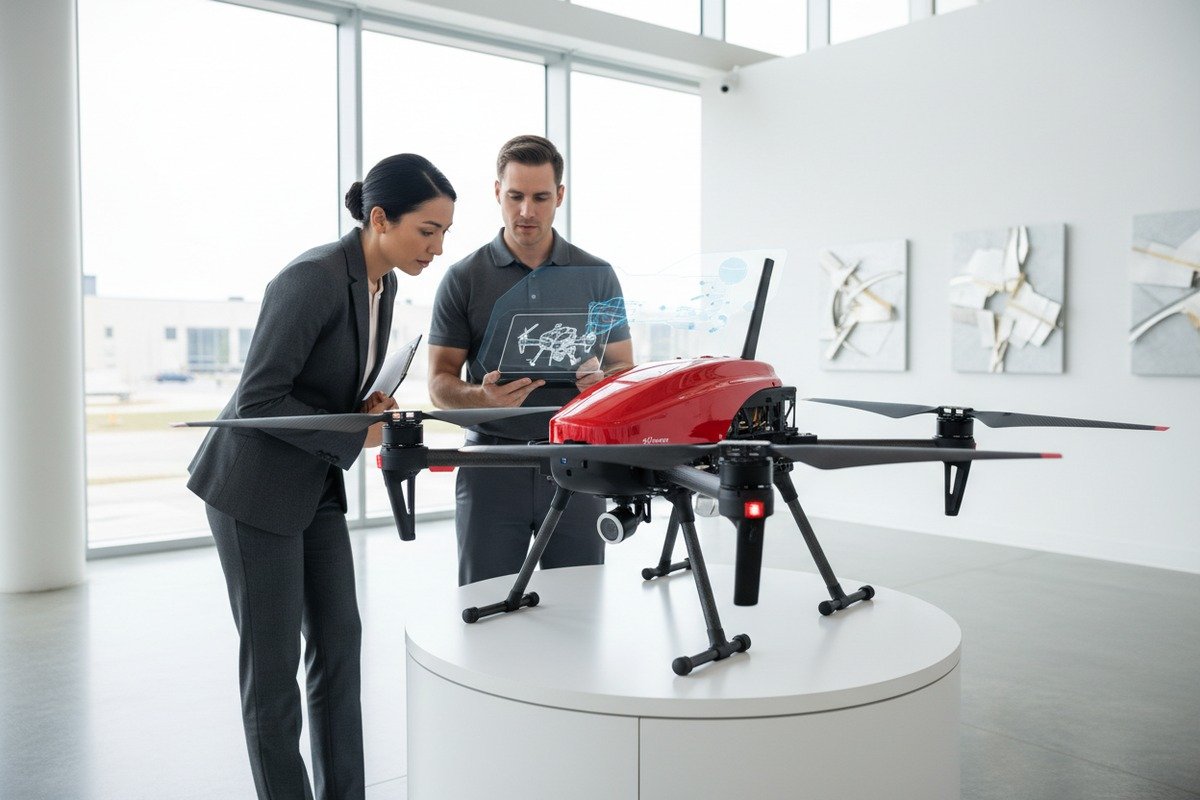
Design your system so proprietary elements remain isolated. Your CNN fire detection algorithm can run on a separate processor. The manufacturer only needs interface specifications, not source code.
This black-box approach protects your core IP while enabling effective collaboration. The manufacturer can integrate your module without understanding its internals.
We use this method when clients bring proprietary payloads. They provide mounting dimensions and communication protocols. We build the airframe around those specs. Their technology stays secret.
Staged Information Release
Do not share everything at once. Release information in phases tied to project milestones and payment schedules.
| Fase del proyecto | Information Released | Milestone Payment |
|---|---|---|
| Initial inquiry | General specifications only | Ninguno |
| Signed NDA | 2D drawings, basic dimensions | 10% deposit |
| Passed security audit | 3D CAD of non-critical components | 20% |
| Prototype approval | Full manufacturing drawings | 30% |
| Final acceptance | Complete documentation | Remaining 40% |
This approach limits exposure. If problems emerge early, minimal IP has been shared.
Implement Technical Protection Measures
Beyond legal safeguards, use technology to protect technology.
Watermark all CAD files. Tools like Digimarc embed invisible markers that survive format conversions and modifications. If drawings leak, you can trace them to specific recipients.
Use encrypted file formats. Convert 3D models to encrypted STEP files that require your authorization to open. Set expiration dates on shared documents.
Consider DRM solutions that prevent printing, screen capture, and local saving. These add friction for legitimate users but dramatically reduce leak potential.
Monitor for Unauthorized Copies
After sharing designs, actively search for violations.
Use reverse image search on key drawings. Monitor Alibaba, Taobao, and DHgate for products resembling your designs. Set up Google Alerts for your product names and technical specifications.
If you find copies, act immediately. Document everything. Issue takedown notices. Your earlier legal groundwork makes enforcement possible.
Retain Critical Components In-House
Some elements should never leave your control. Consider manufacturing the most sensitive components yourself or through a separate, highly trusted supplier.
For firefighting drones, this might include the thermal imaging module or the fire detection AI processor. Ship these pre-assembled to the main manufacturer. They integrate without accessing internals.
This adds cost and complexity. But for truly valuable IP, the protection is worth it.
Conclusión
Protecting firefighting drone designs requires layered defenses. Combine strong legal agreements, thorough supplier vetting, technical safeguards, and ongoing monitoring. No single measure is sufficient, but together they create meaningful protection for your valuable intellectual property.
Notas al pie
1. Comprehensive guide on firefighting drones and their applications. ↩︎
2. Explains various intellectual property risks and their potential impact on businesses. ↩︎
3. Explains the concept of modular programming, a foundational aspect of modular architecture. ↩︎
4. Details the steps involved in the patent registration process for inventions. ↩︎
5. Explains China’s first-to-file IP system and its implications for foreign brands. ↩︎
6. Found a relevant article detailing the requirements for ISO 27001 certification. ↩︎
7. Explains the concepts, benefits, and standard for role-based access control in security. ↩︎
8. Official information on the Convention on the Recognition and Enforcement of Foreign Arbitral Awards. ↩︎

 English
  Spanish
  German
  French
  Dutch
Dutch  Arabic
